
M. M. Somaya: Olympic Hockey Gold, Captaincy and Historical Records Explained
Explore M. M. Somaya’s verified Olympic gold and captaincy, and learn why a historical database subset must not be mistaken for a full career total.
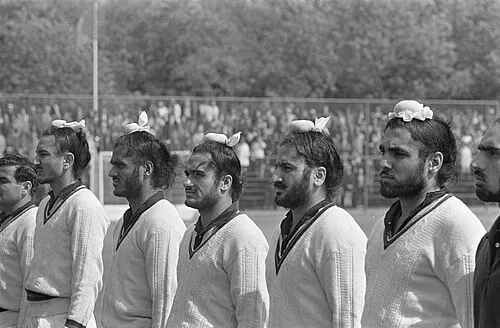
M. M. Somaya, whose full name is recorded by Olympedia as Maneyapanda Muthanna Somaya, is a former India hockey international and Olympic gold medallist. Hockey India identifies him as a member of the 1980 Moscow gold-winning team and captain of India at the 1988 Seoul Olympics. Those documented achievements provide a sound foundation for understanding his sporting career.
This profile is checked on 14 November 2026. It explains the verified Olympic context and shows students how to read historical sports databases without confusing a partial archive with an entire career. It does not assert an unverified death, health update, new appointment or current controversy. A trending name is a starting point for research, not evidence that a particular event has happened.
Who is M. M. Somaya?
Somaya represented India in men's outdoor hockey. Olympedia records his birth date as 8 May 1959 and lists Olympic appearances in 1980, 1984 and 1988. The International Hockey Federation's competition archive also contains entries for those three Olympic tournaments.
Names can appear in different forms across archives. The FIH system uses a compact spelling different from the expanded name displayed by Olympedia. Before merging records, check the team, sport and tournament history rather than assuming that every spelling difference identifies another person.
For a student building a biography, this is a useful first lesson: identity should be confirmed through several connected details. A matching surname alone is not enough, especially when a short name or initials can refer to more than one person in general search results.
What is verified about the 1980 Olympic achievement?
Hockey India identifies Somaya as part of India's gold-medal-winning team at the 1980 Moscow Olympics. Olympedia lists the men's hockey team in first place for that edition and records one Olympic gold medal for him. These sources establish participation and the medal outcome.
A team medal belongs within a collective sporting result. It should not be rewritten as if one player won a solo event or scored every decisive goal. Individual contributions require their own match-level evidence, not assumptions based on the presence of a medal in a biography.
Keep the event year attached. A historical Olympic achievement remains important without being presented as a recent award. Readers deserve a clear distinction between a career retrospective, a newly announced honour and a report about a current tournament.
Which Olympic Games did Somaya play in?
The reviewed records identify Moscow 1980, Los Angeles 1984 and Seoul 1988. This gives a sequence of three Olympic appearances across eight years. It does not by itself establish every international match he played between those tournaments.
Olympedia lists India's finishing positions for those editions as first, fifth and sixth respectively. A finishing position is a team outcome within one event. It should not be confused with a world ranking for the entire year or an individual ranking of the player.
A useful timeline therefore has one row for each Games, with the host city, year and team result. Keep other competitions in separate rows rather than merging them into an Olympic total. That simple structure makes a historical profile easier to verify and less likely to contain double counting.
What is documented about his captaincy?
Hockey India's retrospective identifies Somaya as India's captain at the 1988 Seoul Olympics. That is a specific leadership role at a named tournament. It should not automatically be extended to every year of his career or every international appearance.
Captaincy also differs from coaching and administration. A player leading a team on the field is not necessarily the person who selected the squad, designed every training session or controlled all organizational decisions. Claims about those responsibilities need separate evidence.
When writing about leadership, avoid inventing speeches or private conversations. The documented appointment can be reported clearly, while general discussion of communication and responsibility should be labelled as explanation rather than a reconstruction of what happened inside the team.
Why is the FIH database count not a complete career total?
The FIH page includes an explicit qualification that its figures cover games recorded in that system. The reviewed page displays 33 appearances across six listed competitions. That number should not be presented as Somaya's complete international career merely because it appears beside a caps heading.
An archive can be authoritative about the records it contains while still being incomplete for a historical player's entire career. The limitation is part of the source, not a reason to ignore it. A responsible writer retains that qualification when summarizing the data.
This is one of the most useful lessons in sports research. Authority and coverage are different questions. A trustworthy database may have a limited historical sample, and a precise-looking number does not automatically answer a broader question than the database was designed to cover.
What does a cap mean in international sport?
A cap is commonly used to refer to an international appearance, but the exact record depends on the governing body's definitions and available data. It is not the same as a goal, a medal or a tournament entry. A player can make several appearances within one competition.
For a fictional example, a player who appears in five matches at one event and four at another has nine recorded appearances across those two events. That does not establish their career total if other events are missing from the archive.
When quoting a cap count, state whether it is a complete official career total, a competition-specific count or a database subset. If the source does not establish completeness, preserve that uncertainty. It is better to report a limited count accurately than to offer a misleading total with false confidence.
How should you understand a historical team result?
A team's finishing position reflects the competition's structure and results. It does not directly measure one player's complete performance. A team can finish below expectations while individuals make valuable contributions, just as a medal-winning side relies on more than one person.
To explain a tournament in detail, consult its actual format and match records. Pool standings, classification matches and knockout rounds can create different routes to a final position. Do not assume that every Olympic edition used an identical structure.
This guide does not reconstruct every match of the 1980, 1984 or 1988 tournaments. It provides the verified participation and finishing positions, then explains how to study the wider record. A fuller tournament history should be a separately sourced piece with room for the appropriate context.
Why are different eras difficult to compare?
Sports evolve through changes in rules, surfaces, equipment, preparation and competition structure. Comparing players from different periods requires more than placing medal counts or goals in one table. The opportunities and responsibilities may differ substantially.
A useful comparison defines a narrow question. You might compare documented Olympic participation, team results or a particular role within the sources available. A claim about the greatest player across all eras requires much more evidence and a clear explanation of the criteria.
For students, avoid beginning with a conclusion and choosing only favourable facts. Start with the question, identify the relevant records and list their limitations. This method produces a more informative discussion than a ranking built from whichever numbers happen to be easiest to find.
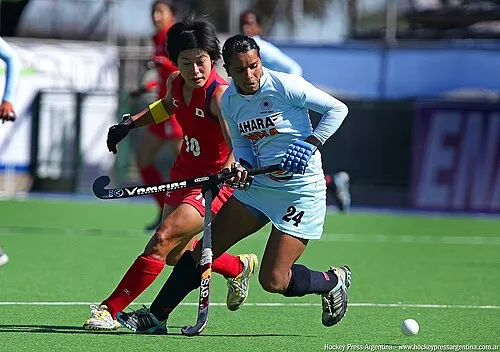
Archive women’s hockey at the 2010 World Cup. This illustrates the outdoor sport, not Somaya or a match from his career.
How can a biography explain leadership without inventing it?
It can begin with the verified captaincy and then discuss the general responsibilities that team leadership can involve, such as communication and coordination. The boundary must remain clear: general explanation is not evidence that a named person used a particular phrase or method.
If an interview provides a direct account, attribute it and preserve its context. Do not place a modern motivational slogan in a former player's mouth merely because it fits the article's theme. An invented quotation is still inaccurate even when it sounds respectful.
You can write engagingly through structure instead. Explain the sequence from participation to later captaincy, show the tournament timeline and ask what evidence would be needed for deeper conclusions. A reader can learn about leadership without being given fictional dressing-room scenes.
What should students know about field hockey vocabulary?
Begin by distinguishing outdoor field hockey from ice hockey and from indoor variants. The same broad word can refer to different sports or disciplines. The records discussed here concern men's outdoor hockey, which is stated in the FIH competition archive.
Then learn terms in context rather than assuming a football definition transfers unchanged. A corner, substitution or scoring opportunity can follow different rules across sports. For current playing rules, consult the appropriate governing body's latest rulebook rather than a historical biography.
This article does not present itself as an official coaching or umpiring manual. Its purpose is to help readers identify the right sport, understand the career timeline and read the records correctly. Technical rules should be checked in the document intended to govern the actual competition.
Why should a trending name not become an unverified news claim?
Search interest can rise for many reasons: an interview, a retrospective, an event appearance or a misleading social post. A list containing a person's name does not identify which reason applies. Writing a death report or health update from the name alone would be irresponsible.
The safe research sequence is to confirm identity, seek a direct or trustworthy report and check the date. If a specific current event cannot be established, a clearly labelled background profile can still answer who the person is without manufacturing breaking news.
That is the scope of this article. It presents verified historical hockey achievements. It does not imply that a personal tragedy, new role or other unverified development is the cause of the current search interest.
How can you build a reliable player timeline?
Create columns for date, event, role, result and source. Use exact years where the evidence supports them. If a source only names a tournament, do not invent the day or month. Leave the date at the level of precision the record provides.
For Somaya, the Olympic years and 1988 captaincy provide a clear initial structure. Add other competitions only after checking the relevant archive. Keep competition appearances separate from a complete career cap total, especially when the database warns that its coverage is limited.
Finally, write a short note about missing information. That note is not a weakness in the work; it shows that the researcher understands the boundary of the evidence. It also gives the next researcher a precise question rather than an attractive but unsupported conclusion.
A classroom activity using two sources
Read the Hockey India retrospective alongside the FIH athlete page. List which facts appear in both and which are specific to one source. The retrospective can discuss achievement and leadership, while the database organizes recorded competition appearances.
Now write a sentence about the Olympic gold and another about database coverage. Make sure the first names the year and team event. Make sure the second says the count concerns games recorded in that system, not an independently verified full career total.
For a final exercise, explain why the sources do not contradict one another merely because they emphasize different information. A narrative biography and a structured archive have different purposes. Good research uses their strengths together instead of forcing both into the same kind of document.
How can photographs be used responsibly in a historical profile?
Check that a portrait actually depicts the named player. Search results can return teammates, later squads and unrelated people. A photograph of another hockey international must never be relabelled as Somaya to fill an empty image slot.
If a verified portrait is unavailable, a clearly described archive sporting or venue image can provide context. The caption should identify what it shows and explicitly avoid presenting a later team as the 1980 squad. Licensing and accurate attribution are separate requirements from visual relevance.
This matters particularly for historical stories, where genuine photographs can be decades apart. An image can be authentic and still create a false impression if its date or subject is concealed. A useful caption gives the reader the context needed to interpret it correctly.
What is the main lesson from this profile?
Somaya's documented record includes Olympic gold and later Olympic captaincy. Understanding that record properly means preserving its dates, collective team context and source limitations. Accuracy does not diminish an achievement; it makes the achievement easier to understand and trust.
The wider learning opportunity is in how a biography is assembled. Names require identity checks, numbers require scope, leadership claims require evidence and changing news requires a date. These habits help with history assignments, sports reports and everyday online reading.
For more examples of evidence-based sporting explainers, visit the RayTech article library. Compare the way different sources organize achievements, but do not assume that a database field or a popular caption answers every question about a person's life.
Common questions about M. M. Somaya
Did Somaya win an Olympic gold medal?
Yes. Hockey India and Olympedia identify him as a member of India's gold-winning men's hockey team at Moscow 1980. It was a team-event achievement.
Was he captain at the Seoul Olympics?
Hockey India identifies him as India's captain at Seoul 1988. That is a specific dated role, not a claim that he captained every appearance throughout his career.
Are the 33 FIH database appearances his complete career?
The reviewed page says its figures cover games recorded in its system. The number must therefore retain that qualification and should not be presented as a complete career total without separate verification.
Is this a report of a new personal event?
No. This is a historical player profile checked on 14 November 2026. No unverified death, health update or new appointment is asserted.
Sources
- Hockey India: Somaya retrospective, Olympic gold and captaincy
- FIH: athlete competition record and database-coverage qualification
- Olympedia: identity and Olympic results
The source-reading exercises and research explanations are original educational material. No missing match history, personal quotation or full career total has been invented.
Image credits: cover: Jack de Nijs for Anefo, source, CC0. Resized and converted to WebP. inline: Luis Oviedo Ortiz, source, CC BY-SA 2.0. Resized and converted to WebP.
Found an error or an outdated detail? Report a correction with the article URL and original source.