
Mohammad Amir: International Record, Retirement Timeline and Bowling Figures
Read Mohammad Amir's international record and dated retirement statements, then understand bowling figures without mixing league and national-team totals.
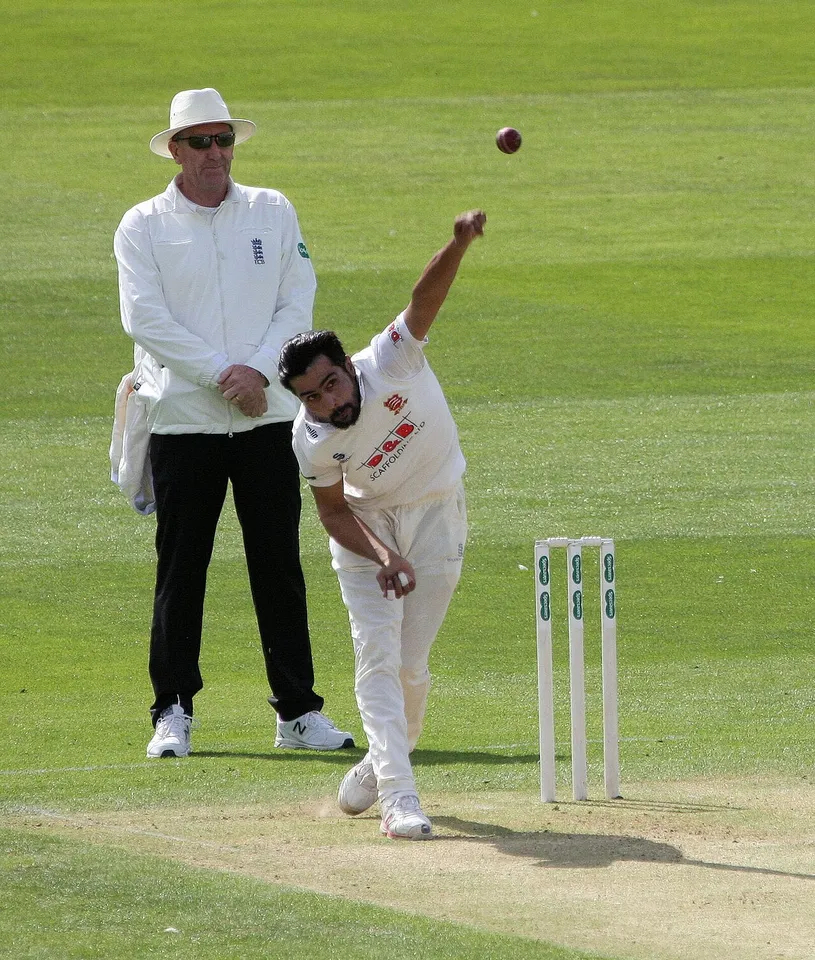
Mohammad Amir is a Pakistan left-arm fast bowler whose international record spans Tests, ODIs and T20 internationals. The PCB's retirement announcement dated 14 December 2024 records 271 international wickets across 36 Tests, 61 ODIs and 62 T20Is. Those are international figures, not totals for every domestic and franchise competition he has played.
For readers searching his name, this guide separates the documented career record, the retirement timeline and the bowling statistics that describe different parts of a performance. It does not invent a fresh comeback announcement, a current contract or the reason his name appeared in a search-trend list.
The record needs three separate headings
| Record category | Appearances in the PCB's December 2024 announcement |
|---|---|
| Tests | 36 |
| One-day internationals | 61 |
| T20 internationals | 62 |
Together, these are 159 international appearances. Adding them is reasonable if the question is about appearances across those three categories. Calling the sum his ODI appearances, or his total professional matches, would change the meaning of the record.
The 271 wickets are similarly attached to the international sample described by the board. A later domestic scorecard belongs in its own competition record. Do not add those wickets to the international figure simply because the player name is the same.
This matters when comparing profiles from different databases. One page may default to all recognised T20 cricket while another shows only T20Is. Both can display legitimate numbers, yet neither answers the other's question until their filters are made compatible.
What does the retirement timeline establish?
The PCB issued an international-retirement statement in December 2020 and another announcement in December 2024. They describe different points in Amir's career. A complete timeline should preserve the dates rather than presenting whichever old headline appears first as a new development.
The later announcement states that he last represented Pakistan during that year's T20 World Cup. It is the dated board record used here. This article does not turn the absence of another announcement in its reviewed material into a universal claim about every future selection possibility.
If a fresh comeback claim circulates, ask for the actual statement and its date. Being discussed by supporters, attending a training session, playing a league match and returning to a national squad are different events. A reliable update identifies which one has actually occurred.
International retirement and league cricket are different
International cricket involves national-team fixtures in defined formats. Domestic and franchise competitions have their own teams, contracts and selection arrangements. A player can step away from international participation without that statement automatically announcing the end of every kind of professional cricket.
Consequently, seeing Amir on a franchise scorecard would not, by itself, prove that the PCB's international-retirement statement had been reversed. The competition label is part of the evidence. The shirt colour alone is not a sufficient substitute because teams and tournaments can use similar designs.
This guide does not publish an unverified list of his current contracts. To confirm a particular appearance, use the organiser's current squad and completed scorecard. A career overview is useful background, but it is not a live availability service.
How do you read figures such as 3/16?
In the usual wickets/runs presentation, 3/16 means three wickets credited to the bowler for sixteen runs charged to the spell. Check the column headings because some scorecards use a different display order. The notation does not mean three overs or sixteen wickets.
Amir's recorded best return at the 2017 Champions Trophy was 3/16. The official player-statistics page linked below preserves that tournament context. A best return is one performance entry, not the player's average spell throughout the event or across his career.
To understand a bowling entry fully, also look for overs, maidens and any extras. A wicket count without the opportunity used tells only part of the story. A brief successful spell and a longer spell can have the same wickets while representing different workloads.
Average, economy and strike rate answer different questions
Bowling average relates conceded runs to wickets. Economy relates conceded runs to overs. Bowling strike rate relates legal balls to wickets. These denominators are different, so a favourable figure in one column does not guarantee an equally favourable figure in the other two.
Use a simple original example: a fictional bowler concedes twenty-four from four overs and takes two wickets. The economy is six per over, the bowling average is twelve and the strike rate is twelve legal balls per wicket. This is not an additional Amir performance.
Now remove the wickets while keeping the same runs and overs. The economy remains six, but dividing by zero does not produce a meaningful finite bowling average or strike rate for that spell. This is why a dash or an unavailable field should not be replaced with a flattering zero.
Why wickets per match is not a bowling average
Dividing a wicket total by appearances produces wickets per match for the chosen sample. It does not produce the standard bowling average, because the numerator and denominator are different. A person can perform a correct division and still attach the wrong statistical name to the answer.
For career comparisons, a match also does not always offer the same bowling opportunity. A Test can involve multiple innings, while limited-overs formats allocate a different role and opportunity. Combining them can describe overall participation but can conceal the differences that matter to a narrower comparison.
If you want to compare two bowlers, choose a compatible format and sample first. Then keep the underlying runs, legal balls and wickets visible where possible. A single cross-format headline number should not be asked to explain every aspect of their careers.
What does left-arm pace change for a batter?
A left-arm bowler presents a different release-side geometry from a right-arm bowler. The angle seen by a right-handed batter differs from that seen by a left-handed batter, and the chosen line changes the scoring and defensive problem. This is a useful starting point for understanding Amir's role.
Angle and movement are not the same thing. A ball can travel on a particular line because of the release position without necessarily swinging through the air. A description that calls every angled delivery “swing” can make technical analysis less clear rather than more impressive.
For a specific wicket, inspect the actual sequence or a credible technical account. This article does not infer the exact movement of an unseen delivery from the fact that the batter was dismissed. The scorecard supplies the outcome; footage or detailed reporting supplies additional evidence about the process.
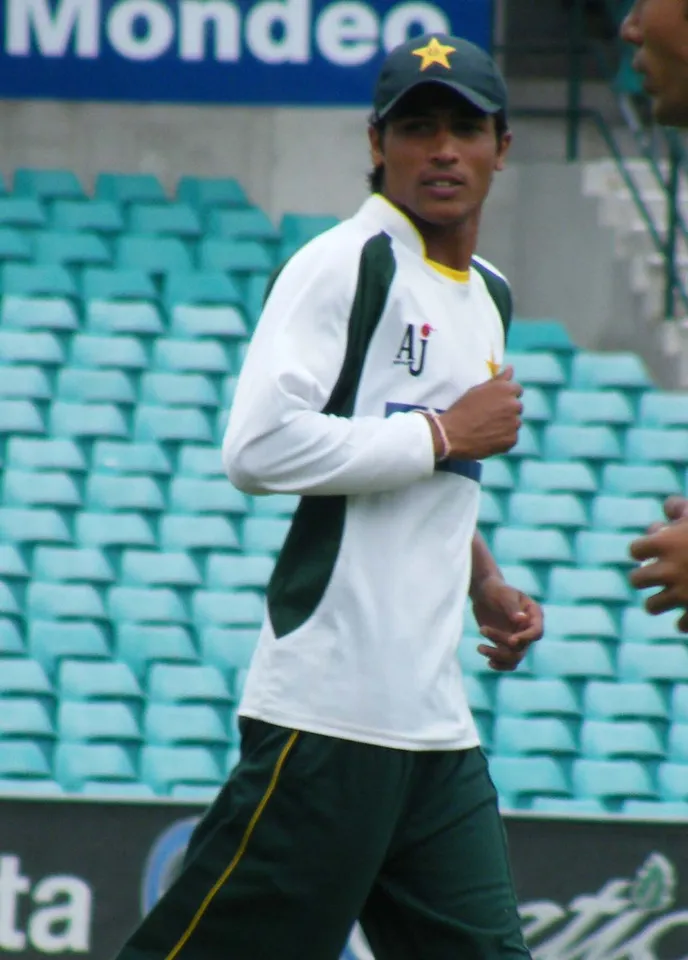
Historical training photograph, not evidence of a current Pakistan call-up.
Why early wickets matter without deciding everything
An early dismissal can change the batting side's available resources and bring a new player to the crease. That creates a different situation from one in which a settled opening pair continues. The value of the wicket still depends on the format and the wider match position.
It is tempting to declare that the first breakthrough has already settled a contest. A better account describes the new score, the remaining wickets and the opportunity left. Teams can recover, and a complete match report must follow the subsequent events rather than stop at its most dramatic opening moment.
This is also why highlights alone can give a narrow picture of a spell. The wicket delivery may be memorable, but the deliveries before and after it influence pressure, runs conceded and how the innings develops. A full scorecard helps restore some of that missing context.
The new ball and later overs can demand different things
A bowler's assignment can change through an innings. An opening spell, middle-overs spell and late-innings spell involve different match states and field settings. Comparing them only through conceded runs can overlook what each assignment was trying to achieve.
That does not justify inventing a secret team plan whenever a spell is expensive. An explanation should distinguish a known assignment from an analyst's interpretation. When the plan is not publicly documented, describe the visible situation and avoid presenting a guessed intention as a quotation from the dressing room.
For a practical reading habit, note the over range beside the figures. “Four overs for this many runs” is more informative when the reader knows where those overs occurred. The extra context supports a better discussion without needing to label every delivery brilliant or poor.
How do extras affect a bowling summary?
The team score and a bowler's charged runs are related but not identical concepts. Different kinds of extras are treated differently in scoring. Read the complete bowling and extras entries instead of assuming that every run added during a spell is recorded against the bowler in exactly the same way.
The over notation also counts legal balls, not tenths. A spell ending at 3.4 overs has used twenty-two legal balls in six-ball cricket. Entering 3.4 as a decimal into an economy calculation uses a different denominator and can distort the resulting rate.
A careful reader does not need to memorise every scoring convention before enjoying the game. Start by keeping legal balls, charged runs and credited wickets separate. Those three labels resolve many common misunderstandings in an otherwise straightforward bowling table.
What should a fair career comparison include?
Choose the category, time span and question before choosing the statistic. Comparing tournament returns, career records and one recent match answers three different questions. A player who leads one selected table does not automatically lead all the others.
Avoid selecting only the best spell for one bowler and a full-season average for another. That comparison uses different samples. Equally, a short run of matches should not be presented as a complete replacement for the career record without explaining why the recent period is the focus.
For Amir, the reviewed board record supplies a clear international baseline. A later league comparison needs that league's own data. Keeping the baseline and new sample separate prevents a discussion about current form from silently rewriting historical international figures.
Reading a player page without being misled
Check the player's identity, competition filter and date before copying a number. Abbreviations and similar names can make the wrong profile look plausible in a quick search. A country or team label is helpful, but the full record context is still needed.
Then look for whether the page displays a career total, a season total or a selected tournament. A changing filter can alter the figures without the underlying record being inconsistent. Record the selection if you want another reader to reproduce the comparison later.
Finally, separate listed squad membership from an appearance. A player can be named in a squad without taking the field in a given match. A scorecard is the stronger source for a question about who actually played, bowled or took a wicket that day.
Questions about Mohammad Amir
Are the 271 wickets his total in every competition?
No. They are the international wickets described in the PCB's December 2024 announcement. Domestic and franchise records have their own categories. Combining them requires a new, explicitly defined sample rather than relabelling one published total.
Does a franchise appearance mean an international comeback?
No. It shows participation in that franchise competition. A national-team comeback would require evidence of the relevant international selection and, for an actual appearance, a match record. One event cannot automatically establish the other.
Is a bowling average of twelve the same as an economy of twelve?
No. Bowling average uses wickets as its denominator; economy uses overs. The original example above illustrates why the values can differ even within one spell. Always read the heading and units before interpreting the number.
Is this a report of a new retirement?
No. The article explains the dated board announcements and the career record attached to them. It does not present a December 2024 statement as breaking news in November 2026 or invent a later decision to justify a trending query.
Follow the record and the actual match
Amir's career is easier to understand when the format labels remain visible. His international appearances, a tournament bowling return and any later franchise match belong to related but separate records. They should support the discussion rather than be mixed into an impressive but undefined total.
Read more cricket coverage or explore class study resources for related learning. For a fresh team announcement or match, consult the current organiser's record. This article was reviewed on 3 November 2026 and makes no claim to be a continuously updating player database.
Sources
- PCB: Amir and Imad announce international retirement, 14 December 2024, for the dated appearance and wicket totals.
- PCB: Statement on Mohammad Amir, 17 December 2020, for the earlier timeline entry.
- Cricket West Indies: Mohammad Amir player statistics, for the labelled Champions Trophy record. The fictional bowling spell and its calculations above are original teaching examples, not additional player statistics.
Image credits: cover: Dave Morton, source, Public domain. Resized and converted to WebP. inline: NAPARAZZI, source, CC BY-SA 2.0. Resized and converted to WebP.
Found an error or an outdated detail? Report a correction with the article URL and original source.