
Mohammed Siraj: Asia Cup 6/21 and a Guide to Reading Pace Bowling
Understand Mohammed Siraj’s dated Asia Cup 6/21 and learn how wickets, economy, average, line, length and field placement explain a pace spell.

Mohammed Siraj is an India fast bowler whose six wickets for 21 runs in the 2023 Asia Cup final provide a clear starting point for learning how a bowling spell changes a match. The performance took place against Sri Lanka in Colombo. It should be discussed as a dated achievement, rather than presented as a new result or a current world-ranking announcement.
For students, a bowling score can look like a short code. This guide opens that code and explains wickets, runs, overs, economy, average and strike rate. It also shows why a highlights package does not reveal everything about a bowler's technique or the conditions. The arithmetic examples are original teaching exercises, not additional claims about Siraj's match.
Who is Mohammed Siraj?
Siraj represents India as a right-arm pace bowler. His ICC player profile describes his development and highlights performances across international formats. In this guide, the central verified example is his spell of 6/21 in the Asia Cup final on 17 September 2023.
A pace bowler attempts to dismiss batters and limit scoring using speed, movement, accuracy and variation. Those tools interact with the surface, the ball, the field and the batter's choices. It is usually too simplistic to explain a successful spell with only one word such as speed or aggression.
The official profile is useful for identity and documented career context. It does not turn an old achievement into a live selection update. Current availability, an injury report or a particular playing eleven needs its own dated source. That distinction protects a reader from drawing an unsupported conclusion from a familiar name.
What happened in the 2023 Asia Cup final?
Siraj took six wickets while conceding 21 runs as India dismissed Sri Lanka for 50 in Colombo. The ICC's report of 20 September 2023 connected that spell with his return to the top of the men's ODI bowling rankings at that time. India won the final.
The match result and the subsequent ranking update are separate events. The wickets came in the final on 17 September. The cited ranking report followed three days later. Keeping both dates makes the account more accurate than compressing every fact into an undated claim that he is currently number one.
This guide does not assert his present ranking on 14 November 2026. Rankings change through performances and eligibility rules, so an old number-one headline cannot establish today's order. The historical spell remains significant without adding a claim that has not been checked against a current table.
What does 6/21 mean in bowling figures?
The notation means six wickets credited to the bowler and 21 runs charged against him. Some publications reverse the presentation and write 21 runs for six wickets, so always read the heading and context. The score is not six overs, 21 deliveries or a team total.
Wickets credited to a bowler are also different from every wicket that falls while he is bowling. A run-out is a team dismissal but is not added to the bowler's wicket tally. This distinction matters when reading a delivery log that contains several different types of dismissal.
Similarly, the team's total includes more than the runs charged to individual bowlers. Different extras have different scorekeeping treatment. A beginner does not need to memorize every accounting detail immediately, but should avoid assuming that every number on a team scoreboard belongs in one bowler's conceded-runs column.
How do line and length work together?
Line describes the delivery's direction relative to the batter and stumps. Length describes where it pitches along the surface. A bowler can maintain a similar line while changing the length, or keep a similar length while changing the angle of attack.
When watching a sequence, describe both. Saying a ball was outside off stump tells part of the story; it does not say whether the delivery was full or short. Saying that it pitched close to the batter does not establish the line. The combination helps explain the shot or defensive decision that followed.
Do not label every wicket delivery perfect after seeing the dismissal. A batter can make an error against an ordinary ball, and a well-directed ball can go unrewarded. A careful observer describes the visible delivery before judging its quality, rather than using the outcome as the only evidence.
What is the difference between swing and seam?
Swing concerns movement through the air. Seam movement concerns deviation after the ball contacts the surface, associated with how the seam and pitch interact. A broadcast replay can help illustrate these ideas, but a single distant camera angle may not prove which movement occurred.
For a beginner, watch the ball's path before and after pitching. Look for a consistent pattern across multiple deliveries. If the available footage is unclear, write that movement was difficult to identify rather than assigning a technical label with false certainty.
These are general bowling concepts, not a diagnosis of every ball Siraj bowled in Colombo. A specific technical explanation of the final requires suitable footage and careful analysis. The score alone establishes wickets and conceded runs, not the exact physical cause of each dismissal.
How is bowling economy calculated?
Economy rate is runs conceded per over. For a fictional spell of 24 runs from four complete overs, divide 24 by four to get six runs per over. The unit matters: an economy rate of six is not six runs per ball or six wickets in the match.
Partial overs require care. A spell of 4.2 overs contains 26 legal balls. Convert that to 26 divided by six overs before calculating the rate. Treating 4.2 as an ordinary decimal introduces an error because cricket's notation counts balls after the point.
An economy figure should be interpreted with the match phase and conditions. Six runs per over can have different significance in a high-scoring T20 finish and a low-scoring ODI opening spell. The number is correct arithmetic, but its meaning depends on the task being performed.
How are bowling average and strike rate different?
Bowling average measures runs conceded per wicket. Bowling strike rate measures legal deliveries per wicket. Both use wickets in the denominator, but they answer different questions. Average concerns the run cost of dismissals; strike rate concerns how frequently dismissals occur in terms of deliveries.
Take a fictional spell of three wickets for 30 from five overs. The average is ten runs per wicket. Five complete overs contain 30 legal balls, making the strike rate ten balls per wicket. The same numerical answer appears here only because the chosen example happens to produce it.
Now imagine the same three wickets and 30 conceded runs from ten overs. The average stays ten, but the strike rate becomes 20. This shows why average and strike rate should not be treated as interchangeable labels, even when a table places them next to each other.
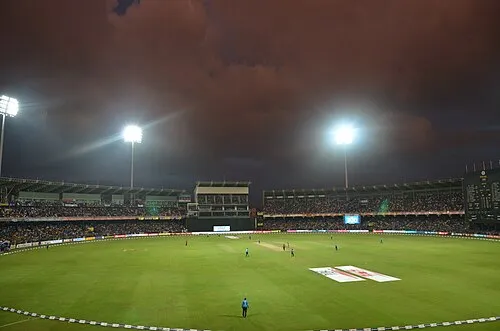
Archive Colombo cricket photograph from the Sri Lanka–England ODI in December 2014. Venue context only, not the conditions during the 2023 final.
Why can dot balls influence a spell?
A dot ball adds no run from that delivery to the team score. Repeated dots can restrict progress, but their effect depends on the format and situation. A batter defending successfully in a Test can view a dot differently from a batter chasing a steep target in a T20 match.
Dots may contribute to pressure, yet a wicket after several dots does not automatically prove what the batter was thinking. A writer can state that the scoring rate was restricted. Claiming that the batter panicked is a psychological interpretation that needs stronger evidence than the sequence alone.
For an observation exercise, record a full over rather than just the wicket ball. Note legal deliveries, runs and visible changes in line or length. Then explain what actually changed on the scoreboard. This produces a more useful review than turning one dramatic replay into an entire story about intention.
What does the field contribute?
A bowler works with a field. Catching positions and boundary protection affect the options available to both bowler and batter. A fielder's successful catch is part of converting an opportunity into a wicket, while a missed chance can leave a well-bowled delivery without a dismissal.
However, television pictures do not always show every player. If you cannot see the complete field, avoid inventing a plan around a fielder who may not be there. Use the visible positions and acknowledge what the camera leaves out.
A useful student diagram marks the stumps, batter, bowler and only the fielders whose positions are clearly established. Draw the delivery's approximate line and the shot's direction separately. The exercise helps distinguish a bowling plan from the outcome of one ball, while keeping uncertainty visible.
Is a six-wicket spell enough to compare entire careers?
No single spell can establish every aspect of a bowler's career. A major performance can show a remarkable match contribution, but comparisons across years require a broader sample. Workload, opposition, conditions and format all affect the opportunities a bowler receives.
If comparing two players, define the question first. You might compare wicket frequency in ODI opening spells, economy across a tournament or contributions over a full Test series. Each question needs a relevant dataset. A table combining unlike formats can create an attractive but misleading ranking.
Also separate peak performance from consistency. A spectacular best figure answers what a player achieved once. An average across many appearances describes a different pattern. Both can be interesting, but substituting one for the other hides the distinction between an outstanding day and sustained output.
Why does a ranking claim need a date?
An official ranking is a changing comparison governed by its own system. A report saying that Siraj reached number one in September 2023 establishes a historical position. It does not promise that the same position will persist through later fixtures and ranking updates.
When reading a sports headline, find the publication date before repeating a ranking. Then check which format the table concerns. Test, ODI and T20 international rankings are separate. Being highly placed in one does not automatically assign an identical position in another.
This habit applies beyond cricket. Tennis rankings, football tables and examination merit lists all have a reporting point and a scope. Attaching those details to a number makes the information more useful and reduces the risk of sharing an old achievement as breaking news.
A bowling worksheet students can complete
Choose a scorecard with a complete bowling table. Write the match date, format, opposition and innings. For the selected bowler, record legal deliveries, runs conceded and wickets. Calculate economy and, if wickets were taken, calculate the average and strike rate for that spell.
Add a separate observation section if you have authorized footage. Describe three consecutive deliveries using line, length and outcome. Keep any interpretation clearly separate from the directly visible events. If the footage is only a highlights selection, state that you are not reviewing the full spell.
Finally, write one paragraph connecting the numbers to the match. Mention the team's score and situation without guessing private tactics. A strong explanation might say that a bowler removed several batters while limiting runs. It should not invent a coach's instruction or a player's thought process to make the paragraph sound more dramatic.
How should a beginner practice safely?
Watching elite pace bowling is an opportunity to learn, not an instruction to copy maximum effort without guidance. Beginners should use age-appropriate equipment, a suitable space and qualified supervision where available. A televised action is not a personalized coaching assessment.
For a classroom activity, start without a hard ball. Students can discuss field diagrams, calculate rates and describe delivery sequences on paper. These exercises develop cricket literacy without requiring a high-speed physical drill or an assumption about an individual's fitness.
If someone wants technical bowling advice, a qualified coach who can observe the actual action is better placed to provide it than a written profile. This guide explains how to read the sport. It does not diagnose an action, prescribe workload or promise protection from injury.
Common questions about Mohammed Siraj
Which final included Siraj's 6/21?
The historical example is the 2023 Asia Cup final against Sri Lanka in Colombo. The match was played on 17 September 2023. It was an ODI, not a T20 international.
Does 6/21 mean he bowled six overs?
No. It means six wickets for 21 conceded runs. The overs are a separate field in a full bowling table and need to be read independently.
Is Siraj's 2023 ranking also his current ranking?
Not necessarily. The cited September 2023 ICC report establishes his position at that time. A current ranking requires a current official table and its reporting date.
Where can I compare different bowling types?
The RayTech sports and learning library includes related cricket guides. Compare the role, format and statistical units carefully. A pace bowler and a spinner can both be effective without facing identical match conditions or assignments.
Sources
- ICC: Mohammed Siraj player profile
- ICC: Asia Cup spell and dated ranking update, 20 September 2023
- ICC: September 2023 player-award report and Siraj's final figures
Checked on 14 November 2026. The hypothetical spells, classroom activities and statistical explanations are original teaching material rather than additional match reporting.
Image credits: cover: Anand Anil, source, CC BY-SA 4.0. Resized and converted to WebP. inline: James Harris, source, CC BY 2.0. Resized and converted to WebP.
Found an error or an outdated detail? Report a correction with the article URL and original source.