
Mojtaba Khamenei: Iran’s Leadership and News-Reading Guide
Understand Mojtaba Khamenei’s role, the Assembly of Experts and Iran’s institutions, with dated sources and practical political-news reading exercises.
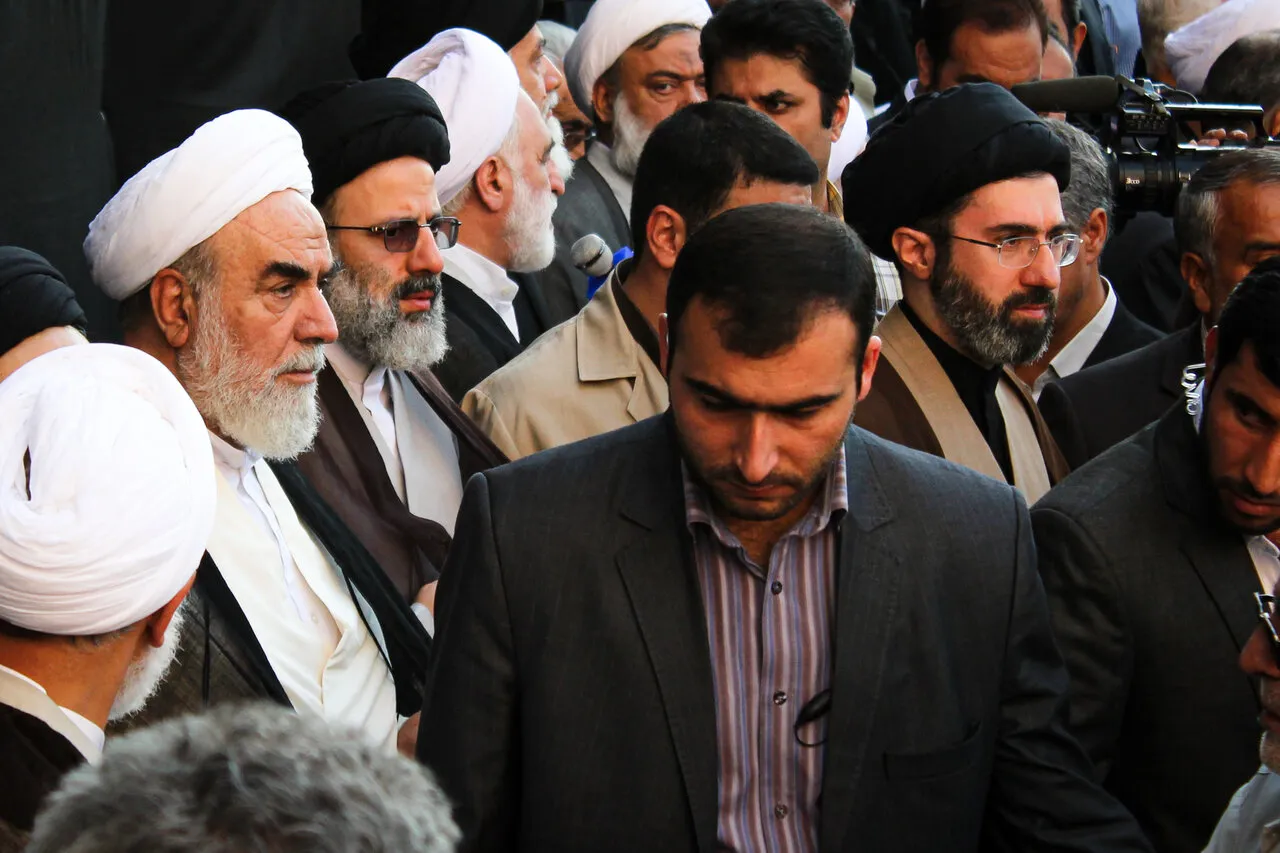
Mojtaba Khamenei is Iran’s supreme leader, appointed in March 2026 after the death of his father, Ali Khamenei. Understanding that sentence requires more than recognising a surname. The leadership office, the Assembly of Experts, the presidency and the country’s other institutions have different roles. This guide explains how to read those distinctions and assess political reports without confusing verified events with speculation.
The source review for this article is dated 2 November 2026. It is an institutional profile and a news-reading lesson, not a live conflict tracker. Statements about military intentions, private meetings or a person’s health require their own dated evidence. They should not be inferred from an older photograph or the repetition of a headline.
Who is Mojtaba Khamenei?
Mojtaba Khamenei is an Iranian cleric and the son of Ali Khamenei. A UK House of Commons Library country briefing, dated 20 March 2026, records his appointment as supreme leader on 8 March. Contemporary reporting described the Assembly of Experts as the selecting institution. Those are distinct facts: family relationship identifies the person; appointment identifies the office and the event.
Keep his name separate from his father’s in notes and searches. An article about Ali Khamenei’s earlier decisions is not automatically evidence of a decision by Mojtaba. Similarly, a photograph of the two together cannot establish when a current statement was issued. Names, dates and the person speaking need to agree before a historical item becomes current evidence.
For students, a useful profile begins with a short identity card: full name, country, public office, appointment date and the source confirming each field. Leave an uncertain field blank rather than filling it with a popular online claim. A smaller accurate profile is more informative than a long biography assembled from unchecked details.
Is the supreme leader the same as the president?
No. The supreme leader and the president are separate offices in Iran’s political system. The constitutional framework gives the leadership office responsibilities distinct from the presidency. A report about one institution should therefore not be paraphrased as though it came from the other. The difference matters when interpreting announcements about executive administration, defence or international negotiations.
Imagine a fictional school with a governing board and a headteacher. Both can affect decisions, but their responsibilities are not identical. Knowing who signed a notice helps you understand its scope. This analogy is only a learning aid: Iran’s institutions are not a school, and the comparison does not describe every legal power or political relationship.
Draw two boxes rather than merging the offices into one. Under each, record only duties supported by the constitutional source you are using. Add the date of that edition. This makes your diagram a document-based explanation, rather than a guess about which official matters most in every possible situation.
What does the Assembly of Experts do in the appointment process?
Article 107 of the constitutional text assigns the appointment of the leader to the Assembly of Experts. That identifies a formal mechanism. It does not, by itself, reveal every discussion, alliance or pressure surrounding a particular selection. A constitutional rule and an explanation of political influence answer different questions and require different evidence.
For example, “the constitution assigns selection to this body” is a statement about a rule. “A particular group persuaded members to choose someone” is a claim about how people acted. The second cannot be proved merely by copying the first. It needs reporting, records or attributable testimony relevant to the actual event.
Create two columns called “formal process” and “reported political context.” Put the constitutional provision in the first. Put dated reporting about the selection in the second, identifying whether a source is named. Keep analysis labelled as analysis. This helps a reader understand the system without pretending that its written rules expose every private conversation.
Does a family relationship explain the whole transition?
A father-and-son relationship is relevant background, but it is not a complete explanation of an institution’s legal procedure or a political transition. A careful account can report the relationship while separately examining the appointment mechanism, the circumstances of the vacancy and the evidence about support for a candidate. None of those questions should disappear behind a surname.
Consider a fictional organisation where the founder’s relative becomes chair after a board vote. A family link is observable. Whether the vote was independent, contested or influenced is a further question. You would need information about the process before reaching a conclusion. The example illustrates reasoning, not a claim about undisclosed events in Iran.
When reading commentary, underline words that describe facts and circle words that interpret them. Terms such as “appointed” and “announced” may identify events; terms such as “inevitable” or “symbolic” express an assessment. Assessments can be useful, but readers should be able to see the evidence and assumptions supporting them.
Build a timeline that distinguishes an event from a report
A timeline needs at least two dates when they differ: when something happened and when a source reported it. An article published after midnight in one country may discuss an event that occurred the previous day elsewhere. That does not automatically create a contradiction. It may reflect time zones, publication schedules or later confirmation.
Use four fields for each entry: event date, description, publication date and source. Add a fifth for uncertainty if the event date is not established. Do not silently replace “reported on” with “happened on.” A timeline that preserves that distinction is easier to correct when more precise information becomes available.
Try a fictional exercise. A council meets on Monday evening, its spokesperson posts on Tuesday morning and a newspaper publishes on Wednesday. These are three separate timestamps around one possible decision. Ask which timestamp belongs in a historical chronology and which belongs in a media record. Neither record is useless; they serve different purposes.
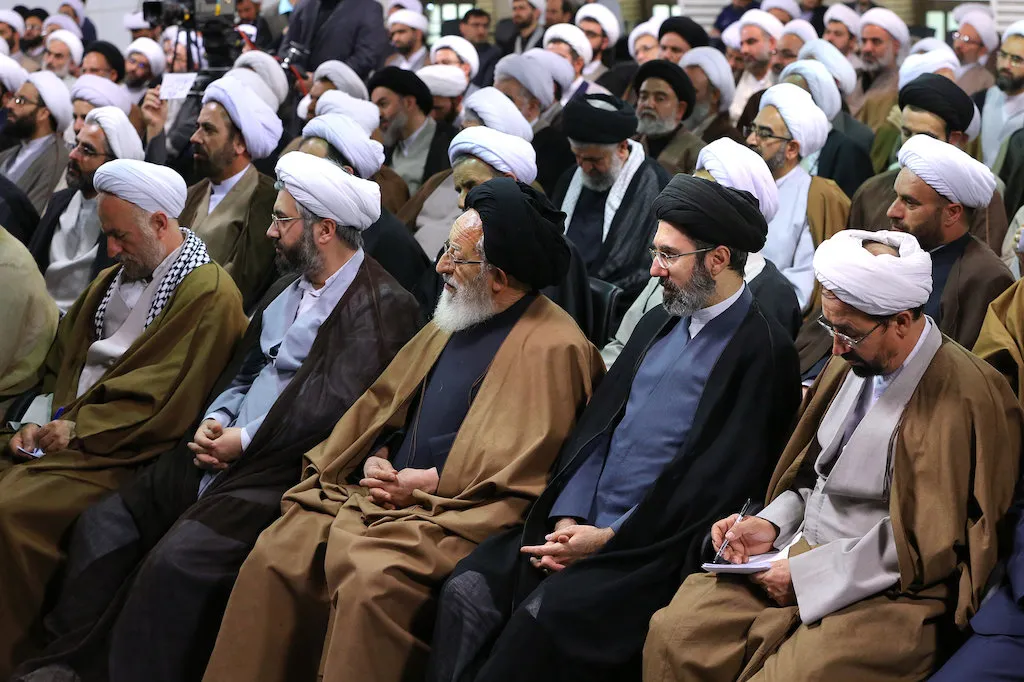
Historical religious-institution context from a 2016 meeting; not the March 2026 appointment.
How should readers assess a political statement?
Start with the actual text or an attributable report of it. Identify who issued it, its date and the audience addressed. A direct statement, a paraphrase and an unnamed official’s description should not be presented as interchangeable. If you have only a translation, record that fact rather than implying you examined the original wording.
Next, distinguish intention from action. A warning about what could happen is not proof that the described action has occurred. A proposal is not an implemented policy. A public announcement may be important, but its practical consequences need additional evidence. This distinction helps prevent a dramatic conditional sentence from becoming a false report of a completed event.
For practice, write three original sentences: “The committee may meet,” “The committee will meet” and “The committee met.” Explain how the level of certainty and the time reference change. Then add an attribution to each. Small grammatical differences can carry substantial factual differences in political coverage.
Why do translations and names require care?
Names can appear in several Roman-alphabet spellings, and political titles can be translated differently. A spelling difference alone does not prove that two articles concern different people. Compare the original-language name when available, the office and the context. Avoid treating an unfamiliar spelling as evidence of deception without checking those details.
Translation can also change the apparent strength of a statement. An English summary may compress a longer passage and leave out conditions. If the exact wording is central to an argument, consult a reliable full translation and identify its source. Do not manufacture quotation marks around your own simplified version of what a speaker meant.
Make a glossary containing the term, the translation used by your source and a plain-English explanation. Keep the explanation separate from the quotation. This is especially useful in a classroom where learners know different languages. The goal is shared understanding, not pretending that one short translation captures every legal, religious or historical nuance.
What can a photograph establish?
A photograph can support a limited observation about what is visible in that image. It cannot automatically establish current location, health, authority or a private relationship. Before using one as evidence, inspect the caption, creator, date and original publication. A recent upload can still be an old photograph.
Ask whether the image is a portrait, an archive scene or a photograph of a specific event. Those categories should remain visible in the caption. An institutional building can illustrate a civics lesson, but it is not evidence that the person discussed visited that building on the day the article appeared.
For a safe exercise, take your own photograph of a public clock. Write one statement it supports and two it does not. It might show the displayed time when photographed; without additional context it does not prove the date or that the clock was accurate. Apply the same discipline to political imagery.
Separate a profile from a prediction
A profile explains a person’s documented background and public role. A prediction estimates what may happen next. Combining them carelessly can make a speculative scenario look like a biographical fact. A reader should know when an article moves from what is established to what an analyst thinks is possible.
Suppose a fictional official has previously supported a policy. That history may inform a forecast, but it does not guarantee the next decision. New circumstances, institutional constraints or negotiations may matter. A responsible prediction states its assumptions and possible alternatives. It should not gain certainty merely because the profile contains several accurate historical details.
Try writing a three-sentence briefing: one verified event, one relevant institutional fact and one clearly labelled unanswered question. This produces a more useful learning record than a confident prediction without evidence. It also makes later updates straightforward because you can see which question has actually been answered.
A source-comparison activity for learners
Choose a constitutional source, a dated news report and an opinion article about the same broad subject. Do not rank them only by how strongly you agree with their conclusions. Instead, ask what each source is equipped to establish. A legal text describes rules; reporting investigates events; commentary offers interpretation.
Create a worksheet with claim, evidence, source type and remaining uncertainty. Include one claim that all three sources discuss differently. Decide whether the difference concerns fact, emphasis or interpretation. Sometimes two accounts can be compatible even when their headlines sound very different. Sometimes they genuinely conflict and require further checking.
Finish by writing an original summary that preserves those distinctions. Use attribution where necessary and avoid copying paragraphs. If you build a digital version in our programming courses, use public example records and include a field for corrections. Do not collect private information about individuals as part of a classroom political profile.
Questions worth asking before sharing
Have you identified which Khamenei an article concerns? Is the event date visible? Does a statement come from the person, an office, a journalist or an anonymous source? Does an image belong to the event described? Answering these questions is more valuable than forwarding an attention-grabbing screenshot without context.
Also inspect what is missing. An article may accurately report an appointment while saying little about the selection discussions. Another may analyse influence without providing a full institutional diagram. Recognising those limits does not require rejecting the entire source. It means using each source for the questions it can reasonably answer.
Political literacy grows through precise distinctions: person and office, rule and practice, statement and action, event and publication. A profile of Mojtaba Khamenei becomes more useful when it helps readers make those distinctions themselves. Keep your notes dated, your claims attributable and your unanswered questions visible rather than filling every gap with speculation.
Sources
- House of Commons Library: Iran introductory country profile, 20 March 2026, for the appointment date and institutional background.
- Reuters report on the leadership appointment, 8 March 2026, for contemporary attribution of the Assembly of Experts announcement.
- Constitutional text hosted by UNESCO, especially Article 107. The fictional organisations, worksheets and examples above are original learning exercises, not reports of private political events.
Image credits: cover: یوسف قاسمی, source, CC BY 4.0. Resized and converted to WebP. inline: english.khamenei.ir, source, CC BY 4.0. Resized and converted to WebP.
Found an error or an outdated detail? Report a correction with the article URL and original source.