
Mr Patlu Wedding Incident: Sialkot Reports, Bail Update and Safety Questions
Read the dated Mr Patlu Sialkot incident reports, conflicting arrest claims, later protective-bail coverage and the public-safety questions to answer.

The Mr Patlu wedding incident refers to a fatal crowd crush at a public pre-wedding gathering in Sialkot on 31 October 2026. Reports identify the TikToker as Muhammad Ansar Jatt, also known as Ansar Mahmood. Later reporting describes two deaths. On 3 November, court coverage reported protective bail until 10 November. That temporary procedural relief is not an acquittal or a finding about responsibility.
This is a developing human-interest and public-safety story, not a reference to the cartoon Motu Patlu. The people who died and those injured should remain central to the coverage. The account below separates reported developments, the organiser's response and wider event-safety questions, with clear limits where the available reports conflict or no primary court order has been inspected.
What happened at the Sialkot gathering?
The gathering was connected with wedding celebrations at Faraz Cricket Ground, also described in reports as Faraz Sports Stadium, on Daska Road. A prize draw had been promoted to followers. Reports describe a very large crowd arriving and a dangerous rush around access to the venue.
Those details explain why the event drew attention, but they do not establish a complete reconstruction of crowd movement. Determining which gates opened, who gave instructions and how people were directed requires evidence from the investigation, not a confident explanation based on one short video.
This guide uses crowd crush alongside the commonly reported term stampede. The wording should not imply that injured attendees were simply irrational or that a crowd's behaviour absolves everyone responsible for planning a gathering. The arrangement of access, space, communication and supervision is also part of the public-safety question.
The developments that can be dated
| Date | Reported development |
|---|---|
| 31 October | The wedding-related public gathering and fatal incident |
| 1 November | Initial reports and rescue information circulated |
| 2 November | Further case coverage and the organiser's video response |
| 3 November | Conflicting arrest reports and later protective-bail coverage |
The dates distinguish the incident from the evolving investigation. A report published on Tuesday can describe something that happened on Saturday. Likewise, a headline written before a court appearance may no longer describe the latest procedural position later that day.
Several reports use different spellings, including Patlu, Patlo and Pattlo. The shared identity and Sialkot event connect them. Spelling differences alone should not be turned into separate suspects or separate incidents, and a cartoon search result should not be used as background material for this case.
Casualty figures changed across reports
Later reporting describes two people dying after the gathering. Earlier and later stories differ on the number of injuries, with figures including seventeen and eighteen. ARY's Assembly report also retained a lower death figure than the later two-death accounts.
The appropriate response is to preserve the reporting date and acknowledge the difference. A developing casualty count can change as hospitals and authorities update information. Adding every number encountered across several reports would count some people more than once, while choosing the largest unsupported figure would exaggerate the evidence.
No independently audited final casualty register is presented here. The account records the later reported two-death figure and does not invent a definitive total of people treated, admitted, discharged or still in critical condition. Personal medical information about the injured is outside the purpose of this explainer.
What the reports say about the police case
News coverage says a case was registered at Motra Police Station and that several people connected with event management were arrested. Reports also describe the seizure of motorcycles and a vehicle associated with the advertised prize draw.
These are reported investigative developments. Registration of a case is not a final judicial finding, and the arrest of one person does not establish the guilt of every other person named in coverage. The role of a venue owner, a security worker, an organiser and a public official must be examined separately through the relevant evidence.
The exact number of people detained also varies across the retrieved reports. Rather than present an unstable figure as a settled current total, this page records that multiple arrests were reported and directs readers to dated developments. It does not publish a list of private addresses or encourage readers to locate anyone connected with the case.
Has Mr Patlu been arrested or granted bail?
Arrest headlines circulated on 3 November, while another report quoted Punjab Information Minister Azma Bokhari as unable to confirm his arrest. Later court coverage said the Islamabad High Court granted protective bail until 10 November so he could approach the relevant court.
That sequence is why this guide does not simply repeat the morning arrest headline as an uncontested final status. The later report describes a court appearance and temporary protection. The actual order, its conditions and any subsequent proceedings remain matters for the court record.
Protective bail should not be described as the case being dismissed or the organiser being cleared. This is a report of the published procedural development, not personal legal advice. No promise is made about what a court will decide after the stated period or what a later investigation will establish.
The organiser's response is part of the account
In his published video response, Mr Patlu denied responsibility and said he was not at the venue when the incident happened. Reporting of that statement also describes his claim that he was dealing with a back injury and receiving medical attention.
Those are his reported assertions. They should be included fairly without being converted into independently verified findings. Whether an individual was present at a particular moment, what instructions were given and who exercised control are questions that require evidence beyond the existence of a video denial.
The response also referred to permission for the event. Reports describe disagreement over the scope and continuing validity of that permission. A responsible account preserves both the administration-related reporting and the organiser's position instead of using one to erase the other before the matter has been resolved.
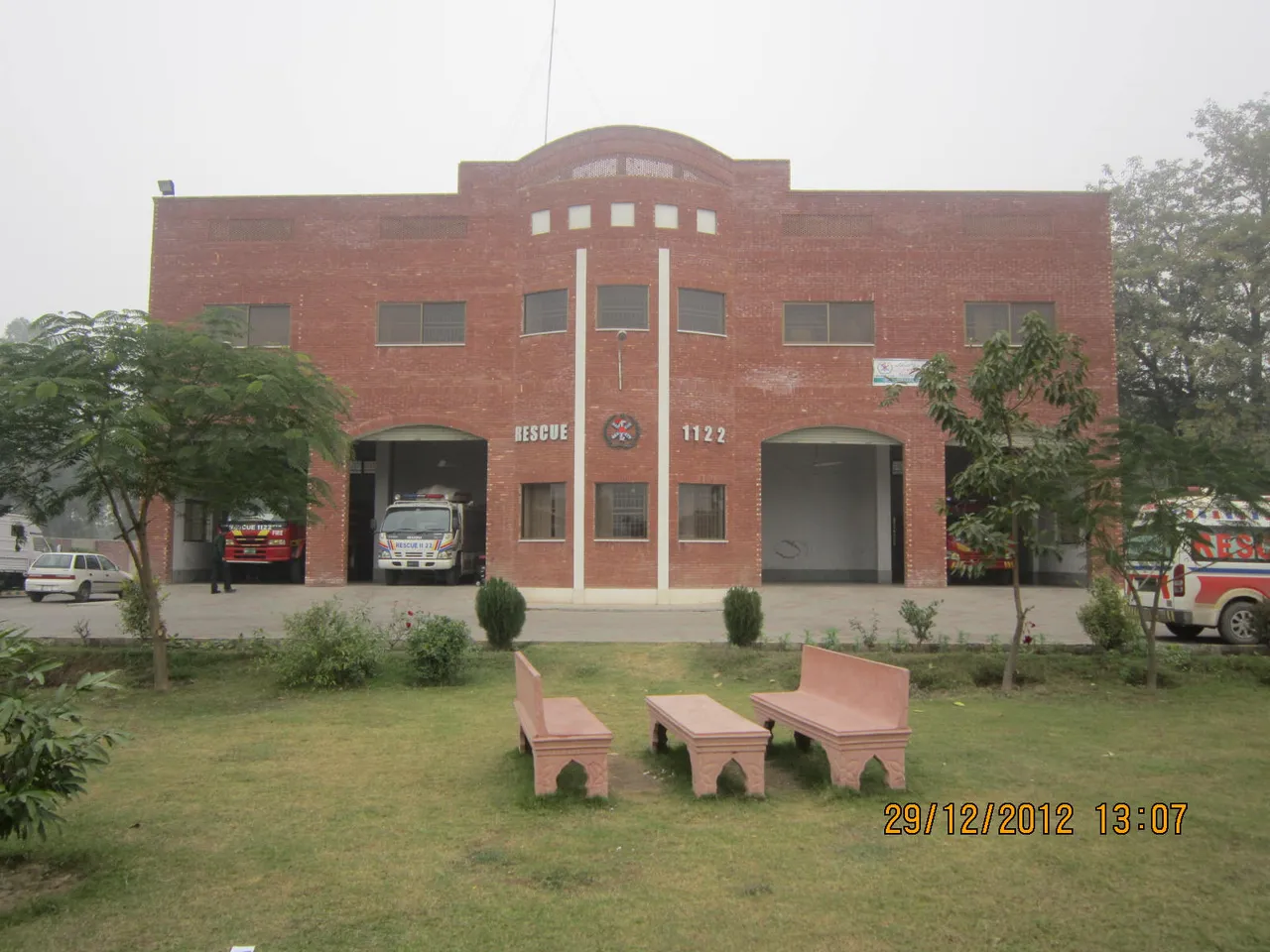
Historical Rescue 1122 illustration from Okara, not a photograph of the Sialkot operation or its casualties.
Permission and practical safety are separate issues
An approval document can have conditions concerning time, activity, venue and responsibility. The existence of a document therefore does not answer every question about how a gathering was run. Conversely, an allegation that conditions were breached still needs to be evaluated against the actual record.
For the reader, the useful questions are specific: what activity was permitted, what attendance was expected, who was managing entry and what arrangements existed if more people arrived? These are questions for the investigation and responsible authorities. This article does not announce answers that have not been established.
The same distinction is valuable for future public events. Paperwork and on-site management perform different functions. A plan needs to work under the conditions that actually develop, including changes in attendance. Calling an event private in an announcement does not itself control the number of people drawn by a widely shared invitation.
The Assembly discussion is not a verdict
ARY reported that the incident reached the Punjab Assembly through a calling-attention notice submitted by opposition MPA Nadeem Qureshi. The reported questions concerned permission, security arrangements, operating procedures and arrests.
A parliamentary question can seek accountability and public explanation. It does not replace the police investigation or determine criminal responsibility. Keeping those functions distinct helps a reader understand why the same incident can appear in court reporting, political reporting and public-safety coverage on the same day.
The substance of the questions matters more than turning the tragedy into a contest between personalities. Families need reliable information, and the public needs to understand whether preventable hazards existed. A demand for answers is useful when it identifies what needs to be established, not when it pretends that the answer has already been proven.
What crowd-safety guidance asks organisers to consider
The UK Health and Safety Executive's public event guidance treats arrival, entry, movement within a venue, exit and dispersal as connected parts of crowd management. It also calls attention to the needs of young people and people with disabilities. These are general planning principles, not a statement of Pakistani law or a retrospective finding about this venue.
Applied as questions rather than accusations, that framework is useful. Could arriving people understand where to go? Was entry coordinated with the space available inside? Could staff communicate a change? Could emergency responders reach somebody who needed help without passing through another unmanaged queue?
These questions do not require an online commentator to calculate a safe capacity from a photograph. Venue capacity and crowd controls need competent assessment of the actual site and event. A large open area does not, on its own, establish that the approaches, gates and internal routes can handle every possible arrival pattern safely.
Publicity should match the event's real capacity
Online promotion can reach far beyond the audience an organiser originally imagined. A prize announcement creates a particular reason for people to arrive and remain nearby. The planning question is whether the promotion and the practical arrangements describe the same scale of event.
That observation is broader than this case and does not establish a particular person's liability. It is a reason for organisers to coordinate communications, expected attendance and professional safety planning before inviting a large audience. A post that spreads quickly cannot be managed merely by assuming that only a small fraction of viewers will attend.
Clear updates matter if arrangements change. An event cancellation, a revised entry policy or a change in timing should reach the same audience that received the invitation. Contradictory messages can leave people travelling towards a venue under assumptions that no longer match the arrangements on the ground.
What attendees can check before travelling
Look for a current announcement from the organiser and, where relevant, the responsible local authority. Check the venue, timing and entry arrangements rather than relying on a forwarded prize poster alone. If reports say an event has been cancelled, do not treat an older invitation as fresh confirmation that it is continuing.
At a gathering, follow directions from identifiable event staff and emergency services. This article is not an emergency-response manual or a substitute for trained assistance. If an emergency occurs in Punjab, Rescue 1122's official site identifies 1122 as its emergency number.
Do not obstruct responders to film a dramatic scene. There is a difference between preserving evidence safely and gathering around an injured person for a close-up. Public interest in what happened can be served by accurate reporting without exposing people at their most vulnerable or interfering with care.
Sharing updates without spreading another rumour
Before forwarding an arrest or casualty claim, compare the timestamp with later reporting. A newer upload is not always newer information: accounts can repost a morning headline after an evening court development without changing its wording.
Keep the source attached when describing an allegation. Saying that a report attributes a claim to police, the administration or the organiser helps the reader understand who is making it. Removing the attribution can make a contested statement appear to be a finding accepted by everyone.
Avoid private family speculation and unverified donation appeals. This guide does not reproduce distressing footage, private contact details or claims about relatives unrelated to the incident. The aim is to understand the public event and its consequences, not turn bereavement or an ongoing case into entertainment.
Questions about the Mr Patlu wedding incident
Is this the cartoon character?
No. The reports concern a Pakistani online creator identified as Muhammad Ansar Jatt, also known as Mr Patlu or Mr Patlo, and a wedding-related gathering in Sialkot. Motu Patlu is unrelated. Cartoon images and fictional character biographies do not explain the human incident discussed here.
Does protective bail mean the case is over?
The checked later reporting describes temporary protection until 10 November, not dismissal of the case or an acquittal. This page has not independently inspected the court order and does not give legal advice. Subsequent status should be checked through the appropriate court record and dated reporting.
Why do different articles show different figures?
The story developed over several days, and retrieved reports disagree on some casualty and arrest counts. This guide states the later reported two-death figure while identifying unresolved differences. It does not add incompatible totals together or present an unverified final register of injured people.
Other public-interest explainers are available in the article library. Our class resources remain a separate route for academic study.
Sources
- Gulf Today incident report, 1 November, for the event identity and reported deaths.
- Daily Times dated case report, for the earlier investigative position, not an eternal claim that no later court appearance occurred.
- Minute Mirror on the minister's inability to confirm the arrest, documenting the uncertainty around circulating arrest claims.
- Later protective-bail report, attributed court coverage rather than an independently inspected order.
- Coverage of the organiser's response, for his stated denial and explanation, not verification of those assertions.
- ARY: Punjab Assembly discussion, for the notice and accountability questions. Its lower death figure is not silently combined with later reports.
- HSE crowd-management guidance and risk-assessment guidance, general safety context rather than Pakistani legal requirements or findings about the case.
- Rescue 1122 official site, for the Punjab emergency number and official service information.
Image credits: cover: Sheryking, source, CC BY-SA 4.0. Resized and converted to WebP. inline: khadim-un-nabi Rao, source, CC BY-SA 3.0. Resized and converted to WebP.
Found an error or an outdated detail? Report a correction with the article URL and original source.