
Native American Heritage Month: History and Learning Guide
Explore Native American Heritage Month with clear explanations, worked examples, source checks and practical questions for independent student learning.

Native American Heritage Month is observed in November in the United States to recognise Native peoples’ histories, cultures and contributions. A useful introduction should also recognise that Native nations and communities are part of contemporary life. They are not one interchangeable culture, and learning about them should not begin and end with an unlabelled historical photograph.
This guide was reviewed on 2 November 2026. It offers a respectful starting point for students, including learners in Pakistan who may be unfamiliar with the terminology. It uses public educational resources and original research activities rather than inventing a single story that claims to represent all Indigenous peoples of the Americas.
What is the purpose of Native American Heritage Month?
The observance creates an opportunity to learn about Native histories, cultures and contributions. The US National Archives records that President George H. W. Bush approved a joint resolution designating November 1990 as National American Indian Heritage Month. That is a specific point in the history of federal recognition, not a claim that Native history began in 1990.
The month can help schools and institutions focus attention, but the subjects remain relevant throughout the year. A calendar observance does not limit when a community’s history, language or contemporary work matters. A useful classroom plan should connect the month to ongoing learning rather than treating it as an isolated decorative theme.
For an original exercise, ask students to write two questions: one about the observance’s history and one about a contemporary Native author, institution or project. The questions require different sources. This makes the distinction between the calendar event and the people it recognises visible from the beginning.
Why should a guide avoid describing one universal Native culture?
The Smithsonian’s Native Knowledge 360° framework emphasises the diversity, complexity and continuing presence of Native peoples. A broad category can be useful for an introduction, but it should not erase the differences among nations, languages, places and experiences. A fact about one community is not automatically a fact about every other community.
Consider a comparison familiar to many readers in Pakistan: a description of one region’s language or clothing would not represent every community in the country. The analogy does not make the histories identical. It simply helps explain why a broad label needs more precise names when the discussion becomes specific.
In a research notebook, include the particular nation or community named by the source. Avoid replacing it with a generic label because the specific name is unfamiliar. Learning to use the name accurately is part of the educational task, not an optional detail to remove for convenience.
Which terms should students use?
Terms such as Native American, American Indian, Alaska Native and Indigenous can appear in different institutional and community contexts. Do not assume one short rule settles every preferred usage. Where possible, use the specific name a nation or person uses and follow the context of the source you are discussing.
If an official historical document uses older terminology, identify it as the document’s wording rather than silently treating it as the only appropriate language today. Quoting a source and choosing your own descriptive terms are different acts. Both can be handled clearly without erasing the original record.
Create a glossary with term, source context and a plain-English note. Leave room for correction. The goal is not to memorise a list of labels while ignoring the people involved. It is to communicate respectfully and recognise that names carry historical, legal and personal meaning.
Why does contemporary life belong in the lesson?
A course that shows only historical scenes can leave students with the mistaken impression that Native communities belong exclusively to the past. The Smithsonian framework explicitly treats Native peoples as participants in contemporary political, economic and cultural life. A good learning plan should therefore include current voices as well as historical records.
For a student project, choose a publicly available contemporary interview, artwork description, language resource or institutional announcement. Identify the creator, community context and date. Do not assume that one example represents everyone. Its value lies in understanding a particular contribution on its own terms.
Then compare the contemporary source with a historical document about the same broad subject, such as education or land. Ask what changed in the type of record and whose perspective is visible. This is more informative than a collage that combines unrelated objects from different periods without explaining their origins.
What does sovereignty mean in this context?
Native Knowledge 360° discusses American Indian tribes as sovereign nations with contemporary political relationships. The important introductory point is that these are not merely cultural clubs or costume categories. Their governmental and legal status needs to be understood through the relevant nation, jurisdiction and official sources.
This guide does not offer a complete legal account of every Native nation or a rule for an individual’s citizenship or rights. Those are specific questions requiring appropriate records. A general classroom lesson should recognise the political dimension without pretending that a brief definition resolves every historical agreement or current dispute.
For an original worksheet, separate a cultural activity, a government institution and an individual person. Ask why the categories should not be merged. This helps students recognise that culture, citizenship and political authority can be related while still referring to different things.
How can a map help without oversimplifying?
A map can orient learners, but it needs a title, date, source and explanation of what its boundaries mean. A historical homeland map, a current jurisdiction map and a modern population map are different representations. They should not be substituted for one another merely because they show the same general region.
For a classroom activity, draw three fictional maps of an imaginary place: language distribution, administrative boundaries and travel routes. Compare them. The exercise demonstrates why a map’s purpose matters without inventing boundaries for a real Native nation or claiming that a simplified diagram settles a territorial question.
When using a real educational map, read its notes and seek the relevant community context. Do not treat the absence of a name from one map as proof that the community did not exist. A map is a selected representation made for a purpose, not a complete record of every relationship to a place.
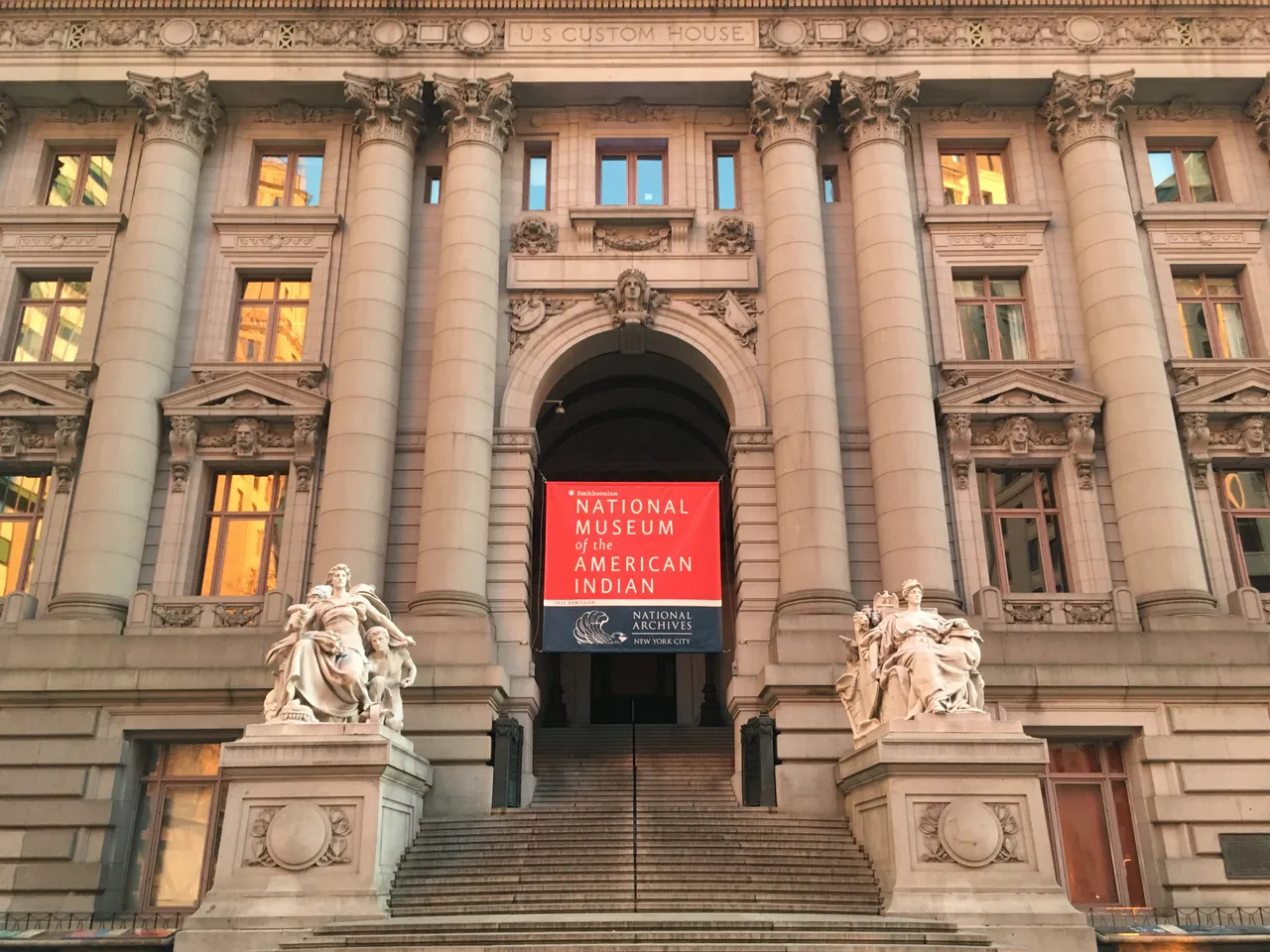
National Museum of the American Indian, New York 11. Historical or contextual illustration; not a photograph of the current event or product being reported.
What makes a primary source useful?
A primary source can provide direct evidence from a particular time, person or institution, but it still needs interpretation. An official record may reflect the priorities and language of the office that produced it. A personal account offers a particular perspective. Neither becomes a universal explanation simply because it is old or original.
Start with creator, date, intended audience and purpose. Ask what the document can establish and what it leaves out. If it describes a policy, distinguish the policy’s wording from evidence about how people experienced it. A written instruction is not automatically proof that its stated outcome occurred.
The National Archives and the interagency heritage-month resource page offer starting points for locating material. Use the actual record and its contextual notes rather than copying a short search snippet. A research project becomes stronger when another reader can trace a claim to the document that supports it.
Why should Native voices be included directly?
Learning only through outsiders’ descriptions can narrow the picture. The Smithsonian framework encourages understanding Native perspectives on history and contemporary life. This does not mean that one speaker represents every nation. It means that the people being discussed should not disappear from the account of their own experiences and work.
Choose a public, attributable source rather than inventing a first-person narrative in a Native person’s voice. If a lesson uses a quotation, keep it short, accurate and properly linked. Do not create an imagined traditional story and label it authentic because it sounds plausible to an unfamiliar audience.
For an original writing exercise, ask students to summarise what a named public source says, then label their own reflection separately. This keeps evidence and response distinct. It also discourages the common mistake of presenting a learner’s interpretation as though it were the community’s own statement.
What should students know about stories and cultural material?
Public visibility does not automatically mean unrestricted permission to reproduce, adapt or perform material. A museum image, story or recording can have rights and contextual conditions. Read the source’s usage information and respect any stated limits. A classroom’s good intentions do not remove the need to check how material may be used.
Avoid generic dress-up activities that reduce many distinct cultures to a single costume. A stronger task can involve reading an attributed text, examining a documented object or learning how a contemporary creator explains their work. The educational value comes from context and understanding, not from imitation detached from meaning.
If a project uses an image, record the creator, subject, date, licence and cultural context supplied by the source. Do not relabel an object from one nation as representative of all Native peoples. A precise caption is a small but important part of respectful research.
How can a comparison with Pakistan be useful?
Comparison can help a learner ask questions about language diversity, historical records and representation, but it should not claim that different peoples’ histories are identical. Begin with a specific question rather than a sweeping analogy. Ask what the comparison helps explain and where it stops being useful.
For example, students can compare how two educational resources identify a language and its speakers. Examine naming, source attribution and whether contemporary use is visible. This is a comparison of presentation methods, not a claim that the communities share the same political or historical circumstances.
Write the limits of the comparison in one sentence. This teaches intellectual care: a useful analogy does not need to explain everything. Recognising a difference can be as important as noticing a similarity, especially when a topic involves people whose experiences are often simplified by distant audiences.
Build a small source-based learning project
Choose one manageable subject, such as a public museum exhibit or a contemporary author’s interview. Create a record with the specific nation or community context, creator, date, source link and a short original summary. Keep the scope narrow enough that each field can be checked.
Learners can make a digital notebook through our programming courses. Use public educational material and avoid collecting private personal data. Include a correction field and a note about permitted reuse. The project should help organise learning, not create an unofficial database claiming authority over identity or citizenship.
Test whether the interface preserves the specific names and dates when records are edited. A generic category should not overwrite the community field. This is a meaningful design choice because it protects the very distinctions the lesson is trying to teach.
What should a November learning plan include?
A balanced plan can combine the observance’s history, a specific historical source, a contemporary Native voice and a reflection on source interpretation. It does not need to cover every nation in a few sessions. A smaller, well-contextualised study is more useful than a large collection of disconnected facts.
Ask students to identify one misconception their work corrected and one question that remains. The unanswered question can guide later learning beyond November. This avoids treating the month as a box to tick after a single display or an activity whose decorative appearance matters more than its content.
Native American Heritage Month is an opportunity to learn with greater precision and respect. Use specific names, dated sources and contemporary perspectives. Keep the diversity of Native peoples visible, and let a classroom project demonstrate careful understanding rather than pretending that one article can speak for everyone.
Sources
- US National Archives: Native American Heritage Month, for the observance and the November 1990 designation.
- Smithsonian Native Knowledge 360°: Essential Understandings, for the educational framework on diversity, contemporary life and Native perspectives.
- Native American Heritage Month interagency resources, for public educational starting points. The fictional maps, research worksheets and digital-notebook activities above are original classroom exercises, not representations of a particular nation’s traditions or legal status.
Image credits: cover: Carol M. Highsmith, source, Public domain. Resized and converted to WebP. inline: Geraldshields11, source, CC BY-SA 4.0. Resized and converted to WebP.
Found an error or an outdated detail? Report a correction with the article URL and original source.