
NCCIA 154 Arrests in Call Centre Raids
The NCCIA arrested 154 people in Islamabad and Rawalpindi call-centre raids linked to loan apps. See the charges, recovered devices and safety steps.
Pakistan's National Cyber Crime Investigation Agency arrested 154 people, including 53 women, in raids on illegal call centres in Islamabad and Rawalpindi on 14 November 2026. The agency also arrested 37 suspects in separate harassment cases and recovered phones, laptops, SIMs and computers used in the operations.
NCCIA call centre raids: what happened
The National Cyber Crime Investigation Agency, known as the NCCIA, conducted a series of raids on call centres operating from residential and commercial premises in Islamabad and Rawalpindi. Dawn reported the arrests on 14 November 2026, describing them as part of a wider crackdown on digital lending apps and online harassment.
The Islamabad raids covered Karachi Company, Aabpara, G-9 Markaz, Khanna Pul and Bhara Kahu. The Rawalpindi raids covered the PWD area, Ghauri Town and Peshawar Road. In total, 154 suspects were taken into custody, including 53 women.
The agency recovered 81 mobile phones, 10 laptops, 48 SIM cards, three computers and one Wi-Fi device. Those items are the working tools of the operations: phones to make calls and send messages, SIMs to create accounts, laptops to manage records, and Wi-Fi devices to keep the operation online.
An FIR was registered on 13 November 2026 at the Cyber Crime Wing police station. Two local facilitators were named in the case, one of them a woman. The FIR is the formal start of the criminal process, and the suspects will face investigation and possible prosecution.
The agency linked the operations to illegal digital lending apps. Dawn named three apps in the case: Rupee Free, Vcash and Wecash. The teams were accused of soliciting customers, harvesting their contact data, and using that data to threaten and blackmail them. In some cases, they allegedly used morphed photographs to pressure victims.
How the alleged operations worked
The pattern described by the NCCIA and reported by Dawn is familiar from digital lending fraud cases in several countries. It usually runs in stages.
First, a borrower downloads a loan app, often after seeing an advertisement on social media. The app offers a small, short-term loan with an attractive repayment term. To sign up, the borrower grants access to contacts, photos and phone data. That permission is the key to the scheme.
Second, the loan is disbursed, sometimes less than the amount advertised because of fees deducted upfront. The repayment period is short, and the charges can be high. When the borrower cannot repay on time, the operation begins to apply pressure.
Third, the app and its call centre use the harvested contacts to threaten the borrower. Family members, friends and colleagues are contacted with messages designed to shame or frighten the borrower. In more serious cases, the operation uses edited images and threatens to distribute them.
Fourth, the pressure escalates. Borrowers are sometimes pushed to take another loan from another app to repay the first, creating a cycle of debt and dependence. The operators profit from fees and charges, while the borrower is trapped.
The NCCIA's description fits this pattern. The agency said the suspects used mobile SIMs, WhatsApp and social media to harass citizens, and that the teams were involved in loan app operations. The 48 SIMs and 81 phones recovered in the raids are consistent with an operation that depends on many numbers and accounts.
Why the raids matter
The case is significant for three reasons.
First, the scale. More than 150 arrests in a single operation is a large enforcement action. It suggests that the call-centre model is not a small, scattered crime but an organised business that can be run from residential premises in major cities.
Second, the gender breakdown. The fact that 53 of the 154 arrested were women reflects how these operations are staffed. Call centres employ large numbers of staff, and both men and women may be recruited for roles that appear to be ordinary customer service jobs. That does not reduce individual responsibility, but it complicates the public picture of who is involved.
Third, the link to harassment. The agency arrested 37 suspects in harassment cases alongside the call-centre raids. That connection is important because harassment is often a tool of the loan-app model, not a separate crime. The same data that powers a loan app can be used to intimidate a borrower, and the same call centre can do both.

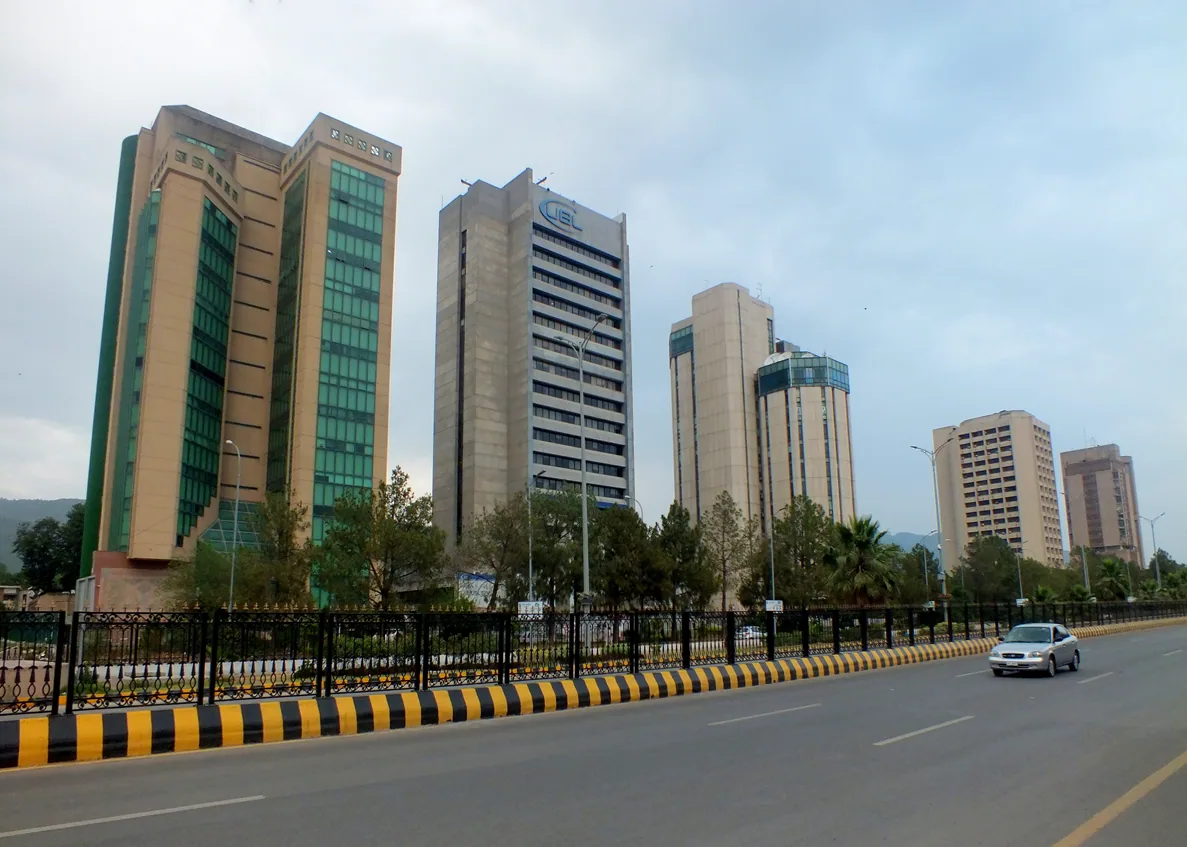
Archive photograph of the Islamabad skyline. It is illustrative and does not show any raided call centre.
The wider crackdown
The NCCIA said the raids were part of a broader effort that began months earlier. Since 5 August 2026, the agency reported 1,749 arrests, 442 cases and 149.8 million rupees recovered in connection with digital lending app fraud and related offences.
The agency also said it had blocked accounts linked to illegal lending apps and taken down social media pages and advertisements used to promote them. That is a significant part of the response, because the apps depend on advertising to find new borrowers. Removing the ads makes it harder for the operations to recruit victims.
The crackdown has not eliminated the problem. Illegal lending apps can be relaunched under new names, and call centres can move to new premises. Enforcement actions like the 14 November raids are necessary, but they are not sufficient on their own.
What the law says
Several laws apply to the conduct described in the case. The Prevention of Electronic Crimes Act 2016, known as PECA, covers unauthorised access to data, interference with information systems, and the use of electronic means to harass or intimidate. The NCCIA was established to investigate cybercrime under that framework.
The State Bank of Pakistan regulates digital lending. Lending apps must be licensed or operate through regulated institutions, and the State Bank has warned the public about unauthorised apps. Borrowing from an unlicensed app is risky not only because of the terms but because of the data practices that often come with it.
Harassment and blackmail are covered by the Pakistan Penal Code as well as PECA. The use of morphed images and threats to distribute private material can attract serious charges. The NCCIA's decision to register a single FIR covering the call centres and the harassment cases suggests that investigators see the conduct as connected.
How to check a lending app
The most important step is to verify the app before downloading it.
Check whether the app is offered by a licensed financial institution or a regulated entity. The State Bank of Pakistan publishes information about licensed digital lending providers. If the app is not listed, treat it with suspicion.
Read the permissions request carefully. A loan app that asks for access to contacts, photos, files and location is collecting far more data than it needs to assess a loan. That data can be used against the borrower. A legitimate lender does not need the borrower's entire contact list.
Look for the company behind the app. A real lender has a registered name, an address and a customer service channel. An app with no company information, no physical address and no way to contact a human is a warning sign.
Check the terms before accepting a loan. The repayment period, the fees and the consequences of late payment should be clear. If the terms are hidden or the fees are deducted upfront without explanation, do not proceed.
Finally, do not allow the app to access your photos or contacts. On Android and iOS, permissions can be managed in the phone settings. Denying unnecessary permissions is a basic protection.
What to do if you are targeted
If you have borrowed from an unauthorised app and are being threatened, do not pay to stop the harassment. Paying often encourages more demands, and it does not remove the data the operator already holds.
Record the evidence. Save screenshots of messages, call logs, the app's details and any payment records. Note the numbers and accounts used. This evidence is essential for a complaint.
Report the matter to the NCCIA. The agency has a complaint portal and a helpline. Complaints can also be filed at the Cyber Crime Wing police station. The earlier a complaint is filed, the sooner the accounts and numbers can be investigated.
Tell someone you trust. Harassment is designed to isolate the victim, and the threat of exposure is often more effective when the victim feels alone. Sharing the problem with family or a friend reduces the leverage the operator has.
Consider legal advice. A lawyer can explain the options under PECA and the Pakistan Penal Code, including complaints to the relevant authorities and civil remedies where appropriate.
Why call centres keep coming back
The economics of the model explain why it persists. A call centre needs phones, SIMs, a few computers and staff. It can operate from a rented house or a small office. The cost of entry is low, and the potential return from fees and charges is high.
The model also depends on distance. The operator may be in one city, the app may be hosted in another country, and the money may move through accounts that are hard to trace. That makes investigation slow and prosecution difficult.
Enforcement can disrupt a specific operation, as the 14 November raids did. But it cannot remove the underlying incentives unless the public stops using unlicensed apps and the advertising channels stop promoting them. That is why public awareness is as important as arrests.
The recruitment side
The arrests also raise a question about recruitment. Call centres need staff, and many of the people answering calls or sending messages may have applied for what looked like an ordinary customer service job. The work can be presented as sales, support or collections, with a salary and a desk.
That does not excuse participation in blackmail or harassment. It does explain why large numbers of people can be found in a single operation. Investigators will need to distinguish between organisers, supervisors and staff, and between employees who knew what was happening and those who did not.
For job seekers, the case is a warning. A call centre that asks staff to use personal SIMs, to pressure borrowers through their contacts, or to send threatening messages is not a normal employer. Leaving such a job and reporting it is safer than staying.
Protecting the people in your contact list
The victims of these schemes are not only the borrowers. They include the borrower's family, friends and colleagues, whose numbers were harvested without their consent.
There is no way for a contact to prevent their number from being collected by someone else's app. But there are practical steps after a leak. If you receive threatening messages about someone you know, do not engage with the sender. Save the messages, block the number and tell the person who borrowed. A coordinated response is harder to intimidate than an isolated one.
Reporting the messages to the NCCIA helps investigators link cases. A single complaint may look minor, but a pattern of complaints can identify an operation and its numbers.
Questions readers are asking
How many people were arrested?
The NCCIA arrested 154 people in the call-centre raids, including 53 women. It also arrested 37 suspects in separate harassment cases.
Where were the raids conducted?
In Islamabad, the raids covered Karachi Company, Aabpara, G-9 Markaz, Khanna Pul and Bhara Kahu. In Rawalpindi, they covered the PWD area, Ghauri Town and Peshawar Road.
Which loan apps were named?
Dawn named Rupee Free, Vcash and Wecash in its report on the case. The NCCIA described the operations as part of a wider crackdown on illegal digital lending apps.
What was recovered?
The agency recovered 81 mobile phones, 10 laptops, 48 SIM cards, three computers and one Wi-Fi device.
Is this connected to online harassment?
Yes. The agency arrested 37 suspects in harassment cases at the same time, and the loan-app operations are accused of using contact data and morphed images to threaten borrowers.
How do I report a loan app?
Complaints can be filed with the NCCIA through its complaint portal or helpline, or at the Cyber Crime Wing police station. Keep screenshots, call logs and payment records before filing.
Can I get my money back?
Recovery depends on the investigation and the evidence. The NCCIA reported recovering 149.8 million rupees across its wider crackdown since August 2026. Individual outcomes vary, and victims should seek legal advice about their own case.
What to watch next
The immediate next step is the investigation of the FIR registered on 13 November. The suspects will be questioned, the devices will be examined, and the agency will try to identify the people running the operation rather than only the staff answering calls.
The wider question is whether the crackdown changes behaviour. The NCCIA's numbers show a large enforcement effort, but the test is whether unauthorised apps stop finding borrowers. That depends on advertising controls, app store moderation and public awareness.
For readers, the practical lesson is simple. A loan app that asks for your contacts and photos is not a normal lender. Verify the provider, read the permissions and report anything that looks like blackmail.
Sources
- Dawn, 154 held as crackdown on illegal call centres intensifies, 14 November 2026
- Dawn, 37 more arrested for harassing citizens, 14 November 2026
Sources checked on 15 November 2026. The arrest figures, locations and recovered items were checked against Dawn's report. Background on PECA and digital lending regulation was checked against public reference material. Image credits: cover photograph of Blue Area, Islamabad, by King Eliot, CC BY-SA 4.0, via Wikimedia Commons, resized and converted to WebP. Inline photograph of the Islamabad skyline by Kamranmangrio, CC BY-SA 4.0, via Wikimedia Commons, resized and converted to WebP. Both images are illustrative and do not show the premises raided in November 2026.
Found an error or an outdated detail? Report a correction with the article URL and original source.