
Northern Taurid Meteor Shower 2026: Viewing, Rates and a Student Observing Guide
Understand the Northern Taurid peak around 12 November 2026, realistic viewing expectations and simple astronomy exercises with a careful observing log.
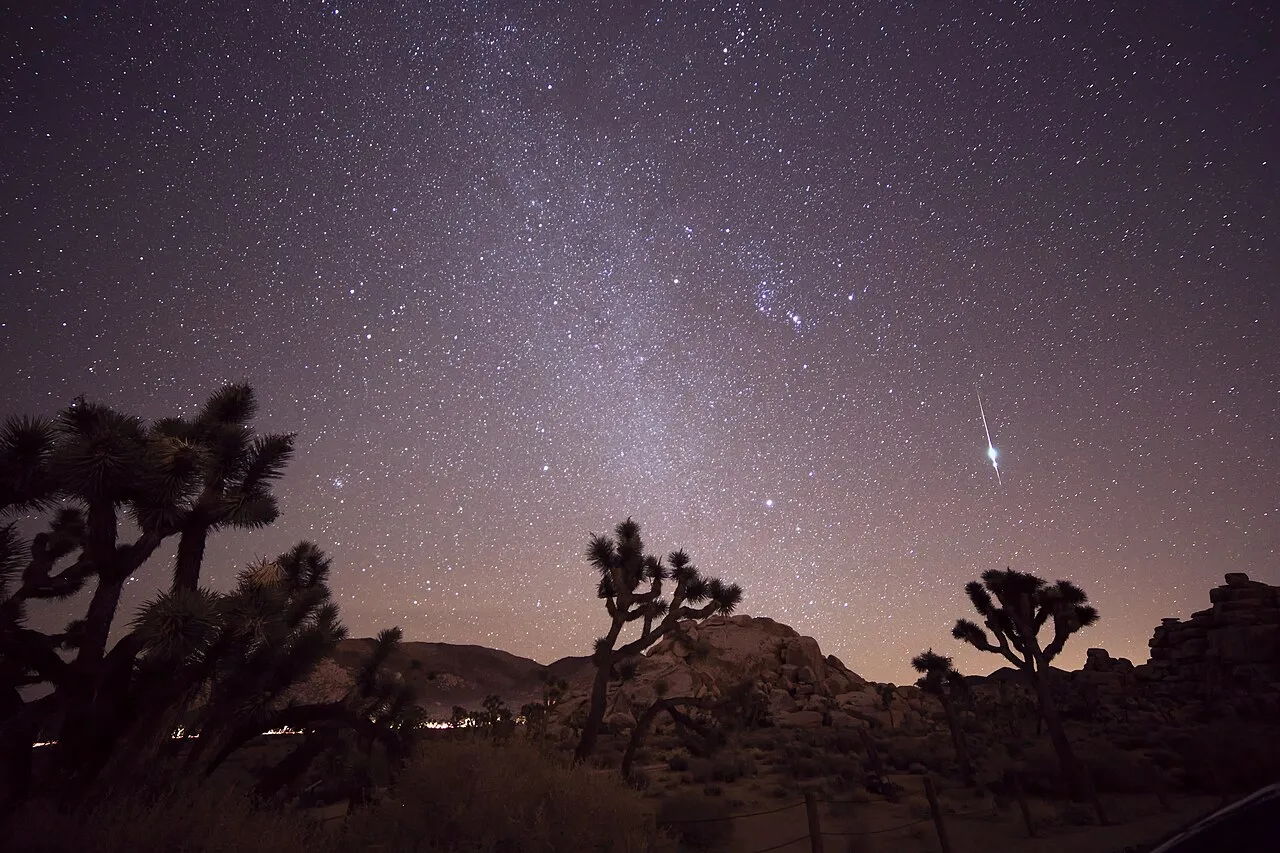
The Northern Taurid meteor shower peaks around 12 November in NASA's November 2026 skywatching guide. It is a modest-rate shower, not a guaranteed storm of shooting stars. NASA describes roughly five meteors per hour under ideal conditions, with occasional bright fireballs adding interest. Your actual view depends on darkness, cloud, obstructions and the time you spend observing.
The event is an opportunity to learn astronomy with your own eyes and a simple notebook. This guide explains what a meteor is, why a shower appears to come from a particular part of the sky and how to record an observation honestly. It does not promise a sighting, give a live cloud forecast or present an archive photograph as an image captured during the 2026 peak.
What NASA's dated guide establishes
NASA's November guide distinguishes the Southern Taurids, peaking around 5 November, from the Northern Taurids around 12 November. The American Meteor Society's calendar also identifies the Northern branch as a separate shower. A headline about “the Taurids” can therefore refer to related activity without specifying which branch or date it means.
The dates describe a peak within a broader period of activity, rather than an appointment at which every observer sees the same meteor. A shower can remain active beyond its peak. Equally, being outdoors on a peak date does not guarantee a particular count at a particular location.
Read the publication date alongside any use of “tonight.” A page written on 11 November and read several days later should not be treated as a fresh forecast for that later evening. This article uses the explicit 2026 date so that the astronomy event remains distinguishable from the day on which someone discovers the page.
Meteor, meteoroid and meteorite are different words
A meteoroid is a small object in space. A meteor is the visible phenomenon produced when such material enters the atmosphere and creates a luminous trail. Material that survives to reach the ground is called a meteorite. The three words describe different stages or aspects, not three interchangeable names for a moving star.
That is why “shooting star” is a familiar expression rather than a literal description of a star travelling across the local sky. Stars are distant luminous objects; a meteor occurs in Earth's atmosphere. Recognising the difference helps students connect an attractive sight with a physical process rather than only a poetic name.
For a notebook exercise, draw three labelled boxes: object in space, visible atmospheric event and surviving material on the ground. Add an arrow between the first two, but do not assume every meteor supplies material for the third. A visible trail alone does not establish that a recoverable meteorite reached the surface.
Why a shower has a radiant
Meteors associated with a shower can appear to trace back toward a common region called the radiant. Perspective is the useful starting idea. Parallel railway tracks seem to converge in the distance even though their physical spacing does not shrink toward a single point in the scene.
The comparison is a visual analogy, not a claim that meteors move along railway-like tracks. It helps explain why the apparent origin in the sky and the point where an individual streak becomes visible are different. A meteor can appear well away from the radiant while its path is consistent with that shower.
For an original classroom demonstration, draw several straight parallel lines on a transparent sheet, then view them at an angle. Compare the apparent arrangement with the overhead drawing. The exercise introduces perspective before students look at a shower chart. It also encourages them to distinguish a diagram explaining direction from an image predicting exactly where the next meteor will flash.
A rate is not a personal appointment
“Around five per hour under ideal conditions” is easy to misread as “one every twelve minutes.” Dividing sixty by five gives an average interval of twelve minutes, but it does not produce a schedule. Natural events can be clustered or separated by longer gaps even when an average rate is meaningful over a larger set of observations.
Imagine an invented hour containing five events. They might occur at minutes two, three, twenty, forty and fifty-eight. Another invented hour might contain none in the first half and several later. These examples illustrate uneven timing; they are not predictions or reconstructed Taurid observations.
The practical lesson is to avoid turning a reference rate into a countdown. If you see nothing after twelve minutes, you have not disproved the existence of the shower. Your observing conditions and the small sample also matter. A good record reports the duration and conditions instead of declaring the whole event a failure after a short wait.
Darkness and sky coverage change what you can detect
A faint trail is harder to notice against a bright sky. Buildings, trees and cloud reduce the portion of the sky available to you. Those limitations affect a personal count and should be recorded rather than ignored when comparing two observers' reports.
Choose a permitted location where you can remain safely and comfortably, with a broad view and minimal nearby glare. Do not enter restricted land, stand in a road or approach hazardous terrain for a clearer photograph. A school observation can be useful even when conducted from an ordinary safe outdoor space with clearly documented limitations.
For students, draw a rough horizon sketch before beginning. Mark the areas blocked by roofs or trees. The drawing gives later readers a way to understand why your visible sky differed from an idealised all-sky chart. It also turns an observing session into an exercise in describing the actual environment.
You do not need to start by buying a telescope
Meteor watching concerns a broad area of sky, while a telescope normally provides a much narrower view. For a beginner, learning where to look and how to observe patiently is more useful than assuming expensive equipment is the first requirement. This guide does not recommend a purchase or claim that a particular device guarantees success.
A star chart can help you identify the relevant sky region, but keep the display from dominating the activity. Looking repeatedly at a bright screen also interrupts attention to the sky. Set up the information you need beforehand, then use your notebook to record what actually happens.
If you already have a camera, treat photography as a separate learning project. A camera's field of view, exposure and automatic processing affect the resulting image. A successful-looking streak on a screen still needs interpretation; equipment does not eliminate the need to ask what the image actually shows.
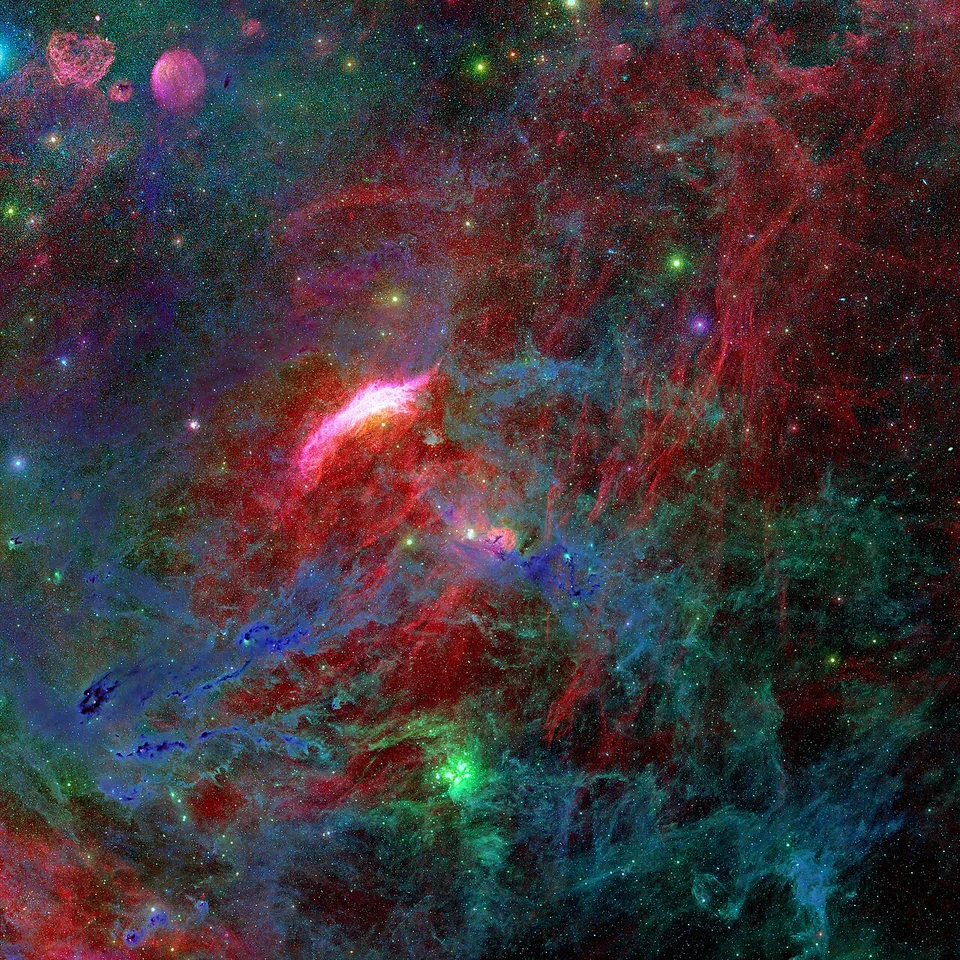
An astronomical image of nebulae and molecular clouds in Perseus and Taurus. This is not a meteor photograph or a prediction of where a streak will appear.
Distinguish a meteor from other moving lights
An aircraft, satellite and meteor can all attract attention, but their apparent behaviour differs. A careful observer notes duration, motion, brightness changes and any repeated flashing rather than deciding from a single impression. Not every light crossing the sky belongs to the advertised shower.
Avoid turning one uncertain observation into an extraordinary claim. If you cannot confidently identify it, record what you saw and label the identity uncertain. A description such as “steady light moving across the visible sky for an extended interval” is more useful than forcing it into a meteor category without sufficient evidence.
This is an important scientific habit. Observation comes before classification, and classification can remain provisional. Students learn more from an accurate uncertain entry than from a confident entry created mainly to complete a worksheet. The notebook should preserve what was observed, not what the observer hoped to see.
Build a useful observing log
Record the date, start and finish times, time zone, general location, cloud conditions and visible obstructions. Keep a tally of candidate meteors and note any identification uncertainty. These fields make a report interpretable without asking the reader to guess how long you watched or what your sky looked like.
Use a general location when sharing a school project publicly; there is no need to publish a home address. If a teacher or observing organisation asks for a more precise location, follow its appropriate private submission method. Public science communication and unnecessary exposure of personal details are different things.
For an invented example, a student observes for thirty minutes and records two probable meteors through a partly obstructed sky. The correct report is two probable events in that session with the stated limitations. It is not a verified universal rate for every observer, nor proof that the official guide promised the wrong number.
Convert a session count into a rate carefully
Two observed events in half an hour correspond arithmetically to four events per hour if you scale the interval. That is a rate calculated from the small session. It does not establish that another half-hour would necessarily contain two more events or that the underlying shower's reference rate equals four.
Always retain the raw count and duration beside the calculated rate. A rate of four per hour could come from two observations in thirty minutes or forty observations over ten hours. Those examples have different amounts of information even though the displayed rate matches.
This distinction connects astronomy with broader data literacy. A percentage, rate or average is easier to judge when its sample size is visible. For a class chart, plot the duration as well as the count and annotate differences in cloud or obstruction. Do not rank students' observational ability simply by whose sky happened to produce the largest tally.
A bright fireball does not make every claim about it true
A particularly bright meteor can be memorable and widely photographed. Brightness alone does not identify its exact size, origin or whether material reached the ground. Those conclusions require evidence beyond an exciting visual impression or a dramatic caption attached to a reposted video.
If you share an image, preserve the date, creator and the context supplied by the original record. An older meteor photograph may illustrate the appearance of a trail, but should not be presented as a newly captured Northern Taurid. An illustration becomes misleading when its caption quietly claims an event it does not document.
The same care applies to computer-generated sky charts. A chart can show a radiant or constellation without depicting an actual observed fireball. Label the image type clearly so that students understand whether they are looking at a photograph, an explanatory diagram or an artist's representation.
Turn the shower into a school project
Begin with a question you can answer, such as how observation duration affects the interpretation of a small count. Agree on a consistent logging format, then compare sessions while keeping their conditions visible. The aim is to practise observation and reasoning rather than to compete for the most spectacular story.
Afterwards, write one paragraph describing the evidence and another describing its limitations. Include an unanswered question for further study. This structure teaches students to make a claim proportionate to their data, which is a useful skill in subjects far beyond astronomy.
Further learning material is available through the RayTech educational guides. A modest meteor shower can still support a worthwhile project because the real achievement is understanding what your observations do and do not establish. A careful zero-count session is still a record of a real observing attempt, not an excuse to invent a sighting.
Common questions about the Northern Taurids
When is the 2026 peak?
NASA's November 2026 guide places the Northern Taurid peak around 12 November, separate from the Southern branch earlier in the month. Peak timing is not a promise of identical local viewing conditions. Check a current local weather forecast before making outdoor plans.
Will I definitely see five meteors in an hour?
No personal count is guaranteed by a reference rate under ideal conditions. Duration, darkness, cloud, obstructions and natural variability affect a session. Keep the raw count and conditions in your notebook instead of treating an average as a timetable.
Does every visible streak belong to this shower?
No. Identification needs context, including apparent direction and behaviour. Other meteors and other moving lights can appear during the same evening. Record uncertainty when necessary, and do not assign every interesting light to the Northern Taurids merely because the shower is in the news.
Sources
- NASA November 2026 skywatching guide
- American Meteor Society meteor-shower calendar
- International Meteor Organization activity outlook, 7–13 November 2026
Image credits: cover: Channone Arif, source, CC BY 2.0. Resized and converted to WebP. inline: TK833, source, CC BY-SA 4.0. Resized and converted to WebP.
Found an error or an outdated detail? Report a correction with the article URL and original source.