
Nuno Borges: Bastad 2024, College Tennis and a First Tour Title
Explore Nuno Borges’s college pathway and 2024 Bastad title against Nadal. Learn match-score reading, development levels and weighted statistics.
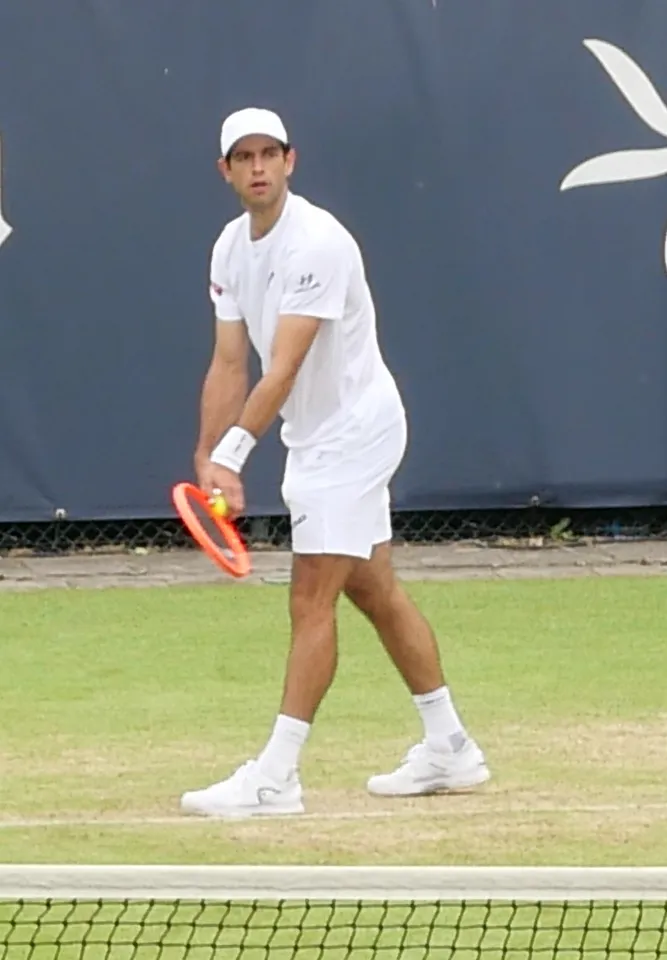
Nuno Borges's path to his first tour-level title shows why tennis development should not be reduced to one age or one route. The Portuguese player represented Mississippi State University before building his professional career, and in July 2024 he defeated Rafael Nadal to win Bastad. Those stages make a useful case study in connecting education, competitive experience and a clearly documented breakthrough.
This guide explains the historical record and then shows how to read a final, compare development pathways and build a fair match analysis. It is not a promise that college tennis guarantees professional success or a claim about today's ranking. Fictional numerical exercises are labelled, and current results should be checked against their actual event and date.
Who is Nuno Borges?
Nuno Borges is a Portuguese professional tennis player whose first tour-level singles title came at Bastad in 2024. ITF match notes record his earlier Mississippi State University period from 2016 to 2019 and a place in the 2019 NCAA singles final. Those facts describe distinct competitive settings, not interchangeable titles within one tour.
A college final and a tour final differ
College competition and a professional tour event have different entry structures and contexts. Reaching a final in one should not be counted as winning the other. A clear career table identifies the organiser, event, discipline and result. This preserves the value of each stage without inflating a tour title total by adding unrelated categories.
A pathway is not a universal prescription
One successful player's route does not prove that every student should make the same decisions. Access, education, finances and individual development can differ. Borges's history is useful because it shows one documented route, not because it removes the need for personal advice and careful planning. A profile should explain possibilities without promising an outcome.
What happened in the 2024 Bastad final?
Borges defeated Nadal 6-3, 6-2 in the Nordea Open final on 21 July 2024. The official draw published through the Spanish Tennis Federation confirms the result, and ITF's later match notes identify it as his first tour-level title. The score should be read from the winner's perspective and kept with the event year.
The opponent's reputation is context, not a score
Beating a celebrated player can make a result especially notable, but the actual match still needs to be reported accurately. A famous name does not establish how every point unfolded. Use the official final score for the outcome and reliable match evidence for detailed analysis. Do not replace the sequence with an assumed story based only on reputation.
First title does not mean first competitive success
The phrase first tour-level title has a defined scope. A player may have earlier achievements in college, junior or other professional competitions. Dropping the qualifier can make the milestone misleading. Explain what was new at Bastad rather than suggesting that Borges had never previously won a tennis match, event or important round.
Why is the college stage worth understanding?
The university period shows that elite development can include organised study and team competition alongside individual tennis. The historical record identifies Borges's participation and result, but it does not reveal every detail of his schedule or private decisions. A useful discussion focuses on what those settings ask of a player without inventing his personal experience.
Team and individual goals can coexist
A player can contribute to a team while also developing an individual record. The two perspectives require separate labels. A team victory does not automatically mean every player won a singles match, and a strong individual result may occur in a team defeat. This distinction helps students read college and national-team reports more carefully.
Experience is not measured only in trophies
Repeated matches can offer opportunities to face different styles and manage varied situations. That is a general developmental possibility, not proof that each match produced a particular lesson. A credible account avoids claiming that one early defeat caused a later title unless there is reliable evidence for that connection. The sequence alone does not establish the cause.
Education should not be treated as a delay by default
A player following a college route is not necessarily behind someone taking another route. Timelines differ, and the relevant question is how the opportunity fits the person's needs. This guide does not rank life choices from one athlete's result. It uses the history to challenge the assumption that there is only one acceptable path into professional sport.
How should a reader assess the Bastad score?
The two set scores describe games, not individual points. A 6-3 set can contain long games and repeated deuces, while a closer-looking set can have a different point pattern. The final score establishes who won each set and the match. It does not by itself prove whether the winner controlled every rally or never faced difficulty.
Add only what the record supports
You can count the games shown, but you cannot recover the number of aces or unforced errors from the set score alone. Missing statistics should remain missing. Filling a gap with a plausible number creates a false impression of detailed knowledge. The best student report distinguishes facts available in the score from questions requiring another source.
Keep the event category separate
Bastad's ATP 250 category is part of the tournament description. It is not a ranking position or a count of games. Event categories help readers understand the tour structure, but they do not make every match within one category identical in difficulty. Draws and opponents vary, so category and actual result should be presented together.
What does a surface comparison need?
A surface label can help explain the environment, but it should not be used as the sole cause of a result. Bounce, movement, weather and the opponents' choices interact. A player winning on one surface is not guaranteed the same outcome elsewhere. The aim is to identify relevant differences without turning broad surface reputations into fixed laws.
Contact height changes the problem
An incoming ball that rises higher can create a different preparation and target choice from one staying low. The hitter's position and time matter as well. When viewing a match, describe the actual contact rather than assuming all balls on a surface behave in one way. A specific observation teaches more than an unsupported general label.
Longer rallies are not automatically better tennis
A long rally can involve patient construction, missed attacking chances or strong defence. A short point can result from excellent serving or a quick error. Length is descriptive, not a complete quality rating. Ask what each player was trying to achieve and what changed before the point ended, using visible evidence rather than a preferred style.
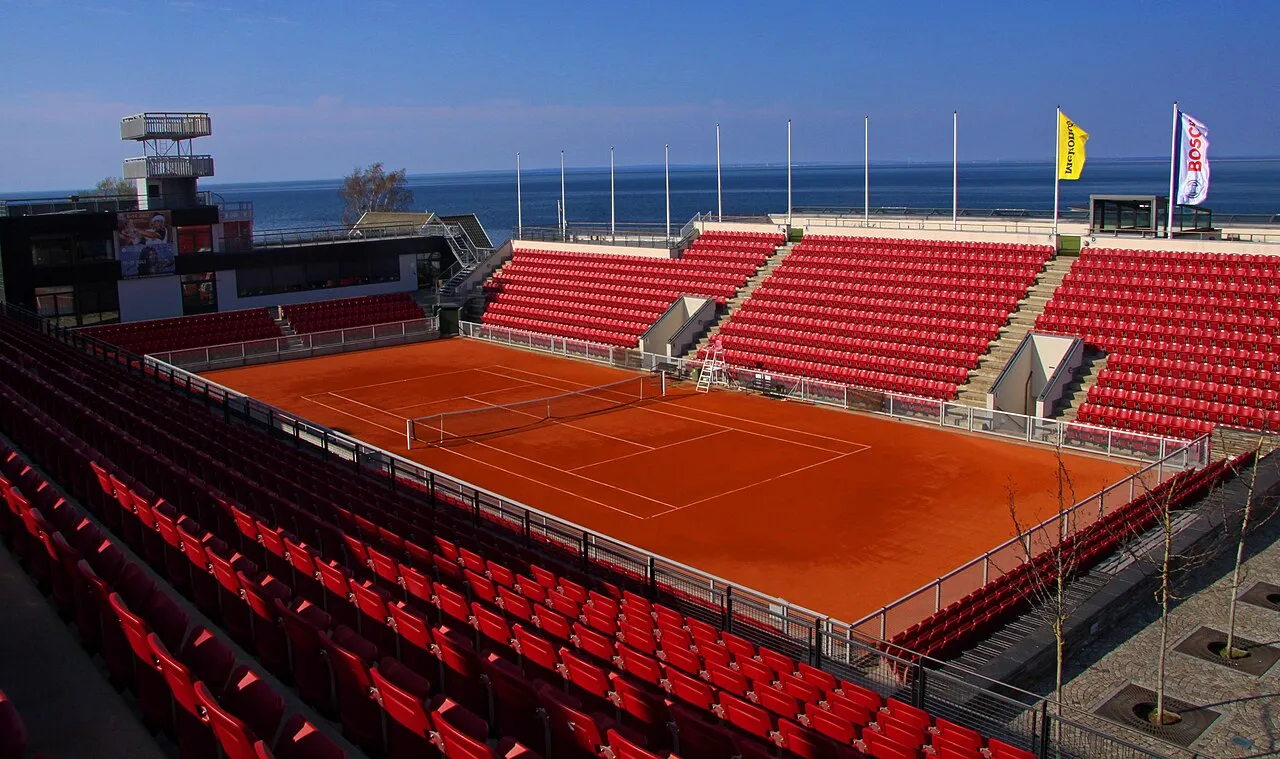
Bastad Tennis Stadium, shown as venue context rather than evidence of a particular final or result.
How do you compare a breakthrough with later results?
A first title is a milestone, not a permanent guarantee. Later events can bring different draws and demands. An accurate profile can preserve the achievement even when subsequent results vary. It should not declare a player finished after one early exit or predict continuous improvement from one successful week. Development remains more complex than either slogan suggests.
Current rank needs a date
A ranking table is updated under its applicable rules. A career high and an older event seed are not substitutes for the present release. If a student project uses a ranking, store the date with it. This article avoids a quickly stale number because its main purpose is to explain a historical pathway and how to analyse the evidence responsibly.
Match format affects the comparison
Different events can use different match and tie-break arrangements. Before comparing durations or set counts, confirm the format for the event and year. A longer match does not automatically indicate a stronger performance. The number of sets available, pace of play and point structure can all influence the elapsed time being compared.
What can a simple data exercise teach?
Imagine a fictional player wins 18 of 30 points in one category and 12 of 30 in another. The rates are 60 and 40 percent, and the combined rate is 50 percent. If the category sizes change, an equally weighted average may no longer match the overall result. Use raw counts to calculate the correct combined proportion.
Weighted values need their original counts
Suppose the first category instead contains 60 points at the same 60 percent rate, while the second still contains 30 at 40 percent. The combined count is 48 wins from 90 points, about 53.3 percent. These are invented examples, not Borges's statistics. They show why averaging two visible percentages can answer the wrong question when sample sizes differ.
An outcome needs a clear unit
Points, games, sets and matches should occupy separate columns. A chart that labels all of them wins can produce nonsense when totals are added. Name the unit before choosing a formula. This habit is useful in school mathematics as well: the arithmetic can be performed correctly while the answer is still meaningless because unlike quantities were combined.
A pathway research project for students
Create a timeline with college participation, a documented final and the first tour title. Add a source for each entry and state what the source establishes. Leave out private motives and unsupported causal claims. The result should show a sequence of opportunities and achievements rather than pretend that every step was planned from the beginning.
Use two kinds of evidence carefully
A university record can establish a college result, while a tour or federation document establishes a professional event. Neither source needs to answer every question. Matching each claim to the right record is stronger than copying an entire biography without checking its categories. When two dates appear to conflict, first ask whether they refer to different milestones.
Keep the tools simple and inspectable
The class resources can support the mathematics, and the programming courses can help build a small timeline or score table. Store date, event type, discipline and source separately. Validate counts, label fictional datasets and show unavailable information honestly. A simple accurate tool is more useful than an impressive chart that hides confused categories.
Reading progress without age stereotypes
A career timeline can show when a player reached an event stage, but it should not impose one universal deadline for development. An athlete's circumstances and opportunities are not identical to those of every contemporary. For students, the useful question is what skills and options a particular setting can support. A single successful example broadens the discussion; it does not prove that all earlier or later pathways are wrong.
Compare records at the same level
If one timeline lists college matches and another lists tour-level results, first label the different competition levels. A larger raw total does not automatically indicate stronger preparation when the categories differ. A fair comparison may need to remain descriptive rather than produce a ranking. This is an important research skill: sometimes the available information supports a clear account of differences but not a reliable declaration of which route is best.
A learning plan needs controllable steps
Instead of using a professional title as a guaranteed target, a student can choose smaller tasks such as keeping a clear match log, improving source reading or learning a calculation. Those tasks are within the scope of the exercise and can be checked. They connect an inspiring career story to practical study without promising a result that depends on many factors outside the student's control.
Questions about Nuno Borges
Did Borges win his first tour title against Nadal?
Yes. The documented 2024 Bastad final ended 6-3, 6-2 in Borges's favour, and the ITF notes identify that event as his first tour-level title. Keep the event and year with the statement. It describes that historical breakthrough, not a claim about a new final or the outcome of every later meeting between the players.
Does college tennis guarantee a professional career?
No. Borges's route is one documented example, not a promise for every student. Development, opportunity and personal circumstances differ. The useful lesson is to understand the options and the evidence rather than imitate a timeline without considering its context. A successful case can broaden a reader's view without being presented as a universal formula for success.
Sources
- ITF: 2025 Australian Open notes recording Borges's college history and first tour title
- Spanish Tennis Federation: official 2024 Bastad draw and final score
Image credits: cover: Tvx1, source, CC BY-SA 4.0. Resized and converted to WebP. inline: PROGuillaume Baviere, source, CC BY-SA 2.0. Resized and converted to WebP.
Found an error or an outdated detail? Report a correction with the article URL and original source.