
Pak vs Aus: Match Identity, Scorecards and Result Margins
Explore Pak vs Aus with clear explanations, worked examples, source checks and practical questions for independent student learning.
“Pak vs Aus” can refer to several different cricket matches, teams and formats. A useful result needs more than the two country abbreviations: identify the date, competition, team category and format before reading the score. This guide compares clearly labelled historical examples and explains how to avoid attaching an older or different match to a current search.
The source review is dated 2 November 2026. This is a scorecard-identification guide, not a claim that Pakistan and Australia played a newly verified match today. A search trend establishes that people searched a phrase; it does not establish a fixture, a result or the identity of the players involved.
Which Pak vs Aus match are you looking for?
Start with four fields: team category, format, competition and date. The senior men’s teams, women’s teams and specialist tournament sides do not share one interchangeable match record. A fixture in a six-a-side event is not automatically a senior T20 international simply because both countries are familiar.
Add the venue if the search remains ambiguous. A report from Leeds and a report from Hong Kong can concern different events even when their headlines use the same abbreviations. The correct record should agree with the event you intended to find, not merely contain the desired words somewhere on the page.
For an original worksheet, give learners three fictional fixtures with the same two country names and different categories. Ask which extra field distinguishes each pair. The exercise demonstrates why a website should display a complete identity card instead of relying on a headline that is too short to identify its subject.
A historical Sixes example: the 2025 semi-final
FanCode’s 2025 Hong Kong Sixes record lists Pakistan at 121/2 and Australia at 120/5, with both innings shown as six overs. Pakistan won by one run. Keep the year and tournament attached to those figures. They should not be relabelled as a 2026 result because the page appears in a newer search.
The defending total and chase target are different numbers. With an unadjusted target in this example, a total of 121 sets 122 to win. Australia’s 120 is one run below Pakistan’s total and two below the winning target. Those statements are compatible because margin and remaining requirement answer different questions.
This guide does not invent the last-ball sequence or player contributions from the summary alone. A narrow result can be described accurately without adding a dramatic delivery that has not been verified. The historical example is useful precisely because its limited fields support a clear arithmetic lesson.
A different example: the 2026 women’s T20 World Cup
Cricket Australia’s June 2026 report from Leeds records Australia making 199 for seven and Pakistan being dismissed for 86, a 113-run Australian victory. The PCB’s corresponding match entry also identifies the women’s T20 World Cup contest and the 113-run margin. This is a different team category and event from the Sixes example.
The subtraction is 199 minus 86, which equals 113. It does not use the chasing target of 200 as the starting number for the winning margin. Confusing target shortfall with the margin can produce an off-by-one error that looks plausible in a result card.
These examples are not a claim that the two formats should be ranked against each other. They show why the same country abbreviations can lead to different valid records. A complete caption or heading keeps readers from combining a women’s World Cup total with a men’s or specialist-event photograph and calling it one match.
Why does 7-199 mean 199 for seven?
Australian score displays commonly place wickets before runs in a form such as 7-199. Other displays use runs first, as in 199/7. The notation can differ while the underlying team total is the same. A reader needs the source convention rather than assuming every separator uses one universal order.
For an original exercise, convert three fictional totals between the two displays. Write the full sentence each time. This makes the meaning explicit and helps prevent a program from importing the first number as runs when the source intended wickets.
If you build a score importer, store runs and wickets as separate named fields. Parse the source format deliberately and validate the values. Do not use a loose string split without knowing which position means what. A small formatting assumption can reverse the meaning of an entire scorecard.
What is the difference between a run margin and a wicket margin?
A side defending a total can win by the difference in runs under the relevant conditions. A side completing a successful chase is commonly described by wickets remaining under its format’s rules. The two result phrases measure different resources and should not be converted into each other without an appropriate model.
For standard eleven-player limited-overs cricket, a successful chase with three wickets lost is ordinarily expressed as a seven-wicket win. A specialist event may use different team-size and batting rules. Identify the format before applying a familiar formula, rather than assuming every score display implies the same maximum wickets.
Use fictional cards to practise the distinction. One contains a defended total; another contains a completed chase. Ask learners which result field each needs and why. The goal is to connect the phrase to the match situation, not merely memorise that one kind of number appears larger than another.
Why is over notation not decimal arithmetic?
A display of 13.4 overs means thirteen complete overs and four legal balls in a six-ball-over format. It is not 13.4 decimal overs. The total legal-ball count is 82. Treating the display as an ordinary decimal produces the wrong denominator for a rate calculation.
For an original example, compare twelve runs in 2.3 overs with twelve runs in 2.5 overs. Convert the displays to fifteen and seventeen legal balls before calculating. The examples are fictional and are not additional bowling figures from either historical match.
An educational calculator should either accept legal balls directly or explain how it parses the over display. A separate field for balls within the over makes the structure easier for beginners to understand. It also prevents a user from entering an impossible ball component without noticing.

MCG Panorama 6 June 2018. Historical or contextual illustration; not a photograph of the current event or product being reported.
Does a batting total explain every individual contribution?
No. A team total can include individual scores and extras, and the summary alone does not assign the runs to particular players. Do not infer a half-century, partnership or boundary count from the final team number. Those claims need a batting card or another suitable record.
The same applies to wickets. A team’s wickets lost are not automatically all credited to one bowler or even to bowlers collectively in the same way. Dismissal types and scorekeeping rules matter. A summary is valuable, but it is not a substitute for the detailed fields it does not contain.
For a fictional worksheet, supply three batting scores and an extras total, then calculate the team score. Change the extras while keeping the batting scores constant. Students can see how the team figure changes without inventing extra runs for a player whose individual record has not changed.
How should a live score be distinguished from a completed result?
A live score is a state during play. A completed result records the outcome after the relevant match has ended and any applicable adjustments are reflected. A screenshot can preserve an earlier state after it stops being current. The time and status labels are therefore essential.
Imagine a fictional chase at 70/2, later completed at 101/4. Both numbers can be valid observations at their respective times. A page becomes misleading if it removes the earlier timestamp and presents 70/2 as the final total. The correction is not changing history; it is restoring the scope of the record.
When using an article as a learning source, identify whether it is a preview, a live update or a report. A preview’s expected lineup is not a confirmed team sheet. A live state is not a final result. Each document type needs a label that remains visible when it is shared.
Why are search dates not fixture dates?
A phrase can trend because of an old clip, a schedule announcement, a discussion or a result from another team category. The time a query became popular does not prove that the event happened then. A trends file is search data, not an official fixture list.
This is particularly important when a familiar rivalry produces many archived results. Check the page’s publication date and the event date separately. An updated article can discuss an older match, and a historical highlights page can remain available years later without becoming a new fixture.
For an original research task, provide a fictional search chart beside three dated documents. Ask which document actually answers the intended question. The exercise teaches source selection rather than rewarding whichever result repeats the keyword most often.
How should reduced-overs or adjusted-target games be handled?
Do not assume that every chase target equals the first innings total plus one when the match record specifies an adjustment. The official target and method need to be read from the relevant source. This guide’s simple arithmetic examples state their unadjusted conditions explicitly.
A fictional worksheet can provide a target directly after a hypothetical interruption. Ask learners to use that supplied target rather than recomputing it from incomplete information. This makes the difference between following an official record and inventing a calculation clear.
The article does not implement an adjusted-target system or provide an operational umpiring tool. Such systems need their own rules and inputs. The practical reading skill is recognising when a familiar shortcut is insufficient and checking the field the actual match record supplies.
Build a fixture-identification tool
Use fields for country names, team category, format, competition, date, venue and status. Give each fixture a unique identifier rather than using “Pakistan-Australia” as the key for every meeting. The same pair of teams can play several times in one series, making the short name unsuitable as a unique record.
Learners can build a small example through our programming courses. Start with fictional entries, then represent the two historical examples described here. Display the year prominently and keep the source link attached to the record. A search result should show enough context for a user to select the intended match.
Test two fixtures on different dates, two categories sharing a date and an unknown venue. The interface should not merge them or fill the missing venue with the last selected value. These are meaningful correctness checks because they address the ambiguity that brought the reader to the page.
What can historical stadium images establish?
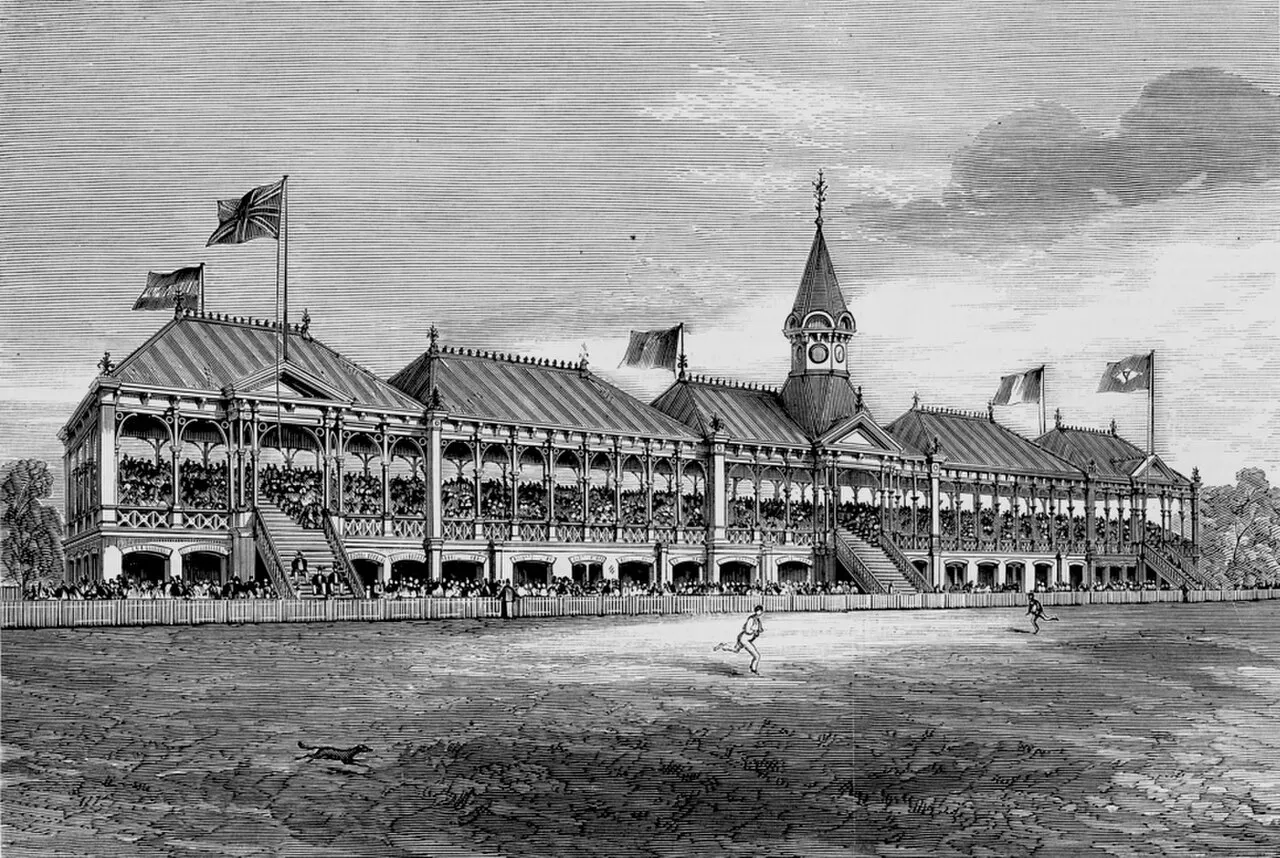
A photograph of a Pakistan or Australia cricket ground can provide regional cricket context without depicting either example in this article. A venue image should not be relabelled as Hong Kong or Headingley because the surrounding text discusses those places. The caption must preserve the actual subject.
Similarly, an older player photograph does not establish a current lineup. A familiar shirt can attract attention while identifying the wrong team category or season. Use the image record and match source together, and explain when the photograph is contextual rather than direct evidence of the event.
Precise imagery supports a precise result guide. It is better to use a clearly labelled historical ground image than to manufacture a current-match impression. A reader should not need to inspect tiny details in the background to discover that a photograph belongs to another place or year.
What should you check before sharing a Pak vs Aus result?
Confirm the team category, format, competition, date and match status. Read the score convention before interpreting the numbers. Keep the target separate from the final total and the winning margin. If the source describes an adjusted target, use its actual record rather than an assumed shortcut.
The useful answer to a broad search is not always another unlabelled score. It can be a clear path to the right record. By preserving those identity fields, readers can understand both a historical one-run Sixes result and a separate women’s T20 World Cup result without combining them into an event that never happened.
Sources
- FanCode: Pakistan-Australia, 2025 Hong Kong Sixes semi-final, for the clearly labelled historical Sixes summary.
- Cricket Australia: June 2026 women’s World Cup report, for the Leeds innings totals and 113-run result.
- PCB women’s match entry, for the event category and result identification. All fictional fixtures and calculation exercises are original educational examples, not a newly verified November match.
Image credits: cover: Samuel Calvert, source, Public domain. Resized and converted to WebP. inline: Jason L, source, CC BY-SA 4.0. Resized and converted to WebP.
Found an error or an outdated detail? Report a correction with the article URL and original source.