
Pakistan Women Beat Bangladesh: Ajman Result and Group B Standings Guide
Read Pakistan Women’s eight-wicket win over Bangladesh in Ajman and understand Group B context, overs notation and how to check the official standings.
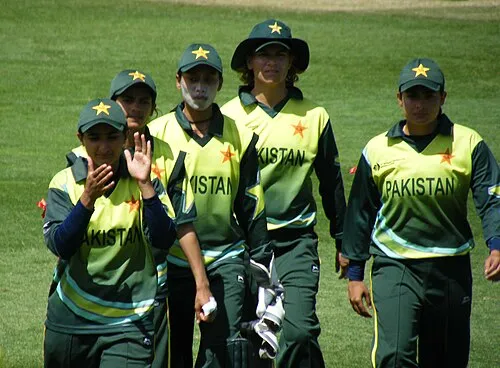
Pakistan Women beat Bangladesh Women by eight wickets in their ICC Women's Emerging Nations Trophy opener at Ajman on 12 November 2026. Bangladesh made 108 for nine from 20 overs; Pakistan finished on 112 for two in 15.5 overs. The result belongs to Group B of this tournament, not a bilateral ODI table or a different women's competition.
For readers searching for standings, the most important distinction is between a completed match result and the group table at a particular time. A result remains fixed once confirmed. Standings can change after other fixtures. This guide records the verified opener, explains the early campaign context and links the official table instead of inventing an undated live position.
Which tournament and group does this fixture belong to?
The match was played in the ICC Women's Emerging Nations Trophy 2026 in Ajman, United Arab Emirates. Pakistan were placed in Group B with Bangladesh, Thailand, the Netherlands and Zimbabwe. The PCB's tournament announcement provides that group context and the ICC's opening-day release confirms the completed result.
This group identity matters when reading a search result containing only team names. Pakistan and Bangladesh can also appear in other events, and those competitions may use different formats and qualification routes. A head-to-head record is another distinct dataset, not a substitute for this tournament's table.
Begin a standings note with the competition, group and update date. Those three details help a reader understand what the numbers actually describe. Without them, even a correctly copied points total can be attached to the wrong sporting question.
What happened in the opening match?
Pakistan restricted Bangladesh to 108/9, with Tuba Hassan taking three wickets for 26 and Nashra Sundhu two for 13. Sadaf Shamas made 37 in the reply, and captain Muneeba Ali finished unbeaten on 31 as Pakistan completed the chase with 25 legal deliveries remaining.
The official report describes Bangladesh losing several wickets after reaching a more stable position. Pakistan's bowling contribution therefore belongs in the explanation alongside the successful chase. A short result that mentions only the winning batters would leave out how the target was established.
The final score should not be described as a 112-run victory. Pakistan were chasing, and eight wickets remained when they won. The runs in the winning total and the wickets-based winning margin are separate pieces of information.
Why does the win count as eight wickets?
Pakistan finished two wickets down. With ten available wickets in a normal innings, eight remained, producing an eight-wicket win. The result does not come from subtracting Bangladesh's nine wickets from Pakistan's two, and it is not a claim that Pakistan took eight wickets while bowling.
The winning margin in a chase describes remaining resources. In a fictional match, a side reaching its target at three wickets down wins by seven wickets. The same target reached at eight wickets down produces a two-wicket victory instead.
This is a useful beginner check when two different numbers appear close together on a scorecard. Identify whether the number is runs scored, wickets lost, wickets taken or the final margin before turning it into a sentence.
How can a team finish above the minimum target?
An ordinary chase of 108 requires 109 to win. Pakistan's final 112 is compatible with a scoring event taking the side past that minimum. A winning boundary can complete the match beyond the exact target rather than stopping the scoreboard at the first sufficient run.
Do not call the additional runs an error merely because the total exceeds the target. The official scoring treatment of the winning event determines the completed total. The simplest accurate summary uses the confirmed final score without trying to force it into a misleading subtraction.
For a fictional example, a side needing one run can strike a valid four. Its final score can exceed the target by three. That is different from a defending side winning by three runs, because the direction and outcome of the chase are different.
What does 15.5 overs tell us?
It represents fifteen complete overs and five legal balls, or 95 legal deliveries. Twenty complete overs contain 120 legal deliveries. Subtracting 95 from 120 gives 25, consistent with the remaining-ball figure in the official opening-day account.
The point in overs notation is not a decimal point in ordinary arithmetic. Treating 15.5 as fifteen and a half overs would produce the wrong legal-ball count. Convert complete overs to balls, then add the number after the point.
This habit becomes important when calculating rates, comparing chases or checking a net-run-rate calculation. A small notation misunderstanding can create a precise-looking but incorrect answer. Writing the conversion on paper is often faster than trying to remember an exception after making the calculation.
What happened to the teams on the following day?
The ICC's day-two release records Pakistan defeating Thailand by 24 runs and Bangladesh beating Zimbabwe by nine wickets. Pakistan had therefore opened with two wins, while Bangladesh followed their opening defeat with a victory. Those are dated campaign facts, not an automatically updating table.
A match between two teams does not freeze their future standings relative to one another. Results against the other group members contribute to the same campaign. A useful standings explanation includes that wider context rather than treating one head-to-head win as the entire tournament.
This guide does not assign an unverified current table position or qualification label. To see the latest order, use the official standings page and check when it was updated. Later results may have changed the situation after this article's research date.
How are a group table and a head-to-head record different?
A group table organizes all relevant teams in the current competition. A head-to-head record compares meetings between two teams across a defined period and format. The first answers who stands where in this campaign; the second answers how those two teams have performed against one another within its chosen sample.
Neither should be silently substituted for the other. A team can have a strong historical record against an opponent and still sit below them in a current table after different results elsewhere. History can provide context without determining today's ranking.
When a search query includes standings, start with the current event. If adding head-to-head information, label its format, period and source separately. Combining all women's international formats into one unexplained number would create more confusion than insight.
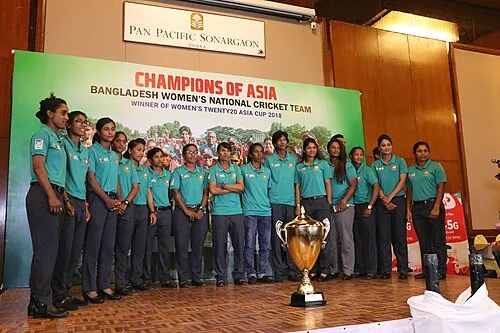
Archive Bangladesh Women celebration in Dhaka in 2018. This is team history context, not a celebration or result from the Ajman opener.
What do wins, losses and no-results mean in a table?
They describe the outcomes counted under the competition's system. Points are then allocated according to the event's rules. The exact treatment of ties, abandoned matches and other exceptional outcomes should be checked in the official regulations rather than assumed from another sport.
A beginner can practise with a fictional table using clearly stated rules. If a hypothetical event gives two points for a win, two wins produce four. If another event uses a different allocation, its numbers will differ. The rule must be established before the calculation.
This article avoids supplying a made-up official points table from incomplete data. The verified match outcomes are useful on their own. A live table should come from the competition's actual results and rules, not a writer's best guess about what they probably are.
Why does net run rate require extra care?
Net run rate compares scoring rates across the relevant innings and applies specific rules to matters such as all-out innings and shortened games. It is not simply a subtraction of final team totals, nor a direct conversion of the wickets margin.
To calculate a current group figure, you need the full applicable match sample and accurate legal-ball counts. An isolated opener cannot establish the value after a second or third game. Mixing updates from different days makes the result unreliable even if the arithmetic within each step looks correct.
For this reason, no unverified net-run-rate figure is presented here. Readers should use the official table for that number. Learning the concept is valuable, but a classroom explanation should not masquerade as a verified tournament calculation.
How should you assess the bowling contribution?
Look at wickets, conceded runs and the spell's legal deliveries together. A bowler can take wickets while conceding quickly, or restrict scoring without receiving a wicket in the final table. Each can affect the opposition innings in a different way.
The official opener identifies important contributions from Tuba and Nashra. Their figures help explain the restricted target, but they do not establish every detail of pitch conditions, delivery movement or private tactics. Those would require suitable footage or directly reported comments.
For a fictional spell of two for 20 from four overs, economy is five runs per over and average is ten runs per wicket. These units describe different features. A reader who understands them can assess a scorecard more carefully than one who looks only at the wickets column.
What does an unbeaten finishing partnership contribute?
A finishing stand can complete the target without requiring either batter to reach a century or fifty. Its value comes from the match requirement. Personal milestones and team completion are different measures of an innings' importance.
An asterisk marks an unbeaten individual score. It contributes runs to the total but does not add a dismissal when a conventional batting average is calculated. The partnership itself can include extras, so it should be read from the actual record rather than reconstructed by adding two final individual scores.
When writing a short report, name the confirmed finishing contributions without inventing what the batters said to one another. The scoreboard sequence provides enough evidence to explain a successful chase without fictional dressing-room or on-field dialogue.
How can you recognize an outdated standings screenshot?
Look for a timestamp, number of matches played and the latest included fixtures. If a screenshot shows only one completed match for a team after a verified second game has ended, it may represent an earlier stage rather than a current error in the official table.
Check the source as well. A reposted graphic can lose the date or crop out the competition name. The team names may be genuine while the surrounding context has disappeared. Return to the original standings page where possible.
Do not assume that a social-media upload date is the table's update time. Someone can repost an old image today. This distinction between publication time and event time is central to reading any changing sports information accurately.
A practical standings notebook
Write the competition, group, source and update time at the top. Add the verified result for each match you include. Keep separate columns for outcomes and any calculated rates. If a value is not available from the source, mark it unavailable instead of estimating it to make the table look complete.
Next, write a plain-English summary that matches the data. Two wins from two appearances is a clear statement when verified. A claim that a side has qualified requires additional evidence about the format and remaining possibilities.
Finally, test the summary against a later update. Note which statements remain historical facts and which changing fields need revision. This exercise helps students understand why a static match report and a live standings service should not make identical promises.
What should supporters check before the next match?
Use the official schedule for the next date, ground and start time. A tournament can use more than one venue in the same city, so a previous match's ground should not automatically be assigned to the next fixture.
Check the relevant time zone. Local UAE time and Pakistan time are not identical. A schedule should retain its stated zone before conversion; an unlabeled time can send a reader to the right match at the wrong hour.
For related cricket explainers, visit the RayTech article library. Keep the dates attached when comparing reports, especially around a tournament with daily fixtures. Accurate context helps supporters follow the competition without relying on misleading or incomplete live-looking graphics.
Common questions
Which team won the 12 November meeting?
Pakistan won by eight wickets. The result was part of Group B in the ICC Women's Emerging Nations Trophy at Ajman.
Does this page show an automatically updating table?
No. It is a dated match and standings guide. The official ICC page should be used for the latest table.
Why should I not combine this with an ODI record?
The reviewed match used the twenty-over format. Different formats have separate records and different innings allowances.
Does the opener alone decide qualification?
No. Other group matches and the competition's progression rules also matter. This article makes no unsupported qualification claim.
Sources
- ICC: opening-day release and Pakistan–Bangladesh score
- ICC: day-two results for Pakistan and Bangladesh
- PCB: Pakistan squad and Group B announcement
- ICC: official tournament standings
Checked on 14 November 2026. Hypothetical calculations are teaching examples, not additional match events or an unofficial live table.
Image credits: cover: paddynapper, source, CC BY-SA 2.0. Resized and converted to WebP. inline: Nurunnaby Chowdhury (Hasive), source, CC BY-SA 4.0. Resized and converted to WebP.
Found an error or an outdated detail? Report a correction with the article URL and original source.