
Courts in Pakistan: Jurisdiction and Current Constitutional Reading
Learn how to read court authority, case stages and official legal sources in Pakistan, using the Constitution edition amended through November 2025.
In Pakistan, the word court does not identify one institution with power to decide every kind of dispute. A court's authority comes from the Constitution and applicable law. Understanding that basic idea, jurisdiction, helps a reader distinguish a court's name, the question before it and the effect of a particular order.
This is a general civic-learning guide checked on 2 November 2026, not advice about where to file a case or how to meet a deadline. It uses the National Assembly's Constitution edition amended through 21 November 2025. That date matters because an older diagram can omit changes to the constitutional court structure.
What is a court's jurisdiction?
Jurisdiction is the authority to hear and decide a matter under the relevant legal framework. Article 175(2) of Pakistan's Constitution makes clear that a court has jurisdiction conferred by the Constitution or law. A familiar name or a large building does not create unlimited power over every subject.
For a simple classroom analogy, imagine a school has separate committees for library loans and examination reviews. A well-run library committee does not automatically have authority to change an exam result. The analogy is only about assigned responsibilities; it is not a model of legal procedure or a substitute for the actual law.
This distinction helps when a headline says a court declined to hear a matter. That wording does not necessarily mean the underlying claim was proved false. The reason could concern authority or procedure, depending on the order. Read the actual decision before converting a procedural outcome into a factual finding about the dispute.
When taking notes, separate the question presented from the institution asked to decide it. Add the source and date for any claim about its powers. The goal is not to choose a forum from a short article, but to understand why the forum's legal authority is part of the question rather than an afterthought.
What changed in the constitutional court picture?
The current National Assembly edition names the Federal Constitutional Court alongside the Supreme Court, provincial High Courts, Islamabad's High Court and other courts established by law in Article 175. It includes a separate chapter for the Federal Constitutional Court. A pre-amendment summary may therefore be incomplete as a description of the current framework.
This guide does not reproduce the complete distribution of jurisdiction or tell a reader which institution should hear a specific matter. The relevant constitutional provisions, statutes and current decisions must be read together for that task. The civic lesson is to check the edition before relying on a memorised diagram.
A useful research card has fields for document title, amendment cutoff and the provision being discussed. “Constitution of Pakistan” alone is not enough when several editions are online. An older official PDF can be genuine without answering a question about the law after a later amendment.
Keep historical and current diagrams separate. If a lesson explains how a system worked in an earlier period, label it with that period rather than deleting the past. If it explains the present structure, use current materials. A date makes the difference between a helpful history exercise and an accidentally outdated civics page.
Is every court part of one simple ladder?
A single upward ladder can be too crude to explain institutions with different subject areas and powers. Appeal routes, constitutional questions and special jurisdictions depend on the governing provisions. Do not assume that every disagreement follows the same sequence or that a court's place in a drawing settles its power over a particular issue.
For an original learning activity, draw boxes for institutions and label the type of question each source provision addresses. Leave an arrow blank when you have not verified the route. An incomplete but accurate map is better than a neat diagram whose arrows were added because they looked symmetrical.
The same care applies to a phrase such as highest court. Ask highest for which question and under which current provision. A broad slogan can obscure a legal change or a specialised function. Use the source's precise institutional names and avoid making a universal claim that the cited text does not support.
If you are dealing with an actual dispute, get qualified legal help rather than choosing an appeal route from a general diagram. Time limits, subject matter and procedural history can matter. This guide's purpose is to improve public understanding, not to give case-specific directions without the necessary facts.
What is the difference between civil and criminal discussion?
Civil and criminal matters involve different legal questions and procedures, although real events can raise more than one type of issue. A news article should identify what the proceeding concerns rather than using court case as if it settled the category. The applicable law and record supply the meaningful labels.
For a fictional exercise, one story concerns a disagreement about an agreement between two people; another concerns a criminal accusation investigated by authorities. Do not try to decide liability from those short descriptions. Use them to practise asking what legal question and process the source actually identifies.
The word accused should not be silently replaced with guilty. An allegation, a charge, a trial finding and an appellate outcome are different stages and claims. A useful reader preserves the wording supported by the record rather than making the strongest-sounding description the default.
The same caution applies to a party winning a procedural application. That result does not necessarily determine the final merits of every issue in the dispute. Identify exactly what the application asked and what the order decided. A limited decision should not grow into a much broader verdict during retelling.

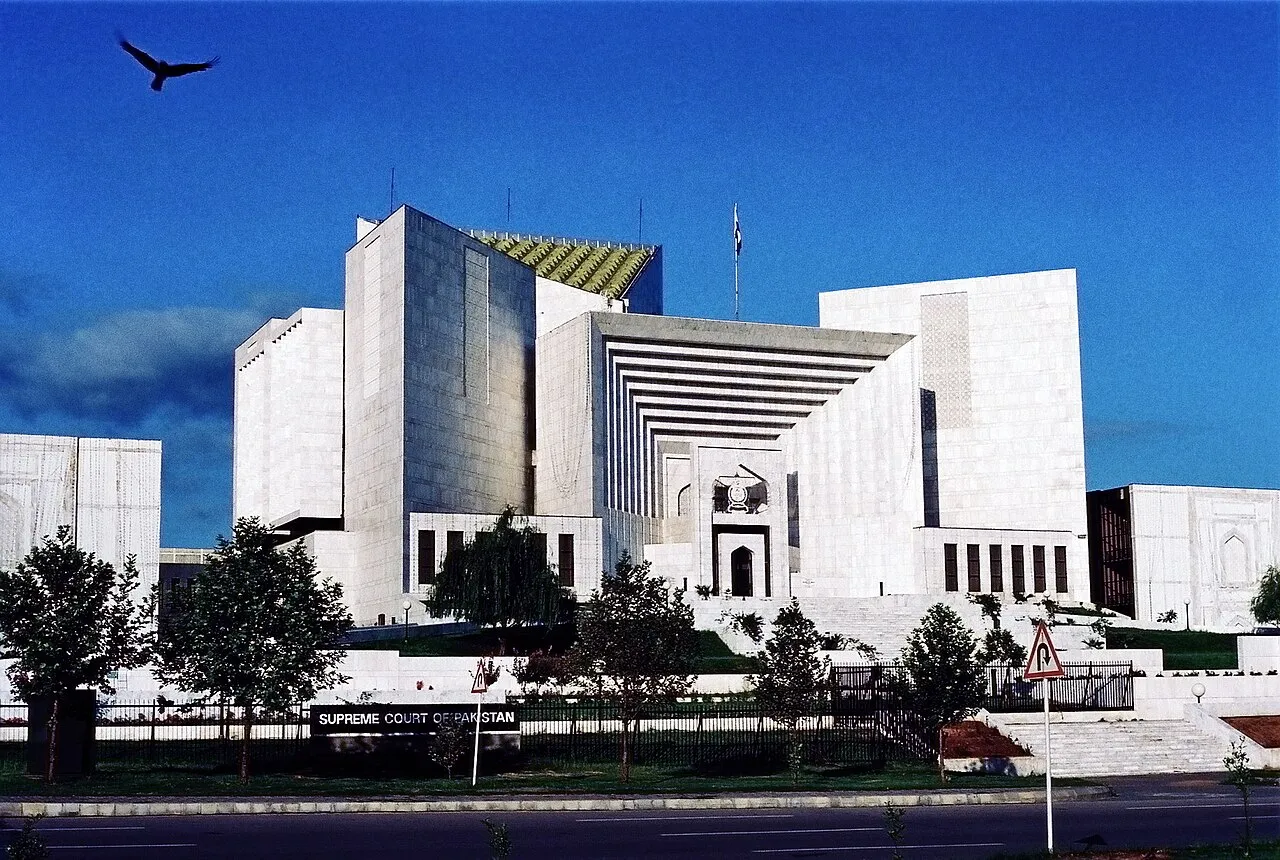
Historical courthouse architecture, not a record of current proceedings.
What can a cause list tell you?
A cause list identifies matters scheduled for a court's business according to its published system. It is not itself a judgment. A listed date can help identify an appointment, but it does not prove that the hearing concluded in a particular way or that a final order has already been issued.
This distinction resembles a school timetable and a completed result sheet. Both relate to the same process, but they answer different questions. The analogy helps a beginner see why an entry saying a matter will be heard cannot establish what was decided after it was heard.
For a fictional record, keep scheduled date, actual hearing update and order date as separate fields. A change to one should not automatically rewrite the others. If a hearing is adjourned, the record should preserve that state rather than display a final judgment simply because the original date has passed.
Our Lahore High Court reading guide addresses the narrower task of interpreting case information. This page instead introduces institutional authority and current constitutional context. Separate resources are useful when they answer different questions rather than repeat the same instructions under a broader keyword.
How should you read an order's scope?
Start with the court, date, case identifier and the question the order addresses. Then distinguish the operative direction from background, submissions and observations. A paragraph recording what a party argued is not automatically the court accepting that argument. The text's role matters as much as the words it contains.
Use an original fictional document with headings called request, response and decision. Put a different statement under each. Ask a learner which statement actually changes the outcome. The exercise is deliberately simplified, but it shows why copying a sentence without its surrounding role can invert the meaning of a legal report.
An interim order and a final disposal can have different effects. Do not label a temporary direction as the permanent end of a case unless the actual record establishes that. A short headline may omit the distinction, so a careful reader should look for the order and its stated scope before drawing a conclusion.
This is not an invitation to interpret a live order without legal help. It is a reading habit that reduces obvious mistakes in public discussion. When a decision affects your rights or obligations, its full terms and procedural setting need professional attention rather than a summary based on one sentence.
Why do amendments and effective dates matter?
A proposal, a passed law and a consolidated text are different documentary stages. An introduced bill can show what was proposed without proving that every clause became law in that form. A current consolidated Constitution helps locate the operative wording, while amendment notes explain how the text changed.
For a classroom timeline, separate proposed, enacted and consolidated. Attach a date and source to each stage you can verify. Do not use the earliest draft merely because it is easier to find in a search result. A search engine's order is not a legal hierarchy of authority.
The distinction is especially relevant to the 2025 constitutional changes. This guide uses the Assembly's later amended edition rather than treating an introduced draft as the complete current text. It does not claim that a publication cutoff guarantees no later development; check current official materials when a practical legal question arises.
You can learn the method without becoming a legal specialist. The key questions are simple: what kind of document is this, when was it issued and which period does it describe? Those questions make a constitutional explanation more reliable before any detailed interpretation begins.
How can images mislead in court reporting?
A courthouse photograph identifies a building or provides institutional context; it does not prove what happened in a specific hearing. A historical image should not be captioned as today's proceedings. Nor should an unrelated person's photograph be used in a way that implies they are accused in a case the article does not establish.
For an image-reading exercise, separate what the photograph shows from what the caption claims. If the image shows an exterior, a claim about an unseen order needs another source. The photograph can make an article recognisable without becoming evidence for facts beyond its contents.
This matters for a civic website serving students. Visual clarity should not come at the cost of suggesting guilt or manufacturing an event. Use neutral captions and licensed images whose context is understood. A dramatic picture is not more informative merely because it produces a stronger emotional reaction.
Build a civic source notebook
Create fields for institution, document type, date, provision or case identifier, and the narrow claim supported. Keep original-source links with the notes. A notebook should let another learner trace a statement rather than simply accept a confident summary. That makes corrections and future updates much easier.
Then test the categories with fictional examples: a cause list, an interim direction, a final judgment and an introduced bill. None should automatically become another category because its date is recent. Recent information can still be a proposal, while an older judgment can remain relevant within its proper context.
You can build a small document organiser in our programming courses. Use invented records at first, avoid storing private case material and make unknown fields visible. The aim is an understandable information model, not a tool that predicts legal outcomes or tells users where they must file.
Before sharing a civic explanation, check its edition, scope and labels. A useful article teaches how institutions and evidence fit together while acknowledging where a general lesson ends. It should leave readers better able to ask informed questions, not falsely confident that a short web page has resolved a particular legal problem.
For a final review, give a learner an older constitutional diagram and a newer consolidated text. Ask them to find the edition dates before comparing institutions. The first task is identifying the time frame, not deciding that one source must be fake. A historical document can be authentic while needing a different label from a current civic guide.
Sources
- National Assembly: Constitution amended through 21 November 2025, especially Part VII and Article 175, for the current institutional framework used in this guide.
- National Assembly: official downloads, for identifying document editions. Fictional committees, documents and notebook activities are educational examples, not legal advice or descriptions of a particular proceeding.
Image credits: cover: Usman.pg, source, CC BY-SA 3.0. Resized and converted to WebP. inline: TahirSultanBhutta, source, CC BY-SA 4.0. Resized and converted to WebP.
Found an error or an outdated detail? Report a correction with the article URL and original source.