
Gold Prices in Pakistan: Tola, Purity, Quotations and Jewellery Bills
Understand Pakistan gold quotations, convert tola and troy ounces, compare purity and itemised bills, and distinguish reference rates from retail offers.
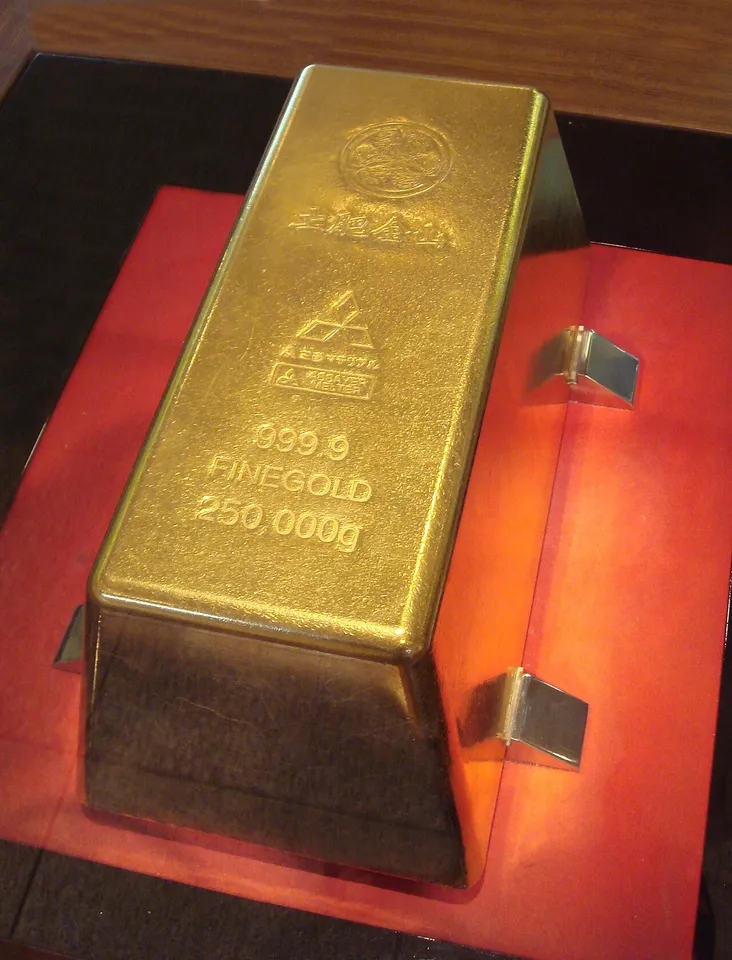
A gold price in Pakistan is incomplete unless it states the unit, purity, currency and time. A quotation per tola cannot be compared directly with one per ten grams, and a 24-karat reference should not be presented as the final price of every piece of jewellery. Making those distinctions first helps readers understand a market update without mistaking unlike numbers for a sudden price change.
This guide was reviewed on 6 November 2026. It explains gold quotations and uses explicitly invented amounts for arithmetic. It does not claim a verified live retail gold rate for Pakistan today or recommend an investment. For an actual transaction, obtain a current, itemised quotation from the seller and check the applicable weight and purity.
What should a Pakistan gold quotation contain?
Record the date, time, location or market reference, currency, unit of mass and stated purity. Also identify whether the number describes a reference rate, a seller's offer or a buying-back offer. These details determine whether two quotations can be meaningfully compared.
For an invented exercise, write one figure labelled rupees per tola, 24-karat reference, checked at noon. Write another labelled rupees per ten grams, 22-karat item, checked yesterday. The figures cannot be treated as an immediate like-for-like price movement. Several fields differ before the numerical comparison even begins.
A clear article should preserve those labels beside a price instead of hiding them in a footnote. A screenshot containing only a large rupee amount is especially easy to misinterpret after being forwarded. The number may be copied correctly while its meaning changes because the missing context is supplied by guesswork.
How are grams, tola and troy ounces related?
International precious-metal references commonly use the troy ounce. The LBMA explains that one troy ounce is 31.1034768 grams. It is different from the ordinary ounce used for many other goods. A converter that silently uses the ordinary ounce can therefore produce an incorrect gold comparison.
The conventional tola conversion used in relevant weight tables is 11.6638038 grams, equal to three-eighths of a troy ounce. In everyday quotations the figure may be rounded, so state the conversion used. A ten-gram quotation is another distinct mass basis and should remain labelled as ten grams.
| Unit used in the calculation | Gram equivalent |
|---|---|
| One gram | 1 gram |
| Ten grams | 10 grams |
| One conventional tola | 11.6638038 grams |
| One troy ounce | 31.1034768 grams |
The table concerns mass conversion, not today's price. Matching units is necessary before comparing quotations, but it does not establish that the prices have the same purity, timestamp or commercial terms.
How can a per-gram quotation be converted?
Multiply a stated per-gram price by the number of grams in the chosen unit, provided the purity and other assumptions match. This is a unit conversion, not a complete retail valuation. A jeweller's final bill may include additional components that the reference rate does not describe.
Use an intentionally fictional rate of one thousand rupees per gram. Under that assumption, ten grams corresponds to ten thousand rupees, while a conventional tola corresponds to approximately 11,663.80 rupees. These amounts are classroom numbers and must not be repeated as a current market quotation.
Now reverse the exercise by dividing an invented per-tola figure by the tola conversion. State the rounding convention and retain enough precision until the final step. Rounding the conversion too early can create small differences that look like a pricing disagreement even when both calculations started from the same assumption.
What do karat and purity mean?
Karat describes gold content on a twenty-four-part scale. In a simplified nominal calculation, 22-karat corresponds to twenty-two parts gold out of twenty-four. The actual item should be assessed through appropriate documentation and testing; a label alone is not proof that a particular object has the stated composition.
Do not confuse gold karat with the carat used as a mass unit for gemstones. The similar sound hides two different quantities. A jewellery description can mention both metal purity and a stone's mass, but they belong in separate fields and should not be added or substituted for one another.
For a classroom worksheet, create columns for total metal mass, stated purity and nominal fine-gold content. This makes the calculation's basis visible. It also shows why an item's total weight is not automatically the amount of pure gold it contains, especially if the item includes stones or other materials.
How does a purity adjustment work in a simple model?
If all other assumptions are held constant, a nominal purity fraction can be used in an educational fine-metal calculation. For example, a fictional twelve-gram piece at a nominal twenty-two parts out of twenty-four contains eleven grams of gold in that simplified model. Twelve multiplied by 22/24 gives eleven.
The result is not a certificate for a real item and not a guaranteed resale value. It excludes testing results, non-metal components and commercial terms. Its purpose is to distinguish total mass from the gold-content assumption, not to replace an authorised assessment or a written transaction record.
When comparing two actual offers, ask what weight was measured and whether stones or other components were excluded. A beautiful photograph or a familiar shop name does not answer the composition question. The relevant evidence is the item's documentation, measurement and appropriate verification.
Why is an international reference different from a local retail price?
An international gold reference and a local jewellery quotation describe different stages and conditions. Currency conversion is part of a comparison, but local commercial terms, product form and transaction timing can also matter. A simple conversion should not be presented as a promise of the exact price available at every shop.
For an invented model, take a fictional foreign-currency price per troy ounce and multiply by a fictional exchange rate. That produces a local-currency equivalent on the same mass basis. It does not automatically include fabrication, seller charges or the price at which the seller will buy the item back.
Keep both source times visible. A morning metal reference and an exchange rate from a different date do not constitute a simultaneous live calculation. A trustworthy comparison explains that limitation instead of using the apparent precision of a calculator to hide mismatched inputs.
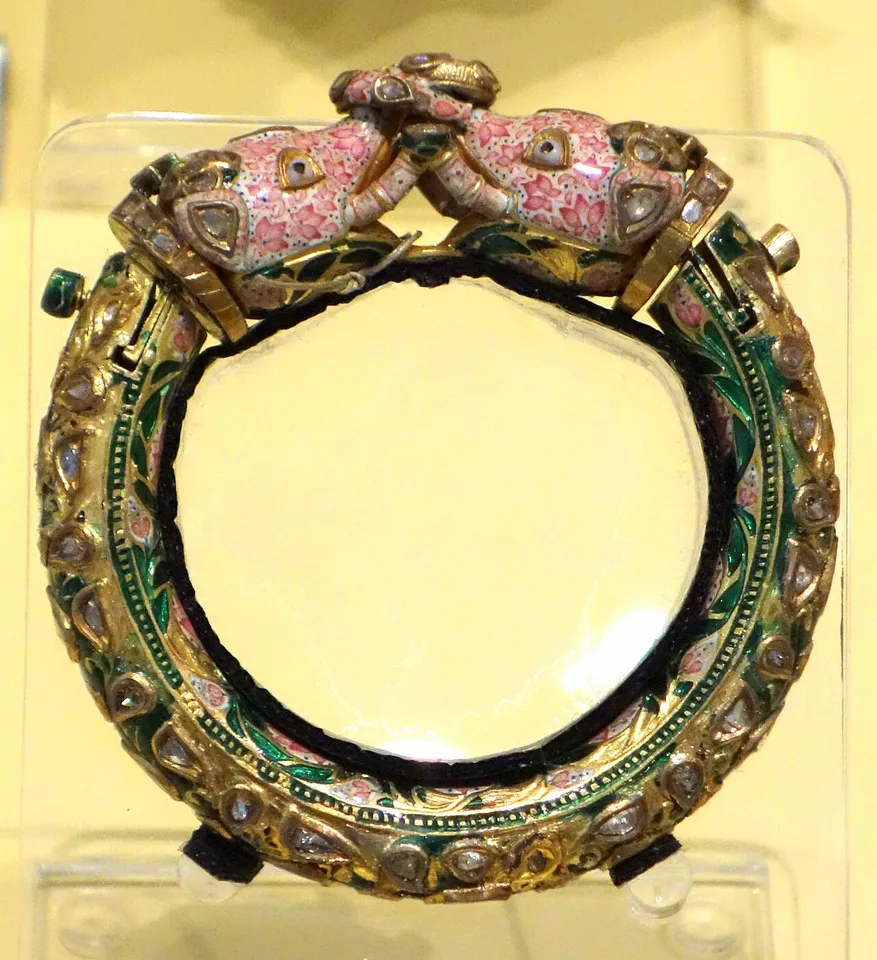
An eighteenth-century gold bracelet from India or Pakistan in a museum collection, shown as historical jewellery context rather than current shop stock.
What belongs in an itemised jewellery bill?
A useful bill distinguishes the item, measured weight, stated purity and the pricing components applicable to the transaction. Depending on the arrangement, workmanship or other charges can be separate from the metal reference. Ask the seller to explain the calculation in writing rather than assuming every displayed rate is an all-inclusive bill.
Use a fictional exercise with an assumed metal component of ten thousand rupees and an explicitly stated workmanship charge of one thousand. The model total is eleven thousand before any other stipulated amount. It teaches addition and itemisation; it does not establish which charges apply to a real purchase or what a fair charge should be.
If an actual bill includes a deduction or an unfamiliar line, ask what it represents and how it was calculated. Avoid replacing that explanation with a general internet claim that every seller follows one identical formula. The transaction's documented terms are the relevant starting point.
Why can buying and selling quotations differ?
A seller's asking price and the amount offered when buying an item back are different quotations. Their difference can reflect the transaction arrangement and assessment of the item. A reference rate does not guarantee that someone can buy and immediately sell at the same amount without any difference.
For an original example, a fictional item is offered at twelve thousand units while a separate buying offer is eleven thousand. The one-thousand difference should not be confused with an overnight change in the international gold reference. It describes two different sides of a transaction under the exercise's assumptions.
Before a real transaction, ask how weight, purity and any applicable deductions will be assessed. Keep the written offer and receipt through an appropriate private record. Do not publish identity documents, payment references or personal account details in a public comment merely to ask a general pricing question.
Does a rising gold reference guarantee an investment profit?
No guarantee follows from a market reference alone. Purchase terms, selling terms, currency movements, timing and other costs can affect an individual's outcome. A historical increase is also not a promise that the price will continue in the same direction over a later period.
An educational comparison can separate gross price change from a fictional net outcome. If an assumed reference rises but transaction costs also apply, the change in the reference is not automatically the return on the person's complete transaction. Each input needs to be listed before a result is calculated.
This guide is about reading quotations, not choosing how someone should allocate savings. A personal financial decision requires its own assessment of circumstances and risks. Avoid headlines promising a guaranteed profit or portraying one commodity as a universal answer for every household.
How should daily and monthly data be distinguished?
A monthly average and a live observation are different records. A long-term chart may be useful for studying broad historical conditions, but it cannot establish a jeweller's current offer. The source's sampling interval and definition should remain visible beside the chart.
Likewise, a report on a country's gold reserves is not a local retail-price list. A reserves dataset answers a question about a stock of assets under its definition. A market quotation concerns a price at a particular time. Confusing them gives the reader an official-looking number that answers the wrong question.
For a classroom exercise, label one record monthly average, another current seller quote and another reserves quantity. Ask which can answer the question what will this seller charge now? The answer requires the actual current quotation and its conditions, not whichever record appears most authoritative.
How can misleading gold-price posts be checked?
Look for the unit, purity, timestamp and source. If a post omits them, treat the comparison as incomplete. A number can be outdated even when a new account reposts it today, and an image's upload date does not necessarily show when the price was observed.
Be cautious about messages demanding payment or private credentials to secure a supposedly guaranteed rate. Use an independently verified contact route for a real seller and obtain the relevant written terms. This is a general verification habit, not an allegation about a particular business.
Historical photographs of bars or jewellery can illustrate a guide without proving today's price. Their captions should identify them as illustrations. A picture of a stamped bar also cannot certify the composition or authenticity of another item being offered in a private message.
A worked quotation-comparison activity
Create two fictional quotations with the same purity and timestamp but different units. Convert both to a per-gram basis using the stated conversion and compare them. Then change one quotation's purity and explain why a direct comparison now requires another explicit assumption.
Add a separate workmanship amount to a fictional jewellery purchase. Keep it on a different line from the metal component and calculate the total. Finally, introduce a hypothetical buying-back offer and explain why it answers a different question from the original purchase bill.
Students can practise these operations through our study resources or build a clearly labelled fictional converter in programming courses. A useful converter should ask for units, purity and date rather than displaying a made-up live Pakistan rate.
Questions readers commonly ask
Is one tola the same as ten grams? No. The conventional conversion used here is 11.6638038 grams per tola. Keep the source's rounding and unit visible when comparing a market report with a ten-gram quotation.
Does this article state today's verified gold rate? No. It explains how to interpret a rate and avoids publishing an unverified live amount. Use a current, identified quotation with a time, purity and unit for an actual transaction.
Can a 24-karat reference be used as the final bill for every necklace? Not automatically. Item weight, stated composition, non-metal components and commercial terms need to be examined. A reference can support a calculation while still being different from the complete documented purchase price.
Sources
- LBMA: the troy ounce and gram conversion
- Oxford Balances: published unit-conversion table
- The Perth Mint: troy ounce versus ordinary ounce
- SBP EasyData: official dataset directory
Image credits: cover: PHGCOM, source, CC BY-SA 3.0. Resized and converted to WebP. inline: Daderot, source, CC0. Resized and converted to WebP.
Found an error or an outdated detail? Report a correction with the article URL and original source.