
Pakistan vs India U19 Asia Cup Final 2026: Full Scorecard and Result
India U19 won by one wicket after chasing Pakistan U19 337/9. Read every batter score and the bowling figures.

Pakistan vs India U19 Asia Cup final 2026: what the verified record shows
Pakistan and India met in the final of the ACC Men's Under-19 Asia Cup on 14 November 2026 at Al Amerat in Oman. The Pakistan Cricket Board's tournament list confirms the fixture, date and venue. It was their second meeting in this edition: Pakistan had beaten India by three wickets in the group stage on 8 November, according to the PCB's separate match report. Those two matches must not be confused when reading a scorecard or writing a headline.
The PCB final scorecard records Pakistan at 337 for nine from 50 overs. Usman Khan scored 107, Abdul Qadir 80 and Farhan Yousaf 63. These figures describe Pakistan's innings. India completed the chase with one wicket remaining. The completed scorecard now records India 339/9 in 50 overs, winning by one wicket.
The confirmed fixture
| Item | Verified detail |
|---|---|
| Competition | ACC Men's U19 Asia Cup 2026 |
| Match | Pakistan Under-19s vs India Under-19s, final |
| Date | 14 November 2026 |
| Venue | Al Amerat Cricket Ground, Oman |
| Earlier meeting | Pakistan beat India by three wickets on 8 November in the group stage |
The earlier match is useful context, but it is not the final. A search for Pakistan vs India U19 brings up both scorecards and sometimes an older 2025 final. Match date and competition round should appear beside every quoted score.
Why the group match matters
Pakistan had already faced India on 8 November. The PCB said wicketkeeper-batter Hamza Zahoor scored an unbeaten century as Pakistan won by three wickets. That performance belongs to the group encounter. It should not be copied into the 14 November final's batting table. Similarly, the 2025 final in Dubai, which Pakistan won by 191 runs, is a different season and ground.
These distinctions help readers who land from broad searches such as "Pak vs Ind U19 score". The correct scorecard is identified by year, date, round and venue together. A page that gives only the teams and a result can easily attach the wrong innings to the wrong match.
Scorecard sources and limits
The Pakistan innings was compared with the PCB card and Cricket World. The PCB page did not display the completed India innings during this review. India scores, the result and margin come from Cricket World; the player-of-match field is omitted.
Complete batting scorecard
Pakistan batted first and reached 337/9. The PCB card and the independent completed card agree on the individual batting scores. Runs are followed by balls faced. A not-out batter remains in the table even if he scored zero; a run-out is included among the nine wickets but is not credited to a bowler.
| Pakistan U19 batter | Runs | Balls | Fours | Sixes | Dismissal |
|---|---|---|---|---|---|
| Usman Khan | 107 | 111 | 11 | 3 | c Arjun Rajput b Kavya Paresh Patel |
| Hayam Khan | 21 | 23 | 4 | 0 | c Anvay Dravid b Kavya Paresh Patel |
| Abdul Qadir | 80 | 54 | 3 | 8 | c VK Vineeth b Arjun Rajput |
| Farhan Yousaf | 63 | 60 | 4 | 3 | c Aryan Savsani b Chigurupati Venkata |
| Ahmed Hussain | 17 | 20 | 1 | 0 | c Aaryavir Sehwag b Chigurupati Venkata |
| Hamza Zahoor | 10 | 10 | 0 | 0 | c Mohit Ulva b Kavya Paresh Patel |
| Hasnain Abbas Dar | 2 | 4 | 0 | 0 | c Manal Chauhan b Chigurupati Venkata |
| Mohammad Sayyam | 7 | 7 | 0 | 0 | run out |
| Niqab Shafiq | 11 | 9 | 0 | 1 | b Kavya Paresh Patel |
| Rizwanullah | 4 not out | 3 | 1 | 0 | not out |
| Ali Raza | 0 not out | 1 | 0 | 0 | not out |
| Extras | 15 | 3 byes, 1 leg bye, 9 wides, 2 no-balls (PCB) | |||
| Total | 337/9 | 50 overs |
India finished on 339/9, reaching the target of 338 in the final over. Cricket World's completed card gives the following eleven individual lines. These are not the scores from the 8 November group game.
| India U19 batter | Runs | Balls | Fours | Sixes | Dismissal |
|---|---|---|---|---|---|
| Lakshya Rajesh Raichandani | 80 | 101 | 5 | 0 | c Hasnain Abbas Dar b Ali Raza |
| Aaryavir Sehwag | 58 | 61 | 9 | 0 | c Usman Khan b Niqab Shafiq |
| VK Vineeth | 24 | 21 | 3 | 0 | c Usman Khan b Rizwanullah |
| Arjun Rajput | 16 | 18 | 0 | 2 | c Hamza Zahoor b Rizwanullah |
| Yashbardhan Singh Chauhan | 9 | 5 | 1 | 0 | c Usman Khan b Hasnain Abbas Dar |
| Anvay Dravid | 19 | 12 | 3 | 0 | run out |
| Manal Chauhan | 47 | 32 | 3 | 3 | c Usman Khan b Niqab Shafiq |
| Aryan Savsani | 9 | 14 | 0 | 0 | c Hayam Khan b Rizwanullah |
| Kavya Paresh Patel | 0 | 2 | 0 | 0 | c Hamza Zahoor b Mohammad Sayyam |
| Mohit Ulva | 49 not out | 26 | 5 | 3 | not out |
| Chigurupati Venkata | 11 not out | 8 | 2 | 0 | not out |
| Extras | 17 | 8 leg byes, 9 wides | |||
| Total | 339/9 | 50 overs |
Bowling figures
India's wicket-taking came mainly from Kavya Paresh Patel, whose 4/68 in ten overs was the best return of Pakistan's innings. Chigurupati Venkata took 3/40 from five overs. Arjun Rajput took 1/43. Mohammad Sayyam's run-out does not appear in any bowler's wicket tally, which is why bowling wickets sum to eight rather than nine.
| India bowler | Overs | Runs | Wickets |
|---|---|---|---|
| Mohit Ulva | 8 | 57 | 0 |
| Kavya Paresh Patel | 10 | 68 | 4 |
| Chigurupati Venkata | 5 | 40 | 3 |
| Manal Chauhan | 3 | 40 | 0 |
| Aryan Savsani | 7 | 36 | 0 |
| Yashbardhan Singh Chauhan | 6 | 35 | 0 |
| Arjun Rajput | 7 | 43 | 1 |
| VK Vineeth | 4 | 14 | 0 |
Pakistan used six bowlers in India's chase. Rizwanullah's 3/53 was Pakistan's leading wicket haul, followed by Niqab Shafiq's 2/57. India lost nine batters, one by run-out, and still completed the chase with Mohit Ulva and Chigurupati Venkata not out.
| Pakistan bowler | Overs | Runs | Wickets |
|---|---|---|---|
| Ali Raza | 10 | 65 | 1 |
| Mohammad Sayyam | 10 | 79 | 1 |
| Rizwanullah | 10 | 53 | 3 |
| Niqab Shafiq | 10 | 57 | 2 |
| Ahmed Hussain | 5 | 38 | 0 |
| Hasnain Abbas Dar | 5 | 39 | 1 |
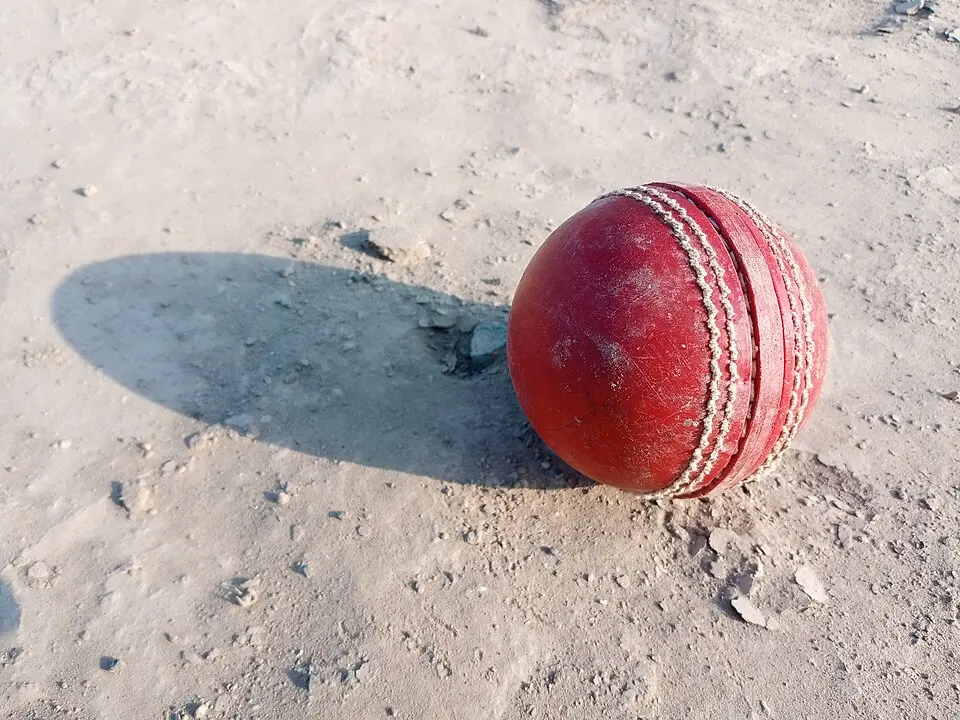
Archive cricket-ball photograph from Punjab. It does not depict the 2026 final or its match ball.
How the final turned
Pakistan's opening pair added 62 before Hayam Khan was dismissed. Abdul Qadir and Usman Khan then moved the total to 197/2, giving Pakistan a strong base. Qadir's 80 came from only 54 balls and included eight sixes, while Usman's 107 came from 111 balls. Pakistan were 240/3 when Usman fell, then 299/4 when Ahmed Hussain was dismissed. Six wickets in the last ten overs meant the innings closed at 337/9 rather than an even larger total.
India's chase began with a 95-run opening stand. Aaryavir Sehwag made 58 and Lakshya Raichandani anchored the top order with 80. The middle overs were less secure: India slipped from 186/4 to 217/6, including Anvay Dravid's run-out. Another three wickets left them 309/9 in the 48th over. The last pair still needed 29 runs to pass Pakistan's total.
Mohit Ulva, unbeaten on 49 from 26 balls, and Chigurupati Venkata, unbeaten on 11 from eight, carried India to 339/9. The card reports a one-wicket win. This is a very different account from saying that the top-order half-centuries alone won the match: the last-wicket stand was decisive once the ninth wicket fell at 309.
The chase's final notation needs care. The completed card says 50 overs and 339/9. It should not be paraphrased as a win with several balls left. Equally, a scoreboard difference of two runs is not the victory margin for the chasing side: India won by one wicket, because one wicket remained when they surpassed the target.
Common scorecard questions
Who won the 2026 Pakistan vs India U19 Asia Cup final?
India U19 won by one wicket on 14 November 2026. Pakistan made 337/9 in 50 overs; India finished 339/9 in 50 overs. The final was at Al Amerat, Oman. Do not confuse it with Pakistan's three-wicket group-stage win over India on 8 November.
Who scored a century?
Pakistan opener Usman Khan made 107 from 111 balls. The other major Pakistan contributions were Abdul Qadir's 80 from 54 and Farhan Yousaf's 63 from 60. For India, Lakshya Raichandani scored 80 and Aaryavir Sehwag 58; neither scored a century in this final.
Who took the most wickets?
India's Kavya Paresh Patel took four wickets for 68 runs. Pakistan's Rizwanullah took three for 53. Individual bowling wickets and team wickets differ when a batter is run out; the scorecard lists one run-out in each innings.
Why does the total exceed the sum of the batters' runs?
Each innings has extras. Pakistan's batters scored 322 and the official card lists 15 extras, reaching 337. India's batters scored 322 and the completed card lists 17 extras, reaching 339. Wides, no-balls, byes and leg byes have different scoring rules, but all contribute to a team's total.
Was this the same match as Pakistan's group win?
No. Pakistan's three-wicket win was on 8 November in the group stage. The one-wicket Indian victory was the final on 14 November. Team names are the same, which is why the date, tournament round and venue must accompany the score.
Reading the numbers without confusing the two matches
This final offers a useful example of how a big first innings can still leave a chasing side a path to victory. Pakistan's 337 was built on one century, an 80 and a 63. The individual batting numbers also show the value of the supporting contributions. Hayam Khan added 21 near the top; Ahmed Hussain made 17 and Niqab Shafiq 11. None of those scores alone defines the match, but a scorecard should keep them visible rather than naming only the three highest scorers. Extras contributed another 15 runs. Ignoring them makes the displayed team total look arithmetically impossible.
India's innings had a different shape. The opening partnership of 95 created room for the chase, but losing nine wickets made the last overs a genuine contest. Lakshya Raichandani faced 101 balls for his 80. Mohit Ulva needed only 26 balls for his unbeaten 49. Their different scoring rates describe different roles and phases, not a simple ranking of who mattered more. The last pair had to protect the final wicket while finding the remaining runs. That combination is why the official result is recorded as a one-wicket victory.
A reader comparing the bowling tables should also watch the extras. India conceded 15, including nine wides and two no-balls on the PCB card. Pakistan conceded 17 according to the completed card, including nine wides and eight leg byes. These are team totals. A leg bye is not charged against the bowler in the same way as a wide. Bowling runs on each row should therefore not be summed and treated automatically as identical to the opponent's full innings total.
The scorecard's boundaries add a second layer of explanation. Abdul Qadir hit eight sixes in 54 balls, whereas Usman Khan's 107 took 111 balls and included three sixes. For India, Mohit Ulva hit three sixes in 26 balls in the late chase. Boundaries alone do not reveal every partnership or tactical decision, but together with balls faced, wickets and the fall-of-wickets sequence, they help explain why the run rate changed across the innings. That is more informative than copying one headline score without the match context.
A scorecard checklist for readers
If you arrive at this page from a search for a live score, check four identifiers before sharing a figure. First, confirm the match date: 14 November 2026. Second, confirm that the round is the final rather than the 8 November group meeting. Third, confirm the teams are their under-19 sides, not the senior men's or women's sides. Fourth, look for the completed status and the final innings totals. These simple checks prevent an impressive performance from one match being credited to a player in another.
A cricket scorecard contains different types of numbers. A batter's runs and balls faced describe an individual innings. Extras belong to the team total but not an individual batter. A bowler's figures describe runs conceded from that bowler's deliveries and wickets credited to that bowler. Run-outs count as team wickets without increasing a bowler's wicket column. The fall-of-wickets list shows the score when each dismissal happened. Reading these sections together provides a fuller picture than the final total alone.
The scores in this final are especially easy to misread because the teams met twice in one tournament. On 8 November, Pakistan chased India and won by three wickets. On 14 November, Pakistan set a target and India chased it for a one-wicket victory. The winning side, innings order and individual figures differ. A headline that says only "Pakistan vs India U19 Asia Cup 2026" cannot tell you which game its statistics describe.
The main lesson from this final is that a score is a sequence, not a single number. Pakistan's century and Qadir's rapid 80 built a large target. India's 95-run opening stand supported the chase, then several wickets increased the pressure. The last partnership carried the side beyond the target. The table lets readers see both the early foundation and the late finish without inventing events that the recorded figures cannot establish.
Sources
- Completed scorecard with both innings
- PCB complete Pakistan innings in the 14 November final
- PCB tournament fixtures: final dated 14 November 2026
- PCB report: 8 November group-stage win, a separate match
- BCCI final match page
- Post-innings report on Pakistan's 337/9 and major scores
Source check: 14 November 2026. Reviewed against the PCB Pakistan innings and a completed two-innings scorecard on 14 November 2026.
Image credits: cover: Safa.daneshvar, source, CC BY-SA 4.0. Resized and converted to WebP. Inline: Mr Khubaib Sani, source, CC BY-SA 4.0. Resized and converted to WebP.
Found an error or an outdated detail? Report a correction with the article URL and original source.