
Pakistan Minerals Investment Forum 2026: Outcomes and MOUs Explained
PMIF26 reported 7,000-plus visitors and 13 agreements or MOUs. Learn what those figures mean and what mining projects still need to prove.
Pakistan Minerals Investment Forum 2026: what happened and what the numbers mean
The Pakistan Minerals Investment Forum 2026 took place in Islamabad on 12 and 13 November. The event organizer's closing page reports more than 7,000 visitors, participants from over 60 countries, more than 50 exhibitors and 13 agreements or memoranda of understanding. Those are organizer-reported event figures, not evidence that thirteen mines were built or that a particular amount of money had already entered the country. Government press releases confirm the forum's opening, exhibition and discussions with foreign investors. This article separates what occurred from what future projects still need to prove.
The search trend for 'mineral' included the more specific phrase 'Pakistan Minerals Investment Forum 2026'. A useful answer should therefore explain the forum, the mining value chain and the meaning of its announcements. It should not treat every mineral-related search as a request for a stock tip or a claim that a discovery has been verified. The forum was about attracting investment, discussing policy and presenting projects. A two-day conference can start relationships; it cannot by itself complete exploration, financing, construction and production.
Forum at a glance
| Item | Verified detail |
|---|---|
| Event | Pakistan Minerals Investment Forum 2026, PMIF26 |
| Dates | 12-13 November 2026 |
| City | Islamabad, Pakistan |
| Main venue in government report | Jinnah Convention Centre |
| Organizer's reported attendance | 7,000+ visitors |
| Countries represented | 60+ |
| Exhibitors | 50+ |
| Agreements and MOUs reported | 13 |
The figures above come from the organizer's current closing page. The count may differ from a search snippet captured at another time if the organizer updates its website; the live page checked for this report says 7,000-plus. A visitor count is also not the same as a number of signed investment deals. These measures describe different things: attendance, geographic representation, exhibition participation and formal documents.
What the forum actually brought together
The forum combined a strategic conference, a technical conference and an international exhibition. The organizer describes policy discussions and engagement between officials, company leaders and institutions in the strategic stream. Its technical stream focused on exploration, processing, infrastructure, environmental and social issues, and innovation. The exhibition gave companies and project developers a place to present equipment, geological prospects and investment proposals. Those formats serve different audiences and stages of a project.
Deputy Prime Minister and Foreign Minister Ishaq Dar addressed the opening session and inaugurated the international exhibition on 12 November, according to Pakistan's Press Information Department. Its release says he emphasized work with provincial governments and the need for mineral development to create local employment, support skills and benefit communities. This is a government statement of intent, not a measured employment outcome from the forum. Jobs would depend on projects reaching operational stages and hiring locally.
A separate government release says Commerce Minister Jam Kamal Khan visited the event on 13 November and spoke with ambassadors, trade commissioners, investors and business representatives. It identifies mineral exports, value addition and partnerships as discussion topics. Discussion is a real part of an investment forum, but it should be reported as discussion. The press release does not establish a dollar total for completed foreign investment resulting from that visit.
Why mineral investment has several stages
Mining begins long before a finished product can be sold. Exploration identifies promising geology and tests whether a deposit exists at a workable grade and scale. A project then needs further studies to estimate extraction costs, processing methods, water and power requirements, transport access and environmental effects. Permits, community engagement, financing and construction follow. Production is another stage, with its own operational and market risks. A forum can connect participants across these steps; it does not collapse them into one announcement.
The difference between a mineral occurrence and a mine is central to understanding the news. A rock sample may show that a metal is present. It does not prove that enough can be extracted economically, legally and safely. A company might exhibit exploration data at PMIF26 to attract technical partners or investors, but the project would still need independent work and approvals. Readers should ask what stage a highlighted project is at rather than assume exhibition space equals production.
Processing is equally important. Raw ore and a refined or concentrated product have different value and require different equipment, energy and skills. The organizer's technical stream includes processing for this reason. More domestic processing could, in principle, create additional local activity, but the feasibility of a particular plant depends on geology, costs, infrastructure, environmental safeguards and markets. The forum's existence alone does not prove that a processing facility has been commissioned.
What an MOU means, and what it does not
The organizer reports 13 agreements and memoranda of understanding. An MOU usually records an intention to cooperate or investigate a project; its terms vary. Some documents may be more specific than others, and the word 'agreement' can cover a range of legal commitments. A count of signed documents is therefore not the same as money disbursed, permits granted or ore exported. The event homepage does not provide a verified aggregate investment value in the figures cited here, so this article does not assign one.
Readers evaluating a particular announced deal should look for the parties, project location, amount if disclosed, legal status, milestones and a later implementation update. A promising announcement becomes more meaningful when work begins, financing closes or a regulator records a permit. Without those follow-up details, it is fair to say that a forum generated an MOU; it is not fair to say that the project has already delivered its advertised output.
This distinction protects both optimistic and skeptical readers. Dismissing every MOU as worthless overlooks the value of an early partnership, while treating every MOU as a completed investment misleads the public. The evidence supports a narrower conclusion: PMIF26 reported 13 documents and brought prospective partners together. Their later commercial effect needs separate verification.
The role of geological data
The published PMIF26 agenda included a scheduled launch of a National Minerals Data Centre and a Geological Survey of Pakistan geoportal. An agenda is a plan. It does not, on its own, prove that both systems went live, that every dataset was released or that the public can download it. Before making those stronger claims, a reporter should open the actual portal, check its operator and confirm what records are available. This article treats the items as scheduled announcements unless a completed official launch record is cited.
Why would such a data service matter? Investors and researchers need reliable maps, surveys and standard descriptions to compare exploration opportunities. If data are fragmented or difficult to access, the first stage of a project takes longer and its uncertainties are harder to evaluate. A well-maintained portal could reduce search costs and improve transparency. But the practical benefit depends on coverage, quality, update frequency and public access. A homepage announcement is only the beginning of that test.
Students interested in geology can use this example to understand the distinction between an institution and a dataset. The Geological Survey of Pakistan is an organization; a geoportal is a way to publish mapped information; the underlying measurements are the evidence. A map can show where observations were made and what they suggest. It cannot remove the need for field work, sampling and independent analysis before a commercial decision.
Provinces, local benefit and infrastructure
The government's opening statement emphasized cooperation with provinces. This matters because mineral projects are located in specific communities and depend on local land, roads, water, power and labor conditions. A national headline about investment can obscure those on-the-ground requirements. Transporting heavy equipment and later moving mineral products may require long-term infrastructure. Water use and environmental management require planning and oversight. Residents need a clear account of potential benefits and costs.
The organizer's technical program referred to infrastructure and environmental, social and governance concerns. Those are not decorations around a mining project. They affect whether a project can obtain permission, operate safely and maintain public trust. For a student or local reader, useful questions include who monitors water quality, how restoration is funded, which jobs require training, and how grievances can be raised. These questions are relevant even when a forum announcement focuses on international investors.
The Press Information Department release says the federal government wants mineral development to produce employment and skills benefits. That is a policy goal that can be measured later. A follow-up report should ask for hiring numbers, training programs, contracts awarded to local suppliers and environmental compliance records. A conference speech is evidence that the goal was stated; it is not proof that it has been met.
Exploration, exports and value addition
The commerce ministry's forum account discussed both mineral exports and industrial value addition. These can be related but are not identical. Exporting unprocessed material can bring revenue, while processing or manufacturing locally may create more domestic activity if it is commercially viable. Whether a country should process a particular mineral domestically depends on energy, equipment, skilled labor, water, logistics, price and environmental rules. A broad claim that all ore should be refined locally would be too simple.
Similarly, a rise in the market price of one metal does not guarantee that every prospective project becomes profitable. Mine costs and product quality differ. A forum can expose a project to interested firms, but each firm must examine the deposit and contracts. Readers should be cautious when a social post turns PMIF26 into a promise of immediate export revenue. The credible information in the organizer and government releases is that projects and investment opportunities were presented and discussed.
The 50-plus exhibitors reported by the organizer may include equipment suppliers and service firms, not just mine owners. Their presence can support a mining ecosystem by bringing technical options to the same venue. It does not mean 50 mines are planned or financed. Counting booths and counting projects are different exercises. A precise article keeps those measures separate.
How to check claims made after the event
Begin with the event organizer's closing page for the event dates and aggregate figures. Use government releases to confirm official speeches and visits. For a claimed project, find the named company or department's announcement and its original document. Note whether the claim is a proposal, a signed MOU, a binding contract, a permit, a financing close or an operating asset. If a figure is expressed in dollars, ask whether it is an estimate, an intention or money already spent.
Look for a publication date and an update date. Event homepages can change their counters after a conference, and a search result may preserve older wording. In the current checked page, the organizer says 7,000-plus visitors. If a later archived version shows a different figure, report the version and date rather than silently choose the larger number. Such care is especially important for SEO pages because they may remain visible long after the event.
The same caution applies to photographs. A stock image of a mine or a mineral specimen can illustrate the subject, but it cannot be presented as a photograph of an agreement signing or a specific PMIF26 project unless the source identifies it that way. This article uses archive illustrations with captions and credits. The event's factual claims rest on its organizer and official releases, not on the appearance of a photograph.
Questions readers are asking
When and where was PMIF26 held?
The Pakistan Minerals Investment Forum 2026 was held on 12 and 13 November in Islamabad. A government release locates the exhibition visit at Jinnah Convention Centre.
How many people attended?
The organizer's closing page checked for this report says more than 7,000 visitors, with participants from over 60 countries and more than 50 exhibitors. These are organizer-reported figures.
How many agreements were announced?
The organizer reports 13 agreements and MOUs. That count does not itself establish their monetary value or whether each project will be completed.
Was a National Minerals Data Centre launched?
Its launch appeared on the published conference agenda. The agenda alone is insufficient to confirm that a public system became operational. Check a later official launch notice or the live service before treating it as complete.
Did the forum prove immediate mining revenue?
No. It brought together officials, firms and investors and reported agreements. Revenue from a mining project requires later exploration, approvals, financing, construction and operations.
Why is the forum relevant to students?
It offers a real example of how geology, engineering, public policy, economics and environmental management intersect. The distinction between a mineral discovery, an investment agreement and an operating mine is useful beyond this single event.
Sources
- Pakistan Minerals Investment Forum: PMIF26 closing figures and event overview
- Pakistan Press Information Department: opening session, 12 November
- Pakistan Press Information Department: commerce minister's visit, 13 November
- PMIF26 organizer: published technical and strategic agenda
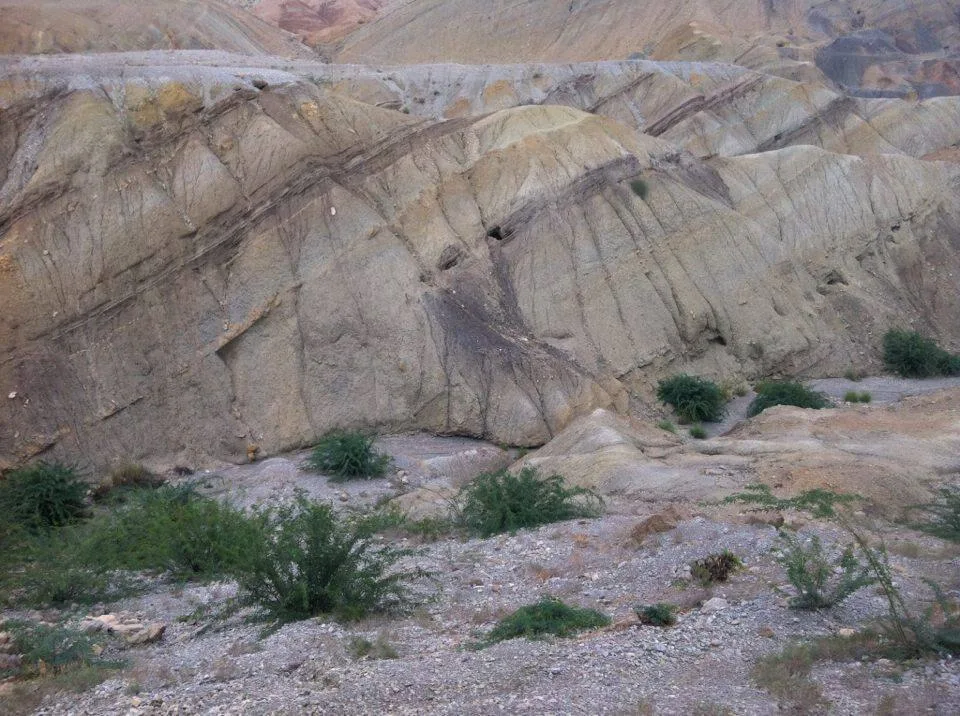
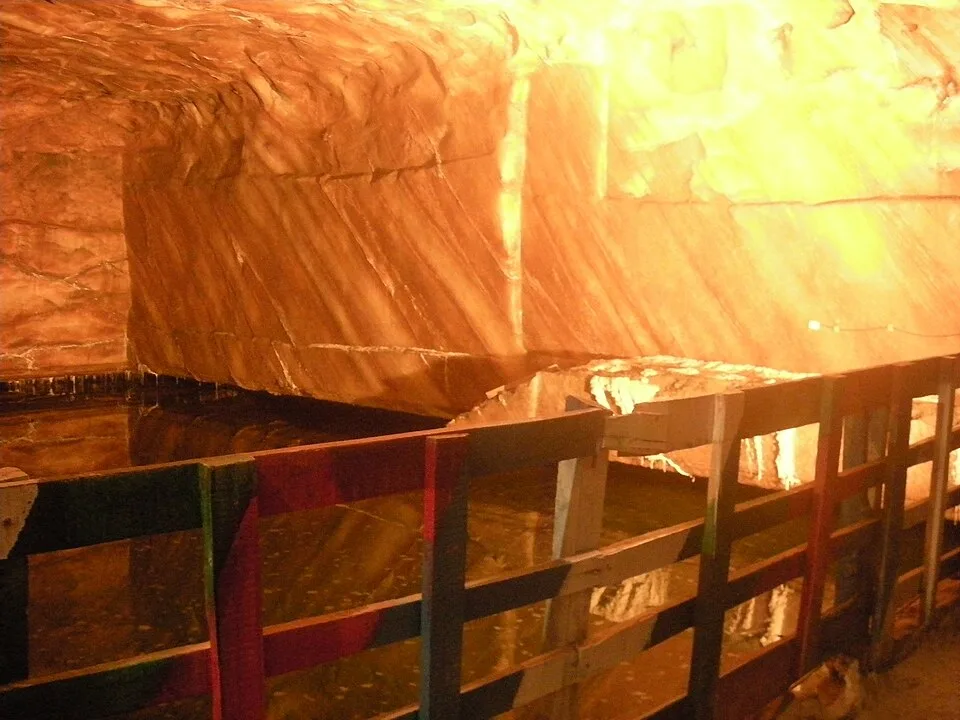
Image credits: Cover by Rinam Fatima, CC BY-SA 4.0; resized and converted to WebP. Inline by Afsheen Zafar, CC BY-SA 3.0; resized and converted to WebP. Both are archive context images, not photographs of the forum.
Checked on 14 November 2026. Organizer figures and government statements are attributed to their publishers. Agenda items are not treated as proof of completed launches.
Found an error or an outdated detail? Report a correction with the article URL and original source.