
Pakistan U19 vs UAE U19: 6 November Result and Usman Khan’s 139 Not Out
Read the Pakistan U19 vs UAE U19 result, Usman Khan’s 139 not out and the 225-run chase. Learn to decode 37.3 overs and the nine-wicket margin.
Pakistan Under-19 beat United Arab Emirates Under-19 by nine wickets at Al Amerat in Oman on 6 November 2026. UAE made 224 in 50 overs, and Pakistan reached 225 for one in 37.3 overs. Pakistan's Usman Khan finished unbeaten on 139 from 120 balls, according to the Pakistan Cricket Board and the completed scorecard.
This was the opening Group A match for Pakistan in the ACC Men's U19 Asia Cup. It is a completed youth fixture, not a live senior Pakistan versus UAE match or the Hong Kong Sixes. The result below is dated so that readers can distinguish it from other games between the countries, then use the actual chase to learn how cricket notation works.
What was the Pakistan U19 vs UAE U19 score?
UAE were dismissed for 224 in their allotted 50 overs. Pakistan needed 225 to win and reached that target for the loss of one wicket. The nine-wicket margin describes the wickets Pakistan still had available when the chase ended. It does not mean that Pakistan took only nine wickets while bowling or that the winning side scored nine extra runs.
| Match detail | Recorded value |
|---|---|
| Date | 6 November 2026 |
| Competition | ACC Men's U19 Asia Cup, Group A |
| Venue | Al Amerat Cricket Ground, Oman |
| UAE U19 innings | 224 all out in 50 overs |
| Pakistan U19 innings | 225/1 in 37.3 overs |
| Result | Pakistan U19 won by nine wickets |
Why the target was one more than the first total
In this completed match, 224 was the first side's total. A chase reaching 224 would equal it; the winning target was 225. Do not copy the opponent's total into a target column without accounting for that difference. In games affected by interruptions, a revised target may apply, so use the scorecard's actual target rather than assuming it can always be obtained from the original total alone.
A wicket margin answers a different question from a run margin
When the second side wins a chase, the result can be expressed in wickets remaining. A side defending a total can win by runs. The two margins have different units. A nine-wicket win should not be ranked numerically against a ten-run win by comparing only nine and ten. Compare the match circumstances and use the correct unit when describing the result.
How did Usman Khan build the winning innings?
The PCB records 139 not out from 120 balls, with 21 fours and one six. It also names Usman player of the match. The asterisk in a scorecard such as 139* means not out. His innings should be attributed to this under-19 match; a search for the common name Usman Khan can return players from other teams and competitions.
Calculate the strike rate from runs and balls
Divide 139 by 120 and multiply by 100. The result is approximately 115.83 runs per hundred balls, which is the strike rate displayed by scorecard providers. It does not mean that he faced a hundred balls exactly, or that every over produced the same number of runs. A rate standardises the denominator so that innings of different lengths can be compared carefully.
Boundaries explain part of the score
Twenty-one fours supplied 84 runs, and one six supplied six more. That makes 90 runs from those recorded boundaries. The remaining 49 of Usman's 139 came from other credited scoring. The arithmetic does not tell us which deliveries produced singles, twos or other outcomes. For a shot-by-shot account, use the appropriate event record rather than reconstructing an invented sequence from the totals.
What did the opening stand contribute?
The PCB credits Usman Khan and Jahangir Bilal with a 153-run opening partnership. Jahangir made 60 from 87 balls. With the first wicket falling at 153, Pakistan had 72 runs left to reach its target of 225. That calculation shows why the opening stand mattered without implying that only the two batters' personal totals count toward a partnership.
Partnerships measure the team score between wickets
A partnership can include runs credited to both batters and extras added during their time together. It is not necessarily identical to the sum of the two players' final individual scores: a batter who stays after a wicket can add more runs with a new partner. Read the team score at the start and end of the stand to isolate the relevant contribution.
The unbeaten partner still has a role
Abdul Qadir finished on 20 not out alongside Usman according to the completed record. A batter who has fewer runs may still help complete a chase by rotating the strike, surviving a difficult spell or scoring when required. Those are possible contributions, not assertions about particular unverified deliveries here. The safe factual conclusion is that both finished unbeaten when Pakistan reached the target.
What does 37.3 overs mean?
It means 37 completed six-ball overs plus three legal balls. The total is 37 multiplied by six plus three, or 225 legal balls. It is not a decimal number of overs. In decimal arithmetic, those 225 balls correspond to 37.5 overs. The written cricket notation must be converted before calculating rates or unused deliveries.
How many legal balls remained?
Fifty overs allow 300 legal balls in an uninterrupted innings. Pakistan used 225, leaving 75 legal deliveries of the scheduled allocation. The same remainder can be expressed as 12 overs and three balls. This is a calculation from the match figures, not an estimate from the printed notation. Subtracting 37.3 from 50 as ordinary decimals would produce a misleading result.
Why balls faced and legal balls are not interchangeable
A batter's balls-faced record describes their opportunity count under scoring conventions. A team's over count tracks legal deliveries. Certain extras and scoring decisions mean the two concepts should not be assumed identical when validating a detailed scorecard. Keep separate fields for innings legal balls and each batter's recorded balls faced. An apparent difference deserves checking before editing an official entry.

Muscat Light on Amerat Mountain at dawn in 2025, showing the wider host area rather than the cricket ground.
How fast was the chase compared with the starting requirement?
At the start, 225 runs from 50 overs corresponds to a required rate of 4.5 per over. Pakistan's completed rate was 225 divided by 37.5, exactly six runs per over. These are different measurements: one describes what was initially needed, and the other describes what actually happened. A rate at a specific intermediate moment would require the score and legal balls at that moment.
Rate changes depend on both runs and balls
Consider an invented 50-over chase of 225. At 100 after 25 overs, the team would need 125 from 25 overs, or five per over. At 120 after the same number of overs, it would need 105, or 4.2 per over. Both examples have the same starting target, but the remaining tasks differ. Neither is meant as an intermediate score for the actual Pakistan innings.
Wickets help explain tactical options
A side with many wickets in hand may have more options for changing pace than a side with most batters already dismissed. That does not make every risk wise. The opposition, conditions and match phase still matter. A good chase analysis reports wickets and scoring pace together instead of acting as if the required rate is the only factor determining how batters should play.
What should a reader notice about UAE's innings?
UAE's total was 224, and the scorecard records the last wicket at the end of the 50-over allocation. That combination is possible: a team can be all out on its final legal ball. A reader should not assume all out always means the side finished well before the scheduled limit. Check both wickets and overs to see how the innings ended.
Use fall of wickets to read the shape of an innings
The fall-of-wickets list describes the team score when each batter was dismissed. It is different from the individual batting table. A stand between two dismissals can show a recovery or a quiet period, but the list alone does not reveal exactly how it was constructed. When discussing a turning point, identify the specific interval and check the matching commentary or scorecard detail.
Keep score and judgment separate
A total can look modest after a successful chase but still have required work to build. The winning margin tells us what the second side achieved; it does not prove that every decision by the first side was poor. A neutral analysis can describe the pace, partnerships and available balls while leaving judgments about intent or skill to evidence that supports them.
What comes next in Group A?
The PCB's match report identifies India U19 as Pakistan's next opponent on 8 November 2026. That is a scheduled next fixture as stated in the report, not an outcome or a guarantee about a particular lineup. For changes and broader tournament context, check the official tournament records and the ACC U19 Asia Cup schedule guide.
One win is not the completed group table
This result establishes Pakistan's performance against UAE on 6 November. Qualification depends on the competition's rules and other results. A snapshot can change after another match ends. Do not infer an exact standing, final opponent or knockout place from this one completed fixture. Use an official dated table when a claim depends on every team having played its matches.
Under-19 records need their age-group label
A youth match can share country names with a senior match and take place in another format or tournament. Keep U19, the competition title and the date attached to the result. An archive search for Pakistan versus UAE without those fields can pull in completely unrelated scores. This is why a precise result link is more useful than a bare screenshot in a group message.
How can students check a scorecard independently?
Read the fixture identification first, then the completed result and innings totals. Check the winning margin and target against those numbers. Finally, compute one batting or team rate from its denominator. This sequence catches mistakes that are hard to spot when beginning with a social post. You should be able to say what came from the source and what you calculated yourself.
Build a small record with separate fields
For a practice dataset, store the competition, age group, date, venue, two innings and result status separately. Store completed overs and extra legal balls as separate values so a calculator cannot mistake 37.3 for a decimal. Add a unit beside the margin. In a database, allow a scheduled match to have no result instead of filling it with a fake score.
Test a conversion before trusting the output
Use 37 completed overs and three extra legal balls as one test. Expect 225 legal balls and 37.5 decimal overs. Add a test for a completed 50-over innings, and another where an invalid input tries to give six extra balls without increasing the completed overs. Reject the invalid entry rather than silently calculating the wrong result. See programming courses and class resources for more practice.
Quick answers for readers returning to the result
Who won? Pakistan U19 by nine wickets. Where? Al Amerat in Oman. What was the chase? 225/1 from 37.3 overs against UAE's 224. Who led the scoring? Usman Khan with 139 not out. How much of the scheduled innings remained? Seventy-five legal balls, calculated from the 50-over allocation and the completed innings notation.
Keep the evidence attached when sharing
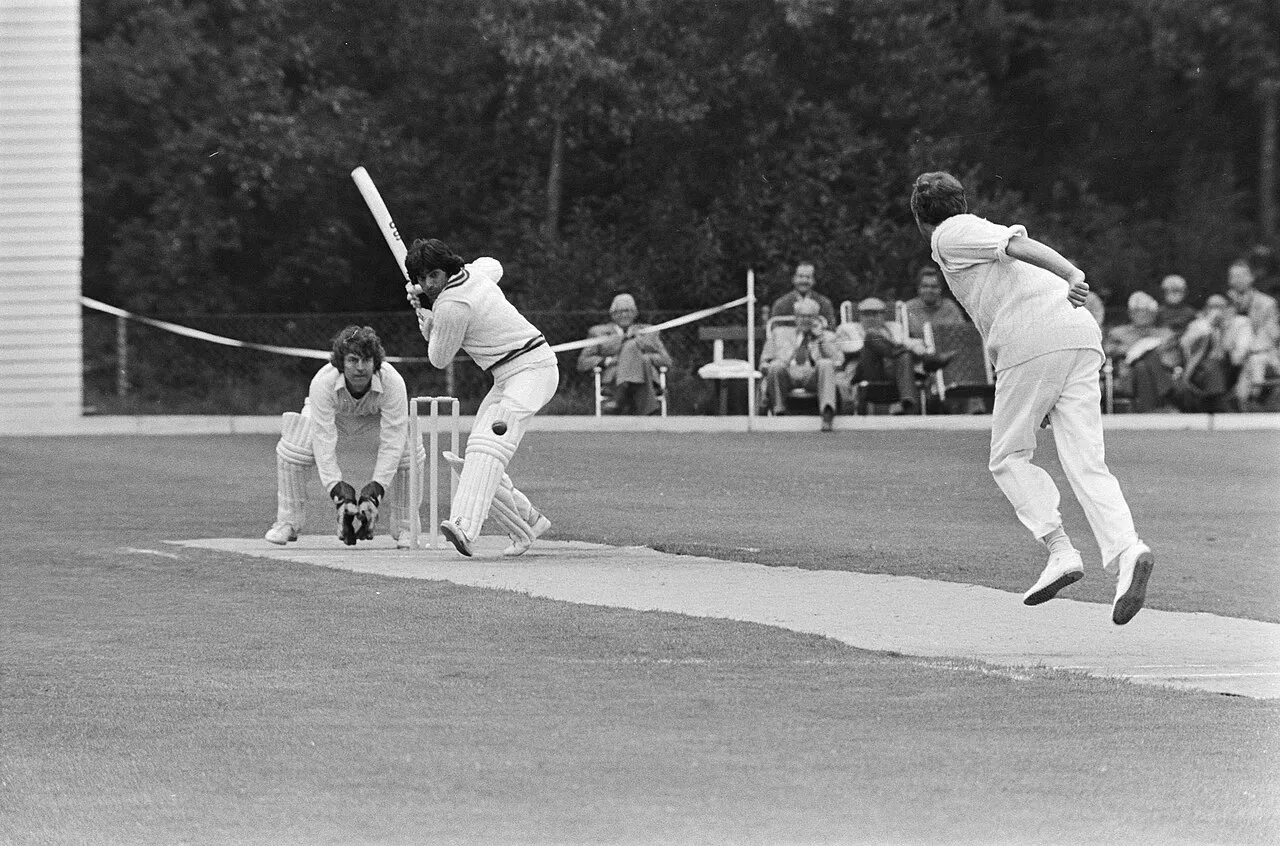
Link to the official match record or a completed scorecard, not a video claiming to show an unverified live stream. State the age group and exact date. Historical venue or cricket photos can help readers picture the setting, but the caption should say what each photo actually depicts. The match record, rather than the illustration, establishes the result.
Reconcile the batting total with the team score
The three recorded Pakistan batting scores add to 219: Usman made 139, Jahangir 60 and Abdul Qadir 20. The team's total was 225, leaving six runs attributable to extras in the completed record. That check is a useful way to distinguish the runs credited to individual batters from the scoreboard total. If the addition fails in a future exercise, check the extras line and whether every batter is included before assuming the scorecard is wrong.
Sources
- PCB match report and player of the match
- PCB official match record
- Radio Pakistan's 6 November result report
- Wisden completed match scorecard
Image credits: cover: Koen Suyk / Anefo, source, CC0. Resized and converted to WebP. inline: Sxthu, source, CC BY-SA 4.0. Resized and converted to WebP.
Found an error or an outdated detail? Report a correction with the article URL and original source.