
Pavan Rathnayake: October Innings, Strike Rate and Match Context
Understand Rathnayake's 130 against England and 77 in the Pakistan final, with clear strike-rate calculations and lessons about individual and team results.
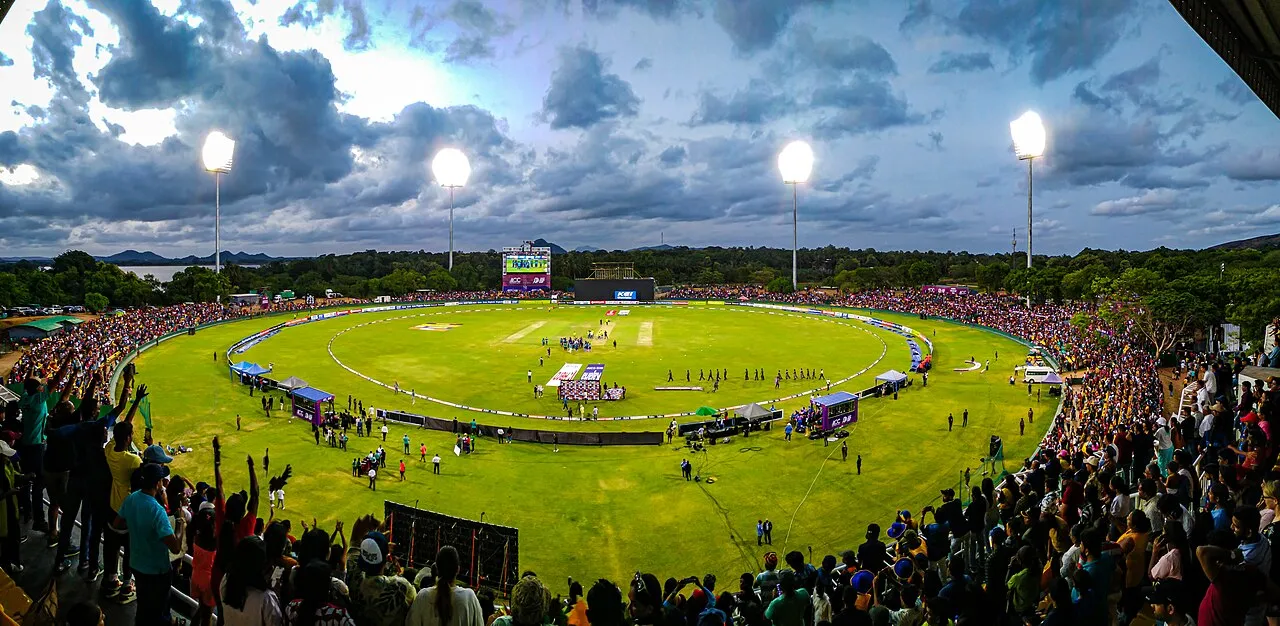
Pavan Rathnayake's October 2026 batting gives cricket followers several different performances to examine, rather than one score to memorise. His 130 from 106 balls helped Sri Lanka chase England's huge total on 22 October. Nine days later, he made 77 from 65 in the tri-series final, but Sri Lanka lost to Pakistan.
That contrast is worth understanding. A batter can contribute strongly in both a victory and a defeat. This guide identifies the Sri Lankan player, explains the two dated innings and turns their numbers into practical lessons about strike rate, targets and the limits of individual statistics.
Who is Pavan Rathnayake?
The official international player profile identifies Rathnayake as a Sri Lankan batter, right-handed with the bat, with off-break bowling listed. At the time checked for this guide, the profile shows an age of 24 and an international debut year of 2025.
Those labels help establish identity without turning a short profile into a complete career record. A bowling style in a profile does not establish that the player bowled in a particular match. Likewise, a role label does not tell us every batting position he has occupied.
For a specific performance, use a dated match report or scorecard alongside the player page. The profile answers “who is this?” while the match record answers “what happened on this occasion?” Keeping those questions separate avoids a surprising amount of confusion.
The 130 that helped make a huge chase possible
The official report for 22 October 2026 records Sri Lanka chasing a target of 430 against England in Rawalpindi, winning by two wickets with one delivery remaining. Rathnayake contributed 130 from 106 balls.
The same account records important contributions from Avishka Fernando and Dasun Shanaka. Rathnayake's innings belongs inside that team effort. It would be misleading to imply that one batter personally scored the whole chase or that the rest of the innings was a formality.
The relationship between the first-innings total and the target also matters. England made 429; the target to win was 430. A total to equal and a target to exceed it are related numbers, but they are not the same label.
For someone learning to read cricket, begin with those three facts: the target, the contribution and the result. Then ask how the innings progressed. A large final score is the start of an explanation, not a complete account of every decision at the crease.
What 130 from 106 means mathematically
Batting strike rate expresses runs per 100 balls faced. Using the reported figures, 130 ÷ 106 × 100 is approximately 122.64. That calculation describes the pace across Rathnayake's innings as a whole.
It does not say that he scored at the same pace in every over. An innings might include a settling period, a quieter phase against a particular bowler and a later acceleration. To identify those phases, you need delivery-level or interval information rather than the final two numbers alone.
Notice the units. “130 runs” is a total. “106 balls” is a count of deliveries faced. “122.64” is the calculated runs-per-100-balls rate. None of these should be copied into a column with a different heading.
This is a small but useful habit for both sport and schoolwork: write the label before comparing the number. An unlabeled statistic can look impressive while answering the wrong question.
The final brought a different outcome
On 31 October, Rathnayake made 77 from 65 balls in Sri Lanka's ODI tri-series final against Pakistan in Lahore. The official final report describes Pakistan successfully chasing 326 and winning by three wickets.
The result gives the innings its context without erasing the contribution. A losing team's useful innings remains useful, but it did not by itself secure the match. Both statements can be true at the same time.
The final should also remain separate from the earlier England chase. The opponents, date, target and result differed. A page that combines the 130 with Pakistan's final victory would create an event that did not happen.
For a fuller account of the final's Pakistan chase, see our Pakistan–Sri Lanka final guide. This page concentrates on Rathnayake's batting and how to interpret an individual contribution.
Comparing the two innings fairly
The final's 77 ÷ 65 × 100 produces a strike rate of approximately 118.46. The earlier 130 from 106 produces approximately 122.64. The larger innings was therefore also slightly quicker by this particular whole-innings measure.
| Dated innings | Runs | Balls | Calculated strike rate | Team outcome |
|---|---|---|---|---|
| Against England, 22 October | 130 | 106 | 122.64 | Sri Lanka won |
| Against Pakistan, 31 October | 77 | 65 | 118.46 | Sri Lanka lost |
That comparison is useful, but incomplete. It does not establish identical conditions, the same required rate or an equal level of difficulty. A sensible conclusion is limited to the numbers actually compared.
Avoid creating a rating of “effort” from the outcome column. One team win and one team defeat cannot reveal a player's private emotions or commitment. If discussing a specific technical choice, identify the ball or sequence that supports the observation.
Combine rates using the right denominator
Across just these two selected innings, the runs add to 207 and the balls to 171. Dividing 207 by 171 and multiplying by 100 gives approximately 121.05.
This selected two-innings strike rate is not his career strike rate or tournament total. It is a worked calculation using only the two rows shown above. The scope needs to stay beside the answer.
It is also better than taking a simple average of the two rounded rates. The innings contained different numbers of balls, so they should not automatically receive equal weight when calculating a combined runs-per-ball measure.
Try the principle with a fictional example. Ten runs from ten balls gives a rate of 100, while 40 from 20 gives 200. Their simple average is 150, but the combined calculation is 50 from 30, or 166.67. The difference comes from the denominator, not from an error in either original rate.
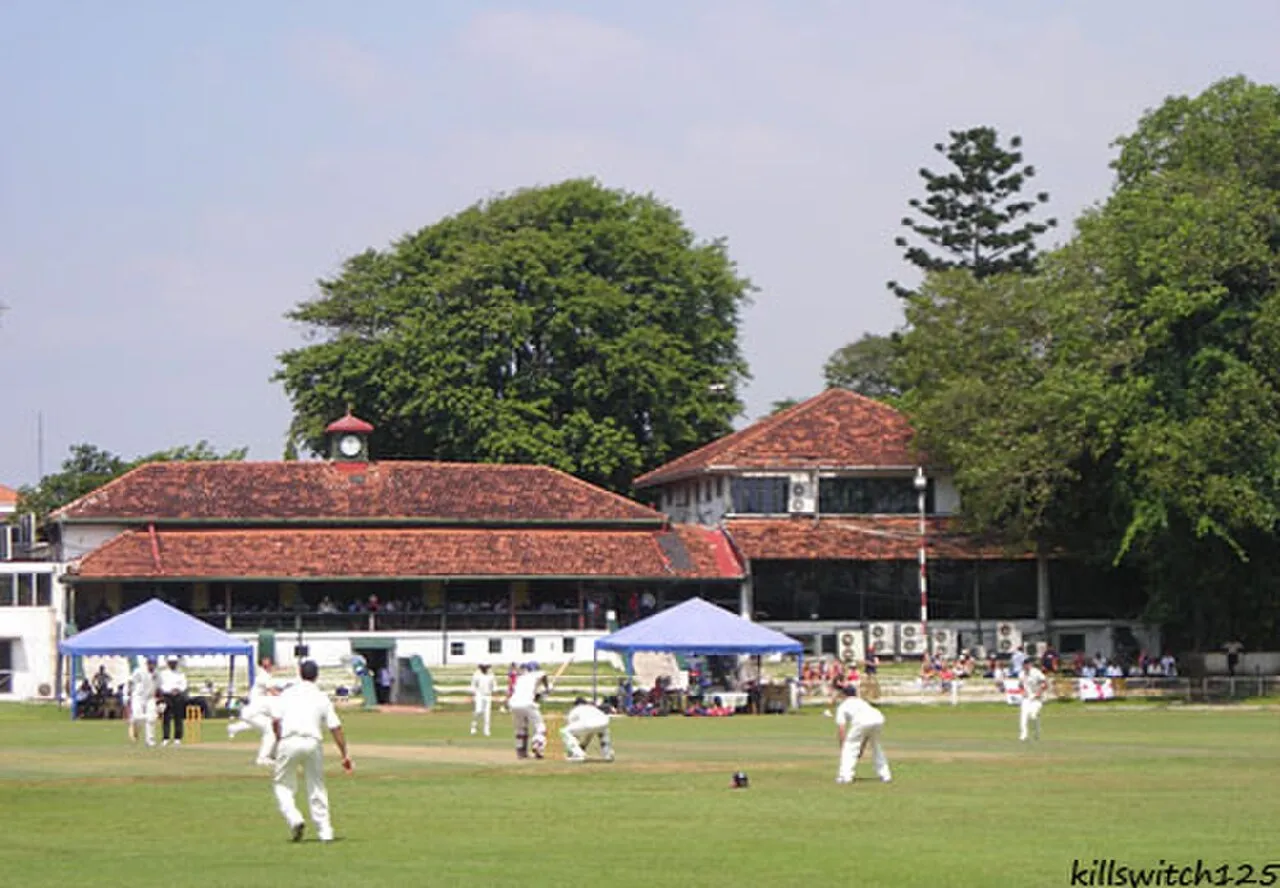
A historical view of Colombo Cricket Club Ground illustrates Sri Lanka's cricket setting. It does not depict either innings discussed here or establish that Rathnayake appears in the picture.
Why this is not a batting-average calculation
Batting average needs dismissals as well as runs. The selected runs-and-balls table above does not supply a full dismissal record, so it should not be used to invent a two-innings batting average.
This matters especially when a not-out innings is involved in a dataset. Dividing runs by the number of innings without checking dismissals can produce a different number from the established batting-average measure.
The safest habit is to decide which statistic you want, then identify its required inputs. If one input is absent, say so rather than substituting another number merely because it is available.
For students, this is a general data lesson. A spreadsheet can calculate a precise-looking answer from an inappropriate formula. Precision in the display does not make the definition correct.
A target is a team problem
An individual batter's strike rate and the team's required run rate are connected through the innings, but they are not the same measurement. One uses balls faced by a particular player; the other describes the runs the side needs over the deliveries remaining.
Here is a fictional situation. A team needs 60 from 60 legal balls. The requirement is six runs per over. If the next over produces three runs, the remaining task becomes 57 from 54 balls, approximately 6.33 per over.
That example does not reconstruct either October innings. It shows why the situation changes after every passage of play. A batter's final strike rate cannot tell the whole story of the team requirement at each moment.
Wickets add another dimension. A target may remain numerically achievable while the available batting resources change. Describing the runs needed without the wickets or remaining deliveries leaves the reader with an incomplete picture.
How to watch a middle-order innings more actively
Begin by noting the score and overs when the batter arrives. Then mark a few intervals: the first ten balls faced, a change of bowler, the fall of a partner's wicket and the closing phase. Write observations before deciding whether the innings was fast or slow for the situation.
Look for actions you can actually identify. Was a single taken into an open area? Was a boundary attempted against a particular length? Did a partnership continue after a difficult spell? These are more useful starting points than assigning a personality label from one stroke.
A short highlights package may omit many deliveries, so do not calculate a dot-ball percentage from it as though it were complete coverage. A missing delivery in an edited video is not evidence that no run was scored.
The purpose is to become a more careful viewer. You do not need to claim professional scouting expertise to ask clear questions about what a score and a sequence show.
Turn the figures into a small coding exercise
Create a list containing the two dated innings, with separate fields for opponent, runs and balls. Calculate the rate from the numeric fields rather than typing the answer into the display manually.
Then add validation. Balls must be greater than zero before dividing. Runs should not be negative. The date should remain attached to the record so another fixture cannot silently replace it.
Next, calculate the selected total runs and selected total balls. Label the output “these two innings” rather than “career statistics.” The correct label is part of the program's correctness, not a cosmetic detail to add later.
Our programming courses offer a place to practise those ideas with lists, arithmetic and conditions. A small, accurate exercise teaches more than a complicated dashboard that mixes formats or invents missing fields.
What not to infer from a promising series
A strong run of scores can attract attention without guaranteeing the next result. Future selection, a later batting position and performance in another format need their own evidence.
Similarly, a profile's general role does not prove that every innings follows a fixed template. A chase and a first innings can present different choices. Even two chases can differ sharply because of wickets, the required rate and the bowling available.
Treat broad claims such as “will always finish the chase” as predictions, not facts. The final described above is itself a reminder that an individual contribution and the team's result can move in different directions.
The useful question is what can be learned from the evidence now: how the figures were produced, what they measure and which questions remain unanswered without a fuller record.
Use a short evidence note beside every comparison
When sharing the two innings, add one sentence saying what you compared: runs and balls from two dated ODI reports. Add another saying what you did not compare: conditions, every delivery, dismissal history or the whole tournament. This makes the conclusion easier to assess without hiding it behind technical language.
A classmate can then repeat the arithmetic and challenge the interpretation separately. That distinction is valuable: agreeing that a rate was calculated correctly does not require agreeing with every opinion about the innings. Good analysis leaves room for both an exact calculation and a careful discussion.
Frequently asked questions
Did Rathnayake score 130 in the final?
No. The 130 from 106 belongs to the 22 October match against England. The 31 October final report records 77 from 65 against Pakistan.
Is the selected combined rate his career figure?
No. Approximately 121.05 is calculated only from the two innings discussed here. It excludes every other innings and must not be presented as a career or whole-tournament statistic.
Does a losing result make the 77 irrelevant?
No. It remains part of Sri Lanka's batting contribution. The team result provides necessary context, but it does not delete runs that were scored.
Are the photographs portraits of Rathnayake?
No. They are labelled Sri Lankan cricket-venue illustrations. Neither is presented as his portrait, evidence of his appearance or a photograph of either Pakistan tri-series match.
Sources
- Official player profile
- Sri Lanka's chase against England, 22 October 2026
- Pakistan–Sri Lanka final report, 31 October 2026
Image credits: cover: Wss ltd, source, CC BY-SA 4.0. Resized and converted to WebP. inline: Yohan Perera, source, CC BY-SA 2.0. Resized and converted to WebP.
Found an error or an outdated detail? Report a correction with the article URL and original source.