
Portugal 1-4 Denmark: Result and Goals
Portugal lost 1-4 to Denmark in Braga as Hojlund scored twice and Ronaldo watched from the stands. Full scorers, table and what comes next.
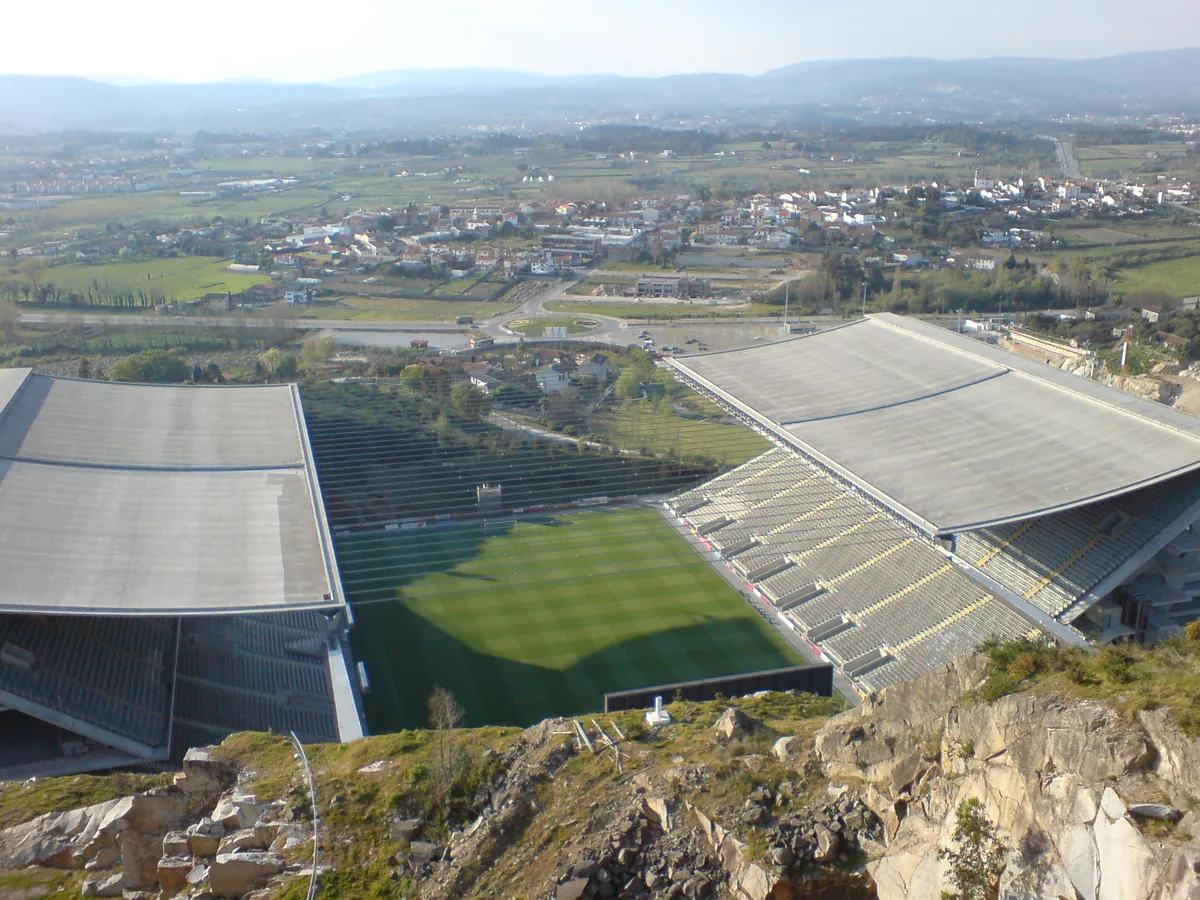
Portugal lost 1-4 to Denmark at the Estádio Municipal de Braga on 14 November 2026 in their first match since Cristiano Ronaldo announced his international retirement. Rasmus Højlund scored twice, Pierre-Emile Højbjerg converted a first-half penalty and Joachim Andersen headed the fourth before Bernardo Silva replied in stoppage time.
Portugal 1-4 Denmark: the result in context
The scoreline looks emphatic, and the performance behind it was equally clear. Denmark pressed with discipline, defended the central corridor, and attacked the spaces Portugal left when their full-backs pushed forward. Portugal had already qualified for the Nations League quarter-finals before kick-off, so this was not a knockout match. It was, however, a match with real consequences for group position, seeding and momentum, and it was played in an emotionally charged stadium that had come to honour Ronaldo.
UEFA records the fixture as a League A Group 4 match on Saturday 14 November 2026. The BBC reported a half-time score of 0-1 and a full-time score of 1-4, with Bernardo Silva's goal arriving in the third minute of stoppage time. The same report gave the attendance as 24,879. Those numbers matter because they separate the verified record from the noise that followed on social media, where partial clips and misattributed goal times circulated quickly.
The result left Portugal on 12 points from five matches and Denmark on nine. Norway, who beat Wales 3-1 in Oslo on the same day, moved to six points. Wales stayed on three. With one round of league-phase matches remaining, Portugal still controlled their own fate, but the margin for error had disappeared.
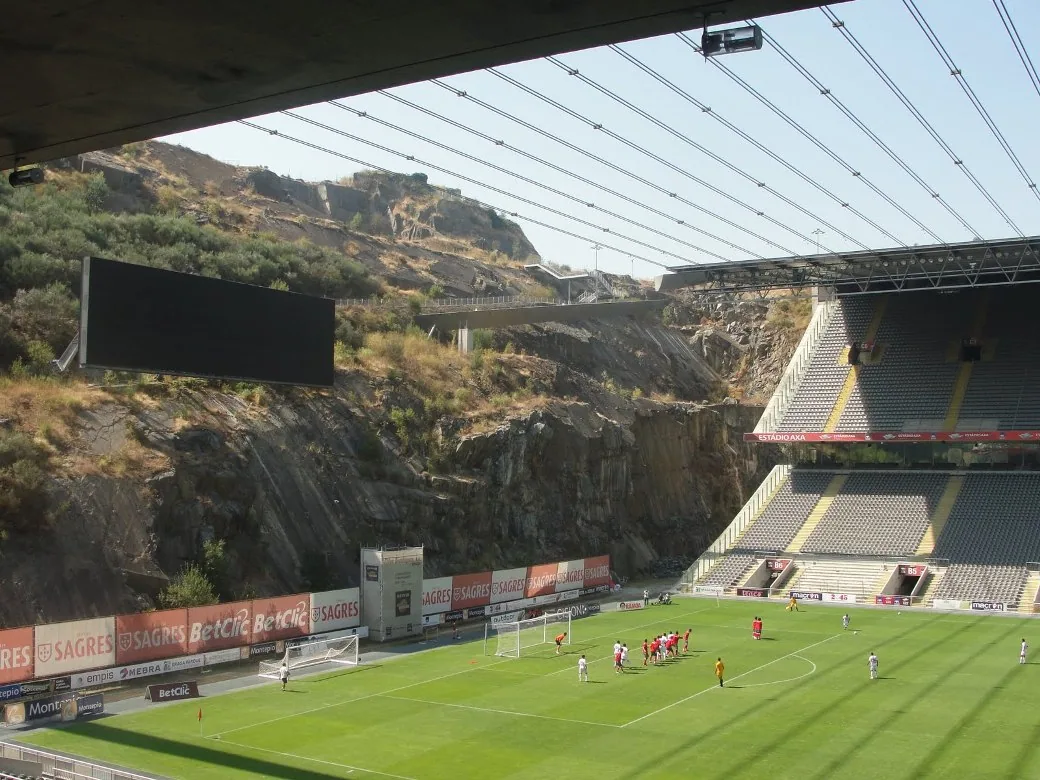
Archive photograph of the Estádio Municipal de Braga stands. It is not a picture of the Portugal versus Denmark crowd.
How the goals arrived
The first half was not a collapse. Portugal had most of the ball and created the better early positions, but the game turned on a single defensive moment. Rúben Dias was penalised for handball inside the area. After a VAR intervention and a pitchside review, the referee awarded a penalty. Højbjerg, Denmark's captain, drove the ball into the top-right corner shortly before the interval.
That goal changed the emotional temperature of the stadium. Portugal had planned a celebration, and the players had worn Ronaldo number seven shirts during the anthem. Instead, they went into the dressing room behind against a side that had already shown it could hurt them on the counter.
The second half removed any doubt. Five minutes after the restart, Højlund slipped behind the defence to meet a cross from the right with a powerful volley. Seven minutes later he scored again, cutting inside Renato Veiga on a counter-attack before firing a right-footed shot past Diogo Costa from the edge of the box. UEFA credited Gustav Isaksen with important build-up play for the second goal, and the pattern was consistent: Denmark won the ball in midfield, moved it forward quickly, and attacked the space behind Portugal's advanced line.
Joachim Andersen made it 4-0 in the 75th minute with a header from a set piece. By then Portugal's midfield was stretched and their back line was defending deep. Bernardo Silva, now at Real Madrid, scored a consolation in the third minute of added time after João Neves had been denied. A VAR check followed, the goal stood, and the final whistle arrived almost immediately.
The numbers behind the scoreline
The raw goal sequence tells a simple story, but the supporting numbers explain why it happened.
| Item | Verified detail |
|---|---|
| Competition | UEFA Nations League, League A, Group 4 |
| Date | Saturday 14 November 2026 |
| Venue | Estádio Municipal de Braga |
| Half-time | Portugal 0-1 Denmark |
| Full-time | Portugal 1-4 Denmark |
| Portugal scorer | Bernardo Silva, 90+3 |
| Denmark scorers | Højbjerg 43 pen, Højlund 49, Højlund 57, Andersen 75 |
| Attendance | 24,879 |
| Portugal points after match | 12 from 5 |
| Denmark points after match | 9 from 5 |
Denmark did not need to dominate possession to dominate the match. They defended with a compact block, forced Portugal wide, and trusted their front players to finish the chances that arrived. Portugal, by contrast, had long spells of the ball without enough penetration. Their best moments came from crosses and second balls, and when Denmark scored first, Portugal's structure became more open with every passing minute.
The handball decision will be debated, as most handball decisions are. The important point for readers is not whether the rule is popular. It is that the penalty was awarded after a review, it was converted, and it changed the game state. From that moment Denmark could defend deeper and attack the spaces Portugal had to leave behind.
Ronaldo's retirement and the night of tributes
Ronaldo announced his international retirement in a video posted on social media in the week before the match. The BBC reported that he retired with 146 goals and 234 caps for Portugal, both world records, and five Ballon d'Or awards. He was 41. His former team-mates wore number seven shirts before kick-off and during the anthem as a tribute.
Portugal coach Jorge Jesus later said Ronaldo would have been selected for the Nations League matches against Denmark and Wales. That detail matters because it prevents a misleading reading of the result. This was not a squad in transition by choice. It was a squad adjusting to the absence of a player who had been central to its identity for two decades, in a match that had been framed around his departure.
The crowd's reaction reflected that tension. There were tributes before kick-off, then whistles as the game slipped away. The AP report described a party atmosphere that turned sour, with fans disappointed by a team that had already secured quarter-final qualification but could not impose itself on the night.
For readers outside Portugal, the temptation is to treat one heavy defeat as the end of an era. That conclusion is too strong. Portugal had won their opening four Nations League matches before this defeat. They remained top of the group. The result exposed specific weaknesses, especially in transition defence and in the space between midfield and defence, but it did not erase the quality in the squad.
Why Denmark's plan worked
Denmark's performance was not a fluke built on one penalty. It was a coherent away performance in a difficult stadium.
First, they survived the opening period without conceding. Portugal's early pressure produced corners and half-chances, but not a clear goal. Goalkeeper Diogo Costa was not forced into a string of saves, which suggests Portugal's possession was more sterile than dangerous.
Second, Denmark attacked the right spaces. The second goal came from a cross to a striker who had moved behind the defence. The third came from a counter-attack in which Højlund isolated a defender and finished from the edge of the box. Those are repeatable patterns, not random mistakes.
Third, Denmark managed the game after scoring. They did not chase a second goal immediately. They kept their shape, absorbed pressure, and waited for Portugal to commit players forward. The fourth goal, a header from a set piece, was the reward for that patience.
Højlund's two goals will receive most of the attention, and rightly so. He is a striker who thrives on service into the box and on running behind a high line. The match showed both qualities. His first goal was a volley from a cross. His second was a low finish after a counter. For a forward who has moved to Napoli, this was the kind of performance that answers questions about his role in a team that does not always dominate the ball.
Højbjerg's penalty was equally important. As captain, he took responsibility in a high-pressure moment and executed cleanly. Andersen's header added the set-piece threat that makes Denmark difficult to defend against. Damsgaard, Isaksen and Jensen contributed the assists and build-up play that turned good defensive work into goals.
Group A4 standings and what comes next
After five matches, the table read:
| Position | Team | Played | Won | Drawn | Lost | Goals for | Goals against | Points |
|---|---|---|---|---|---|---|---|---|
| 1 | Portugal | 5 | 4 | 0 | 1 | 10 | 8 | 12 |
| 2 | Denmark | 5 | 3 | 0 | 2 | 11 | 8 | 9 |
| 3 | Norway | 5 | 2 | 0 | 3 | 9 | 9 | 6 |
| 4 | Wales | 5 | 1 | 0 | 4 | 3 | 8 | 3 |
The final round is scheduled for Tuesday 17 November 2026. Portugal travel to Wales. Denmark host Norway. Portugal need to avoid defeat against Wales to finish as group winners, according to the BBC. Denmark have a three-point advantage over Norway in second place, and the Norwegians need a win in Copenhagen to overtake them.
Those permutations are simple, but they create different pressures. Portugal can afford a draw, which means they do not have to chase the game in Cardiff. Denmark cannot rely on goal difference alone if they lose, because Norway would move level on points. Wales, already bottom, are playing for pride and for a better seeding position in the next cycle.
The match also matters for the quarter-final draw. Group winners are seeded differently from runners-up. That is why Portugal's defeat was more than a bad night: it reopened a race that had looked settled.
Portugal's tactical problems in plain terms
Portugal's issues were visible in three areas.
The first was the defensive line. When Portugal pushed their full-backs high, Denmark targeted the space behind the centre-backs. Højlund's second goal came from exactly that space. The first goal also followed a sequence in which Denmark moved the ball quickly into the box and won a penalty. Portugal's defenders were repeatedly forced to defend while backpedalling.
The second was midfield cover. Portugal's midfielders pressed forward to support the attack, but when Denmark won the ball, the distance between the midfield and the defence was too large. That allowed Denmark to run at the back line rather than pass through it. Renato Veiga was isolated for the third goal, but the problem started earlier, with the team's shape.
The third was set-piece defending. Andersen's header was not a freak accident. Denmark had already threatened from aerial situations. Portugal's marking in the box was loose, and the delivery was good enough to punish it.
None of these problems is unique to Portugal. They are the standard risks of a possession-heavy team that loses the ball in bad areas. The question for Jorge Jesus is whether the response is structural or cosmetic. Changing personnel without changing the shape will not solve the transition problem. The next match against Wales will show whether the lesson was absorbed.
What this result does not prove
It does not prove that Portugal are a bad team. They had already qualified for the quarter-finals and had won four group matches before this defeat. One heavy loss can distort the picture, especially when it comes immediately after an emotional retirement announcement.
It does not prove that Denmark are favourites for the tournament. They were excellent in Braga, but they still trail Portugal in the group and face a difficult final match against Norway. Their performance was impressive because it was disciplined, not because it was unstoppable.
It does not settle the debate about Ronaldo's retirement. Portugal's attacking shape will evolve over the next year, and one match without him is not enough evidence to judge the new balance. What the match did show is that Portugal's attacking structure still depends heavily on crosses and individual moments. That was true before the retirement as well.
Finally, it does not change the fact that Nations League matches are not World Cup qualifiers. The competition has real consequences for seeding and promotion, but it is not the same as a qualifying campaign. Readers should be careful with headlines that describe this result as a World Cup disaster. It was a Nations League group match.
Questions readers are asking
Did Cristiano Ronaldo play against Denmark?
No. Ronaldo announced his international retirement before the match and was not in the squad. Portugal paid tribute to him before kick-off. Jorge Jesus said he would have picked Ronaldo for the Denmark and Wales matches, but the player had already retired.
Who scored Portugal's goal?
Bernardo Silva scored in the third minute of stoppage time. It was a consolation goal after João Neves had been denied. A VAR check confirmed the goal before the final whistle.
Was this a World Cup qualifier?
No. It was a UEFA Nations League League A Group 4 match. Portugal had already secured a quarter-final place before kick-off. The result affects group position and seeding, not World Cup qualification.
What does Portugal need against Wales?
Portugal need to avoid defeat in Cardiff on 17 November 2026 to finish as group winners. A draw would be enough. A defeat would leave them level on points with Denmark if Denmark beat Norway, and the group would be decided on the competition's tie-break rules.
Why was Denmark's first goal a penalty?
Rúben Dias was penalised for handball inside the area. The referee reviewed the incident and awarded the penalty. Højbjerg converted it. The decision was contentious, as handball decisions often are, but it was made after a review and it stood.
Who was the best player on the pitch?
Rasmus Højlund scored twice and was central to Denmark's attacking plan. Højbjerg's penalty and Andersen's header were also decisive. Portugal's best moments came through Bernardo Silva and João Neves, but they arrived too late to change the result.
What to watch next
The final round of Group A4 on 17 November is the immediate follow-up. Wales versus Portugal will show whether Portugal can stabilise their defensive shape without the emotional weight of the Ronaldo tribute night. Denmark versus Norway will show whether Denmark can reproduce the discipline they showed in Braga under different pressure.
For Pakistan-based readers following European football, the key takeaway is not the scoreline alone. It is the way Denmark converted a small number of chances into a large victory. That is a useful lesson for any team that expects to defend deep and counter-attack. Portugal's task is harder: they must learn to keep their attacking structure without leaving their defence exposed.
Sources
- BBC Sport, Portugal 1-4 Denmark: Cristiano Ronaldo-less hosts suffer heavy Nations League home loss, 14 November 2026
- UEFA, UEFA Nations League Matchday 5 round-up, 14 November 2026
- Associated Press, Unimpressed by Cristiano Ronaldo tributes, Denmark routs Portugal 4-1 in Nations League, 14 November 2026
- Al Jazeera, Portugal 1-4 Denmark: UEFA Nations League, 14 November 2026
Sources checked on 15 November 2026. Match details were checked against the BBC, UEFA, AP and Al Jazeera reports. Group table and points were checked against the BBC live page and UEFA round-up. Image credits: cover photograph of the Estádio Municipal de Braga by Forgemind ArchiMedia, CC BY 2.0, via Wikimedia Commons, resized and converted to WebP. Inline photograph of the stadium stands by Forgemind ArchiMedia, CC BY 2.0, via Wikimedia Commons, resized and converted to WebP. Both images are archive photographs and do not show the 2026 match.
Found an error or an outdated detail? Report a correction with the article URL and original source.