
P. V. Sindhu: Olympic Medals, the 2019 World Title and Result Reading
Explore Sindhu’s Rio silver, Tokyo bronze and 2019 world title, distinguish competition records and understand badminton scores with clear examples.
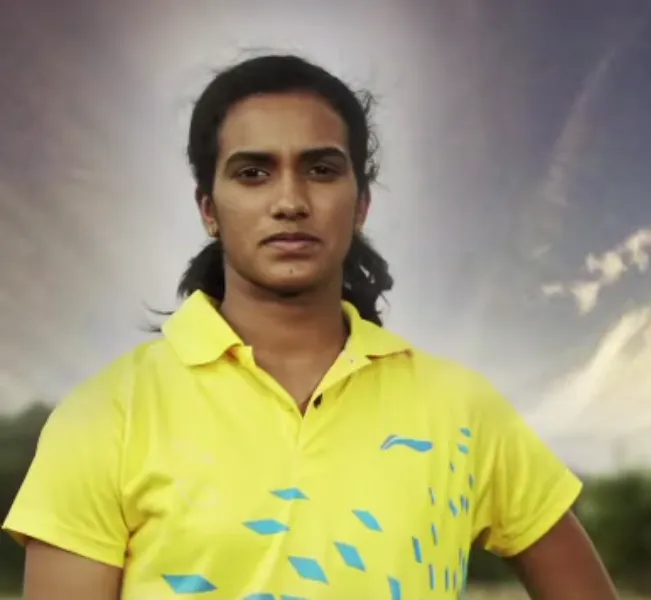
P. V. Sindhu is an Indian badminton player whose established career achievements include Olympic silver at Rio 2016, Olympic bronze at Tokyo 2020 and the women's singles world title in 2019. These are different competitions and different results. Reading them accurately gives a clearer picture than describing every medal as another world championship.
This profile was reviewed on 6 November 2026 using official sporting and public records. It explains the major milestones and how to interpret badminton results. It does not announce a new injury, current ranking or upcoming match without evidence. Historical achievements are dated, and the worked examples are separate from Sindhu's actual match record.
Who is P. V. Sindhu?
Sindhu is also identified in sporting records as Pusarla Venkata Sindhu. The different presentation of her name can make search results look as though they concern different people. Match the athlete, country and event rather than assuming that an abbreviation or a reordered name indicates a separate player.
Her career is particularly significant in Indian women's singles badminton. The achievements discussed here are documented milestones, not a complete list of every tournament appearance. A useful profile selects meaningful events while making clear that a summary is not an exhaustive statistical database.
For a student building a sports timeline, use one consistent display name and preserve the fuller form in the notes. Then give each achievement its event name and year. This small organisational choice makes it easier to check facts and avoids counting duplicate references to the same athlete as separate records.
What did Sindhu achieve at Rio 2016?
Sindhu won the women's singles silver medal at the Rio 2016 Olympic Games. A silver medal means she reached the final and finished as runner-up in that event. It should not be described as gold merely because a celebratory headline calls the performance a victory for the sport or the country.
The Indian sports ministry's Olympic summary records the silver, providing a direct reference for the result. When sharing the achievement, keep the sport, event and medal together. Saying only Olympic medal omits useful information; saying Olympic champion would change the meaning of the result.
Students can use the event as an example of separating achievement from an inaccurate label. A finalist's campaign can be historically important without rewriting its medal colour. Respect for an athlete is compatible with precise reporting, and precision makes the achievement easier for a new reader to understand.
What happened at the 2019 World Championships?
Sindhu won the women's singles title at the 2019 World Championships in Basel. Badminton Asia's contemporary account records her defeating Japan's Nozomi Okuhara 21-7, 21-7 in the final and becoming India's first badminton world champion. This was a world-championship title, distinct from an Olympic medal.
The score shows two games won by Sindhu in that final. It does not mean she won twenty-one matches or that the whole tournament consisted of those two games. A reader unfamiliar with badminton needs the level of the score explained before the numbers can convey the achievement properly.
The match is also a useful example of preserving a historical result. Its date, opponent and score remain the same even when current rankings or later tournament outcomes change. A biography can rely on this verified milestone without pretending that a 2019 result describes every later meeting between the players.
Why is Tokyo 2020 associated with a 2021 medal?
The Games retained the Tokyo 2020 name even though the competition took place in 2021. Sindhu won women's singles bronze there. Official Olympic and Indian government records describe that achievement alongside her earlier Rio silver. Keep the event label and the calendar timing clear rather than treating the two years as contradictory.
The official Olympic replay records her bronze-medal match against He Bingjiao, with a 21-13, 21-15 result. That was the match determining bronze, not the women's singles final for gold. A photo of the medal ceremony needs the same accurate event description.
For a classroom table, use separate columns for event name and year played where necessary. This is a useful research habit beyond sport: an examination cycle, a financial year or a postponed festival may also carry a label that differs from the calendar date of a particular activity.
How should the three main milestones be organised?
| Event | Result | What the result means |
|---|---|---|
| Rio 2016 Olympics, women's singles | Silver | Olympic runner-up |
| Basel 2019 World Championships, women's singles | Gold | World champion |
| Tokyo 2020 Olympics, played in 2021, women's singles | Bronze | Olympic third-place medal |
The table helps a reader see both continuity and difference. It shows success across several major events without collapsing them into one title category. The World Championships and Olympics each have their own entry conditions, schedule and competitive history.
When a headline describes multiple Olympic medals, count only Olympic events in that category. Do not add the 2019 world title to the Olympic medal total. The broader career includes both, but the narrower statistical question has a specific boundary that should be respected.
What is the difference between a rally, a game and a match?
A rally is a sequence of play leading to the next scoring outcome under the applicable rules. Games contain points, and a match contains the required games. These levels explain why a score such as 21-7, 21-7 records two completed games rather than forty-two separate match victories.
Always check the competition's applicable rules before assuming that a remembered scoring format applies unchanged. Historical results can be explained in their own context, while a current event may require its current regulations. A career article should not improvise a future scoring rule from an old match report.
For an invented exercise, label three records as rally outcome, game score and match result. Ask students which can establish the winner of the whole encounter. This develops the same habit used in cricket and tennis: identify the level of the statistic before drawing a conclusion from the number.
What can a final score tell a reader?
A final score establishes the result and the completed-game totals, but it does not reproduce every rally or tactical decision. A clear victory on the scoreboard can still contain demanding exchanges. The appropriate evidence for detailed tactical analysis includes the match record or footage, not a fabricated description of unseen moments.
Use a fictional match in which a player wins two games by different margins. The larger margin does not, by itself, prove that every point was easier or that the opponent used an identical approach throughout. A score is a summary of outcomes, not a complete measurement of effort or decision-making.
This does not reduce the value of the result. It clarifies what the evidence supports. An accurate article states the outcome confidently and is more careful about the causes, emotions or private plans it cannot establish from the available source.
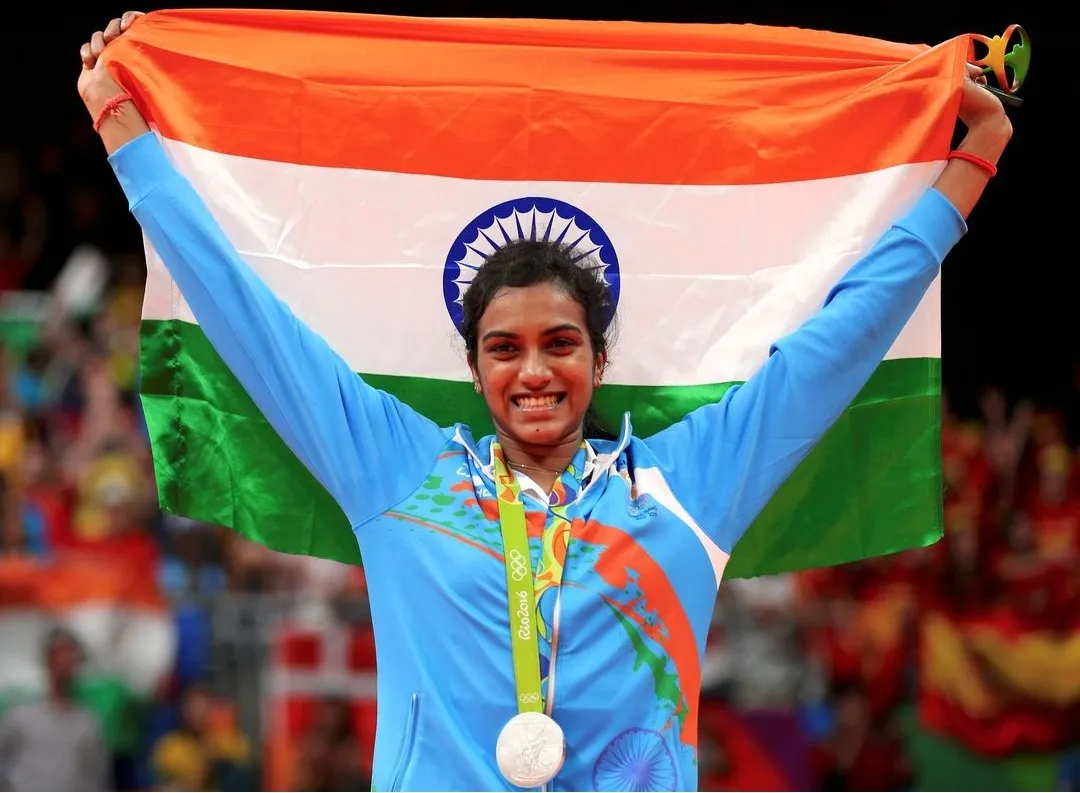
Sindhu pictured with Olympic silver, used as historical medal context rather than a photograph of a new championship.
What should learners look for in singles badminton?
Court coverage, shot selection, recovery and the changing position of the opponent are useful themes for observing singles. They are general analytical categories, not claims that Sindhu follows one fixed pattern in every rally. The actual footage is needed before attributing a specific tactical sequence to her.
For a paper-court exercise, mark where two fictional players stand after a shot. Ask which spaces are open and how a recovery movement could change the next options. Keep the exercise conceptual and do not present it as professional coaching or an instruction to practise beyond a learner's ability.
The educational value is learning to explain a choice with evidence. Instead of writing she won because she wanted it more, describe an observable sequence when the recording supports it. That distinction creates a more respectful and informative sports analysis than inventing a player's internal motivation.
Why should rankings and tournament results remain separate?
A ranking summarises performance under a defined system and date. A tournament result describes a particular event. Winning one event does not automatically mean holding the top ranking, and a player can lose a match while remaining ahead in a broader ranking table.
If a report uses the phrase world number one, verify the ranking list and date. If it uses world champion, verify the championship and event. The two phrases are not interchangeable. A career milestone from Basel 2019 establishes a world title, not an indefinitely current ranking position.
For a classroom exercise, give fictional players different results across several events and ask why an overall ordering might differ from one final. The example should not claim to reproduce the current BWF calculation. It simply demonstrates why the competition's definition and period belong beside the label.
How should a head-to-head comparison be read?
A head-to-head record counts results between specified players under the source's scope. It does not guarantee the next outcome. The dates, competition level and completeness of the record matter, especially when two athletes have met over a long period under changing conditions.
Do not convert one memorable final into a claim that every meeting followed the same pattern. Sindhu's documented 2019 result against Okuhara is a fact about that final. A wider comparison needs its own complete record, and a future prediction remains a different type of statement.
An original worksheet can show three invented meetings and ask students to calculate wins and losses. Then add a fourth match and observe how the count changes. The arithmetic is simple, but the important lesson is that an accurate historical record and a guaranteed forecast are different things.
What can students learn from a long competitive career?
A career across multiple major events shows why development should not be reduced to one result. Different competitions provide different challenges, and an athlete's public record contains both achievements and setbacks. A biography should explain documented outcomes without pretending that it can reconstruct every training decision or private experience.
Avoid invented quotations, unsupported medical claims and claims that one exercise or routine guarantees a medal. Those details may make a story sound vivid while reducing its reliability. Publicly documented milestones and careful observation already provide enough material for a meaningful account.
For students, the transferable skill is reviewing evidence after a task. What was the result? Which part can be measured? Which explanation is supported? Those questions can help with study and project work without implying that academic learning and elite athletic preparation are identical processes.
How can images be captioned properly?
A historical competition photograph can illustrate the athlete or a stage of her career. Its caption should identify the supported setting and avoid presenting it as a new Olympic final, current training session or recent public statement. The upload date is not necessarily the date photographed.
When several athletes appear in a picture, confirm which person is Sindhu before choosing the image. A familiar racquet, country uniform or medal background is not sufficient identification. A correct article with an unrelated athlete's photograph would still mislead the reader.
The images here are credited to their sources and treated as career context. They are not evidence of an unannounced event. Keeping the visual claim modest and accurate gives readers a better basis for understanding the text and checking the original material.
A practical sports-record activity
Create a timeline with the three milestones in the table, recording competition, event, location and result. Then write one sentence comparing the Olympic entries and another explaining the world title. The sentences should preserve the different categories instead of adding every achievement into one vaguely named total.
Next, use an invented badminton score to practise identifying points, games and the match outcome. Label the invented record clearly. This keeps the calculation useful without contaminating the athlete's real statistics or encouraging a reader to repeat an example as a historical result.
Our study resources support table reading, while programming courses can help learners display fictional results with clear labels. A well-made interface should show the event and date beside a result so that readers do not have to guess which competition a number belongs to.
Questions readers often ask
Did Sindhu win Olympic gold in the milestones listed here? The listed Olympic results are silver at Rio and bronze at Tokyo. The gold in the table is her 2019 world title. Keeping those categories separate preserves the actual achievement rather than diminishing it with an inaccurate label.
Was the Tokyo medal won in 2020 or 2021? It belongs to the Tokyo 2020 Games, held in 2021. A precise explanation can include both facts. The event's retained name and the calendar year played answer different questions.
Does this profile give her live ranking or next fixture? No. It documents selected established milestones and teaches result-reading. Use the current official BWF and tournament information for changing rankings, draws and schedules rather than assuming an old profile contains the latest event details.
Sources
- Indian sports ministry: Rio 2016 medals
- Badminton Asia: Sindhu's 2019 world title
- Government of India: Tokyo bronze medal
- IOC: Indian women athletes and Olympic achievements
- Official Olympic replay: Sindhu's bronze-medal match
Image credits: cover: Ten Sports, source, CC BY 3.0. Resized and converted to WebP. inline: Prashant123japla, source, CC BY-SA 4.0. Resized and converted to WebP.
Found an error or an outdated detail? Report a correction with the article URL and original source.