
Qatar for Students: Doha, Geography and Education City
Understand Qatar's geography, Doha's role as capital and Education City. Build a useful country-research sheet without confusing historical data with current decisions.
Qatar is a country on a peninsula in the Gulf region, and Doha is its capital. Arabic is the official language, and the currency is the Qatari riyal, identified by the code QAR. Qatar and Doha are therefore related names, but they do not mean the same geographic unit.
This student guide introduces the country's basic geography and Education City, then shows how to build a useful country-research sheet. It does not announce a new visa policy, scholarship deadline, job offer or security event. Those questions need their own current official information.
Where is Qatar?
Qatar occupies a peninsula extending from the eastern side of the Arabian Peninsula into the Gulf. Its land connection is with Saudi Arabia to the south. When looking at a regional map, distinguish a shared land border from countries located across the water.
The official tourism geography page describes Qatar as a compact peninsula and identifies nearby regional relationships. Use a map with a readable legend and scale rather than assuming that the size of a label represents the size of a country.
For a classroom activity, locate Qatar, mark the land connection and identify the surrounding water. Then explain in one sentence why “peninsula” is a useful description. The aim is to understand the shape and connection, not merely memorize a definition without applying it.
Is Doha the same place as Qatar?
Doha is Qatar's capital city. A statement about Doha can describe a particular urban location without describing every part of the country. Similarly, a photograph of one waterfront does not represent the entire landscape or every community.
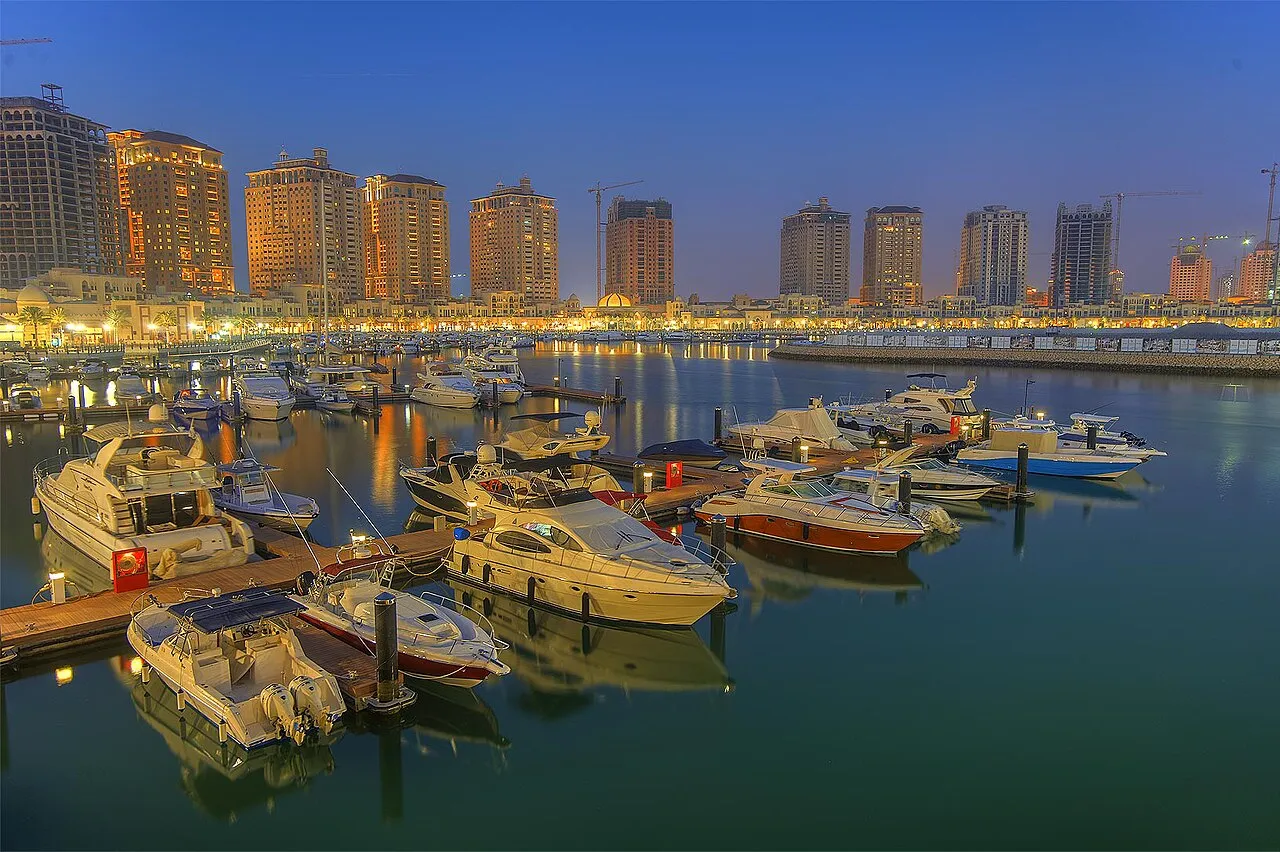
Use three labels when making notes: country, capital and specific place. For example, Qatar is the country, Doha is the capital, and the Pearl Marina photograph illustrates a particular waterfront setting. Keeping the levels separate makes descriptions more precise.
This habit transfers to other geography questions. A capital is important, but it is not a replacement name for every settlement, institution or natural feature within a country. Ask which level a source is discussing before generalizing from it.
What basic facts belong on a country sheet?
The following compact reference uses the Government Communications Office's country information. It intentionally avoids an undated population total or an invented current exchange quote.
| Field | Qatar reference |
|---|---|
| Country | State of Qatar |
| Capital | Doha |
| Official language | Arabic |
| Currency | Qatari riyal |
| Currency code | QAR |
| Geographic description | Peninsula in the Gulf region |
| National Day | 18 December |
Treat the field label as part of each fact. “Official language” and “languages encountered in daily life” are different questions. Likewise, a currency code identifies a currency; it does not tell you the conversion rate charged by a bank or transfer provider.
When adding statistics later, include their reference year and definition. A census count, a resident estimate and an airport passenger total do not describe the same population. Do not place an attractive large number into the sheet without identifying what it measures.
What can you learn from the national flag?
The official country page describes a maroon field and a white serrated band with nine white points. This gives you observable design details for identifying the flag without inventing a historical explanation for every feature.
For a student exercise, draw a small labelled sketch and compare the arrangement with the official image. Keep the orientation consistent so that the hoist side is not confused with the free edge. The task is to practise accurate description, not create a new version of the national symbol.
If you want to discuss the historical meaning of a feature, research that separately. An image establishes what the flag looks like; it does not automatically establish the origin of every design choice.
What is Education City?
Qatar Foundation presents Education City as a campus community connecting educational institutions, research and shared student opportunities. It should not be treated as another country's name, a single degree programme or a promise that every institution on the campus has identical admission rules.
The Foundation's page includes links to institutions such as Hamad Bin Khalifa University, Carnegie Mellon University in Qatar, Georgetown University in Qatar and Weill Cornell Medicine-Qatar. Those examples identify parts of the educational setting, not a complete recommendation list for every applicant.
A prospective student should continue to the institution and programme that match their actual interest. A general campus page cannot establish whether a particular qualification is offered, whether applications are open or what an individual applicant will pay.
How should a Pakistani student research a programme?
Begin with the subject and qualification you want, not simply a photograph of an impressive campus. Identify the awarding institution, programme title and entry level. Then inspect the institution's current requirements and dates for that exact programme.
Create a comparison sheet with fields for academic prerequisites, language requirements, application deadline, tuition, funding information and contact details. Fill only what the official programme page establishes. Mark unanswered questions instead of borrowing another institution's requirements.
If financial support is advertised, distinguish eligibility from an award decision. Being allowed to apply does not guarantee that you will receive funding. This guide does not announce a scholarship, promise admission or provide an applicant-specific assessment.
Avoid paying a stranger who claims a place is guaranteed if you send documents or money immediately. Verify the institution and the process independently. Sensitive academic and identity documents belong in the legitimate application channel, not an unrelated social-media inbox.
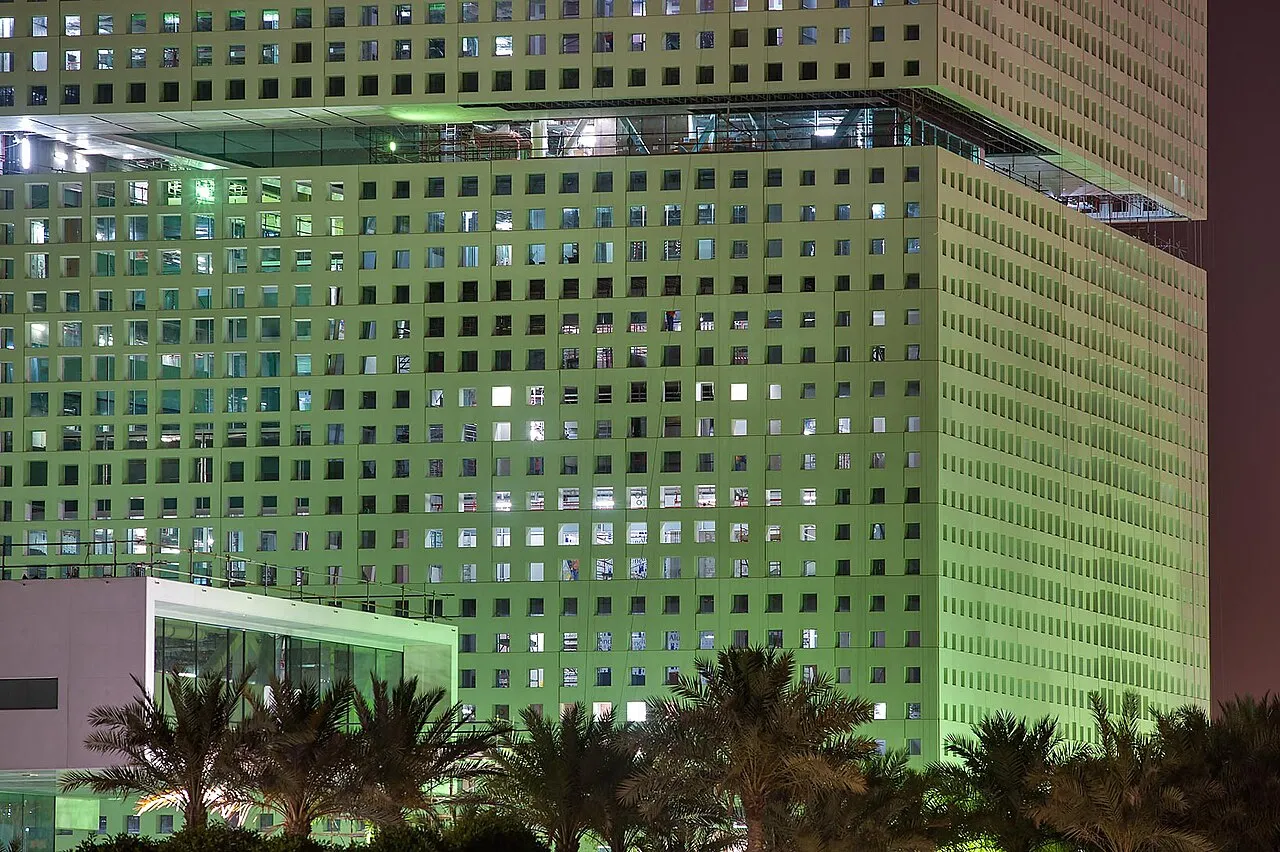
Qatar Foundation headquarters at Education City in 2014. The image does not establish current admission, funding or programme availability.
How can geography connect with a research project?
Choose one narrow question rather than copying a whole country profile. You might investigate how a peninsula differs from an island, how a capital relates to a national map, or how a campus brings different institutions into one location.
For the peninsula question, draw the outline and mark where it connects to the mainland. For the education question, separate the campus organization from individual institutions and their programmes. Each activity requires you to organize relationships rather than simply list names.
State what your source actually supports. A campus map can show where buildings are located. It cannot by itself establish teaching quality, graduate employment or the experience of every student. Choose evidence that matches the question.
How should you read photographs of Doha?
Look for the location, photographer and date. A waterfront image can introduce a place visually, but it does not show the entire country or establish current construction, weather or crowd conditions.
The cover photograph in this guide shows boats at the Pearl Marina in November 2013. The Education City image is identified as a 2014 photograph of Qatar Foundation's headquarters. They are historical location images, not pictures taken for a live November 2026 report.
For a visual-literacy exercise, write two sentences about each image: one describing what you can actually see and another identifying what you cannot conclude. This helps prevent a polished skyline from becoming an unsupported statement about every aspect of life in a country.
What is the difference between climate and a weather forecast?
A climate discussion describes longer-term patterns, while a forecast concerns conditions for a specified place and time. This guide does not supply a live Qatar forecast. A sunny historical photograph cannot tell you the weather on the day you plan an activity.
If weather matters to a real decision, consult a current official forecast and preserve the date and location. Do not substitute a general travel description for a time-specific warning or forecast.
For a school project, keep climate notes and daily observations in separate columns. That makes it easier to see which information describes a longer pattern and which describes a particular day. The distinction is useful when studying Pakistan as well as other countries.
How can you avoid mixing historical and current information?
Record the publication date and the date of the event or statistic separately. A page updated recently can still contain a historical census, and an older page can preserve a useful historical record without describing current conditions.
For an original exercise, imagine a source published in 2026 quoting a 2020 survey. Your note should retain both years: 2026 for the source publication and 2020 for the data. Labelling the number simply “2026 population” would change its meaning.
The same care applies to educational information. A university's old prospectus may help you understand a previous programme structure, but it does not establish the next application deadline. Use the current institutional page for a current decision.
What should you check when a Qatar headline is trending?
Identify the actual subject. A headline might concern diplomacy, sport, education, travel or a company using Qatar in its name. The country name alone does not explain the event, and a general facts page does not verify a new incident.
Open the original report and check the event date, location and attribution. If the claim concerns a government decision, seek the relevant current authority's communication. Do not turn a rumour into a confirmed announcement simply because several accounts repeat it.
This introduction does not claim to explain a particular breaking-news trend. It answers a clear introductory question: what Qatar is, how Doha relates to it and how students can research further information responsibly.
How can a simple digital project reinforce the lesson?
Build a small country-card project containing the fields in the facts table. Keep the capital, language and currency as separate labelled values rather than joining everything into one unstructured paragraph.
Add a source-date field for information that can change. If you later include a population or an application deadline, give it a reference year or exact date instead of treating it as a permanent property. This makes the project easier to maintain and check.
Our programming courses provide a place to practise organizing and presenting data. The aim of the exercise is not to scrape private information or publish an automated news claim. It is to turn verified facts into a clear, understandable learning tool.
What should a useful Qatar introduction leave you knowing?
You should be able to distinguish the country from its capital, identify its peninsula setting, recognize its official language and currency, and explain why Education City is an educational setting rather than a single universal admissions process.
You should also know what remains outside a country introduction: current travel requirements, a live exchange quote, individual admission decisions and new political events. Keeping that boundary clear gives readers a reliable starting point without pretending one article answers every question.
Sources
Source 1: official country facts
Source 2: official geography overview
Source 3: Education City overview
Checked 1 November 2026. No visa, scholarship, job, exchange-price or live-weather guarantee is made. Photographs are dated historical illustrations and student exercises are original teaching suggestions.
Image credits: cover: Alex Sergeev (www.asergeev.com), source, CC BY-SA 3.0. Resized and converted to WebP. inline: Alex Sergeev (www.asergeev.com), source, CC BY-SA 3.0. Resized and converted to WebP.
Result dates, fees and eligibility must be checked against the issuing authority's current notice. Report a correction with the article URL and original source.