
Qatar-Turkiye Defence Pact Explained
Qatar and Turkiye signed a mutual defence pact in Istanbul on 13 November 2026. See what it commits, what it omits and why it matters for the Gulf.
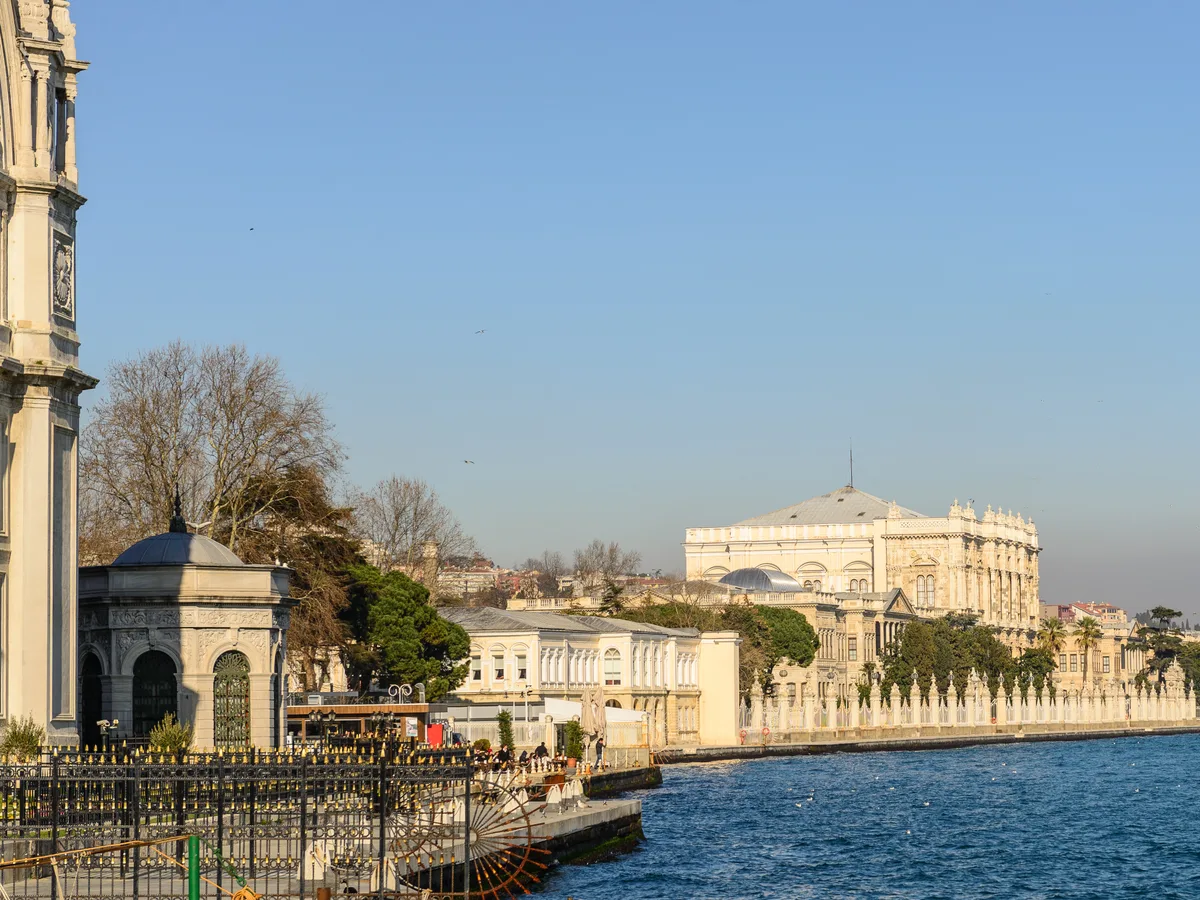
Qatar and Turkiye signed a mutual defence agreement in Istanbul on Friday 13 November 2026, pledging a unified position against any external armed attack targeting either country. Turkish President Recep Tayyip Erdogan and Qatar's Emir Sheikh Tamim bin Hamad Al Thani signed the pact at the Dolmabahce Palace during the 12th meeting of the Turkiye-Qatar Supreme Strategic Committee.
What was signed
The defence agreement was the centrepiece of a package of five agreements and memoranda signed during the meeting. According to Turkiye's Anadolu Agency, the other documents covered consumer protection and market surveillance, educational cooperation, and cooperation in peace, reconciliation and conflict resolution. The two leaders also signed the joint declaration of the committee's 12th meeting.
The Supreme Strategic Committee was established under an agreement signed on 19 December 2014. Friday's meeting was the 12th session of that forum. It has become the main framework for managing a relationship that goes well beyond defence, covering trade, energy, education and diplomacy.
The signing ceremony took place at the Presidential Dolmabahce Office in the presence of the two leaders, following bilateral and delegation-level talks. Qatar's Emir travelled to Istanbul after attending the COP31 climate summit in Antalya, southern Turkiye.
What the pact actually commits
The joint communique sets out the core commitment. The agreement aims to strengthen collective defence, promote regional security and establish a common position against external armed attacks targeting either or both countries.
The statement said the pact reflects "not only the commitment of its signatories to safeguarding their sovereignty and territorial integrity, but also their shared vision of contributing to a more secure and stable regional order."
Beyond that headline commitment, the two countries agreed to consult one another on security threats and defence policy. They also agreed to expand joint military exercises, defence industry collaboration and personnel training exchanges.
Those commitments are practical. Consultation means the two governments will talk before or during a crisis. Joint exercises mean their militaries will train together. Defence industry collaboration means Turkish and Qatari companies will work on equipment and production. Personnel training means officers and specialists will study and train in each other's institutions.
The communique also welcomed the Badr memorandum, signed by Turkiye, Qatar, Pakistan and Indonesia. It described the memorandum as a step towards collective defence through the development of indigenous capabilities, including joint production, technology development, information sharing and stronger supply chains.
What the pact does not commit
The published text does not say that an attack on one country is automatically an attack on the other. It does not create an automatic obligation to deploy troops. It does not specify what would trigger a joint response or what form that response would take.
That matters because the phrase "mutual defence" can imply a NATO-style Article 5 guarantee, under which an attack on one member is treated as an attack on all. The Turkiye-Qatar text is softer than that. It commits the two countries to a unified position, but it leaves the details of that position to be decided in a crisis.
The full text of the agreement has not been publicly released. Analysts have therefore focused on the communique and on the public statements of the two governments. Those sources describe a strong political commitment, but they do not amount to a blank cheque.
Qatar is not a member of NATO. An attack on Qatari territory would not automatically activate NATO's collective defence provisions. That is one reason the bilateral pact matters: it gives Qatar a security relationship that is separate from the alliance Turkiye belongs to.
How it differs from the Makkah pact
The comparison with the Makkah Joint Defence Agreement is unavoidable.
In August 2026, Turkiye, Saudi Arabia and Pakistan signed a joint defence agreement in Makkah. That pact is explicitly modelled on NATO's Article 5. Under its terms, an attack on one party constitutes an attack on all.
Turkiye's parliament ratified the Makkah agreement on 5 November 2026 by 279 votes to 119. The law approving the pact took effect on Saturday 14 November, a day after the Qatar agreement was signed, when it was published in Turkiye's official gazette. The National reported that Turkish Defence Minister Yasar Guler had ruled out deploying troops to fight the Iran-backed Houthis in Saudi Arabia despite the pact.
The Qatar agreement is different. It creates a political commitment to a common position, but it does not contain the explicit "attack on one is an attack on all" language of the Makkah pact. That distinction is important for anyone trying to understand what Turkiye has actually promised.
The two agreements are also connected. The Makkah pact brings Turkiye, Saudi Arabia and Pakistan together. The Qatar pact adds another Gulf partner. The Badr memorandum, which includes Qatar, Pakistan and Indonesia, extends the network further. Together, they form a layered set of security arrangements rather than a single alliance.
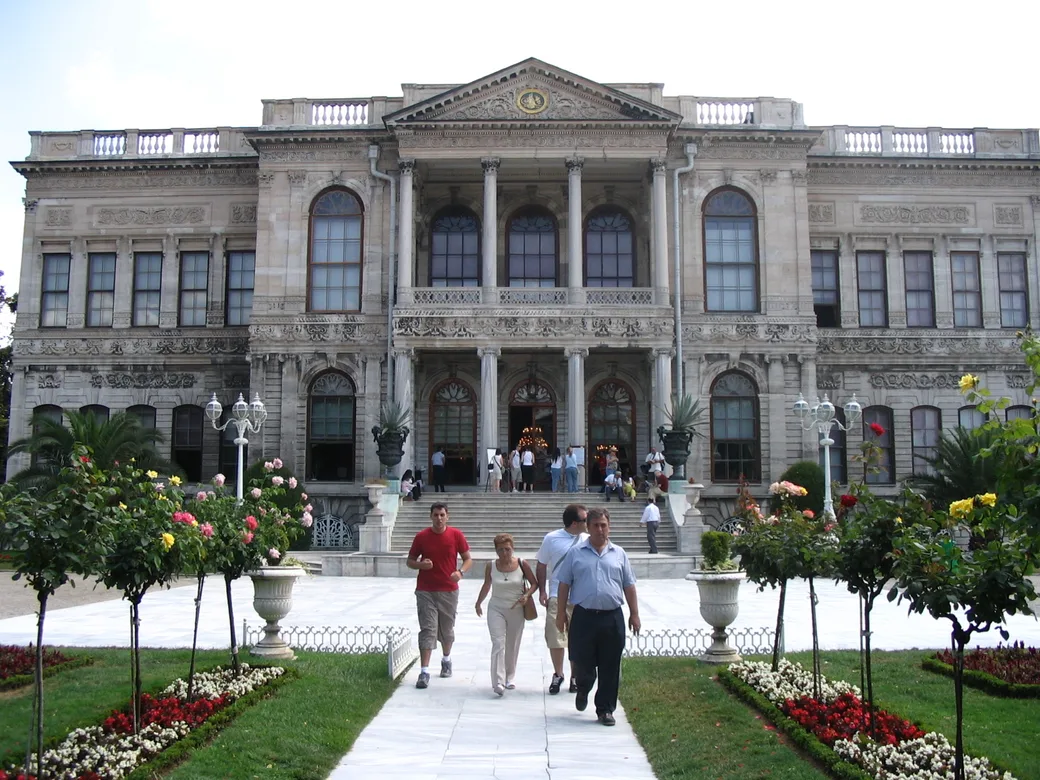
Archive photograph of Dolmabahce Palace in Istanbul, where the mutual defence agreement was signed on 13 November 2026.
Why now: Iran, Hormuz and Gulf security
The timing of the pact reflects the regional situation.
Al Jazeera reported that the agreement followed Friday's high-level meeting and came as the region deals with the fallout of the US-Israeli war on Iran and disruption to shipping in the Strait of Hormuz. The communique called for the conflict and its wider regional repercussions to be resolved through dialogue and diplomacy.
It also called for "the swift and full resumption of safe, secure and unimpeded passage through the Strait of Hormuz". That language reflects the importance of the strait for global energy supplies. Any disruption there affects oil and gas prices far beyond the Gulf.
The two countries said they would continue working together to prevent the resurgence of war in the Gulf region. Erdogan was quoted as saying that Turkiye and Qatar would keep working to establish a basis for dialogue and achieve peace.
For Qatar, the pact reinforces a security relationship that has been developing for more than a decade. Turkiye has maintained a military presence in Qatar, and the two countries have conducted joint training and defence manufacturing. The new agreement moves that partnership to a more advanced level, based on converging security doctrines and a shared view of where threats come from.
For Turkiye, the pact strengthens its role as a security partner in the Gulf. It also complements the Makkah agreement with Saudi Arabia and Pakistan. Ankara is building a network of bilateral and trilateral arrangements rather than relying on a single alliance structure.
The economic and defence industry dimension
Defence is only one part of the relationship.
According to the communique, Turkish contracting companies have carried out 206 projects in Qatar worth 20.8 billion dollars. The two countries reiterated a target to raise bilateral trade to five billion dollars. They also pledged closer cooperation on energy, particularly liquefied natural gas.
That economic depth matters for the defence relationship. Defence industrial cooperation requires financing, supply chains and long-term contracts. Countries that trade and invest together find it easier to build joint production lines and share technology.
Analysts expect the defence relationship to expand into specific areas. Ozcan Tikit, a foreign affairs analyst at Anadolu, said the partnership combines Turkish industrial and military expertise with Qatari financial and diplomatic strength. He expects cooperation to expand to missile defence systems, drones and armoured vehicles, with Qatar possibly joining advanced Turkish air defence projects. He also said several manufacturing projects could extend to Saudi Arabia and Pakistan.
Tikit stressed that these were future possibilities, not projects whose details were announced in the agreement. That caveat is important. The communique sets a direction, but it does not list specific systems or contracts.
Qatar has already acquired Turkish-made military equipment, including Bayraktar TB2 armed drones, and companies from both countries have developed joint defence industry projects. The new pact is likely to deepen those ties, but the pace will depend on budgets, export approvals and operational requirements.
What analysts say about deterrence
Abdulla Banndar Al-Etaibi, an assistant professor in the Department of International Affairs at Qatar University, told Al Jazeera that the goal is not to form an alliance against any particular country. Instead, he said, it is meant to raise the cost of any potential aggression so that others are deterred from attempting it.
That framing is useful. A defence pact can deter without promising an automatic war. If a potential attacker knows that two countries will coordinate their response, the calculation changes, even if the exact response is uncertain.
Al-Etaibi said cooperation already rests on an extended military partnership, including a Turkish military presence, joint training and defence manufacturing. The partnership is moving to a more advanced level, based on converging security doctrines and a shared view of where threats come from and how to deal with them.
The communique also pledged to counter "terrorism in all its forms and manifestations". It listed the PKK, its Syrian branch the YPG, ISIS, the Fetullah Terrorist Organization and their affiliates. That language reflects a shared security agenda that goes beyond state-to-state threats.
The Pakistan connection
Pakistan is not a signatory to the Turkiye-Qatar pact, but it is part of the wider security architecture that the communique describes.
Pakistan is a member of the Makkah Joint Defence Agreement with Turkiye and Saudi Arabia. It is also a signatory to the Badr memorandum with Turkiye, Qatar and Indonesia. Those arrangements matter for Pakistan because they connect it to Gulf security, defence production and training.
The communique's reference to the Badr memorandum is brief, but it signals that the Turkiye-Qatar relationship is not isolated. It sits within a network that includes Pakistan and Indonesia, and that network is focused on developing indigenous defence capabilities, joint production, technology development, information sharing and stronger supply chains.
For Pakistan, the practical benefits are likely to be indirect. Closer defence industrial cooperation in the region can create opportunities for joint production and technology transfer. It can also strengthen diplomatic relationships that matter during crises. But the details will depend on bilateral agreements that have not yet been announced.
What this means for the region
The pact is part of a broader shift in Gulf security. For decades, the region's security architecture was dominated by the United States and by bilateral relationships with Washington. That structure still matters, but it is no longer the only game in town.
Turkiye is positioning itself as a security partner with its own defence industry, its own military experience and its own relationships across the Gulf. Qatar is diversifying its security relationships while maintaining its ties to the United States. Saudi Arabia and Pakistan are part of the Makkah pact. Indonesia is part of the Badr memorandum.
The result is a more complex landscape. Countries are building overlapping arrangements rather than choosing a single patron. That can increase deterrence, but it can also create confusion about who is committed to what.
The Turkiye-Qatar pact does not resolve that confusion. Its text is deliberately general, and its most important commitments are political rather than automatic. What it does is signal that the two countries intend to coordinate closely in a crisis. In a region where signals matter, that is significant.
Questions readers are asking
Is this a NATO-style alliance?
No. The published communique does not say that an attack on one country is an attack on the other. It commits the two countries to a unified position and to consultations, but it does not create an automatic obligation to deploy forces. It is softer than NATO's Article 5.
Who signed the agreement?
Turkish President Recep Tayyip Erdogan and Qatar's Emir Sheikh Tamim bin Hamad Al Thani signed the agreement at the Dolmabahce Palace in Istanbul on Friday 13 November 2026.
Why did Qatar and Turkiye sign it now?
The pact comes amid the fallout from the US-Israeli war on Iran and disruption to shipping in the Strait of Hormuz. Both countries called for dialogue and for the safe passage of ships through the strait. The agreement also builds on a military relationship that has developed over more than a decade.
How is it different from the Makkah pact?
The Makkah Joint Defence Agreement, signed by Turkiye, Saudi Arabia and Pakistan in August 2026, explicitly treats an attack on one party as an attack on all. The Turkiye-Qatar text does not contain that explicit language and does not set out an automatic military response.
Is Pakistan part of the pact?
No. Pakistan is not a signatory to the Turkiye-Qatar agreement. It is part of the Makkah Joint Defence Agreement and the Badr memorandum, which the Turkiye-Qatar communique welcomed.
What does the Badr memorandum cover?
The communique describes it as a step towards collective defence through the development of indigenous capabilities, including joint production, technology development, information sharing and stronger supply chains. The signatories are Turkiye, Qatar, Pakistan and Indonesia.
What to watch next
The first thing to watch is whether the two countries publish more details about the agreement. The full text has not been released, and the communique leaves important questions unanswered. A more detailed document would clarify what the pact actually requires.
The second is the practical follow-through. Joint exercises, defence industry projects and training exchanges are the parts of the agreement that can be observed. If those expand over the next year, the pact will have substance beyond its political language.
The third is the wider regional architecture. The Makkah pact, the Badr memorandum and the Turkiye-Qatar agreement are connected. How they fit together, and whether other countries join, will shape Gulf security in the years ahead.
For Pakistan, the main interest is in how these arrangements affect defence cooperation, energy security and the safety of shipping routes. The communique's language on the Strait of Hormuz is a reminder that Gulf security is not a distant issue. It affects trade, energy prices and the security of Pakistani workers and diaspora communities across the region.
Sources
- Al Jazeera, Qatar and Turkiye sign a mutual defence pact: What do we know?, 14 November 2026
- Anadolu Agency, Turkiye, Qatar sign 5 agreements, including mutual defense pact, 13 November 2026
- Anadolu Agency, Turkiye, Qatar reaffirm defense ties, call for diplomacy on Iran, 14 November 2026
- France 24, Turkey and Qatar pledge unified stance against attacks in mutual defence pact, 13 November 2026
- The National, Turkey's approval of Makkah pact takes effect as it signs separate defence agreement with Qatar, 14 November 2026
- Qatar News Agency, HH the Amir, Turkish President sign joint defense agreement, 13 November 2026
Sources checked on 15 November 2026. The signing, participants, agreement details, communique language, Makkah pact context, trade figures and analyst comments were checked against Al Jazeera, Anadolu Agency, France 24, The National and the Qatar News Agency. Image credits: cover photograph of Dolmabahce Mosque and Palace by ArildV, CC BY 3.0, via Wikimedia Commons, resized and converted to WebP. Inline photograph of Dolmabahce Palace, public domain, via Wikimedia Commons, resized and converted to WebP. Both images are archive photographs and do not show the 2026 signing.
Found an error or an outdated detail? Report a correction with the article URL and original source.