
Ramayana Movie 2026: Cast, Release Context and Adaptation
Explore Ramayana Movie 2026 with clear explanations, worked examples, source checks and practical questions for independent student learning.
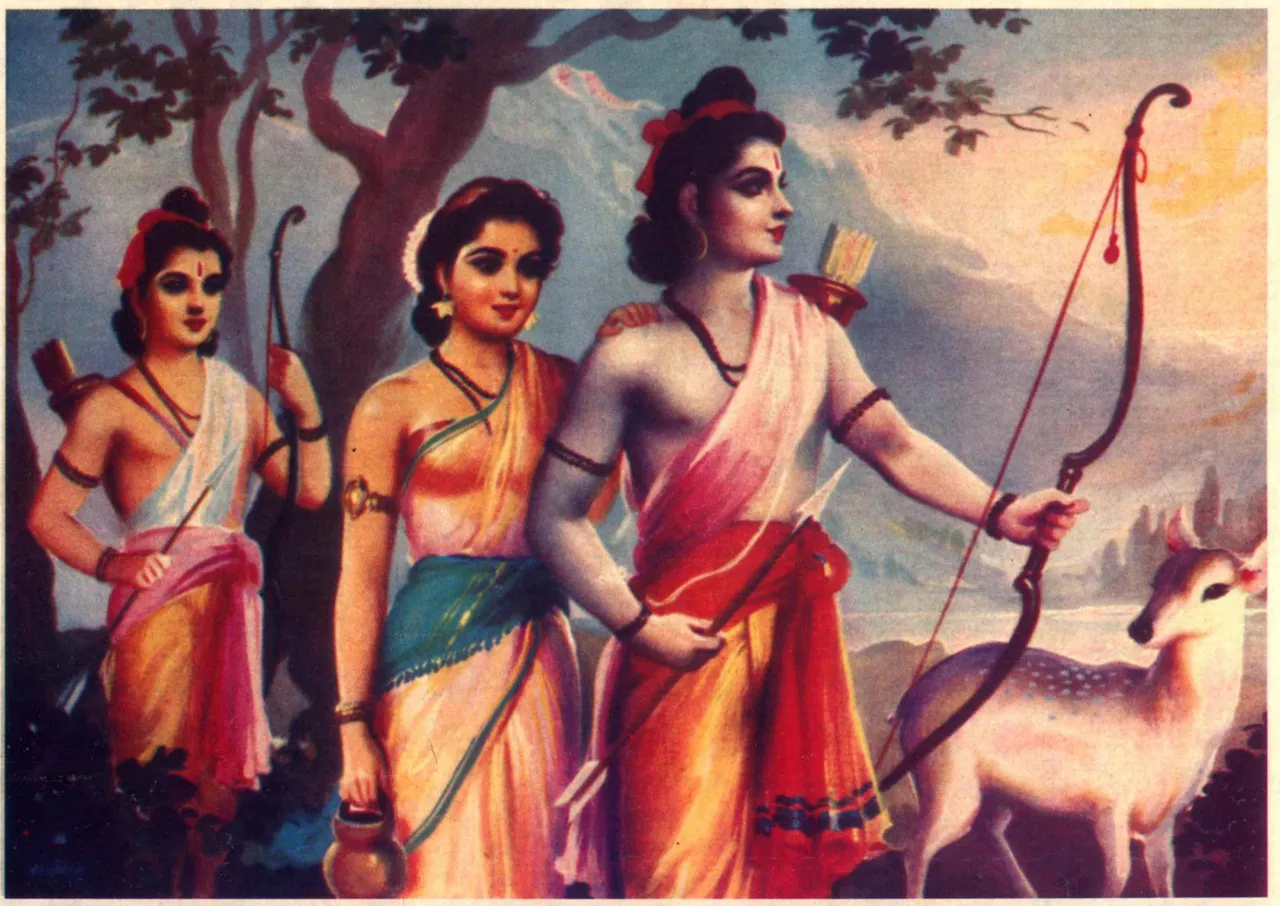
The 2026 Ramayana film is a cinematic adaptation directed by Nitesh Tiwari, with Ranbir Kapoor, Yash and Sai Pallavi among its principal cast. The official Singapore distributor page lists 5 November for its cinema release. This guide was checked on 2 November 2026, so it is a sourced introduction, not a review claiming that we have already watched the completed film.
The project appears under Ramayana: Part One in studio material and Ramayana: Rise of a Legend on the Singapore distributor page. Regional presentation can differ. Match the distributor, territory and date when reading a listing, and do not infer a Pakistan screening or streaming arrangement from another country's announcement.
What has the studio actually announced?
Prime Focus Studios published its trailer announcement on 30 July 2026. It identifies the project as a collaboration involving Prime Focus Studios, DNEG and Monster Mind Creations, with international distribution through Sony Pictures. The studio describes a large-scale adaptation, but promotional descriptions should remain attributed rather than being treated as independent measurements of artistic quality.
The Singapore distributor lists Tiwari as director, Namit Malhotra and Yash as producers, and Hans Zimmer and A. R. Rahman for music. Its page identifies Valmiki's Ramayana as the source. These credits establish a creative team. They do not tell us whether every creative choice will work for a particular viewer.
Keep a distinction between a verified credit and an assumed responsibility. A director, producer, composer and visual-effects team contribute different kinds of work. A film is collaborative, and an introduction should not attribute every visible or audible choice to whichever name is most familiar in its publicity.
What is an adaptation?
An adaptation reworks an existing story for a different medium, audience or form. A film must select what to show, how long to spend on it and which perspective to emphasise. Even when the central narrative is familiar, those decisions can create a distinct experience. Adaptation is therefore more than simply illustrating every sentence of a written source.
Consider an original classroom example unrelated to the film: a short story describes a traveller remembering home for three pages. A screen version might use a silent shot, a conversation, a flashback or sound. Each solution changes how the audience receives the information. Ask what was preserved, what was changed and what effect the new medium makes possible.
That question is more productive than assuming that any difference is automatically a mistake. At the same time, a viewer can reasonably criticise a change. The strongest criticism identifies the relevant version of the source, describes the change accurately and explains why it alters meaning rather than merely announcing that something is different.
Why identify the version of a traditional story?
Long-lived narratives can be encountered through different texts, performances, languages and retellings. A careful comparison names the particular version being discussed. The distributor's reference to Valmiki gives this production a stated source, but a learner's previous knowledge may come from a different retelling. Those starting points should not be silently treated as identical.
In a classroom, begin by asking where a familiar story was encountered: a book, an oral telling, a stage production or a screen version. The purpose is not to rank anyone's family tradition. It is to make the comparison precise enough that disagreement can be discussed respectfully and sources can be identified when needed.
Religious and cultural significance deserves care. This article does not adjudicate belief or declare one community's experience universal. It focuses on the announced screen production and transferable skills for reading adaptation, credits and visual storytelling. Understanding those distinctions allows a culturally important work to be discussed without reducing it to either publicity or provocation.
What can the trailer tell you?
A trailer can introduce selected images, voices, characters and a proposed release date. It can show the promotional tone chosen for an audience. It cannot establish that the whole film has the same pace, that every effect is finished identically or that a particular ending succeeds. Those are questions for the completed work and an honest, properly scoped review.
Try an original observation exercise with any officially released trailer. Write three statements beginning “I can see or hear,” three beginning “I predict,” and three beginning “I still need to know.” A visible landscape belongs in the first group. A guess about the final act belongs in the second. Runtime or local availability may belong in the third.
The exercise prevents a common confusion: treating an expectation as an observed fact. Excitement is a valid response to publicity, but a preview should not claim the evidential authority of a full review. If you have only watched the trailer, state that clearly and keep your conclusions within that scope.
How do you distinguish practical and digital filmmaking?
A finished image may combine photography, sets, costumes, performance, compositing and computer-generated elements. A viewer cannot reliably reconstruct the entire production process from one frame. Official behind-the-scenes material can supply evidence, but visual confidence alone does not prove that a scene used a particular technique or no practical work at all.
For a safe original exercise, photograph a paper model against a plain background, then place that image over a photograph you own. Compare the perspective, light direction and scale. The activity demonstrates why combining images requires decisions. It is not a claim to reproduce DNEG's workflow or an instruction to copy protected film assets.
When discussing effects, explain the visible issue. A character may appear disconnected from the ground, or the light on two elements may seem inconsistent. Those observations are more useful than saying that every unfamiliar image is “all CGI.” They also leave room for the possibility that the cause differs from the viewer's guess.

Historical stage-performance context, not the 2026 screen cast or production.
What should learners notice about music and sound?
Music, speech, ambience and effects can guide attention in different ways. A credited composer is one part of that process. Listen for what changes when a scene becomes quiet, when a sound continues across a cut or when music arrives before an important action. Describe the effect without inventing a composer's private intention.
Create an original ten-second sequence of a door opening using sounds you made yourself. Present it once with a gentle rhythm and once with no music but a prominent creak. Ask classmates how their expectations change. Neither version changes the door, but the sound presentation can alter the audience's reading of the moment.
Keep the exercise separate from the film's actual score. The official music credits tell us who is credited, not how every scene sounds. Until you have access to the work, questions about recurring themes, musical development or the balance between dialogue and score should remain questions rather than fabricated review comments.
Why do release dates need a territory?
A release date can describe a specific market, format or distribution window. The Sony Pictures Singapore page lists 5 November, and Sony's Australian trailer also announces 5 November 2026. Neither listing automatically establishes showtimes, certification or availability in Pakistan. A local exhibitor or relevant distributor is needed for that separate claim.
Use a fictional example to see the difference. A film opens in Country A on Thursday and Country B on Friday, with a streaming release announced later. Saying “available everywhere on Thursday” would collapse three different arrangements into one false promise. A precise listing includes territory, format and the source's date.
The same care applies to time zones. An online premiere time published for another country may fall on a different local date. A cinema release date, however, is not necessarily a single global broadcast timestamp. Do not perform a time-zone conversion unless the event actually provides a time and a zone to convert.
How can a review remain fair to a large production?
A fair review does not need to praise a production because it is expensive, and it does not need to dismiss it because it is ambitious. Evaluate specific elements within your viewing experience. State whether you watched the full work, what language or subtitle version you used and which claims are personal interpretation.
Separate narrative clarity from agreement with a character. A character can make a troubling decision in a clearly told scene. Separate technical scale from emotional effect as well. A very large image may feel distant, while a small exchange may carry the story's weight. Explain how an example supports your judgement instead of relying on the production's reputation.
This guide deliberately does not offer a star rating or verdict before release. Readers can use its questions later: which relationships are clearly developed, where does the pacing change, how does the adaptation frame its conflicts and which choices remain effective after the immediate spectacle has passed?
Can students compare a film with a written passage?
Yes, provided the comparison identifies the passage and uses material lawfully. Choose a short public-domain passage or an original class story, then compare how information is arranged. A written narrator can explain a thought directly; a film may communicate it through speech, action, framing or sound. Neither method is automatically more truthful or more sophisticated.
Make a two-column chart. In the first column, record the information the reader receives. In the second, suggest an original screen equivalent. A sentence about distance might become a wide view. A sentence about uncertainty might become an interrupted reply. Discuss what each proposal reveals and what it leaves ambiguous.
Do not confuse this exercise with evidence about how the Ramayana production adapted a specific passage. It teaches a method. A real comparison requires the chosen source and the released scene, with differences stated accurately. That prevents a classroom prediction from turning into an invented account of the film.
What about unofficial posters, clips and download links?
Treat promotional-looking material as unverified until its origin is clear. A fan poster may be attractive without being official. A clip labelled “full movie” may be misleading, unlawful or unsafe. This article does not provide pirated copies, unofficial downloads or a claim that a free stream has been authorised.
Look for the production or distributor's own announcement and the relevant legal viewing service. Check the title, year, cast and territory, especially when different adaptations share a name. A search result's label is not a guarantee that the page contains the claimed work or has permission to distribute it.
For an original digital-literacy task, compare three fictional listings: a studio trailer, a fan commentary and an unexplained download button. Identify what each claims and what evidence would be needed to trust that claim. The aim is careful identification, not learning to bypass restrictions or obtain a protected film without permission.
Questions to take into the release
Ask what the production's official credits establish, what the trailer actually shows and which questions remain unanswered until viewing. Keep the distinction between a traditional narrative, a particular source text and a new screen adaptation. A familiar title can carry several layers of context without making them all interchangeable.
After legal viewing, write one paragraph about a specific choice and its effect. Replace promotional adjectives with observations. Explain how a scene communicates information, handles a relationship or changes your understanding of an earlier moment. You can disagree with other viewers while keeping the evidence clear and the cultural discussion respectful.
For related practice, browse our reading and media guides. The useful result is not a prediction about box office or awards. It is the ability to distinguish an announcement from a review, identify the scope of a release claim and explain what a screen adaptation does with the material it chooses to tell.
A careful preview can still be enthusiastic. It simply keeps anticipation separate from the evidence needed for a completed review.
To practise closer observation of actors and ensemble storytelling, continue with our screen-performance guide.
Sources
- Prime Focus Studios: official trailer announcement, dated 30 July 2026, for production and distribution context.
- Sony Pictures Singapore: Ramayana listing, for the regional title, credits and announced 5 November cinema date.
- Sony Pictures Australia: official trailer, for the Australian 5 November 2026 announcement. No Pakistan release, completed-film review or streaming availability is independently asserted here.
Image credits: cover: Tej Kumar Book Depo, source, CC0. Resized and converted to WebP. inline: Jakub Hałun, source, CC BY-SA 4.0. Resized and converted to WebP.
Found an error or an outdated detail? Report a correction with the article URL and original source.