
Rex Ryan: Nashville Police Announcement and His NFL Coaching Background
Read the attributed Nashville police announcement about Rex Ryan, separate allegations from outcomes and understand his historical NFL coaching roles.
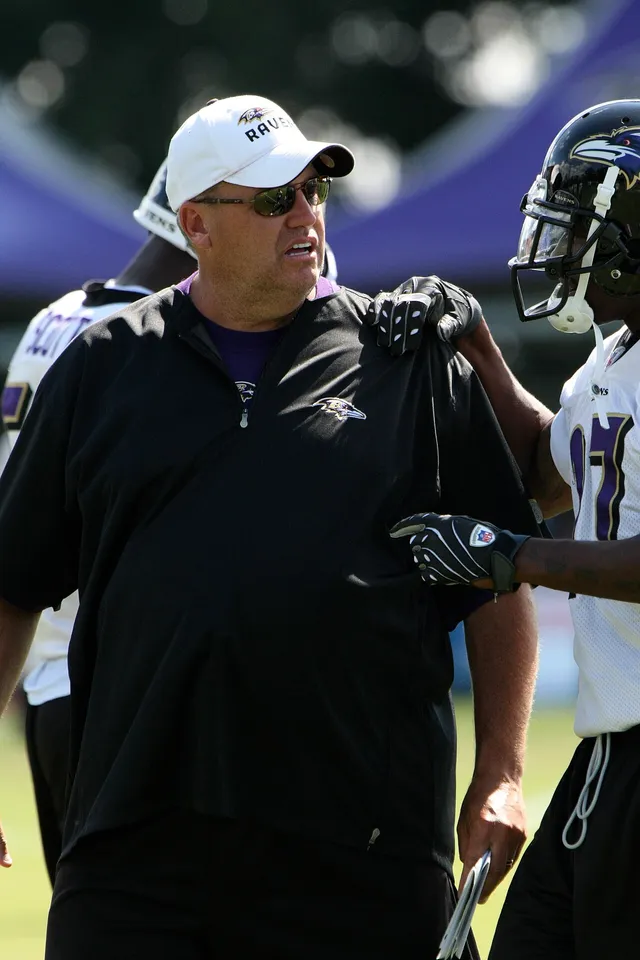
Nashville police said former NFL coach Rex Ryan surrendered for booking on 11 November 2026 on six misdemeanor warrants connected to an alleged collision involving two pedestrians. The announcement is a police account of allegations. It is not a conviction or a finding establishing every disputed fact, and this article does not invent a subsequent court outcome.
Ryan is widely associated with coaching the New York Jets and Buffalo Bills after earlier defensive work in Baltimore. This report separates the dated Nashville announcement from that professional history, then explains how to read a coaching profile and defensive football statistics without confusing reputation, results and evidence.
What Nashville police announced
The police release says the alleged incident occurred shortly before midnight on the previous Thursday at 4th Avenue and Broadway. Police described two pedestrians as having minor injuries and said the allegations involved Ryan's pickup. The release lists two counts each of leaving the scene, failing to give information or render aid, and failing to obey a traffic-control signal.
It says a judicial commissioner set bond at $6,000. The release is dated 11 November, which is the booking-announcement date rather than the date of the alleged collision. These details should remain attributed to the police statement. They do not establish a later disposition, a plea or an explanation from every person involved.
This page was checked for publication on 12 November 2026. It does not identify private pedestrians, speculate about medical consequences or assign a motive. An archived street photograph illustrates the reported location's context; it is not a photograph of the alleged incident or evidence of what happened there.
Keep an allegation separate from a conclusion
News reports use different verbs for different kinds of information. Someone can be alleged to have done something, charged in connection with it or found responsible after a legal process. Those descriptions are not interchangeable. A clear summary preserves the stage described by the source rather than selecting whichever word sounds most dramatic.
The same principle applies when a story concerns a recognisable sports figure. A familiar name makes a report easier to notice but does not reduce the need for attribution. Readers should be able to tell whether a sentence comes from an official announcement, a participant's account, a documented court action or the writer's interpretation.
For a study exercise, underline the source and verb in a news sentence. “Police said” identifies an attributed account. Removing those words can change a statement's certainty. This is a lesson in accurate reading and writing, not advice about anyone's legal rights or a prediction of what a court will do.
Why Rex Ryan is a familiar football name
The Jets' official January 2009 announcement records their appointment of Ryan after his work as Baltimore's defensive coordinator. Buffalo's historical profile records his appointment as Bills head coach on 12 January 2015. Those dates describe earlier career events; neither announcement should be presented as a new appointment in November 2026.
A professional chronology explains why a person has a public profile. It does not prove or disprove an unrelated allegation. Keep the sections separate so that a football achievement does not become an argument about the Nashville case, and the Nashville report does not rewrite the contents of an old football record.
For readers new to American football, a defensive coordinator organises a team's defensive work within the wider coaching structure. A head coach has broader responsibility for the team. Moving between those roles changes the scope of the job, even when a coach continues to be associated publicly with one side of the game.
Head coach and coordinator are different responsibilities
A coordinator's work concerns a particular phase of play, while a head coach must coordinate the overall operation. Staff organisation, preparation and decisions involving different units all contribute to team performance. A simple label such as “defensive coach” can describe a background without explaining the full responsibilities of a later role.
Consider an invented school team with separate staff members preparing its attack and defence. The attack might perform well while the team still loses because of other phases. Conversely, a strong team result does not establish that every unit played equally well. Evaluation should match the responsibility being discussed.
This is why a useful coaching profile does more than list final scores. It distinguishes the role, the period and the measure used to assess it. The approach is valuable in other professions too: a project's overall result and an individual's specific contribution are connected, but they are not the same quantity.
What an aggressive defence is trying to do
In general football discussion, an aggressive defensive approach can involve pressure intended to disrupt the offence's timing or decision-making. That description does not mean every snap uses the same tactic. Personnel, field position, score and the opponent's formation affect what a defence can reasonably attempt.
An extra player sent toward the passer may create pressure while changing the resources available elsewhere. The trade-off is the useful concept for a beginner. A tactic cannot be evaluated solely by whether it sounds bold; its success depends on execution and on what the offence does in response.
Imagine a fictional classroom diagram with defenders assigned to rush, cover or react. Move one marker from coverage toward the passer and ask which space now needs attention. This exercise explains the idea of a trade-off without claiming to reveal a confidential playbook or the exact call used in a historical NFL game.
A sack is useful information, but not a full defensive report
A sack records a particular outcome involving the passer behind the line of scrimmage. It can be important, but it is not the only way a defensive play can succeed. Pressure, coverage and the situation can influence an outcome that a single headline statistic does not fully describe.
For an original example, compare two fictional plays. On one, pressure leads to an incomplete pass. On another, the defender records a sack but the broader drive still produces points after later mistakes. Neither example makes sacks unimportant. They demonstrate why the play's result and the drive's result answer different questions.
A sound note identifies the unit of analysis: snap, drive, game or season. Combining those levels without explanation can produce a misleading judgement. Before calling a defence dominant on the basis of one number, ask what the number measures and what information remains outside it.

Archive view of Broadway in Nashville. It illustrates the location context and does not show the alleged incident.
Wins, losses and percentages need a defined sample
A coaching record normally specifies wins, losses and sometimes ties within an identified competition and period. A regular-season record and a postseason record should not be merged without saying so. A percentage becomes meaningful only when the reader knows which games are included.
Use a fictional team with nine wins and seven losses in sixteen games. Dividing nine by sixteen gives a winning proportion of 0.5625, or 56.25 percent. If that team then wins two postseason games and loses one, its postseason proportion is two divided by three, approximately 66.7 percent. The samples answer different questions.
The example is not presented as a complete Ryan career table. Its purpose is to show why a profile must label the record it quotes. A short postseason run can be memorable while remaining a small sample. Avoid treating a percentage from three games as though it has the same evidential weight as several seasons.
Team context matters when comparing records
Football results involve players, staff, opponents, injuries, preparation and many other factors. A coach influences the system, but a final record does not isolate each cause. Saying that context matters is not an excuse to ignore results; it is a reason to describe the evidence at the right level.
An original comparison might place two fictional teams at eight wins apiece. One may have played a different schedule, and the teams may have arrived at those wins through different strengths. The equal total does not prove identical performance. Additional measures can clarify the comparison when they are consistently defined.
For a student project, choose one narrow question such as points allowed per game over a stated period. Record the number of games and the definition of the statistic. Then explain what the comparison cannot establish. A transparent limited conclusion is stronger than an unsupported declaration that one person caused every result.
Retain the original table headings in your notes so that a later comparison does not quietly change the statistic's definition.
Defensive learning starts before the highlight
A highlight usually begins close to a visible outcome: a hit, interception or score. It may omit the alignment and movement that made the play understandable. Learning from football footage requires attention to the situation before the dramatic moment as well as the result afterwards.
With an authorised clip, pause before the snap and note down-and-distance, field position and the visible formation if they are available. Resume the clip, then compare the result with your initial observation. Do not claim to know an assignment that the footage does not establish. What is visible and what is inferred belong in separate notes.
This habit makes analysis more precise and fair. A viewer can describe a defender moving toward a space without pretending to know the exact instruction given in the huddle. The difference between observation and inference is as important in sports discussion as it is in reporting a public announcement.
Build a simple coaching-profile timeline
Create a table with four columns: organisation, role, start date and source. Add only events supported by a dated record. The Jets' 2009 announcement and Bills' 2015 appointment belong on separate rows. If an end date is not established by the material you have checked, research it rather than calculating it from memory.
Next add a second table for performance measures, keeping its period definitions explicit. Do not place an announcement date beside an unrelated season result without explaining the connection. Separating the tables helps a reader see the difference between holding a role and measuring what happened during it.
Finally, add the date on which you checked the sources. A historical announcement can remain accurate while a claim about a person's present employment changes. This is particularly important with older pages that still use present-tense language. The page's original context determines what that language meant.
What this report does not establish
The Nashville announcement is the source for the attributed incident summary above. The professional sources establish historical coaching context. Neither set of material supplies an undisclosed personal explanation, an unreported court result or a new employment announcement. Those gaps should not be filled with speculation to make a story appear more complete.
A reader looking for a later legal development needs an identified, dated court record or reliable report of that development. A reader looking for football history needs appropriately labelled season and coaching records. Keeping those research tasks distinct prevents one topic from being used as unsupported evidence for the other.
Further study material is available through the RayTech article collection. The practical takeaway for students is a method: identify the claim, choose the right record, preserve its date and scope, and explain uncertainty plainly. A recognisable name should make accurate context more important, not less.
Common questions
Was the police announcement a conviction?
The cited announcement describes booking and misdemeanor allegations. This guide does not report a conviction or invent a later case outcome. Read any subsequent report with its own date and source, and distinguish a procedural development from a finding resolving the allegations.
Are the Jets and Bills announcements new coaching news?
No. They are historical sources from 2009 and 2015, used to explain Ryan's professional background. Their original publication dates matter. A familiar article appearing again in search results does not make the event it describes a new appointment.
Why include football-learning context?
Many readers recognise the name without understanding the coaching roles or statistics associated with it. The original examples explain those concepts while keeping them separate from the attributed Nashville report. They are classroom illustrations, not claims of inside access to a team or evidence about the legal allegations.
Sources
- Metropolitan Nashville Police Department announcement, 11 November 2026
- New York Jets appointment announcement, January 2009
- Buffalo Bills historical career profile and 2015 appointment
Image credits: cover: Keith Allison, source, CC BY-SA 2.0. Resized and converted to WebP. inline: w_lemay, source, CC BY-SA 2.0. Resized and converted to WebP.
Found an error or an outdated detail? Report a correction with the article URL and original source.