
Rinky Hijikata: The 2023 Doubles Title, Singles Progress and Teamwork
Explore Rinky Hijikata’s 2023 doubles title and singles progress. Learn court coverage, partnership roles and how to read tennis records.
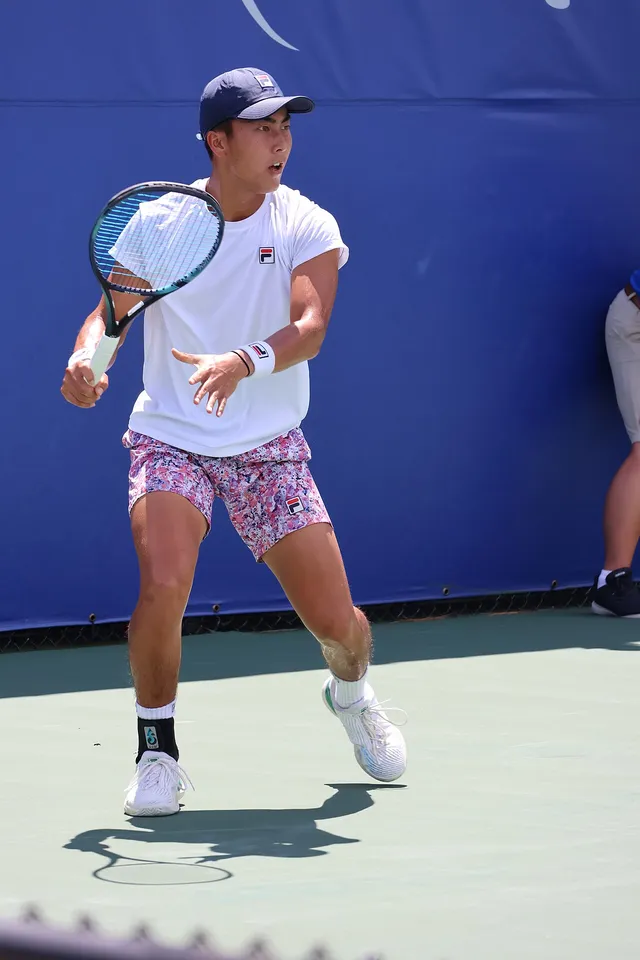
Rinky Hijikata's 2023 season offers two different ways to understand a tennis breakthrough. He won the Australian Open men's doubles title with Jason Kubler and later reached the fourth round of the US Open singles draw. One achievement depended on a partnership, while the other belonged to an individual draw. Keeping those categories separate makes the story clearer and more useful.
The doubles title also provides a good route into teamwork on court. Two players sharing a side must manage space, make decisions and respond to the same ball without working against each other. This guide follows the established historical results and explains those ideas through original teaching examples. It is not a current ranking report, live match score or prediction of the next tournament.
Who is Rinky Hijikata?
Rinky Hijikata is an Australian professional tennis player. His documented career milestones include the 2023 Australian Open men's doubles championship alongside Jason Kubler and the fourth round of the 2023 US Open men's singles competition. Those outcomes appear in ATP, ITF and Tennis Australia records. They should retain their discipline and year rather than being merged into an unlabelled Grand Slam claim.
A doubles title does not become a singles title
A player can compete in more than one draw at a major event. Winning doubles is a major achievement in its own discipline, but it does not mean winning the singles championship. A useful career table includes a discipline column. Without it, even a correct event name can lead readers to the wrong conclusion about the title won.
A fourth round is a different stage
The fourth round in a standard major singles draw is the last sixteen. Reaching that stage is not the same as reaching the final. Tennis Australia's dated September 2023 report identifies Hijikata's US Open exit in that round. A profile can value the run without replacing the official finish with a more dramatic but inaccurate description.
What happened in the 2023 Australian Open final?
Hijikata and Kubler defeated Hugo Nys and Jan Zielinski 6-4, 7-6(4) in the 2023 Australian Open men's doubles final. ATP's report identifies the Australian pair as wild cards. The score and entry category describe separate parts of the achievement: how they entered the draw and how the championship match ended.
Read the score one layer at a time
The first set ended six games to four. The second ended seven games to six, with a tie-break deciding it. The bracketed figure records tie-break information under the source's display convention. It is not a third set or a separate match. Readers should check the convention before turning a compact score into a spoken explanation.
Wild card describes access, not a handicap
A wild card is an entry granted under the event's arrangements rather than obtained through the same route as every other participant. It does not give a team extra points during play or change the final result. Once in the draw, the pair still needed to win the matches required for the title under the competition's rules.
Why does doubles require shared court awareness?
In doubles, each player's movement changes the space the partner must cover. Moving toward one side can help attack a ball while leaving another route open. The useful question is how the pair's positions fit together. Watching only the person who strikes the ball misses much of the decision-making that shapes the point.
The middle needs a shared plan
A ball sent between partners can create uncertainty about who should play it. A sensible arrangement considers the ball's path, each player's position and the available stroke. It is not always resolved by the same person. For a viewing exercise, observe the partners' preparation and response rather than assuming a missed middle ball proves a lack of effort.
Movement creates a new responsibility
When one player moves across to intercept, the partner may need to adjust behind him. If both follow the ball without considering the open area, the opponents may gain a simple target. This general principle explains why two individually quick players do not automatically form an effective pair. Coordination connects their abilities into useful coverage.
A net player influences shots without touching them
A player near the net can make an opponent choose a more difficult return or change direction. That influence does not always appear as a volley winner. To identify it, look for a visible response in the opponent's target or contact. Do not award hidden credit automatically; explain the sequence that supports the interpretation.
How do serve and return work as team actions?
The server's delivery affects what the partner can anticipate, while the receiver's reply must consider two opponents. A wide serve can create one pattern and a body serve another. The pair's next positions matter as much as the initial contact. An ace ends the point immediately, but many useful serves create a manageable next ball instead.
Watch the server's recovery
After serving, a player must prepare for the return and understand the partner's movement. Standing still to admire a strong delivery can leave the next shot difficult. A useful analysis follows the full sequence from serve through return to the next team action. It does not treat the speed reading as a complete service-performance score.
A return can be safe and purposeful
Trying to avoid the net player may lead a receiver to choose a controlled direction with more margin. A powerful return hit directly to a well-positioned opponent can be less useful than a slower ball that creates time. Judge the situation produced, not only the force of the swing. Placement and team geometry are separate variables from pace.
The next shot can change the pattern
An intended serve-and-volley or baseline arrangement may need adjustment after an unexpected return. Good teamwork includes alternatives rather than continuing a plan that no longer fits the ball. This is a general explanation of doubles choices, not a claim about private instructions used by Hijikata and Kubler in every match of their title run.
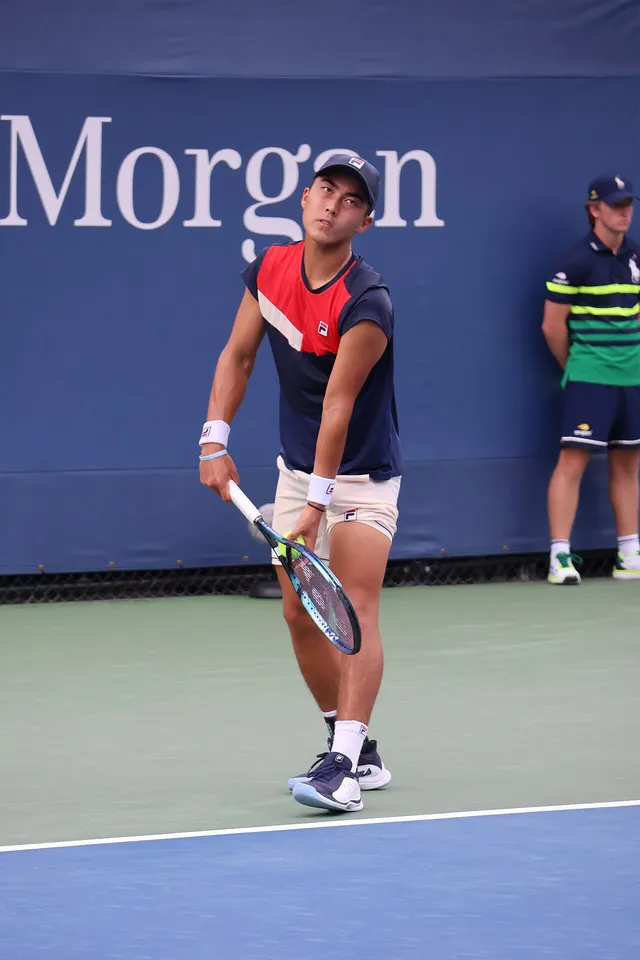
Rinky Hijikata in the first round of the 2023 US Open, shown as a separate singles-career reference.
What is a poach?
A poach is a movement in which a player crosses to intercept a ball that might otherwise travel toward the partner's side. Timing and preparation matter because the movement changes the pair's coverage. It is not simply a dramatic leap across the court. The interception should be assessed alongside the space left behind and the partner's response.
An attempt can influence a later point
Even when a player does not intercept, a visible movement can make the opponents reconsider a familiar target. However, a viewer should not assume every hesitation was deliberately caused by a feint. Describe what can be seen and keep the interpretation modest. Tactical analysis is strongest when the claimed effect can be connected to an observable change.
Crossing without communication carries a cost
If partners move in conflicting directions, they can leave a gap or both attempt the same ball. Communication can involve agreed patterns, signals or brief discussion, but private details should not be invented. In a public analysis, identify the coordination visible on court and avoid presenting an imagined conversation as fact.
How should singles and doubles records be compared?
Start with separate columns for discipline, event and result. A player's success in one format may offer useful context without guaranteeing the same outcome in another. Court coverage, shot patterns and partnership responsibilities differ. Hijikata's 2023 results are interesting precisely because they show progress in distinct settings rather than one achievement copied into two categories.
Rankings belong to their category
A doubles ranking and a singles ranking measure results in different competitions. They should not be compared as though the smaller number automatically identifies the player's stronger overall performance. A career high is also different from a current ranking. Include the category and release date whenever a ranking is used in a profile or classroom chart.
Match totals need a clear scope
A season table might include tour-level matches, qualifying or lower-tier events depending on its source. Another table may use a different scope. Do not add the totals or compare percentages until the definitions are clear. The same caution applies to titles: a doubles title is not an extra singles trophy simply because both appear in a combined biography.
How can teamwork be measured in a small exercise?
Some contributions can be logged from video, such as interceptions attempted, returns kept in play and visible coverage changes. Other contributions require information the camera does not provide. Begin with a small set of clear categories rather than a made-up teamwork score. A modest transparent dataset is more useful than a confident number that cannot be checked.
Use a fictional conversion example
Imagine a pair wins six of ten points after a particular labelled serve target. That is a 60 percent success rate in the sample. It does not prove the target will work on the next point or against another pair. The sample contains only ten situations, and their return quality may differ. Counts, context and uncertainty should appear together.
Avoid counting the same point twice
A point can contain both a strong serve and a successful interception. If you list both contributions, make clear that they occurred within one team point rather than two points won. This distinction is useful beyond tennis. A project can describe several actions contributing to one outcome without inflating the outcome total.
Define the observation window
Choose consecutive points from a specified game or passage rather than only attractive highlights. Consecutive footage includes routine play and unsuccessful choices. State where the sample starts and ends so another student can repeat the exercise. If the camera cuts away, mark the information missing rather than filling the gap with an assumed successful action.
What can students learn from the partnership story?
The broad lesson is that a shared objective requires clear roles and adaptation. A pair does not need identical strengths to work together, but each player needs to understand how one decision affects the other. This is an analytical lesson from doubles, not a promise that copying a professional formation will produce a title in a school tournament.
Explain one point in plain language
Try describing a sequence without technical labels: the serve moved the receiver wide, the return travelled toward the middle, and the partner stepped across to meet it. This makes the cause and effect easier to understand. Technical terms can then be added to name what the reader already sees, rather than replacing explanation with jargon.
Turn the notes into a simple tool
Use the class resources for supporting mathematics and the programming courses to build a small point log. Give each entry a discipline, event date and source. Validate that successful actions do not exceed attempts and handle empty samples without division by zero. A useful tool preserves the distinction between individual actions and team points.
Distinguish partnership history from individual history
A doubles result belongs to the named pair in that event. It does not prove they played together in every earlier or later tournament. If the partnership changes, keep the new teammate's name with the new record. This prevents an individual biography from accidentally awarding one partner credit for a title won with somebody else. The same rule helps when a player enters mixed doubles as well as men's doubles.
Questions about Rinky Hijikata
Did Hijikata win Australian Open singles in 2023?
No. The championship discussed here was the men's doubles title, won with Jason Kubler. His fourth-round singles run at the US Open later that year is a separate result. Keeping the discipline visible avoids a common mistake when a biography lists several competitions under the same major-event heading without explaining which draw produced the achievement.
Does a wild card change the scoring rules?
No. It describes a route into the draw, not a scoring advantage. The pair's title still depended on winning its matches under the applicable event rules. A reader should separate entry status from seeding, ranking and match outcome. Each label answers a different question about how a competitor took part in the tournament.
Sources
- ATP Tour: the 2023 Australian Open men's doubles final
- ITF: official 2023 Australian Open doubles final notes
- Tennis Australia: Hijikata's fourth-round US Open finish
Image credits: cover: Hameltion, source, CC BY-SA 4.0. Resized and converted to WebP. inline: Hameltion, source, CC BY-SA 4.0. Resized and converted to WebP.
Found an error or an outdated detail? Report a correction with the article URL and original source.