
Sachin Tendulkar: Career Milestones, Cricket Records and Batting Numbers
Understand Sachin Tendulkar’s career, Test and ODI records, centuries and World Cup context, with clear cricket calculations and source checks.
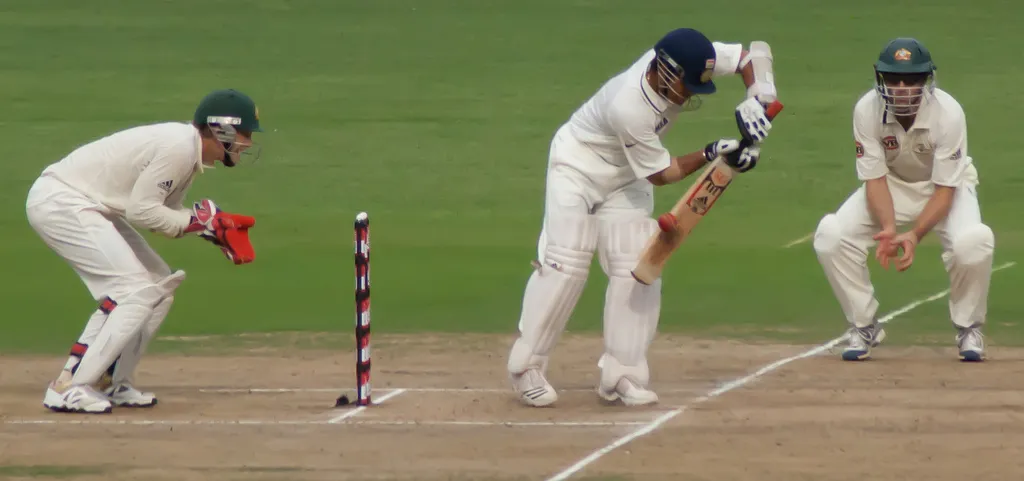
Sachin Tendulkar's career is associated with 100 international centuries, 200 Test matches and 463 One-Day Internationals. Those numbers describe different measures, and understanding their labels makes the record more impressive, not less. A century count is not a match count, an innings is not always a dismissal, and a career total needs its format and time boundary.
Tendulkar's international career ran from 1989 to 2013, and the ICC inducted him into its Hall of Fame in 2019. This guide follows those official records, explains the landmark achievements and uses scorecard exercises to help students read cricket statistics accurately. It does not invent a current playing appearance or present old career figures as live match data.
Start with the format behind the number
Tests and ODIs have different structures, and their statistics should retain their format labels. A figure from one format should not silently become the player's total across all cricket. Domestic, franchise and international records also need separate boundaries.
The official career record includes 51 Test centuries and 49 ODI centuries. Together they account for the famous 100 international hundreds. The calculation is straightforward once the categories are clear; removing the categories makes the same numbers harder to interpret.
| Career measure | Official historical record |
|---|---|
| Test appearances | 200 |
| ODI appearances | 463 |
| Test centuries | 51 |
| ODI centuries | 49 |
| Combined international centuries | 100 |
| ICC Hall of Fame induction | 2019 |
What a century represents
A century is an innings of at least 100 runs by a batter. It is not an additional 100 runs added separately to the innings total. If a player scores 114, those 114 runs include the first hundred rather than being counted as 214.
For a fictional scorecard, a batter makes 108 in one innings and 42 in another. The two innings contain 150 runs and one century. The second innings does not become another century simply because the combined match total exceeds 100.
This distinction is useful when reading Tendulkar's achievements. The century record counts qualifying innings, while the career-run total adds runs under the relevant statistical scope. The two measures describe different aspects of sustained batting performance.
Matches and batting innings differ
Test cricket can provide two batting innings for a team, while an ODI has a different structure. A player can also appear in a match without producing a batting innings under the circumstances. Match count and innings count therefore should not be assumed equal.
Imagine a fictional batter selected for ten matches but batting in eight innings. Dividing runs by ten answers a different question from dividing by the relevant dismissal count. The apparent simplicity of a career table can conceal several different denominators.
When making a comparison, copy the column heading with the number. A precise figure under the wrong heading is still misleading. Tendulkar's long career is easier to understand when appearances, innings and dismissals are kept separate rather than compressed into one total.
Why batting average is not simply runs per match
A batting average uses runs and dismissals under the relevant record. A not-out innings affects the relationship between innings played and dismissals. Using matches as the denominator would calculate something else and should not be labelled as the official batting average.
For an invented example, a batter scores 240 runs across six innings and is dismissed four times. The batting average is 60. Dividing by six gives 40, which is runs per innings in this simplified exercise, not the same statistic.
The example shows why not-out notation matters. A career table with asterisks and not-out counts contains information needed for interpretation. Those symbols are part of the statistical record rather than decoration attached to a famous innings.
Strike rate answers a different question
Batting strike rate relates runs to balls faced, normally expressed per 100 balls. It measures scoring pace under that definition, not the probability of winning or the player's entire value to a team. Average and strike rate can therefore move differently.
A fictional innings of 60 from 75 balls has a strike rate of 80. An innings of 45 from 30 has a strike rate of 150. The second is faster under that measure, but the first contributes more runs. Match context is needed to explain their different roles.
Do not compare a Test-career rate with an ODI innings rate without identifying the different scopes. A short successful innings and a long career summary can both be useful, but they should not be presented as identical kinds of evidence.
The ODI double century was an innings milestone
Tendulkar's unbeaten 200 against South Africa in Gwalior in February 2010 was a landmark in men's ODI cricket. The not-out mark belongs to the score. The achievement concerns a particular innings, separate from his eventual career aggregate and century count.
An innings of 200 is also a century, but it is not counted as two separate century innings in the usual career-hundreds total. The same score can meet several descriptive thresholds while still representing one batting innings.
For a classroom record, create columns for runs, balls, dismissal status and milestone category. This makes it possible to describe the achievement accurately without adding the score twice or confusing a double century with two different matches.
The 2011 World Cup connects individual and team records
India won the 2011 men's ODI World Cup, and the ICC's Hall of Fame account identifies Tendulkar as India's leading run-scorer in that tournament. The team title and the individual contribution are connected, but they are not interchangeable records.
A player can perform strongly in a losing team, and a winning team can contain players with different statistical contributions. Reading both levels gives a more complete account than attributing every team outcome to one individual score.
When analysing a tournament, separate player runs, team results and the competition's final outcome. Use the actual match and tournament records for each. This method respects an individual's achievement while preserving the work and results of the whole team.
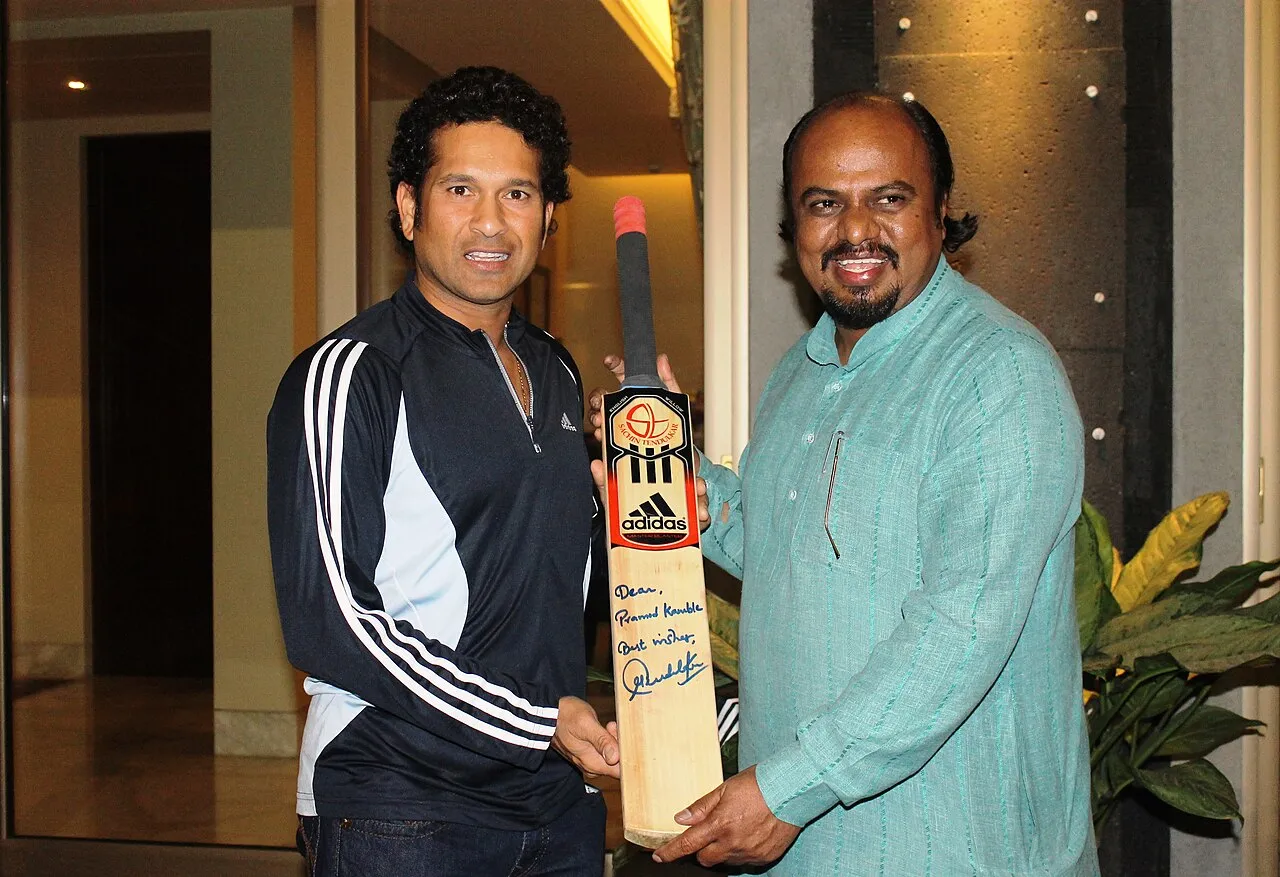
Sachin Tendulkar with artist Pramod Kamble in a photograph dated January 2013, shown as historical off-field context.
A career ending and an honour arriving later are different dates
Tendulkar's international career ended in 2013, while his ICC Hall of Fame induction came in 2019. The later honour does not mean he resumed international playing in that year. An achievement can be recognised after the period in which it occurred.
This is a useful biography-reading lesson. A match appearance, retirement, anniversary and award ceremony can all appear in later news coverage. Their dates should remain attached to their event types rather than being merged into a supposed current playing schedule.
Build a simple timeline with one row for the career period and another for honours. That presentation makes historical recognition easier to understand and prevents a photograph from an awards event being mistaken for an image from a new match.
Career length and opportunity affect totals
A long career can provide many opportunities to accumulate runs and appearances. That does not make the total unimportant; it explains why aggregate achievement and per-innings measures answer different questions. Readers should consider both without pretending they are substitutes.
For a fictional comparison, one player scores 1,000 runs in twenty innings and another scores 800 in twelve. The first has the larger aggregate, while another calculation might describe the second differently. The appropriate comparison depends on the question being asked.
Tendulkar's records can be appreciated as a combination of longevity and performance. A careful explanation identifies the measure instead of using one selected statistic to declare that every possible comparison has been settled mathematically.
Different eras need context rather than invented adjustments
Cricket conditions, schedules and formats can differ across eras. Those differences make historical comparison interesting, but they do not justify adding a guessed modern value to an older player's record. An adjustment needs a clear method and evidence.
For a student exercise, describe the comparison's limits in words before changing any numbers. Ask whether both players' figures come from the same format, whether the periods are complete and what the statistic actually measures. These questions often resolve confusion without a speculative formula.
Historical records should remain intact. Interpretation can discuss context, but it should not replace documented runs or appearances with an unsupported alternative and then present the result as an official corrected total.
Boundary runs and total runs are different
A batter can score through boundaries and other completed runs. Knowing the number of fours and sixes explains part of an innings, not necessarily all of it. The remainder needs the scorecard rather than an assumption that every run came from a boundary.
In an invented innings, five fours and two sixes account for 32 runs. If the batter's total is 50, the remaining 18 came through other scoring contributions under the exercise's assumptions. The boundary calculation does not replace the complete score.
This is a useful way to explore a famous innings without copying a highlight clip's impression. Highlights may emphasise boundaries, while the scorecard records the whole numerical contribution. The two sources serve different purposes.
Partnerships are shared team contributions
A partnership records the runs added while two batters are together under the applicable scorecard definition. It is not automatically the sum of their entire final scores. A batter may have scored runs before the partnership began or after it ended.
For a fictional pair, one batter enters on an existing personal score of 20 and later reaches 60 while the partner adds 30. The relevant partnership needs the actual team-score movement during their time together, including applicable extras, rather than simply adding 60 and 30.
The example shows why cricket analysis should preserve innings sequence. A famous individual total and a key partnership can both be important, but their numerical relationship must be established from the actual match record.
A complete scorecard is better than an isolated screenshot
A cropped image can omit the opposition, venue, format, date or innings status. Those missing fields can change the meaning of the visible number. Before sharing a record claim, identify the match and the scope of the statistic.
For a career claim, use the relevant official profile or statistical record. For a particular innings, use the match scorecard. A retrospective article can supply context, but it should not be used to invent an undisclosed ball count or a different dismissal status.
The same reading discipline is valuable outside cricket. A number becomes useful when its unit, period and source are visible. Without those labels, even an accurate figure can support an inaccurate conclusion.
Make a Tendulkar learning notebook
Start with the historical milestones and separate format-specific records. Add a page for average, strike rate, boundary contribution and partnerships. Use fictional numbers for practice before applying the method to a documented innings.
For each calculation, write what it answers and what it does not answer. A strike rate describes scoring pace; it does not independently explain pitch conditions, field settings or the final result. This habit turns memorised statistics into a more useful understanding of the game.
Use class resources for percentages and averages. A project in programming courses could build a cricket calculator that asks for the format, innings and denominator before displaying a labelled result.
Questions about Sachin Tendulkar
How do the 100 international centuries break down?
The historical record contains 51 Test centuries and 49 ODI centuries. Together they make 100 century innings across those international formats. A double century remains one qualifying innings in that count rather than being treated as two separate century innings.
Did the Hall of Fame induction happen during his playing career?
No. His international career ran from 1989 to 2013, and the ICC inducted him in 2019. The later honour recognises an earlier career. Keep the award date separate from match appearances, retirement and later commemorative events.
Why is a not-out innings marked with an asterisk?
It records dismissal status, which matters when interpreting batting figures and averages. An unbeaten score and a dismissed score can contribute the same runs while affecting the dismissal count differently. The mark is part of the record, not merely a celebratory symbol.
Can one statistic prove every comparison between batters?
No single measure answers every question. Aggregate runs, average, strike rate, format, opportunities and match context describe different aspects of performance. A useful comparison states its question and evidence rather than treating one selected number as a complete account of two careers.
Sources
- ICC Hall of Fame: Sachin Tendulkar
- ICC: 2019 Hall of Fame induction
- BCCI: Sachin Tendulkar in numbers
- BCCI: 200 Sachin Tendulkar facts
Image credits: cover: Pulkit Sinha from Mumbai, India, source, CC BY-SA 2.0. Resized and converted to WebP. inline: Coolgama, source, CC BY-SA 3.0. Resized and converted to WebP.
Found an error or an outdated detail? Report a correction with the article URL and original source.