
Sania Saeed on Rescued Animals: Interview Context and Responsible Care
Read the context of Sania Saeed’s animal-care conversation, her earlier advocacy work and practical lessons in responsible, realistic community support.

Sania Saeed's animal-care conversation: attention is a responsibility
Sania Saeed's conversation with Atiqa Odho has brought attention to her work with rescued animals. Reports published on 10 November 2026 describe the actor discussing twelve rescued cats, the demands of caring for them and her involvement with shelters. The useful theme is sustained responsibility, rather than treating an animal as a photograph or a passing interest.
The episode is titled Sania Saeed: Beyond the Character, part of In Conversation With Atiqa Odho. This article draws its account of the recent conversation from the published reports; it does not present an independently checked transcript or claim to have reviewed every minute of the episode.
There is also a longer public record behind the discussion. Saeed's artistic work and animal-welfare advocacy have appeared in earlier interviews and reporting. Together, they offer an educational question worth exploring: what turns sympathy into dependable action, and how can a reader support a cause without confusing visibility with results?
What the recent reports establish
ARY News and Daily Times identify Odho as the interviewer and describe Saeed's care for rescued cats. Their accounts connect affection for animals with practical demands on time and attention. They also report that shelter volunteering formed part of the conversation.
The reports do not frame every personal remark in the same way. A short headline should therefore not be expanded into an explanation of someone's private motivations. This article makes no claim about a diagnosis, family dispute or a reason for a personal decision that the available evidence cannot establish.
The reported number of cats is a detail from that conversation, not a model that readers are being encouraged to copy. Capacity differs between households. The more useful question is whether the people taking responsibility can provide consistent care and arrange appropriate help when needed.
There is no new adoption application, shelter appeal or official fundraising campaign established by the interview coverage alone. A reader wishing to act should check the organisation's own current information rather than assuming that a social-media post is an authorised request for money or volunteers.
Who is Sania Saeed beyond the latest headline?
Saeed is a Pakistani actor whose public work spans television, theatre and film. A 2025 Express Tribune profile places her early television recognition in Aahat in 1991 and discusses the charitable interests that run alongside her acting. That profile is historical context, not a new programme announcement.
A published 2024 conversation with the Pakistan Institute of Development Economics offers a direct account of her thinking about creative choices. She describes refusing work she disagrees with and valuing stories that make room for more honest conversations. Those are her views about her career, rather than independent measurements of the entire entertainment industry.
This distinction is important when writing about an artist. A character played on screen is not evidence of the actor's private beliefs. Equally, an interview about personal values is not a review of every role in a long career. Keep the performance, the public statement and the reporting about each separate.
Readers can appreciate a person's work without accepting every opinion or assuming complete knowledge of their life. A thoughtful profile gives context and identifies its evidence; it does not turn admiration into a demand that the subject be beyond disagreement.
The earlier link between storytelling and animal welfare
In June 2023, Images reported an ACF short-film project featuring Saeed, directed by Marina Khan, with cinematographer Mo Azmi. The project was described as a way to question what society accepts as normal in its treatment of animals. The report concerned a five-minute film planned for release that month.
That earlier project gives a more specific connection between her profession and the cause than a generic description such as “celebrity animal lover”. It identifies a creative contribution. It does not establish that she founded the organisation or personally runs every service it provides.
Storytelling can make an overlooked problem easier to notice. A scene may ask a viewer to consider an animal's experience or recognise a behaviour previously dismissed as ordinary. Its value comes from the question it raises, while the practical response still requires people, skills and resources beyond the film itself.
The difference is similar to the distinction between a lesson and its application. Understanding a situation is a beginning. The next step is deciding what action is appropriate, who is qualified to carry it out and what continuing responsibility that action creates.
What ACF Animal Rescue says it does
The Ayesha Chundrigar Foundation describes itself as a Karachi-based animal-rescue and rehabilitation organisation established in 2013. Its website sets out work involving street animals and working animals, alongside community engagement and educational activity. These descriptions come from the organisation itself, not from an independent audit of its results.
Its programme pages describe street-animal rescue, donkey-care camps, vaccination and sterilisation work, animal-market interventions and support for horses and camels used at the beach. The range matters: animal welfare is not limited to adopting a cat or dog into a household.
Working-animal welfare also connects with the circumstances of the people who depend on those animals. An approach that considers both sides can ask what resources, training and services are needed, rather than assuming that every problem will be solved by blaming an individual owner.
The website's numerical counters are not used here as live verified totals. A figure without a clear reporting period can be misunderstood as an annual or current count. Readers looking for impact evidence should check the period, definitions and available reports before repeating a number.
Why caring for an animal is more than liking animals
Affection is a feeling. Responsibility includes recurring tasks, decisions and arrangements for times when the main caregiver is unavailable. The two can support each other, but they are not interchangeable. An enthusiastic first day does not answer what happens during a busy month.
A household considering a new commitment can begin with an ordinary weekly schedule. Who is present, who has agreed to help and which tasks already compete for time? Discussing these questions before making a commitment is more useful than assuming that excitement will supply unlimited capacity.
It is equally important to distinguish an intention from an arrangement. “Someone will help if I am away” is an intention. Naming an available person, obtaining their agreement and explaining the responsibilities creates an arrangement. The same principle applies to many forms of community work.
This is a planning exercise, not veterinary advice or a recommendation to adopt a particular animal. Care needs differ, and qualified professionals or the responsible organisation should guide decisions about individual cases. A public interview cannot provide an assessment of a reader's household.
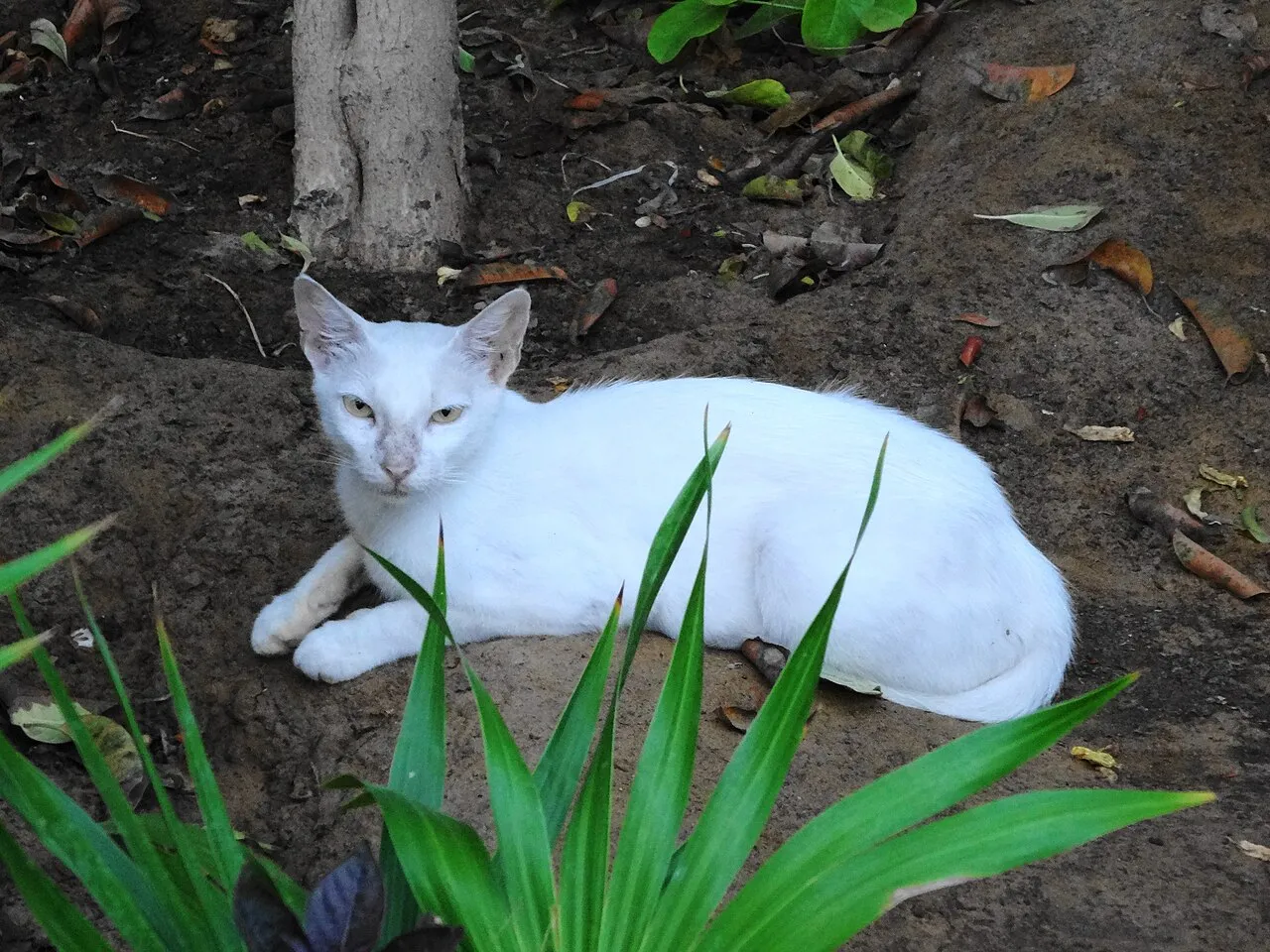
Illustrative photograph of a cat in Pakistan. It is not identified as Saeed’s cat, an ACF animal or a particular rescue case.
Rescue, adoption, fostering and volunteering are different roles
These terms are often used together, but they describe different commitments. Adoption normally concerns taking long-term responsibility for an animal. Fostering usually refers to a temporary arrangement made under an organisation's conditions. Volunteering can involve supporting work without bringing an animal home.
The exact expectations depend on the organisation and the particular arrangement. Ask for its current process rather than assuming that every shelter uses the same rules. A social-media caption saying “help needed” may refer to transport, supplies, administration or a specialised task, not necessarily adoption.
For a hypothetical student with limited time and no permission to keep an animal at home, the appropriate contribution might be a supervised awareness activity or a task agreed with an organisation. That is an illustration of matching capacity to a role, not a claim that a specific shelter currently has a vacancy.
Choosing a smaller, dependable contribution is not a failure to care. Taking on a responsibility that cannot be sustained may create another problem. The useful standard is whether the commitment can actually be met and whether it addresses an identified need.
A simple capacity worksheet for a community project
Before organising an activity, write down the proposed outcome in one sentence. “We want to help animals” is a broad intention. “We will contact an established organisation, ask what educational material it currently needs and agree one manageable task” is a more concrete starting point.
Next, list the available people, time and resources. Keep confirmed offers separate from possibilities. A classmate who might help after exams is not the same as a person who has agreed to attend on a particular date. This prevents a plan from depending on resources that do not yet exist.
Then define the boundary of the work. Who can approve a change? What will the group do if it cannot finish? Who receives the completed work? These questions are ordinary project planning, but they become especially important when another organisation is relying on the promise.
Finally, decide how to report the outcome honestly. Completing an awareness poster is not the same as rescuing an animal. Delivering supplies does not prove that a wider problem has been solved. Describe the contribution accurately without inflating its impact for a shareable photograph.
Empathy can be taught through observation and discussion
ACF's education page describes resources including storybooks, flyers and brochures, as well as activities intended to build understanding of animal welfare. Its stated approach gives educators a possible starting point, not evidence that every activity suits every learner or setting.
For a classroom discussion, ask students to separate observation from interpretation. “The animal moved away when the crowd approached” describes something visible. “The animal wanted to perform for us” assigns an intention that the observation does not establish. Learning the distinction discourages careless assumptions.
Another useful exercise is to compare a brief caption with a fuller report. What information is missing? Does the image show the event named in the text? Is the date available? This develops media literacy alongside the original welfare topic, without asking students to become animal handlers.
Respectful learning does not require turning an animal into entertainment. An educational visit or activity should follow the responsible organisation's guidance, with appropriate adult supervision where needed. The purpose is understanding, not obtaining a dramatic reaction for a video.
Check a charity link before acting on a repost
An interview can increase interest in a cause, and reposts can then circulate old or incomplete information. Start with the organisation's own website or verified public channel when checking a campaign. Confirm that the appeal, contact details and stated purpose belong together.
Keep the original date visible when sharing. A request for a particular item last year may not describe today's need. Likewise, a photograph can remain genuine while the caption attached to it has become inaccurate. Authentic imagery does not automatically make a new accompanying claim true.
If a campaign provides an update, read it before forwarding the original appeal. The need may have changed or the target may already have been met. A useful share reduces confusion; it does not simply increase the number of copies of an outdated message.
This article is editorial coverage, not a donation collection or an endorsement of a particular payment request. It does not reproduce bank details or claim that a donation made through an unrelated message will reach an organisation. Readers should use the institution's own current process.
How to read a celebrity interview without turning it into gossip
Begin by identifying the speaker, interviewer and publication. Then distinguish a direct quotation from a reporter's paraphrase and from a headline writer's interpretation. All three may appear on the same page, but they do not carry the same evidential weight.
If two reports frame a remark differently, do not combine the strongest phrases from both into an even stronger conclusion. Return to the original interview when a precise wording matters. Where a full transcript has not been checked, a careful summary should acknowledge that limit rather than invent certainty.
It is also possible to discuss a public issue without repeating every personal detail in the conversation. Here, the relevant theme is the work involved in caring for animals. Speculation about a family, health or private relationships adds no reliable explanation of that theme.
Our articles and updates section contains other source-based explainers. The same reading habit applies across them: check the date and scope, distinguish reported facts from examples and look at the source material before sharing a stronger claim than the article supports.
Photographs should clarify, not manufacture a connection
The portrait accompanying this article identifies Saeed in an earlier public image. The cat photograph is illustrative; it does not show one of her reported rescued cats or an animal at ACF. The captions state those limits because visual placement can otherwise imply a relationship that does not exist.
Do not identify an unnamed animal as a rescue case merely because it appears outdoors. A photograph may not establish whether it has an owner, receives community care or needs assistance. The same caution applies when assigning a location or a medical condition from appearance alone.
An accurate caption is part of the reporting. It can state the known subject and date while leaving unknown details unknown. A more dramatic caption is not more informative if it invents the very connection the reader is trying to understand.
Questions about Sania Saeed's animal-care discussion
What is the recent conversation about?
The reports describe her affection for rescued animals and the responsibility involved in looking after them, during a conversation with Atiqa Odho. This article focuses on that public welfare theme rather than reconstructing an unchecked transcript.
Does the reported number of cats recommend a target for others?
No. A number mentioned in a personal account is not a care standard or a suggestion that another household should take on the same commitment. Resources, arrangements and individual needs differ.
Did Saeed establish ACF?
The organisation identifies Ayesha Chundrigar as its founder. Saeed's reported participation in advocacy and creative work should not be confused with founding or managing every part of the institution.
What can a student take from the story?
The practical lesson is to connect concern with a realistic, agreed responsibility. Verify the need, understand the task, commit within your capacity and describe the outcome honestly. None of those steps requires turning a public figure's private life into an explanation.
Sources
- ARY News: interview coverage, 10 November 2026
- Daily Times: animal-care conversation coverage
- Express Tribune: earlier profile of Saeed's acting and charitable interests
- PIDE: 2024 published conversation with Sania Saeed
- Images: ACF short-film project, June 2023
- ACF: organisation and mission
- ACF: rescue and rehabilitation programmes
- ACF: education and community activities
Image credits: cover: The Citizens Foundation, source, CC BY 3.0. Resized and converted to WebP. inline: Miansari66, source, CC0. Resized and converted to WebP.
Found an error or an outdated detail? Report a correction with the article URL and original source.