
Saud Shakeel: Galle 208 Not Out and the Skills Behind Reading Test Batting
Read Saud Shakeel’s verified Galle double-century context and learn how not-outs, partnerships, batting average and match state shape Test cricket.
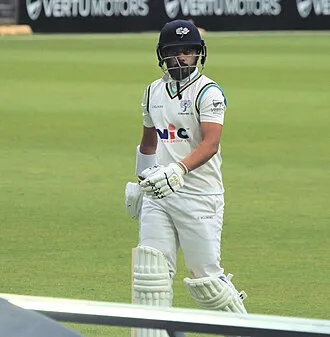
Saud Shakeel is a Pakistan left-handed batter from Karachi whose Test career includes an unbeaten 208 against Sri Lanka at Galle in July 2023. The PCB's player record and its report of that innings provide the factual starting point for this profile. The innings remains useful for understanding long-form batting, partnerships and the meaning of a not-out score.
This guide was checked on 13 November 2026. It combines a short verified career outline with an original explanation of how to read a Test innings. The learning examples are illustrative; they are not claims that Shakeel used a particular private training method or made an unreported decision on a specific ball.
For a current match score, consult the relevant completed scorecard. A career profile should not quietly become an unverified live update. The discussion below keeps the dated Galle achievement separate from current selection, captaincy and ranking questions that need their own fresh evidence.
The verified career starting point
The PCB profile identifies Shakeel as a left-handed batter, born in Karachi on 5 September 1995. Its earlier pathway feature describes progression through age-group cricket, including Karachi under-16 cricket and Pakistan under-19 representation. Those are dated career facts, not a promise that every young player follows the same route.
The pathway matters because a senior appearance does not emerge from a single highlight. Different levels provide different tests of skill, role and consistency. A short profile can explain that progression without inventing a personal story about childhood ambitions or private family circumstances.
Keep team labels intact when reading a record. Pakistan under-19, Pakistan A and the senior national side are separate levels. A score or appearance at one level should not be added to a senior Test total as though all the rows describe the same competition.
Why the Galle innings is a useful reference
The PCB's July 2023 report records Pakistan making 461, with Shakeel 208 not out. That gives readers a specific innings to study instead of relying only on a broad label such as patient batter. The date, opponent, venue and final score identify the achievement clearly.
It does not follow that every later innings will resemble it. A career milestone is evidence of what happened on that occasion, not a guarantee of another double century. Form, role and match conditions need their own context in each subsequent fixture.
For a study note, write the four facts together: Galle, Sri Lanka, July 2023 and 208 not out. The compact record is easier to verify than an unsupported claim that the innings was the greatest in every possible category.
What the asterisk means
An asterisk beside 208 means the batter was not dismissed in that innings. It does not mean the score was estimated, unfinished because the player was still batting when the article was written, or automatically carried into a later innings. The completed team innings and the player's dismissal status are different parts of the record.
Not-out status also matters when calculating a batting average. The denominator is dismissals, not simply appearances. A batter with two innings, one dismissal and 100 runs has an average of 100, while the same runs with two dismissals produce 50.
Those numbers are fictional examples. They explain the statistic without replacing Shakeel's actual career record. Never calculate a live average from a selected famous innings while omitting the rest of the relevant sample.
Long innings are built in smaller decisions
For a learner, it is easier to understand an innings as a sequence of decisions than as a demand to reach 200. Each ball presents a new question about line, length, pace and the field. The final total is the accumulation of those situations, not one action performed at the start.
An illustrative goal could be to identify which balls can be left, defended or scored from in a short passage of play. That is a decision exercise, not a claim about Shakeel's private plan at Galle. Keep the distinction between a learning method and a reported player's action visible.
A large target can become less abstract when divided into observable tasks. The point is not to guarantee a long innings. It is to give the learner something concrete to notice and discuss rather than judging every ball only by whether it produced a boundary.
Defence can create the chance to score later
A defensive shot is not automatically a failure to attack. In a longer format, preserving the wicket can keep future scoring options available. The useful question is whether the response fitted the delivery and match situation, not whether every ball added a run.
Imagine a fictional over containing two difficult balls and two clear scoring chances. A batter who handles the difficult deliveries may still score from the others. Treating every dot as proof of poor batting ignores the different questions posed by those balls.
This does not mean all defence is correct or that a slow score needs no examination. It means the analysis should consider the ball and task. A scorebook alone may show dots without showing why they occurred.
Leaving the ball is also a decision
In a suitable situation, a batter can choose not to play a delivery. To understand a leave, a learner must consider where the ball travels relative to the wicket and the batter, not assume that no shot means no skill was involved.
When watching footage, pause before the result and describe the visible line. Then compare the response with what the ball actually did. This is an observation exercise, not an instruction to copy a professional's movement without appropriate coaching or conditions.
The purpose is to notice choices that a highlight reel often omits. A long innings contains many events that do not become a scoring clip, yet those events can still matter to how the innings continues.
Strike rotation and partnerships
A single changes which batter faces the next ball, depending on where it occurs in the over. That makes running more than a way to increase the total by one. It can change the immediate matchup and the rhythm of a partnership.
For a paper exercise, draw six boxes for an over and mark a single in one box. Work out who faces the next delivery and who starts the following over. Then change the position of the single and compare the result.
Use fictional names so the exercise is not mistaken for a reconstruction of Galle. The lesson concerns the rules of strike and the shared nature of batting, not an invented account of a conversation between two players.

Archive Galle cricket-ground photograph from January 2013, providing venue context rather than depicting the 2023 innings.
A partnership is not one player's score
If two batters add 80 together, neither must have scored 80 personally. Their individual runs and the relevant extras contribute to the partnership. A report should not copy a stand into a player's career total as though it were a personal innings.
This distinction becomes important when reading about support from the lower order. A major innings can involve partners helping the team continue, even if one batter receives most of the attention. The contribution of each needs the correct record and label.
The PCB report of Galle discusses Pakistan's recovery and later-wicket contributions. That establishes context without giving this article permission to invent the exact instructions shared in the middle or the thoughts of a player at a particular moment.
Batting average and strike rate ask different questions
Average relates runs to dismissals. Batting strike rate relates runs to balls faced and is usually expressed per 100 balls. A player can have a high average and a different scoring pace from another player with a similar average.
For example, a fictional 60 from 120 balls has a strike rate of 50. A 60 from 80 has a strike rate of 75. The run total is equal, but the pace differs. Neither figure alone explains the conditions or the value of the innings to the team.
When discussing Test batting, keep both the numerical definition and the match task visible. A demand to score quickly and a need to survive a difficult passage can lead to different decisions. The relevant question is what the situation required and what the evidence shows.
Session and match state provide context
A team recovering after wickets faces a different task from a team extending a large lead. The same personal score can therefore have a different role in two matches. Context does not change the recorded runs; it explains why readers may assess their contribution differently.
Start a match note with the team score when the batter arrived, the innings number and the opposition total where relevant. Those details help explain the task without relying on vague praise. Add only figures confirmed by the scorecard.
If the information is missing, leave it missing rather than guessing. A profile can acknowledge the value of context without fabricating every entry needed for a full tactical account of an old innings.
Read spin and pace as different problems
A batter facing spin and a batter facing pace may need to interpret different cues, but neither category is one fixed delivery. A spin bowler can vary flight and pace, while a seamer can vary line, length and movement. Broad labels do not replace observing the actual ball.
For a study exercise, group selected deliveries by what is visibly different. Avoid claiming that a batter always uses the same answer to a particular type of bowler. A pattern needs a meaningful sample, not one edited clip.
This guide does not provide a technical diagnosis of Shakeel's complete game from the 208 alone. It explains how a learner can ask better questions while using a verified achievement as a starting point.
Why format labels matter
Test, ODI and T20 records measure performances under different match structures. A strike rate or average from one should not be copied into a different format without a clear label. Combining them can create an impressive-looking number that answers no precise question.
The PCB's 2023 discussion of moving Test form into ODIs itself identifies the distinction between formats. An established skill can be relevant across them while the task, innings length and selection context differ.
For your own notes, maintain separate sections for each format and include the date of a statistical snapshot. A profile page can change as new matches are played. A saved number should not be described as permanently current.
A simple innings review sheet
Use columns for ball or over, team situation, visible challenge, response and result. Keep a separate column for interpretation. This prevents a conclusion such as pressure caused the shot from being presented as an observed fact when the footage shows only the shot itself.
Review a short passage rather than attempting to explain a whole career at once. Identify two decisions that can be described clearly and one question that remains unresolved. A small accurate observation is a good basis for learning.
The exercise can be done with public match footage and a paper scorecard. It does not require access to a player's private coaching notes or a claim that you can read their mind from body language.
What not to infer from a milestone
A double century does not automatically establish current selection, a new contract, a captaincy appointment or the next ranking position. Those are separate matters requiring current official information. This article deliberately avoids using a historical innings as proof of unrelated news.
It also avoids private financial estimates and family speculation. Readers seeking a useful cricket profile need the verified sporting record and an explanation of its meaning, not unsupported personal detail attached to a famous name.
More cricket and educational guides are available here. Shakeel's 208 not out offers a strong starting point for learning about long innings, but the lasting skill is knowing how to read the record with its date, format and limits intact.
Common questions
Which innings is highlighted here?
The guide uses Shakeel's unbeaten 208 against Sri Lanka at Galle in July 2023, as recorded by the PCB. It is a dated career example, not an unverified current score or a prediction about his next innings.
Does not out mean an innings continues forever?
No. It means the batter was not dismissed in that particular innings. The team innings can still end. Keep the personal dismissal status separate from the state of the team innings when reading a completed scorecard.
Are the exercises Shakeel's own methods?
No. They are original learning activities based on general score-reading and observation principles. The article does not attribute private drills, thoughts or coaching instructions to him without evidence.
Sources
- PCB: Saud Shakeel official player record
- PCB: Galle double-century report, July 2023
- PCB: Test form and ODI context
Image credits: cover: Dave Morton, source, Public domain. Resized and converted to WebP. inline: calflier001, source, CC BY-SA 2.0. Resized and converted to WebP.
Found an error or an outdated detail? Report a correction with the article URL and original source.