
Sevilla vs Alavés 0–0: November 2026 Result, Possession and Shots
Check the Sevilla vs Alavés 0–0 result from 6 November 2026 and learn what LaLiga’s possession, shot and corner totals say about the draw.
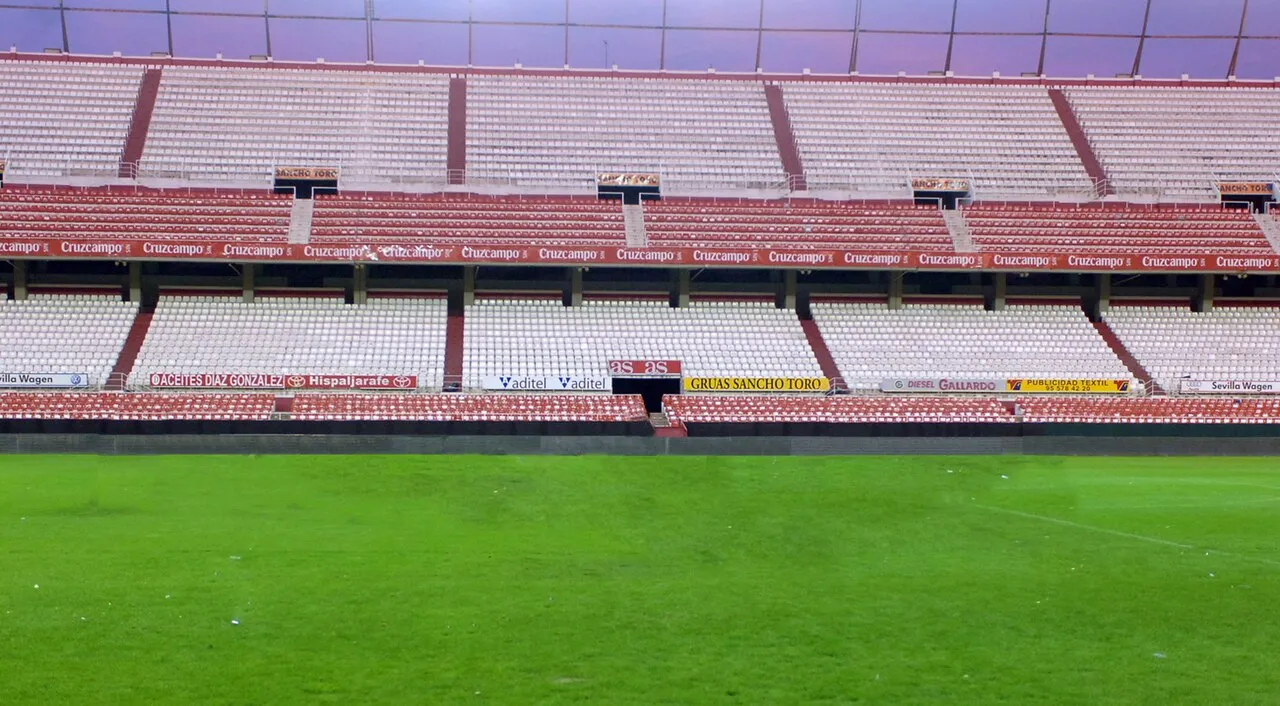
Sevilla FC and Deportivo Alavés drew 0–0 on 6 November 2026 in the 2026–27 LaLiga season. The league's match centre lists the fixture as matchday 12 and confirms the final result. Its summary records 60.1 percent possession and 13 shots for Sevilla, compared with 39.9 percent possession and nine shots for Alavés.
Those numbers explain why this fixture is a useful case for learning to read football data. Sevilla had more of the ball and more recorded attempts, yet neither team scored. This guide presents the dated match information first, then shows what a result, a possession share and a shot count can and cannot tell us.
What was the Sevilla vs Alavés result?
The full-time score was Sevilla 0, Deportivo Alavés 0. Sevilla's own schedule notice placed the match in Nervión on Friday, 6 November, with a 21:00 local kick-off. The official league match record, rather than that pre-match notice, establishes the goalless result. Keep the season and date beside the score to distinguish it from earlier meetings.
The match record in one place
The league's match summary presents the figures below in home-away order. They are recorded match statistics, not projected figures. A provider can define events differently, so use one named source when comparing these columns. If a later correction changes a figure, keep the original source date with any earlier note rather than mixing values from incompatible summaries.
| Measure | Sevilla | Deportivo Alavés |
|---|---|---|
| Goals | 0 | 0 |
| Possession | 60.1% | 39.9% |
| Shots | 13 | 9 |
| Corners | 5 | 4 |
| Yellow cards | 1 | 3 |
The fixture date can shift on a local device
At 21:00 in mainland Spain on that November date, the equivalent Pakistan time was 01:00 the following day under the CET to PKT conversion. A 7 November timestamp on a Pakistan device can therefore describe the same match as a Spanish record dated 6 November. That timezone difference does not create a second fixture or make either record inherently wrong.
Why did more possession not produce a win?
Possession is a measure of control of the ball under the provider's method. It is not a goal count or a guarantee of scoring quality. Sevilla's higher share tells us something about the distribution of play. The 0–0 score tells us neither side converted an opportunity into a goal. Explaining the result requires more evidence than placing those two numbers beside each other.
Where the ball is matters as well as who has it
In a fictional example, one side spends a long spell exchanging passes near its own defence. Another side has shorter periods with the ball but reaches dangerous areas quickly. The first can record greater possession without creating the better chances. This illustrates a possibility, not a claim that it exactly describes every phase of the Sevilla match. Video and event data would be needed for that judgment.
Treat a possession difference as percentage points
The difference between 60.1 percent and 39.9 percent is 20.2 percentage points. That is clearer than saying Sevilla had 20.2 percent more possession, which could be interpreted as a relative percentage change. A percentage-point difference describes subtraction between shares. The same distinction applies to marks, survey results and any other comparison of two displayed percentages.
What does the shot count tell us?
LaLiga's summary lists 13 attempts for Sevilla and nine for Alavés. A shot count measures volume, not the difficulty or location of each attempt. A blocked shot, a distant effort and a close attempt can contribute differently to the match story. To judge chance quality, examine event details and the definitions used by the source rather than assuming all 22 attempts were alike.
Shots and shots on target are not identical
An attempt can miss the goal, be blocked or be directed on target, depending on the provider's categories. Do not relabel a total-shots figure as shots on target simply because the Spanish label translates to attempts. The match centre's 13 and nine are the displayed shot totals. A separate on-target statistic should be checked and labelled before it is quoted.
A larger share of attempts does not give a scoring probability
Sevilla's 13 out of 22 combined recorded attempts is about 59.1 percent of the attempts. That arithmetic describes shot share. It is not the probability Sevilla would win the game, and it is not expected goals. A share of events becomes misleading when it is presented as the chance of a future outcome without a model or supporting evidence.
How should expected goals be interpreted?
Expected goals, commonly shortened to xG, estimates the scoring likelihood of a chance using a model. Different providers can use different inputs and methods. This article does not give a match-specific xG value from the league's displayed shot totals. A real xG figure needs a named model or provider. It cannot be reconstructed by dividing goals by shots.
Use an invented illustration for the idea
Imagine two attempts with illustrative probabilities of 0.1 and 0.3. Their expected goals add to 0.4 under the model. That does not mean a real score can contain four tenths of a goal. It describes an expectation across possible outcomes. A team can score zero, one or two from the two attempts. These numbers are made up for explanation, not taken from this match.
Do not confuse model estimates with a result
An xG estimate can help discuss chance quality; the result remains the actual goals scored. Disagreement between a model and the score is not automatically a data error. A one-match result has variability. When using multiple providers, keep their numbers labelled. A chart that blends model outputs without explanation can look more precise than its evidence allows.

Mendizorrotza in 2021, the Alavés ground shown for club context. The match discussed here was played in Seville.
How should corners and cards be read?
The league records five corners for Sevilla and four for Alavés, with one and three yellow cards respectively. A corner is an opportunity to restart play in a particular way, not a guarantee of a chance. A card is an event recorded under the rules. The totals are useful descriptions, but they do not reveal the entire sequence or the reason for every decision.
Use the timeline for individual incidents
A summary table can tell you how many corners a team had; a timeline can tell you when a particular one occurred. If you are discussing momentum near the end, the sequence matters more than the total alone. Read the official match commentary for the event and, where possible, use a permitted clip for visual context. Avoid filling in missing details from an unrelated highlight.
Do not infer intent from a count
Several cautions do not prove that a side arrived intending to play unfairly. A count can reflect the pattern of play, particular incidents and refereeing decisions, among other factors. A report can describe the recorded cautions and their times without attributing motives. Keeping observation separate from interpretation is especially helpful in a heated post-match discussion.
What does a 0–0 draw mean for the table?
In the standard league scoring system, a draw earns each side one point. A goalless draw adds no goals for or against to either side's season totals. This explains the basic effect of the result. It does not establish the clubs' exact position after every other match in the round. Check the dated standings for that broader question.
Points and goal difference are different fields
Imagine a fictional team beginning with 15 points and a goal difference of plus three. After a 0–0 draw it has 16 points while goal difference remains plus three. A 2–2 draw would also leave goal difference unchanged but increase goals for and goals against by two. This example shows why a table needs more than one column to preserve what happened.
A single match does not define a season trend
One goalless result cannot establish that a team has a persistent scoring problem or that an opponent always defends the same way. To study a trend, choose a date range, compare several matches and account for opposition and game state. If the evidence is limited to this one fixture, phrase the conclusion narrowly. The result is clear even when its wider meaning is uncertain.
How can readers avoid mixing up head-to-head fixtures?
Use competition, season, home side, away side and original date as a combined identifier. The same clubs can play more than once in a season and may also meet in another competition. A result from an earlier meeting does not belong to this matchday. Search engines can show old and new articles together, so confirm the date inside the official record.
Preserve both official names and search spellings
The club's name is Deportivo Alavés, with the accent used in its official name. Readers may type Alaves without the accent. A search tool can handle both spellings without altering the displayed official name. Similarly, Sevilla FC is the club; Seville is an English name for the city. Accurate identifiers help a fixture database avoid confusing a place with a team.
Compare previews and recaps side by side
A preview gives the scheduled pairing and start time. A recap or completed match centre gives the outcome. Save both when studying how a match was reported, but mark the different roles. A scheduled fixture could change, so a club announcement is not by itself a record of what happened. In this case, the club's notice and the league's completed record answer separate questions.
A practical match analysis for students
Start with one question: how can a team have more attempts without scoring? Choose three observations you can verify from the match record or permitted footage. For each, separate the event from your interpretation. The result, possession and shot totals are sufficient for a small data exercise, even if you do not have access to detailed tracking data.
Write a better two-sentence report
The first sentence should give teams, date, competition and result. The second can compare possession and attempt totals while making clear that neither side scored. Avoid saying that the numbers prove one team deserved victory. If you want to go beyond the data, describe the additional observations that support your judgment. This method keeps a short report readable and honest.
Build a match record that handles a real zero
A 0–0 result is different from a match whose goals are not yet known. In a fictional app, store status completed and both goal values zero for the former. For a scheduled match, store no result until it is available. Test that a filter includes goalless draws but excludes fixtures that have not started. The distinction matters whenever a spreadsheet uses blanks and zeroes.
What should a reader check before sharing this result?
Check that the official record says full-time, the clubs are in the correct order and the season is 2026–27. Use the 0–0 result as the central fact. If quoting statistics, carry the league's labels through your summary. An archived stadium image adds context but does not show an incident in this fixture unless its provenance establishes that connection.
Use the figures as questions, not verdicts
A useful discussion might ask where the attempts came from, whether the balance changed during the match and what another data source measures differently. Those questions are more productive than assigning a verdict from possession alone. For more practice with reliable records, see programming courses and class resources. The same skills apply to academic datasets well beyond football.
Make the comparison reproducible
Keep the source link and a copy of the small table you actually analysed. If you compute shot share or a percentage-point gap, show the numerator and denominator. A classmate should be able to reach the same number without consulting a different statistics service. If the source later revises an event, your dated record explains why the earlier calculation differs.
Check an apparent mismatch before changing the score
If the league summary shows a penalty entry but the final score is zero, the two facts need not contradict one another. An awarded or attempted penalty is not automatically a goal. Check the event note before describing whether an attempt was saved, missed or otherwise resolved. A column label alone cannot tell the reader which of those things happened.
Sources
- LaLiga completed match centre and statistics
- Sevilla FC's dated fixture and kick-off announcement
- Deportivo Alavés fixture notice
Image credits: cover: Валерий Дед, source, CC BY 3.0. Resized and converted to WebP. inline: MarcosMarinM, source, CC BY-SA 4.0. Resized and converted to WebP.
Found an error or an outdated detail? Report a correction with the article URL and original source.