
Shaik Rasheed: Under-19 World Cup Milestones and How to Read Batting Records
Explore Shaik Rasheed’s 2022 Under-19 World Cup milestones, batting role and partnerships, with clear examples of averages and strike rates.
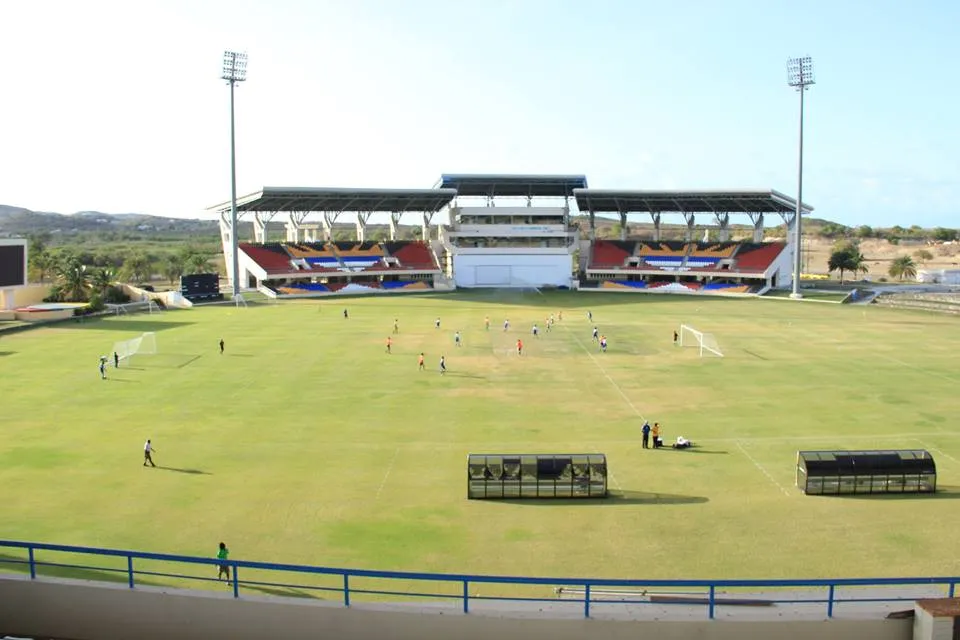
Shaik Rasheed was India's vice-captain at the 2022 men's Under-19 Cricket World Cup. His 94 against Australia in the semi-final and fifty against England in the final were important contributions to India's title-winning campaign. Those performances provide a useful introduction to the batter and to the way cricket records should be read.
The BCCI squad announcement and ICC tournament reports establish the historical record used here. This guide explains the innings, partnerships, batting measures and the distinction between an age-group achievement and a separate senior selection. It does not invent a current squad place, a new contract or an unverified match result.
Identify the player and the competition
The BCCI's 2022 squad announcement lists SK Rasheed as vice-captain and identifies his association with Andhra cricket. The ICC reports use Shaik Rasheed in describing the tournament performances. These references identify the player more reliably than an image search returning someone with a similar name.
An Under-19 national competition is also a specific category. Its records should retain the age-group label. A major achievement in that competition does not automatically become a senior international appearance or a statistic from another format.
| Historical record | Context |
|---|---|
| India vice-captain | 2022 men's Under-19 World Cup squad |
| 94 against Australia | Semi-final innings |
| 204-run stand with Yash Dhull | Semi-final third-wicket partnership |
| Fifty against England | Final innings |
| India won by four wickets | Final team result |
What vice-captain means in the squad record
A vice-captain designation identifies a leadership role within the named squad. It does not mean that every match report should replace the captain's name with the vice-captain's or attribute all team decisions to one player. The actual captaincy and match record remain separate fields.
For students, a squad list is a structured source. It can establish a selected player, a stated role and an association at the time of announcement. It cannot independently establish the final playing eleven for every later match.
Build a simple table with squad role and match participation in different columns. This prevents selection, leadership and actual appearance from collapsing into one claim. It is a useful distinction whenever a young player's name becomes prominent after a tournament.
The semi-final innings against Australia
The ICC semi-final report describes Rasheed's 94 and a 204-run third-wicket partnership with Yash Dhull as India reached 290 for five. The partnership is a team-scoring interval; the individual innings is a separate measure. Both help explain how the match developed.
An innings of 94 is six runs short of a century, but its value cannot be reduced to the missing six. The match situation, partnership and team total provide a fuller account of the contribution. A milestone threshold is a useful label, not a complete assessment.
When reading the scorecard, identify the batter's score, dismissal status and the stage of the innings. The final team total is not the batter's personal score, and the partnership figure should not be added again as if it were another independent innings.
A partnership is not automatically the sum of two final scores
A partnership records the runs added while two batters are together. Their complete innings may include runs scored before or after that shared interval. Applicable extras can also affect the team-score movement. The actual partnership record should therefore be used directly.
For a fictional example, a batter has already scored ten before a new partner arrives. They then add 80 together. Adding their final personal scores without considering the sequence may not reproduce that 80-run stand. The timing of the partnership matters.
Rasheed and Dhull's documented 204-run stand is an especially useful learning example because it shows how a shared contribution can shape an innings. It should be appreciated as the reported partnership rather than reverse-engineered through an unsupported addition of career or innings totals.
The final required another contribution
India faced England in the final at the Sir Vivian Richards Stadium in Antigua. The ICC's final report records Rasheed reaching fifty as India pursued the target. The team eventually won by four wickets, securing its fifth men's Under-19 World Cup title.
The semi-final and final are separate matches. A photograph, score or dismissal from one should not be presented as evidence from the other. Keeping opposition, stage and date visible prevents a short player profile from accidentally merging two performances.
For a tournament notebook, use one row per innings. Record the opponent and match stage beside the score. This makes it easier to see repeated contribution without manufacturing a combined match score that never occurred.
Fifty and century are innings milestones
A fifty describes a batting innings reaching at least 50 runs, while a century reaches at least 100. A score of 94 has passed the first threshold but not the second. These categories should not be treated as additional runs added to the actual score.
In a fictional exercise, scores of 55 and 45 across two matches total 100 runs. They do not create one century innings because neither individual innings reached 100. The aggregate and the milestone count answer different questions.
This helps explain Rasheed's tournament contribution accurately. Several useful innings can support a team campaign without every one being a hundred. The scorecard supplies the runs; milestone labels describe particular thresholds within those innings.
Strike rate needs the ball count
Batting strike rate relates runs to balls faced, expressed per 100 balls. A score by itself is not enough to calculate it. Guessing a ball count from a highlight video's length would create a statistic with no reliable basis.
For an invented innings of 60 from 80 balls, the strike rate is 75. If the same 60 is scored from 50 balls, the rate is 120. The run contribution is equal, but the scoring pace differs under that measure.
Use the actual match scorecard when applying the formula to a real performance. A tournament article can explain the calculation without attaching an unsupported rate to Rasheed's innings or confusing one match's ball count with another's.
Batting average needs dismissals, not just matches
A batting average is based on runs and dismissals under the relevant statistical record. A player can appear in a match without batting, and a not-out innings affects the dismissal count. Dividing total runs by appearances would calculate a different measure.
For a fictional batter with 180 runs and three dismissals, the average is 60. If those runs came across five innings, dividing by five produces 36 instead. The arithmetic is simple once the denominator is identified.
When comparing age-group players, preserve the tournament or season boundary. A short event average and a multi-year senior average do not describe equal samples. The numbers can be useful without being directly interchangeable.
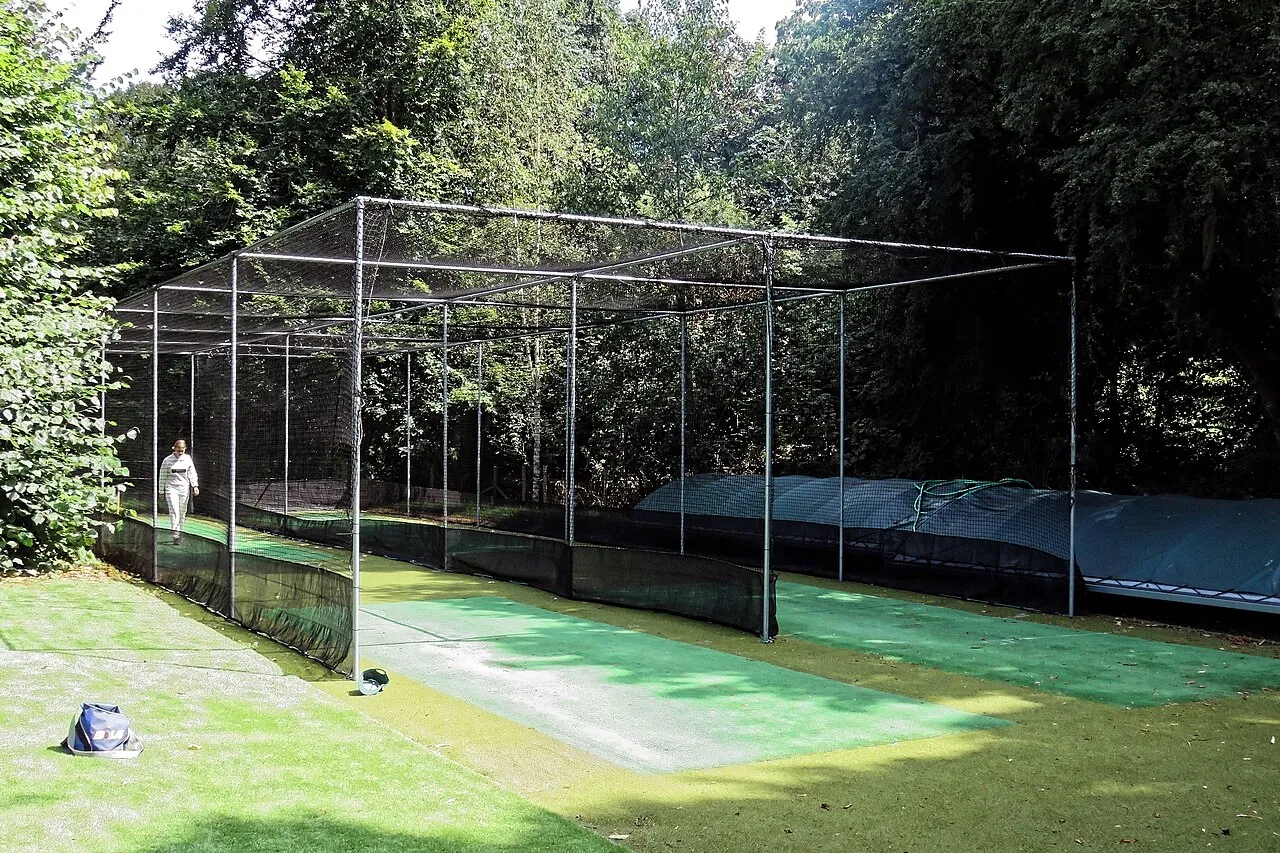
A cricket practice setting at Stansted Hall and Elsenham Cricket Club in Essex, photographed in 2021; illustrative training context, not Rasheed’s own session.
A wicket-margin victory is a team outcome
India's four-wicket final victory describes how many wickets remained when the winning chase was completed. It is not Rasheed's personal wicket tally or an indication that only four batters participated. The result label belongs to the team score.
For a fictional ten-wicket batting side completing a chase with six wickets lost, the winning margin is four wickets. The example explains the notation and does not replace the actual final's innings record.
Reading the margin correctly makes match reports easier to follow. It also prevents a common mistake in short summaries: attaching a team's result number to the nearest player's name even though the figure measures something entirely different.
Under-19 achievement and senior selection are separate
A successful age-group tournament can form part of a player's development record. Senior selection, domestic appearances and franchise contracts are later or separate events that need their own official evidence. They should not be inferred solely from an earlier title.
For a fictional pathway, an age-group player performs well, returns to domestic competition and is later considered for another squad. Each stage requires a distinct source. A promising early result does not establish an automatic timetable for the remaining stages.
This distinction respects the original achievement. Rasheed's 2022 contributions are documented and valuable in their own right. They do not need an invented current selection claim to make the story relevant to students learning about cricket development.
Team roles can affect a batting comparison
An opening batter, a middle-order batter and a finisher can face different match situations. Even within one tournament, their opportunities may differ. A raw total should therefore be read with batting position and innings context where the actual scorecard supplies it.
Imagine a fictional chase where one player builds the innings and another finishes the last few overs. Their strike rates may differ because their tasks and the remaining target differ. The scorecard and match sequence help explain the comparison.
Do not assign a role from a single highlight clip or claim that a player always bats the same way. A careful profile discusses the documented match situation rather than turning one innings into a permanent personality description.
Boundary contribution is only part of an innings
Fours and sixes provide a visible part of scoring, but singles, doubles and other completed runs also contribute. A highlight package can overrepresent boundaries because those moments are easy to show. The scorecard records the complete numerical innings.
For a fictional score of 50 containing six fours, boundaries account for 24 runs. The remaining 26 must be explained through the rest of the innings record. Six boundaries do not mean the batter scored only 24 in total.
This exercise can be applied to a verified innings once the actual boundary counts are available. Keep the fictional model separate from real player statistics, and avoid borrowing a boundary count from another match to complete the calculation.
Tournament totals need a defined scope
A World Cup total, a season total and a career total cover different sets of matches. A player profile should state which one is being used. A high score from one event is not the same as a total across the event.
Create a fictional dataset with three innings and label each by competition. A sum limited to one competition should not include the other entries. This is a basic filtering exercise, but it prevents many misleading sports graphics.
For Rasheed, the BCCI squad record and ICC tournament reports support the particular 2022 account discussed here. A present-day aggregate would need the relevant current statistical source rather than an assumed extension of that historical record.
Photographs cannot identify a player by a shared name alone
Search results can return unrelated people with similar names. A portrait should be used only when its source establishes the identity. If a reliable player photograph is unavailable, a clearly captioned venue or equipment image is more honest than misidentifying another person.
The same rule applies to match context. An image of the Sir Vivian Richards Stadium can illustrate the venue, but it does not automatically show the 2022 final. Its caption should retain the known date or state that it is general historical context.
This is part of good sports reporting, not a minor visual detail. A correct article with an incorrect portrait can mislead readers just as effectively as a wrong score. Source checking should include the image as well as the text.
Make a youth-cricket learning worksheet
Begin with the player's name, competition, squad role and source. Add separate rows for the semi-final and final. Then create calculation fields for strike rate, average, boundary contribution and partnership context, using only the inputs actually available.
Write a short explanation after each result. State what the number measures and what remains outside it. A batting rate does not independently describe the pitch or the opponent's complete performance; a team margin does not identify one player's entire contribution.
Use class resources for percentages and averages. Learners in programming courses can create a scorecard tool that requires a match identifier and format before combining entries, preventing two different games from becoming one fictional innings.
Questions about Shaik Rasheed
What was his role in India's 2022 Under-19 squad?
The BCCI squad announcement identified him as vice-captain. That is a role within the named age-group squad. It should remain separate from the captaincy record for an individual match and from any later senior or franchise selection.
What were his important knockout innings?
The ICC reports record 94 against Australia in the semi-final and a fifty against England in the final. These were separate contributions in separate matches. Their context includes the partnership with Yash Dhull and India's eventual four-wicket victory in the final.
Did the 94 count as a century?
No. It was six runs short of 100. That does not erase its importance to the semi-final innings. A milestone category and a performance's contribution are different ways of describing the same documented score.
Does the Under-19 title prove a current senior squad place?
No. A later selection needs its own official announcement. The 2022 tournament record establishes an age-group achievement and historical performances, not every subsequent career event. Keep each stage dated and use the appropriate current source for a present selection question.
Sources
- BCCI: India's 2022 Under-19 World Cup squad
- ICC: India defeat Australia in the semi-final
- ICC: India win the 2022 final against England
- ICC: India's journey to the 2022 title
Image credits: cover: Chuckdisi, source, CC BY-SA 3.0. Resized and converted to WebP. inline: Acabashi, source, CC BY-SA 4.0. Resized and converted to WebP.
Found an error or an outdated detail? Report a correction with the article URL and original source.