
Sialkot Pakistan: Heritage, District Data and Industry Learning
Explore Sialkot Pakistan with clear explanations, worked examples, source checks and practical questions for independent student learning.
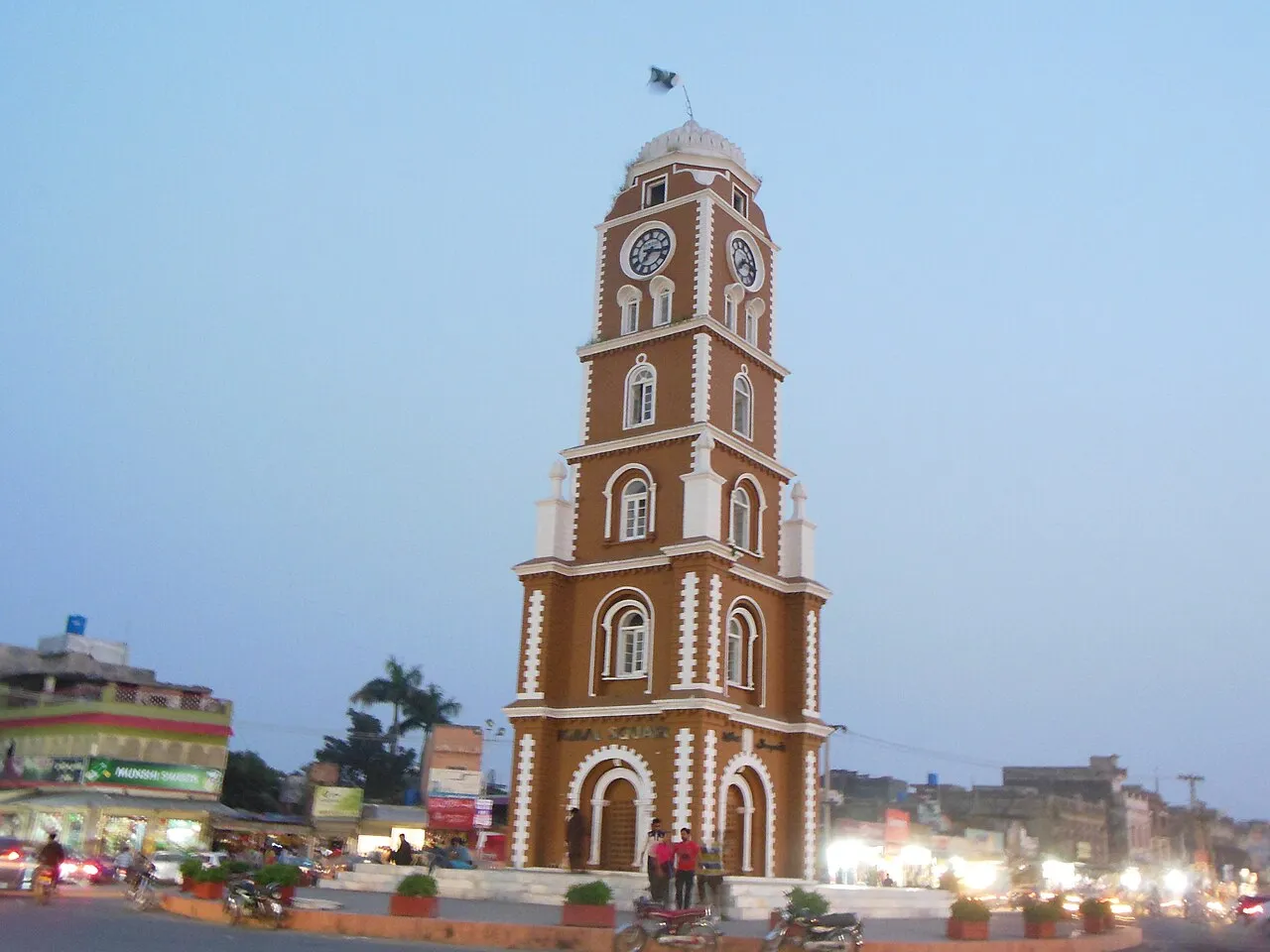
Sialkot is a city and the centre of a district in Punjab, Pakistan, with an important place in cultural history, education and manufacturing. A useful guide should distinguish the city from the wider district and preserve the dates attached to official statistics. Iqbal Manzil, the birthplace of Allama Muhammad Iqbal, is one of the heritage locations identified by the district's official visitor information.
This educational introduction was checked on 2 November 2026. It combines a limited set of official facts with original map, heritage and industry-learning activities. It does not claim a recent personal visit, current opening hours, admission prices or real-time travel conditions. Confirm those practical details directly before planning a journey.
Is Sialkot city the same as Sialkot district?
No. A city and a district describe different geographic or administrative scopes. A population figure for the district should not be labelled as the city's population. The official district profile identifies Sialkot, Pasrur, Daska and Sambrial in its tehsil tables. Those labels help readers understand the area covered by different entries on the page.
For an original map exercise, draw a fictional district containing a main city, three smaller towns and rural areas. Colour the main city separately from the whole district. A count covering every coloured area answers a different question from a count covering only the main city. The distinction is simple, but it prevents a common statistical mistake.
When writing about Sialkot, retain the source's geographic label. If it says district, do not shorten it to city merely to make a sentence smoother. Precision matters more than making the place appear larger or smaller. The same habit applies to school counts, land statistics and any comparison with another location.
What can the official district statistics tell you?
The district profile labels its population section as 2023 data and reports 4,499,334 people, with 671,589 households. It separately labels land statistics as 2017. These are dated entries in different sections, not one complete survey of conditions in November 2026. A guide should preserve those dates instead of presenting every number on the page as newly measured.
The profile also displays district administrative information and institutional tables. Those can help identify what to investigate, but they should not be combined carelessly. A page can contain material from different reporting periods. Check the relevant heading and category before placing two values together in a chart.
For a classroom task, give each copied number three labels: what it measures, where it applies and when it was measured. If a label is missing, record the uncertainty. A number without those details may look precise while answering a different question from the one a reader thinks they asked.
Why is Iqbal Manzil significant?
The official important-places page identifies Iqbal Manzil as Allama Muhammad Iqbal's birthplace and describes its later museum and library role. That makes it a meaningful starting point for learning about a major poet and thinker through a specific place. It does not mean that every object or story encountered nearby is automatically an authenticated historical record.
Separate the building, the collection and the interpretation. A building can have its own history, an object can require provenance, and a museum label can explain a particular understanding of the past. Asking about those layers helps students engage with heritage as evidence rather than treating a visit as only an opportunity for a photograph.
Before an actual visit, confirm current arrangements with the relevant authority. This guide does not publish unverified hours or promise unrestricted access to particular rooms. A historical description can remain useful even when practical visitor information needs a fresh check.
How can a heritage visit become a learning activity?
Begin with a question that can be explored through observation and a reliable source. Ask how a building's spaces are used, what a displayed object is said to represent or how a museum separates original material from later interpretation. Avoid an assignment that only asks learners to copy a long passage from a sign.
For an original worksheet, use four fields: observation, label or source, question and possible next source. A learner might observe a room layout, note the institution's explanation and ask whether the layout changed over time. The next step could be a documented building history rather than an unsupported guess from appearance.
Respect photography rules, other visitors and the institution's guidance. A useful school activity does not require touching objects, entering closed areas or photographing private people. If a visit is not possible, a sourced virtual exercise can still teach observation and evidence without pretending that the student was physically present.
What does a clock tower tell us about a city?
Sialkot's official places page identifies the clock tower in Saddar Bazaar. A landmark can help organise a person's mental map, but a landmark photograph does not explain the entire city's history. Look at its location, surrounding streets and public role while keeping specific historical claims tied to an appropriate record.
In an original drawing activity, make a simple map with a school, market and landmark. Ask students to describe a route using clear reference points. Then compare that description with an overhead view. The exercise teaches the difference between a useful simplified map and a complete geographical representation.
Do not publish a fictional classroom route as actual directions through Sialkot. Roads, access and traffic conditions can change. The activity illustrates map language, not current navigation. A visitor should use current local information and appropriate travel guidance rather than relying on an educational sketch.
How can manufacturing be studied without inventing statistics?
The district profile lists several industrial establishments, including sports-related businesses. That supports an introduction to manufacturing as part of the district's economic context. It does not justify an invented share of world production, a current export total or a claim that every item carrying a familiar brand was made in one particular factory.
For an original learning model, follow an imaginary product through design, materials, production, quality checks, packaging and delivery. The model illustrates a process rather than documenting a named company's operations. Ask what information each stage needs and what might happen if a specification changes midway through production.
A student can learn about industry through careful questions: what is being made, what standard defines an acceptable item and how is a shipment recorded? The answers for a real business require that business's verified information. An educational guide should not fill those gaps with confident factory descriptions based only on the city's reputation.
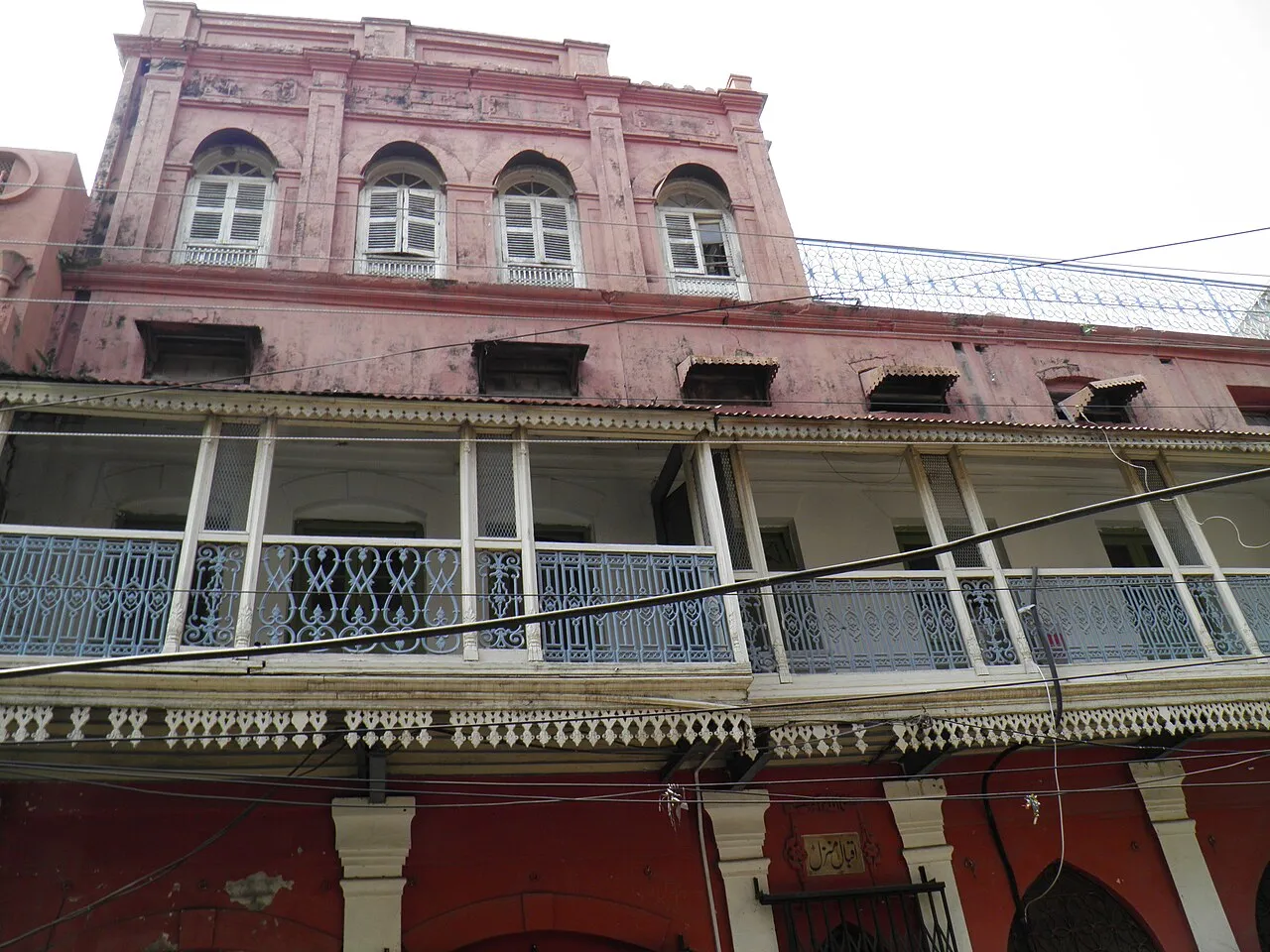
Historical heritage-location illustration, not a current opening-hours notice.
What is a product specification?
A specification describes the requirements an item should meet. It can include dimensions, materials, performance or packaging, depending on the product. It is different from an advertising phrase such as high quality. A useful specification makes an intended requirement clear enough to check, while the actual standard must come from the relevant product and organisation.
Imagine an original paper-box project. The box must fit a small model, remain closed during handling and carry a readable label. Students can measure the model, build a prototype and test whether it fits. The activity teaches how a requirement becomes a check, without claiming to reproduce a Sialkot factory's professional quality system.
If the model changes size, update the requirement before judging the old box. This shows why manufacturing records need versions and dates. A perfectly measured item can still be unsuitable if it was made to an obsolete requirement. The same idea appears in programming, design and other technical subjects.
How do quantity, value and time differ in trade data?
A number of items, their monetary value and the period over which they are counted are different measures. A story can become misleading when it compares a monthly quantity with an annual value or changes currency without explanation. Before reading any export headline, identify the unit, period, geography and source.
For an original example, an imaginary workshop ships one hundred units in January and one hundred and fifty in February. The increase is fifty units, or fifty percent relative to January. That does not establish a fifty-percent rise in revenue, because prices and product mix may differ. Quantity and value cannot be substituted for one another.
This guide intentionally does not state a current Sialkot export total. A precise trade claim needs the relevant dated dataset and its definitions. The absence of an impressive number is preferable to a fabricated statistic that readers might repeat as though it came from an official survey.
How can students read an education table?
First identify whether the rows describe places, institutions or categories, and whether totals are subtotals or complete counts. A table with separate primary, elementary, secondary and higher-secondary entries may use categories that require explanation. Do not add every visible total together without checking whether any entries overlap or already include others.
Use an original fictional table with two tehsils and two school categories. Add within a row to find a tehsil total, then add the appropriate rows for the combined total. Show your working. If the table already supplies a grand total, do not add it again as though it were another tehsil.
When using the actual district page, preserve its headings and note any unclear reporting date. A classroom can analyse how the table is organised without asserting that the displayed institution counts are a current audit. Reading the structure is useful even when the data needs further confirmation for a specific decision.
What makes a city guide trustworthy?
A trustworthy guide tells readers what was checked, which details can change and what the writer actually knows. It distinguishes heritage context from current visitor arrangements, district statistics from city statistics and original learning exercises from real measurements. It should not claim a personal visit or a local interview that never happened.
Photographs need the same discipline. A historical image can illustrate a location without proving how it looks today. A picture of one industrial building cannot establish the conditions inside every workplace. Captions should identify the visible place and any relevant historical context rather than using an attractive image as evidence for unrelated claims.
For an original editorial exercise, compare two fictional captions: “Sialkot today” and “Historical view of a named Sialkot landmark.” Ask which can be supported by an older photograph. The second is narrower but more informative because it gives the reader a fair account of what the image can actually show.
Can you build a short Sialkot research project?
Choose one question rather than trying to summarise the whole city in a single poster. You might examine how a heritage location is presented, how a district table defines its population or how an imaginary manufacturing specification can be tested. A focused question makes it easier to gather relevant evidence and explain the limits of the result.
Prepare a one-page plan with the question, sources, activity and expected output. Keep source facts in one section and your own observations or calculations in another. If a current fact cannot be confirmed, mark it as unresolved. Do not hide the gap by replacing it with an unsourced sentence from a search snippet.
Finish by explaining what another learner could check independently. Include the official page and the relevant date or heading. A strong project does not need to claim that Sialkot is first, largest or best in every category. It needs a clear question, accurate evidence and a conclusion that stays within what the evidence supports.
What should you remember about Sialkot?
Sialkot can be explored through several connected subjects: place, heritage, education and manufacturing. Keep the city and district distinct, treat historical statistics as dated records and use official visitor information as a starting point rather than an automatic guarantee about today's arrangements. Original models can deepen learning when they are clearly identified as models.
Explore more Pakistan-focused educational guides for further practice. The most useful outcome is not a memorised list of landmarks. It is the ability to ask a precise question about a place, find an appropriate source, read its labels and explain what the information does and does not establish.
Sources
- Sialkot district: official profile, for administrative scope, the labelled 2023 population section, separately dated land data and institutional context.
- Sialkot district: important places, for Iqbal Manzil and clock-tower heritage context. Current hours, prices and travel conditions are not asserted here. All budgets, workshop quantities, maps and classroom tables are original fictional examples.
Image credits: cover: PakGuru99, source, CC BY-SA 3.0. Resized and converted to WebP. inline: Sarmad Mahmud, source, CC BY-SA 3.0. Resized and converted to WebP.
Found an error or an outdated detail? Report a correction with the article URL and original source.