
Starship Flight 15: Ship Catch, Booster Loss and Mission Facts
Starship Flight 15 ended with an upper-stage catch but no booster recovery. Here is the verified sequence and what SpaceX planned.
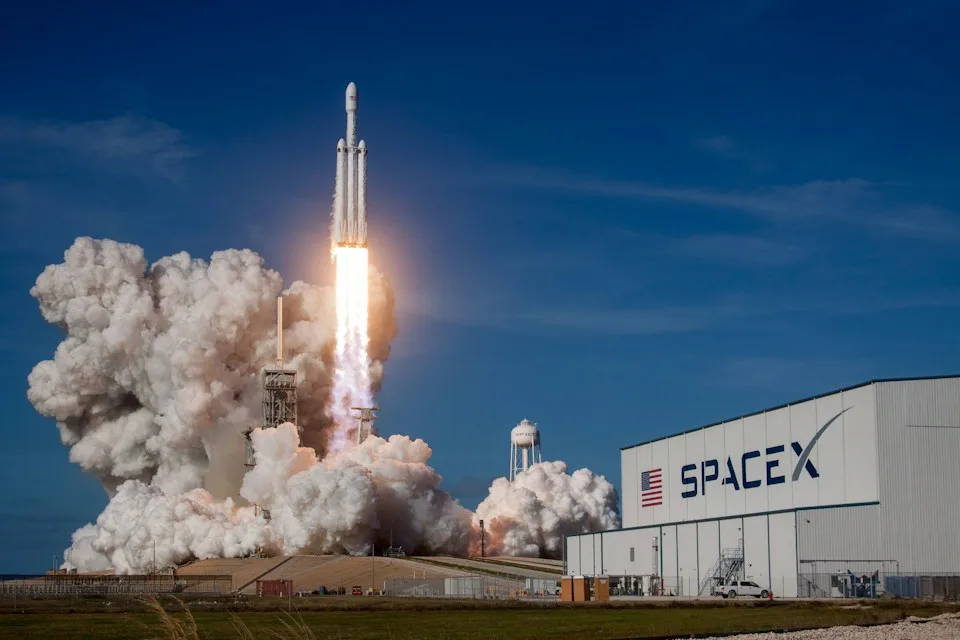
Starship Flight 15: what launched, what returned, and why the distinction matters
SpaceX launched Starship Flight 15 from Starbase, Texas, on 13 November 2026. The mission was designed to attempt an unusually ambitious recovery: both the Super Heavy booster and the Starship upper stage were meant to return to the launch site, with the upper stage spending more than 22 hours in orbit before its planned return. The outcome was mixed. Contemporary postflight reporting says the booster did not make its planned catch and was lost after an aborted recovery, while the Starship spacecraft later returned and was caught by the launch tower arms. That is a major upper-stage recovery milestone, but it is not a successful catch of both stages. The distinction is the central fact behind the trend.
SpaceX's mission page explains what the company intended before launch, including the orbit, testing sequence and catch plans. Its countdown and flight timeline are a plan, not a final event log. Reports after the flight describe the booster loss and later spacecraft catch. Readers should not copy a preflight timeline and present every listed event as completed. This article separates the plan, observed outcome and remaining questions, then explains what a return to launch site means for students following reusable rocket development.
Flight 15 at a glance
| Question | Supported answer |
|---|---|
| When did the flight begin? | Friday, 13 November 2026, from Starbase, Texas. |
| What did SpaceX plan? | Return both stages to the launch site for attempted catches. |
| Did Super Heavy get caught? | No. Postflight reporting says its return and catch were aborted and the booster was lost. |
| Did the Starship upper stage return? | Yes. It completed the extended orbital mission and was caught at the launch site on 14 November. |
| Was this a full double catch? | No. One stage was caught; the booster was not. |
| Is this an operational passenger mission? | No. Flight 15 was a development test. |
The mission took place across two calendar days, which helps explain conflicting headlines. A report written shortly after the Friday launch could correctly say the upper stage was still in orbit and its catch remained ahead. A later Saturday report could correctly describe a completed spacecraft catch. Both can be accurate for their publication times. The date and status on a page matter as much as its title when a mission has a long orbital phase.
What SpaceX planned before the launch
SpaceX described Flight 15 as the first planned attempt to return both the Super Heavy booster and Starship spacecraft to the launch site for catches. Its official mission page targeted a launch window on 13 November, subject to regulatory approval and the usual changing conditions. The company described a trajectory near 275 kilometres in altitude, approximately 14 orbits and a mission lasting more than 22 hours. These were expected parameters, not a guarantee that every milestone would happen exactly on schedule.
The planned booster sequence began with ascent and stage separation, followed by a boostback burn toward the launch site. A landing burn was to slow the vehicle for the tower catch. SpaceX's published timeline placed the planned booster catch only minutes after liftoff. The spacecraft's sequence was very different: after separation and ascent, it would enter orbit, carry out mission operations, then deorbit and descend for a landing burn roughly a day later. Treating the two stages as if they shared one recovery moment obscures why this flight was technically demanding.
The mission page also described contingency options. SpaceX said the flight profile was designed to allow a safe alternative trajectory or deorbit at predetermined ocean areas if a return to the launch site was not appropriate. A planned catch therefore had conditions. In flight testing, an abort or switch to another outcome is not evidence that the plan was fictional; it is part of a system designed to make real-time decisions under uncertain conditions. The outcome still has to be reported honestly: a planned booster catch did not become an accomplished booster catch.
What happened to the Super Heavy booster?
The booster did not achieve the intended tower recovery. Postflight accounts describe an aborted return and a loss of the vehicle. Reports differ in how briefly they summarize the sequence, so the safest statement is the operational result: no booster catch occurred. A reader should avoid attaching a definitive root cause to that result without SpaceX's engineering analysis or a later regulatory report. An abort may be triggered by many different measurements and conditions; observing the final splashdown or explosion alone does not identify the precise component or software decision that led to it.
This matters because the mission's original headline promise was not merely to get to orbit. SpaceX had caught earlier Super Heavy boosters in previous tests, according to its own Flight 15 mission description, and wanted to demonstrate a return of the newer V3 booster. A loss on this attempt is therefore a meaningful setback for that particular recovery objective. It does not erase the separate spacecraft test, and it does not prove that booster catch attempts as a class cannot work. Reusable launch systems are tested in stages and versions; a result for one flight must stay attached to that flight.
The language of rocket coverage can be slippery here. “Booster landing burn” is a planned manoeuvre, while “booster caught” is an outcome. “Returned toward the launch site” does not mean “landed successfully.” A short social post may omit that difference to make a dramatic clip easier to share. The reliable way to read the mission is to ask which vehicle the sentence refers to, which stage of flight it describes, and whether the writer is quoting a plan or a completed event.
What happened to the Starship spacecraft?
The upper stage continued after the booster loss and spent more than 20 hours in space before its planned return. Postflight coverage reports that the vehicle re-entered and was caught by the launch tower arms at Starbase on 14 November. That upper-stage catch is the success that makes Flight 15 notable. SpaceX's earlier flight plan had outlined a roughly 22-hour mission with orbital operations, checks and a return-to-launch-site attempt; the later reporting describes the actual spacecraft recovery. The two sources have different jobs, and neither should be used as a substitute for the other.
The distinction between reaching orbit and returning from it is substantial. Reaching orbit requires the vehicle to accelerate to orbital speed and operate in space. Returning requires a deorbit decision, atmospheric entry, thermal protection, controlled descent and a landing burn. A launch provider can demonstrate one capability without demonstrating all the others on the same flight. Catching a large upper stage after a long orbital mission addresses a different set of engineering questions from catching a booster only minutes after liftoff.
That said, a successful catch is not the same as proving routine reuse. It shows that a vehicle met the conditions for this recovery and that the ground system captured it on this attempt. Routine reuse would require inspection, refurbishment when needed, repeated launches, predictable turnaround and demonstrated reliability across many flights. SpaceX's ambition is to reduce the work between missions. One dramatic catch is evidence of a capability, not proof that the full operational and economic programme is finished.
Why the two-stage design changes how the result should be read
Starship is a launch system made of the Super Heavy booster and an upper spacecraft called Starship. The booster supplies much of the initial thrust and separates early in the ascent. The upper stage continues to space and carries out the later orbital mission. A catch of the upper stage does not retroactively recover the booster. Similarly, a booster landing on another test would not mean the upper stage survived entry. The vehicles have different tasks, environments and risk windows.
Flight 15 made these differences especially visible. One recovery opportunity came within minutes; the other came after roughly a day. Engineers had to evaluate the spacecraft's condition in orbit before allowing its return. SpaceX's published schedule included checks before the deorbit burn, indicating that a safe return depended on information acquired during the mission. A reader who sees an online countdown reach zero should remember that later milestones can still be conditional, and that a timeline is a planning tool until confirmed by postflight data.
The word “reusable” is also a goal with several layers. A stage that is designed to be reusable may be lost in testing. A stage that is caught may need extensive work before it can fly again. A launch system that eventually reuses both stages will need reliable coordination between flight vehicles, propellant operations, launch site equipment and regulatory clearances. Flight 15 supplies evidence about some of those layers and leaves others unresolved. Calling the mission a total failure or a complete double-reuse success would flatten a mixed result into a misleading slogan.
Why a long orbital test mattered
SpaceX's preflight description emphasized a mission of more than 22 hours near Earth orbit. Time in orbit lets the team observe how the spacecraft behaves well beyond the short ascent and immediate post-separation phase. The planned profile included operations, multiple opportunities to assess a safe return, a deorbit burn and controlled entry. These phases matter because future missions will demand sustained power, guidance, communications and thermal performance, rather than just an impressive launch video.
A long orbital phase also creates a reporting trap. At one point, the booster outcome was already known while the spacecraft outcome was still pending. Someone checking the news at that moment could have seen “booster lost” and assumed the entire test was over. Someone checking after the tower catch could have seen “Starship caught” and assumed both stages were safely recovered. A precise timeline avoids both mistakes. The flight launched Friday, the booster catch failed during the early return, and the upper stage remained in orbit until its later Saturday recovery.
The orbit figure and number of laps on SpaceX's mission page are approximate targets. Without a final public telemetry record in this article, it is better to describe the intended profile than to assert exact achieved orbital parameters. Even when a mission broadly follows its plan, small changes to orbit, timing and operational decisions are normal. Exact numbers deserve a postflight source that explicitly reports them. Precision in aerospace writing includes knowing when to say “planned approximately” rather than converting a planning figure into a measured result.
How does this connect to NASA's Moon plans?
NASA is working with SpaceX on a Starship-based human landing system for the Artemis programme. NASA's 2026 updates describe lander development, testing and changes to the mission architecture. This is why progress in Starship launch, orbital operation and recovery attracts attention outside SpaceX's own audience. Testing a commercial Starship is not identical to certifying a crewed lunar lander, however. The lunar version has different systems, mission requirements and safety gates. A catch at Starbase does not itself mean a crewed Moon landing is ready.
NASA's current 2026 programme information should be preferred to older pages that still describe the original Artemis mission assignments. The agency reported contract realignments in October 2026, with both lander providers involved in a low Earth orbit demonstration and no provider assigned to a particular lunar landing mission at that point. A news article that repeats an earlier assignment as if nothing changed risks giving readers the wrong picture. Flight 15 is relevant to the broader technical path, but it should not be used to invent a firm lunar launch date.
For students, the valuable link is methodological. NASA's oversight work, SpaceX's planned flight objectives and the observed test result are separate forms of evidence. Engineering teams use tests to discover which parts of a system perform as designed and which require changes. That process can be encouraging without being uncritical. A recovered upper stage is a concrete achievement. A lost booster is a concrete failed objective. Both observations belong in a useful assessment of Flight 15.
What the flight does not yet tell us
The public information reviewed for this article does not establish the complete engineering cause of the booster loss. It does not give a verified turnaround time for the recovered spacecraft or a date for its next flight. It does not prove that both stages can be caught together on a later mission. Nor does it settle the economics of a fully reusable Starship programme. Those are tempting conclusions because they would make a neat story, but each requires more measurements and subsequent tests.
SpaceX's preflight page is valuable for the intended test sequence. Postflight reporting is valuable for the observed result. If a detailed official postflight technical report appears, it should take priority for fault analysis and measured performance. Until then, a careful summary should remain narrow. The booster failed its catch objective; the upper stage survived an extended mission and was caught. The “first” label should be tied to the specific upper-stage recovery, not loosely applied to a full double catch that did not happen.
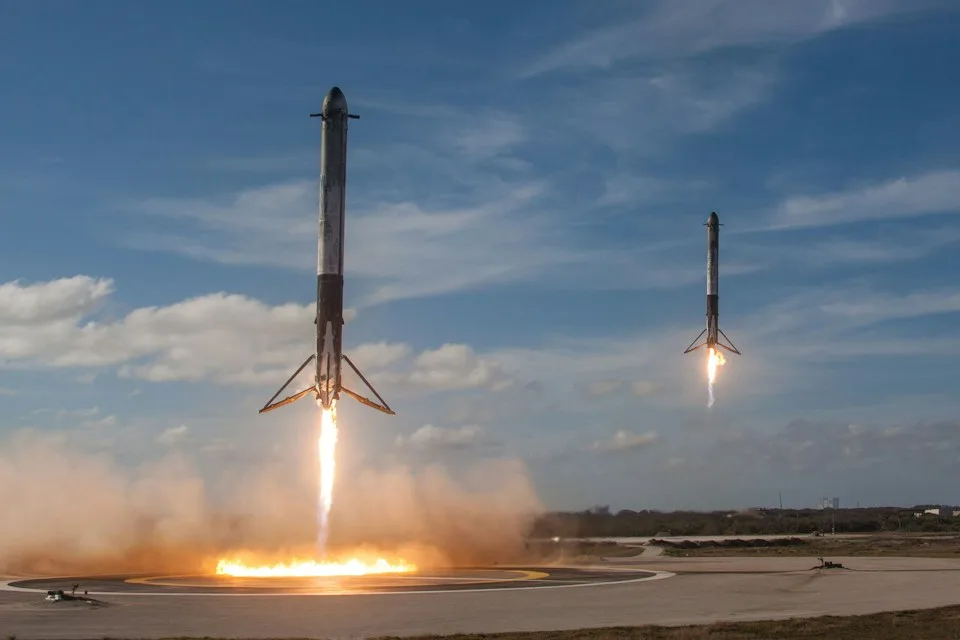
Images need the same care as numbers. Archive rocket photographs can help a reader recognize launch hardware and the scale of a plume, but a Falcon Heavy or Falcon 9 photo from an earlier year is not an image of Starship Flight 15. The images accompanying this article are marked as illustrations, with their original mission and year in the credits. A dramatic picture is not evidence for the event it sits beside unless its provenance matches the date, vehicle and location of the report.
Questions readers are asking
When was Starship Flight 15 launched?
It launched from Starbase, Texas, on Friday, 13 November 2026. SpaceX's preflight mission page had targeted a 75-minute window beginning at 4:45 p.m. Central Time, subject to regulatory and operational conditions. The launch and the later spacecraft return occurred on different dates.
Did SpaceX catch both stages?
No. The booster was not caught and was lost after an aborted recovery. The Starship upper stage was caught after its extended orbital flight. Describing this as a “double catch” would confuse the planned objective with the completed result.
How long was the spacecraft in space?
SpaceX planned a flight of more than 22 hours with roughly 14 orbits near 275 kilometres. Postflight coverage describes the spacecraft spending more than 20 hours in space before it returned. The planning numbers are approximate mission targets; a final telemetry summary would be needed for exact achieved orbital values.
Why is the upper-stage catch important?
It demonstrates that the vehicle could return from the planned extended mission and be captured by launch site equipment on this test. It is a step toward reuse. It does not establish routine turnaround, full-system recovery or certification for carrying people.
Was this an Artemis Moon mission?
No. Flight 15 was a Starship development test at Starbase. NASA has a separate programme to develop a Starship-based human landing system. The test can inform technology development, but it was not a crewed lunar landing or an Artemis mission.
What should readers check next?
Watch for an official SpaceX postflight account, any FAA findings relevant to the booster loss, and later demonstrations of upper-stage inspection and reuse. Compare the date of each update with the date of the flight. A preflight page can explain intentions, while a later technical report can explain actual performance.
The clear result
Flight 15 combined an unsuccessful booster recovery with a successful upper-stage return and catch. That is a mixed test result with a substantial achievement inside it. The mission's value lies in both observations: a new booster version did not meet its catch target, while the spacecraft completed a long orbital phase and returned to the launch site. Reporting both outcomes gives readers a more useful account than repeating the word “success” or “failure” without naming the vehicle and objective. SpaceX's subsequent technical updates will determine how much can be said about causes and next steps.
Sources
- SpaceX: Starship Flight 15 mission plan and timeline
- Associated Press: Flight 15 spacecraft catch and booster outcome
- Associated Press: launch and early booster loss report
- NASA: 2026 human landing system contract realignment
- FAA: Starship programme and environmental review
Image credits: Cover and inline photos by SpaceX and SpaceX, respectively, under the Unsplash License. Both were resized and converted to WebP. The cover shows a 2018 Falcon Heavy launch; the inline image shows a 2018 Falcon Heavy landing. Neither depicts Flight 15.
Checked on 15 November 2026. SpaceX's preflight mission targets are identified as plans; postflight outcomes are attributed to reporting published after the events. Any later engineering cause should be checked against an official technical update.
Found an error or an outdated detail? Report a correction with the article URL and original source.