
Supreme Court of the United States: Cases, Opinions and Public Records
Understand the US Supreme Court, read its docket and distinguish arguments, orders and opinions through a practical source-based student guide.
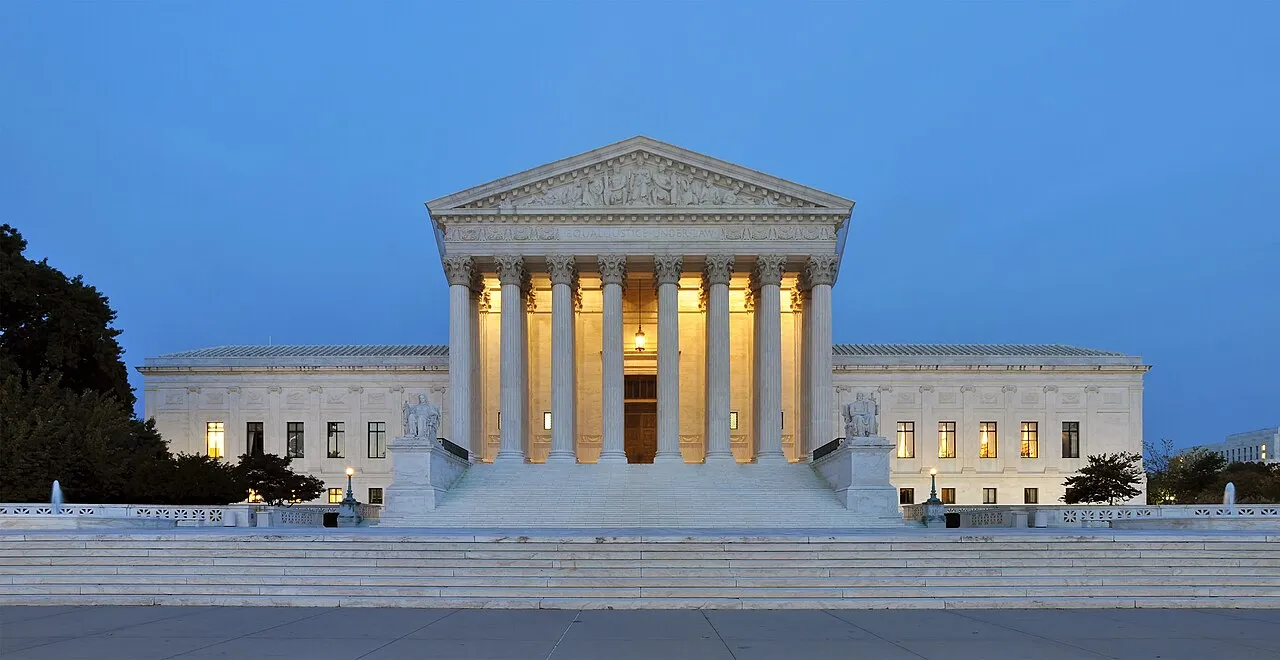
The Supreme Court of the United States is the country's highest court for cases within its constitutional and legal authority. It reviews legal questions through specific cases rather than answering every public disagreement. To understand a headline about the Court, first identify the case, the document and the stage of proceedings.
An argument is not a judgment. A request for review is not an accepted case. An individual justice's separate opinion is not automatically the Court's controlling explanation. Those distinctions are the foundation of this student guide, which explains the institution and offers a practical method for reading its public records without inventing a new ruling.
What does the Supreme Court do?
The Court's official introduction describes its responsibility for cases and controversies arising under the Constitution or federal law. It identifies a Chief Justice and eight Associate Justices, with appointments involving presidential nomination and Senate consent. That structure is different from a legislature writing a new statute or an executive agency administering a programme.
A useful starting question is therefore “What legal issue is before this court?” rather than “What policy does this court want?” A public dispute can involve political interests while still reaching a court through a defined legal question. Understanding the question helps readers distinguish the litigation from the wider argument taking place around it.
For example, a fictional disagreement about a government programme might raise questions about statutory authority, procedure or an individual's legal rights. These questions are not interchangeable. A decision about the procedure used to make a rule would not necessarily answer every argument about whether the programme is socially desirable.
Why the document type matters
The Court publishes several kinds of records. Its opinions page distinguishes opinions resolving cases, writings connected to orders and individual in-chambers opinions dealing with applications for interim relief. The existence of a PDF with a justice's name on it does not, by itself, tell a reader which category it belongs to.
Read the document's heading and procedural setting before extracting a sentence. A short order may concern an immediate request, while a longer opinion may explain the resolution of a fully considered case. The length of a document is not a reliable substitute for its legal role, and an urgent document is not necessarily a final answer.
This matters especially on social media, where a screenshot often removes the first page and surrounding context. A sentence beginning in the middle of an argument can be a party's claim, a discussion of an earlier case or a position the author rejects. Identify who is speaking before attributing the sentence to the Court.
A docket is the case's public timeline
The official docket search provides information on pending and decided cases. It can be searched by a case name, docket number or other words appearing in a docket report. The Court explains its number format as a term year followed by a number, which helps distinguish one proceeding from another with a similar name.
The timeline is useful because legal reporting often compresses several events into one headline. A filing, a response, an order and an argument date are different entries. Seeing them in sequence helps a student avoid treating a party's newly submitted request as something the Court has already granted.
Write the docket number at the top of your notes. Then record the exact entry date and document title for any claim you intend to discuss. A proper reference is more dependable than remembering only the name of a prominent person associated with the dispute. Names can recur across related cases and different courts.
What happens at oral argument?
The Court's procedural guide describes arguments based on the record and written briefs, rather than a jury hearing new witnesses. It explains that each side generally has thirty minutes, subject to exceptions. A justice's question is part of examining the legal positions; it is not a recorded vote on the eventual result.
When listening to an argument, separate three things: the issue presented, the lawyer's answer and the justice's hypothetical. A hypothetical may deliberately test an extreme consequence. Reporting it as an actual event would change its meaning. It can be useful for understanding the boundary of an argument without being a fact about the people in the case.
The official site provides argument audio and transcripts through its oral-arguments section. Those records let a reader check whether a quotation was heard correctly and whether the response changed after a follow-up question. A short clip can introduce an issue, but the surrounding exchange is often necessary to understand it.
Majority, concurrence and dissent
The Court's explanation of opinions distinguishes the principal or majority opinion from concurring and dissenting writings published with it. A concurrence can agree with a result while offering a separate explanation. A dissent disagrees with the disposition or reasoning in ways the writing specifies. Read the authorship and joining information rather than guessing from tone.
Consider a fictional document containing three sections from different authors. Copying a forceful paragraph from the final section into a headline could reverse the public's understanding if that section is a dissent. A careful summary identifies both the position and the author before describing what the paragraph argues.
For study notes, use separate boxes labelled result, main reasoning and separate views. This simple layout prevents a minority position from blending into the account of what the Court decided. It also encourages readers to recognise disagreement without pretending every sentence in the published package has the same status.
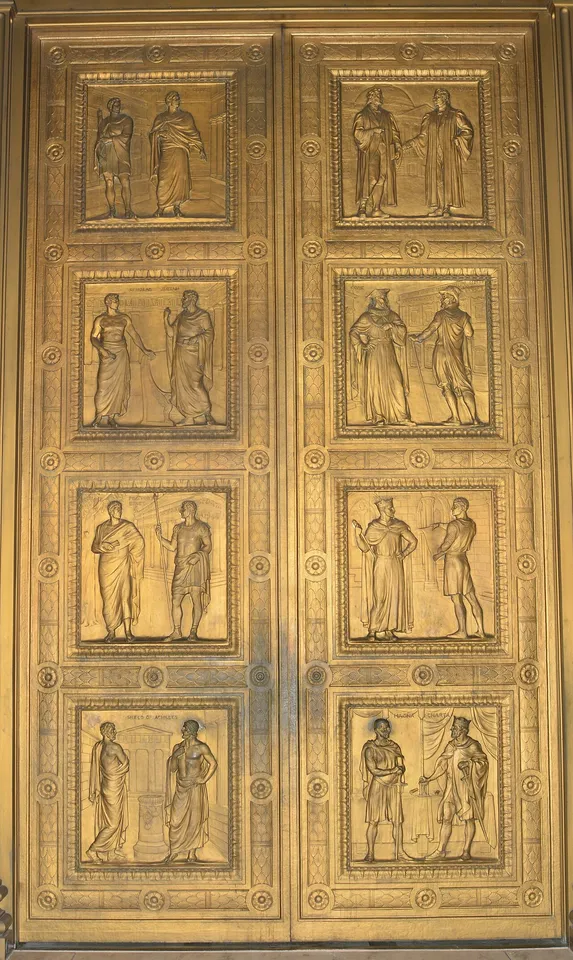
Archive photograph of the Supreme Court building entrance. Case research uses the official docket and documents, not the building photograph.
Read a fictional case without inventing a real ruling
Imagine a made-up dispute called Student Association v. Example Agency. No real docket or decision is being described. In the exercise, an agency requires a form, a student organisation challenges the requirement, and a lower court issues a decision. The exercise is designed to practise reading categories, not to tell anyone what rights they possess.
Begin by writing the competing claims in separate columns. The organisation says the agency lacked authority. The agency says the relevant law permits the requirement. At this stage, both entries are positions held by parties. Neither becomes an established legal conclusion simply because it appears in a filed document.
Next create a timeline with four fictional events: a request for review, a response, an order taking a specified procedural step and an argument. Do not add a decision unless the exercise supplies one. This discipline teaches a useful rule of reporting: an empty final box is more accurate than a guessed outcome.
Finally, imagine that an eventual document resolves only whether the organisation used the correct procedural route. A headline saying “Court approves every agency form” would extend beyond the question answered. A more precise classroom summary would describe the procedural issue and explain that other questions were not resolved in this fictional scenario.
How to take useful notes from an opinion
Start with identification: case name, docket number, date and document type. Then write the question presented in ordinary language. If you cannot explain the question without introducing unrelated policy claims, return to the case materials. A clear question gives the rest of your notes a stable reference point.
Next describe the disposition before attempting to summarise the reasoning. A reader should be able to tell what happened to the case, not merely whether the author sounds supportive of one side. Keep specialised procedural terms in their context and consult the document rather than substituting a dramatic everyday synonym.
After that, identify the reasoning you are summarising and the limits the text expresses. Avoid lifting one broad sentence away from qualifications in the next paragraph. Finish with a separate section for your own questions. Labelling those questions prevents personal interpretation from being presented later as a quotation or an official conclusion.
The difference between a source and a summary
An official document is the primary record of what the institution published. A news report or classroom explanation helps a reader navigate that record, but it is a separate piece of writing. Both can be useful when their roles remain clear. A summary should help someone find the underlying material rather than replace it with an unverifiable assertion.
If two accounts disagree, first check whether they refer to the same document and date. One may describe a request filed yesterday while another describes an earlier order. Their apparent disagreement may be a mismatch in timing. This is why a date and docket reference often resolve more confusion than a longer argument over a headline.
A good verification exercise is to trace one sentence from a report back to its source. Ask whether the original supports the same scope, certainty and attribution. If the report says a party “argued” something, do not rewrite that as a fact “found” by the Court. The verb carries important information.
Why a term and a calendar year are different
The Court's procedural page explains that its term begins on the first Monday in October. A term therefore crosses calendar-year boundaries. A student searching only by the year printed in a news headline may miss related records filed or decided in another part of the same term.
Treat the term as an organisational label and the event date as a separate field. This is similar to a school year spanning two calendar years: the label groups related activity, but each event still has its own date. The comparison explains the bookkeeping idea without suggesting that a court operates like a classroom.
For a spreadsheet project, make columns for term, docket number, filing date, argument date and opinion date. Leave dates blank if the official record does not supply them. Sorting a blank future outcome into a chronological table is safer than entering a predicted decision day and later forgetting that it was only a guess.
Use public records without turning study into legal advice
This guide explains reading habits and institutional vocabulary. It does not decide anyone's eligibility, filing deadline, legal remedy or chances in litigation. Those questions depend on facts and rules that cannot be inferred from a general article. A resemblance between a real person's situation and a classroom example is not a legal analysis.
For academic work, keep the goal narrow: accurately identify and explain the public material you have read. If a document uses a term you do not understand, note it and consult the relevant official explanation. The purpose is not to sound certain about every legal issue; it is to make the boundary of your understanding visible.
Students can explore further reading through the RayTech article and study guide collection. The same research method applies beyond courts: identify the institution, find the record, separate claims from conclusions and describe the date and scope. It is a practical information-literacy skill, not a promise of expertise after reading one page.
Questions about the Supreme Court
Does accepting a case mean one side has already won?
No result should be inferred merely from a case moving into another procedural stage. Find the relevant order and read what it does. Review, argument and judgment describe different events. This guide's fictional exercise demonstrates why recording those events separately is more reliable than compressing them into a single “win” label.
Is every sentence in a published opinion package the majority view?
No. The package can include separate writings expressing different positions. Check the authorship, headings and joining information. A dissent can be important and informative while remaining a dissent. An accurate summary says whose reasoning it describes instead of calling every paragraph “the Supreme Court's decision.”
Where can I check a case instead of trusting a screenshot?
Use the official docket search and follow its document entries, then consult the appropriate opinions, orders or argument section. Record the docket number and date so another reader can repeat the check. A screenshot that omits those identifiers is a starting point for research, not a complete citation.
Is this an update about a specific new judgment?
No. This is an institutional and research guide checked for publication on 12 November 2026. It does not announce an unnamed new ruling or predict a future decision. For a particular controversy, the case name and current official record are necessary before a responsible explanation of its outcome can be written.
Sources
- Supreme Court official introduction
- The Court and its procedures
- Official explanation of opinions and separate writings
- Supreme Court docket search and instructions
Image credits: cover: Joe Ravi, source, CC BY-SA 3.0. Resized and converted to WebP. inline: Photograph by Don Ramey Logan, source, CC BY-SA 4.0. Resized and converted to WebP.
Found an error or an outdated detail? Report a correction with the article URL and original source.