
Taika Waititi: Films, Television, Oscar and Where to Start
Explore Taika Waititi’s work from Boy and Hunt for the Wilderpeople to Jojo Rabbit, Thor and television, with credits and a spoiler-light viewing route.
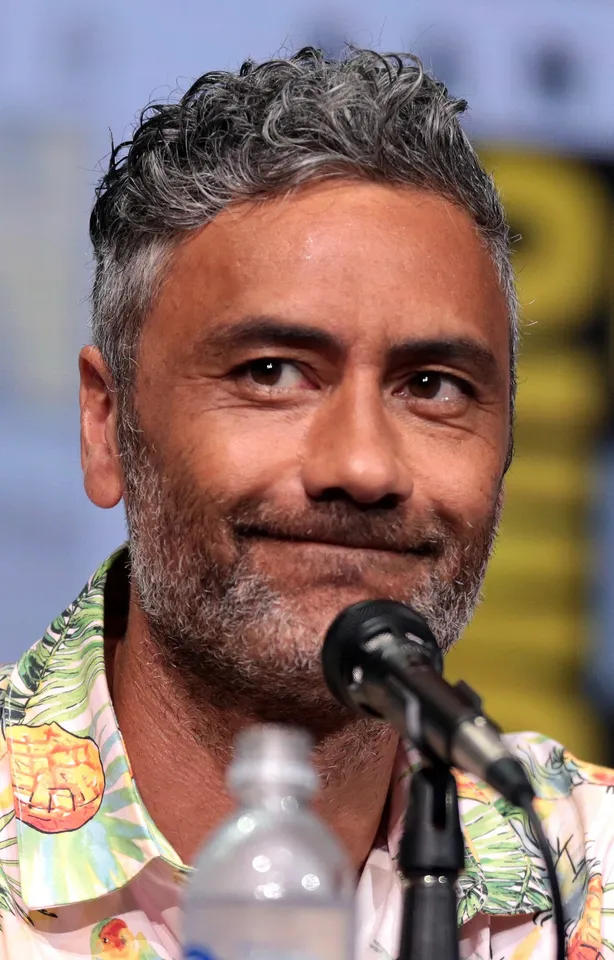
Taika Waititi is a filmmaker, writer, actor and producer whose work spans New Zealand features, Hollywood franchises and television. His credits include Boy, Hunt for the Wilderpeople, Thor: Ragnarok and Jojo Rabbit, for which he won the adapted-screenplay Oscar. Following his career means checking the particular credit: directing a film, co-creating a series and executive-producing television are different jobs.
That distinction makes his filmography easier to explore. A viewer looking for a self-contained New Zealand story will want a different starting point from someone following Marvel, and neither should assume that every episode of a television series carrying his name was directed by him. This guide offers routes through the work without invented reviews, private-life speculation or an unverified release calendar.
A quick map of the best-known credits
| Work | Useful starting context |
|---|---|
| Boy | New Zealand coming-of-age feature, with Waititi writing, directing and appearing as Alamein. |
| Hunt for the Wilderpeople | New Zealand feature following Ricky and his foster father into a manhunt. |
| Thor: Ragnarok | Marvel feature directed by Waititi. |
| Jojo Rabbit | Feature written and directed by Waititi; adapted-screenplay Oscar winner. |
| Reservation Dogs | Television series co-created with Sterlin Harjo. |
| What We Do in the Shadows | Distinguish the feature from the separate television production and its credits. |
These are entry points, not a ranking of artistic quality or a complete catalogue. They show why the name appears in several different kinds of screen production. For the exact cast, running time, certification and distribution in your territory, consult the particular work's current official listing.
Start with Boy for the New Zealand context
The New Zealand Film Commission identifies Boy as a project Waititi developed after his short Two Cars, One Night. Its development history predates his large Hollywood franchise work. That chronology matters because describing him only as a Marvel director reverses the order in which the earlier films established his feature career.
The official on-demand description places the story in the 1980s and centres an eleven-year-old boy whose father returns. Waititi plays the father, Alamein. That gives a new viewer enough context to recognise the film's family relationship without requiring a scene-by-scene retelling or disclosing the ending.
One useful question to bring to a coming-of-age film is the distance between a child's picture of an adult and the adult's actual behaviour. The question is a viewing lens, not a claim that every joke or shot has one fixed meaning. It encourages attention to the relationship rather than reducing a film to a list of amusing lines.
Hunt for the Wilderpeople offers another feature route
The production's official description centres Ricky Baker and his foster father becoming the subjects of a manhunt after being stranded in the New Zealand wilderness. The New Zealand Film Commission also records Waititi's connection to adapting Barry Crump's material. Those credits locate the work as both a screen story and an adaptation.
For a viewer choosing between this and a franchise film, the practical difference is that the feature can be approached as its own central story. You do not need to treat every later Waititi credit as a prerequisite. Check the film's content guidance, but do not assume that a familiar director name makes every work suitable for every age.
A productive way to watch a story about an unexpected pair is to notice how their relationship changes under pressure. Distinguish what each character knows from what the wider world assumes. That kind of attention develops a richer understanding than a promotional label such as quirky or heartwarming can provide on its own.
Where Thor: Ragnarok fits
Marvel's official film page identifies Waititi as director of Thor: Ragnarok. Its premise places Thor away from Asgard and without his hammer while a threat to his home develops. That is the franchise context a new viewer needs before deciding whether to begin there or first catch up on the character's earlier screen appearances.
The director credit should not be stretched into sole authorship of every element. A franchise feature involves screenplay, performances, design, editing, effects and studio production, among other contributions. Recognising a director's role does not require erasing the rest of the credits or attributing another filmmaker's later choices to that director.
If you already know Thor, ask how this film presents a familiar hero in altered circumstances. If you do not, consult an official viewing order or the earlier films' descriptions rather than a spoiler-heavy compilation. This guide does not claim a personal screening experience or reproduce a plot summary of the entire feature.
Why Jojo Rabbit is central to the career story
Searchlight describes Jojo Rabbit as a World War II satire about a German boy whose worldview is challenged when he learns that his mother is hiding a Jewish girl. Waititi wrote and directed it. The Academy's records identify his adapted-screenplay win at the 2020 ceremony.
The award category matters. Winning adapted screenplay is not the same as winning directing, and a best-picture nomination is not the same as a best-picture win. A precise profile preserves those distinctions instead of collecting every nomination and award into the vague assertion that a person won everything associated with a film.
Satire also needs to be approached with attention to viewpoint. A character expressing a belief does not automatically make that belief the film's endorsement. Look at how the work frames the character, what consequences it shows and which assumptions it challenges. This is a general critical approach, not a substitute for watching the film or an instruction about what every viewer must conclude.
Adaptation is a creative credit, not a photocopy
The Academy's screenplay information connects Jojo Rabbit with Christine Leunens' Caging Skies. The New Zealand Film Commission describes the adaptation background of Hunt for the Wilderpeople. These are different projects, but together they show why source material belongs in a filmography discussion.
An adaptation can change structure, emphasis and the way information reaches an audience. That does not mean a short guide can claim specific changes without checking both works. A careful reader separates a verified adaptation credit from an unverified statement about how closely every scene follows a book.
For students comparing page and screen, begin with one bounded question: whose perspective organises the story? Then examine the evidence in each medium. Avoid judging fidelity through a trailer alone. A trailer selects moments for promotion; it does not provide the full narrative structure needed for a detailed comparison.
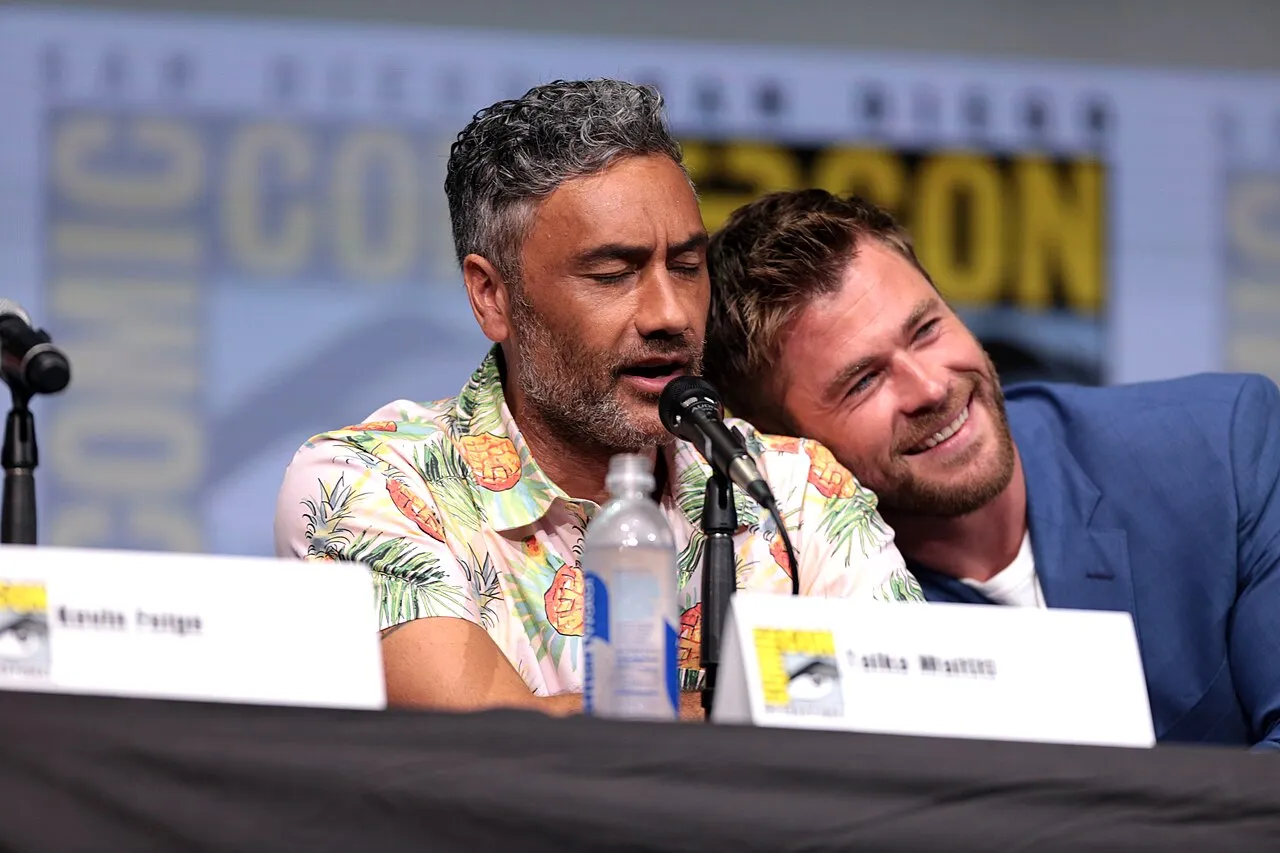
Historical Thor: Ragnarok panel at the 2017 San Diego Comic-Con. Their onstage appearance is separate from the film’s fictional story.
Reservation Dogs is a shared creation
FX identifies Sterlin Harjo and Waititi as co-creators and executive producers of Reservation Dogs. Its central group consists of four Indigenous teenagers in rural Oklahoma. Preserving Harjo's credit is essential; calling the programme simply a solo Waititi creation removes a named creative partner from the official account.
The television context is also different from a single feature. Episodes can have different writers and directors, and a continuing story develops across a season. A creator or executive-producer credit does not prove that the same person wrote every episode or performed every production role.
For someone exploring the series through Waititi's name, the next useful step is therefore to read the programme's own credits and description. The association can be an introduction to a broader creative team rather than a reason to ignore that team. This guide does not attach unverified authorship to individual episodes.
What We Do in the Shadows: check which version
The shared title can cause confusion between a feature and a television series. FX's profile credits Waititi as an executive producer on its programme, while his wider career includes the earlier feature. A viewer searching for one can easily land on the other if the listing omits the year or format.
Before choosing a platform result, check whether it lists a movie or seasons and episodes. Then check the specific version's cast and production information. Similar titles do not imply that the television programme is simply the feature divided into shorter sections.
This is also why availability needs to be checked at the title level. Access to one version does not guarantee access to another in Pakistan or any other territory. A platform's promotional page can establish a programme association without proving that a particular account can watch every episode today.
Klara and the Sun adds another adaptation to follow
Sony's official project page identifies Waititi as writer and director of Klara and the Sun, based on Kazuo Ishiguro's novel. It names Jenna Ortega as Klara, an Artificial Friend, and Amy Adams in the story's family setting. Those are confirmed project details, not evidence of a particular local screening or streaming offer.
The premise gives viewers a different question from those raised by the earlier titles: how is an artificial companion's perspective used to approach a human family? That question can guide interest in the adaptation without inventing an ending, a review score or a claim about scenes not independently examined here.
For current release arrangements, consult the studio and the legitimate distributor serving your region. This article does not manufacture a Pakistan release date from another country's page. Nor does an official project listing automatically establish that the finished film is already included in a subscription service.
Choose a route rather than trying to watch everything
If your interest is New Zealand features, begin with Boy and Hunt for the Wilderpeople. If it is blockbuster filmmaking, Thor: Ragnarok is the direct franchise connection discussed here. If it is adaptation and satire, Jojo Rabbit provides a different starting point. These routes are editorial suggestions based on the verified credits, not an objective ranking.
For television, approach Reservation Dogs and What We Do in the Shadows as their own productions with their own teams. Read an episode's credit when discussing who directed it. The distinction becomes useful whenever a familiar name appears prominently in marketing but performs a more specific role in the actual production.
There is no requirement to follow a filmmaker's entire catalogue before expressing a considered response to one work. The more useful habit is to identify what you watched and the evidence for your interpretation. A comment about one film should not be stretched into a claim about every programme associated with its director.
How to assess new project headlines
Film news moves through stages: a project may be announced, developed, produced, promoted and released in different territories. A new interview about an older project does not necessarily mark a new production announcement. Date and source matter before a claim is repeated as the latest confirmed film.
Give greater weight to a current studio or production announcement when establishing credits and release arrangements. A fan poster, an old interview or a social-media account using the director's photograph is not the same evidence. This does not make every early report false; it means its level of confirmation should be stated.
The same care applies to performance claims. A domestic box-office total, a worldwide total and streaming popularity measure different things. No such totals are invented here, and an old ranking is not repackaged as a current one merely to make the profile appear more impressive.
Questions about Taika Waititi
Which Oscar did he win?
He won writing, adapted screenplay for Jojo Rabbit at the 2020 Academy Awards. Keep the category attached to the achievement. Other nominations connected with the film do not turn into additional personal wins, and the ceremony year is not necessarily the year in which the film first reached audiences.
Did he create Reservation Dogs alone?
No. FX identifies Sterlin Harjo and Waititi as co-creators and executive producers. The series should be discussed with those shared credits intact. Individual episode credits provide a more detailed account of who wrote or directed particular instalments and should be checked before making a claim about them.
Is every project under his name the same kind of comedy?
The official premises and production formats show different settings and approaches. A coming-of-age feature, franchise adventure, satire and television series need not offer an identical experience. Check the work's description and content guidance rather than expecting a director's name to replace information about the actual title.
Does this guide confirm where every film streams in Pakistan?
No. Territory, language and subscription availability vary. Use the current legitimate platform or distributor listing for the particular title and version. This guide supplies verified career entry points and viewing questions, not a promise of access or instructions for bypassing regional restrictions.
Explore further film and media coverage in the article library. Readers interested in how digital media is made can also explore programming courses, while keeping screen criticism and technical instruction as separate subjects.
Sources
- New Zealand Film Commission: Boy, for the feature's development context.
- NZ Film on Demand: Boy, for the premise and Alamein credit.
- New Zealand Film Commission: Hunt for the Wilderpeople, for the project and adaptation history.
- Piki Films: Hunt for the Wilderpeople, for the production description.
- Marvel: Thor: Ragnarok, for the official feature credit.
- Searchlight: Jojo Rabbit, for writer-director and premise information.
- Academy Awards: 2020 ceremony, for the adapted-screenplay award.
- FX: Reservation Dogs, for shared creative credits.
- FX: What We Do in the Shadows credit, for the television role.
- Sony: Klara and the Sun, for the officially listed project. Viewing routes and interpretive questions are this guide's editorial suggestions, not claimed firsthand reviews.
Image credits: cover: Gage Skidmore, source, CC BY-SA 3.0. Resized and converted to WebP. inline: Gage Skidmore from Peoria, AZ, United States of America, source, CC BY-SA 2.0. Resized and converted to WebP.
Found an error or an outdated detail? Report a correction with the article URL and original source.