
Tata Steel Shares: Production, Steel Spreads, Regional Results and Cash
Understand Tata Steel shares through capacity, production, deliveries, steel spreads and regional results, with clear explanations of investment and cash.

Tata Steel share-price searches concern a steel producer with operations and financial reporting that need regional, product and accounting context. A tonne of steel, a tonne of annual capacity, a rupee of revenue and a share-price quotation are different measures. Keeping those distinctions clear is the foundation of reading the business well.
Tata Steel's official 2025-26 integrated report provides its business and financial record. This article explains production, deliveries, steel spreads, regional results, investment and cash flow. It does not invent a current quote, forecast the next steel cycle or recommend a trade. All classroom numbers below are deliberately hypothetical unless an actual dated disclosure is identified.
Identify the listed company and reporting scope
The Tata brand covers many businesses. Tata Steel's accounts cannot be replaced by Tata Motors' results or the figures of an independently reporting group company. Begin with the full legal name and the period heading, then establish whether the table is standalone, consolidated or a specified regional view.
A consolidated company result and a regional operating result can both be useful. They simply answer different questions. Problems arise when a reader selects revenue from one scope and profit from another, then presents the resulting percentage as a meaningful margin.
| Data item | Question to ask |
|---|---|
| Capacity | Annual capability of which assets? |
| Production | What was made during which period? |
| Deliveries | What quantity was sold or delivered under the definition? |
| Operating measure | Which costs and adjustments are included? |
| Cash flow | What cash moved, and for what purpose? |
Capacity, production and deliveries are three measures
Installed capacity describes potential capability under a stated basis. Production records actual output. Deliveries concern a different stage in the movement of goods to customers. The three need not match during a quarter, especially when inventories or operating conditions change.
Imagine a fictional mill produces 100 tonnes and delivers 90 during a period. The difference raises an inventory question; it does not automatically establish lost sales or defective output. Opening stocks, product stages and reporting definitions may also matter in a real statement.
Keep the units and period labels visible. A capacity announcement in million tonnes per annum is not proof that the same volume was produced during the current year. Construction, commissioning and ramp-up provide the operational context needed to interpret an expansion.
Why a steel spread is more useful than one price
A selling-price headline does not describe a steelmaker's whole margin. Input costs, product mix and other expenses matter. The difference between selling value and relevant input costs can help illustrate the business, but a simplified spread is not the same as statutory profit.
For an invented example, selling value per tonne is 60 and relevant raw-material cost is 35, leaving 25 before other costs. If the selling value rises to 65 but raw-material cost rises to 45, the simplified spread falls to 20. Revenue per tonne rises while that spread narrows.
The lesson is to analyse both sides of the relationship. Actual company operating measures require the report's definitions and reconciliations. Do not label a classroom spread as Tata Steel's real quarterly margin or assume an industry quotation applies to all its products.
Product mix can change revenue without the same volume change
Different steel products can serve different customers and have different realised values. A tonne count alone cannot capture those differences. A shift in mix may affect revenue and margin even when the total physical quantity changes little.
Consider a fictional mill selling 50 tonnes of one product and 50 of another. If the second has a higher selling value and its share increases, revenue can rise without a proportional increase in total tonnes. This is arithmetic about mix, not a claim about actual customer contracts.
Read the company's own explanation of the period's operating changes. A broad construction or automotive headline can suggest questions, but it does not establish which product drove the reported result. The relevant disclosure supplies the evidence for that connection.
Regional businesses need local context
Steel operations in different locations can face different input arrangements, energy costs, customer markets and investment programmes. A consolidated average may conceal those differences. Regional analysis helps explain why the whole group does not necessarily follow one local market indicator.
An invented group earns 20 in one region and loses five in another, producing 15 before further group adjustments. Discussing only the profitable region would not describe the consolidated outcome. Discussing only the loss would be equally incomplete.
Use the report's regional boundaries and actual measures. Avoid comparing a regional operating figure with another region's after-tax result as though the labels matched. The first requirement of a useful comparison is a consistent definition, not a visually impressive chart.
Currency conversion can change reported comparisons
A business operating in several currencies can show different movements in local-currency activity and the reporting-currency total. Exchange-rate effects therefore belong in the explanation when disclosed. They should not automatically be interpreted as a physical change in steel output.
For a fictional subsidiary, local revenue remains 100. If the conversion rate changes from two reporting units per local unit to 1.8, translated revenue moves from 200 to 180 under the exercise's assumptions. The local revenue has not fallen in that example.
Actual reporting may use different rates for different statement components and periods. Use the company's stated methodology rather than an arbitrary current exchange rate. A conversion exercise can teach the relationship while leaving the actual accounting calculation to the disclosed record.
Raw materials and energy require more than a headline
Steelmaking can involve raw materials and substantial energy use, with the actual inputs depending on the process and operation. Cost exposure should be established from company information. A commodity-price change does not independently reveal the timing or value of an issuer's actual purchases.
An invented mill holds inventory bought earlier and purchases more during a quarter. The current spot quotation may differ from the cost associated with material consumed during that period. Timing and accounting treatment connect the market context with the reported expense.
This article stays at the business level. It does not provide operational instructions for industrial equipment. The useful financial question is which disclosed cost components changed and how they relate to the actual reporting period, rather than guessing technical conditions at a site.
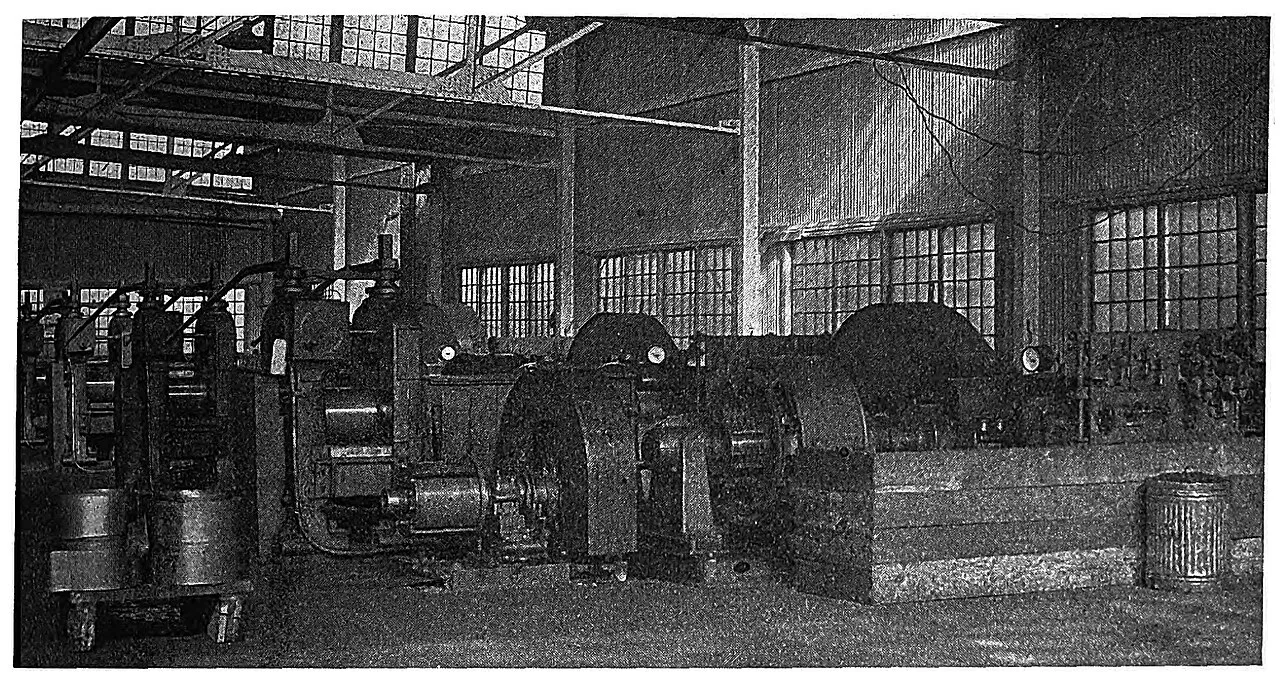
A historical 1919 view of cold-rolling mills at Trumbull Steel, used to illustrate steel manufacturing; this is not a Tata Steel facility.
Inventory can connect production, sales and cash
Inventory includes goods at relevant stages under the company's accounting record. Its movement helps explain why production and deliveries differ and why cash can be tied up before customer payment. An increase alone is not enough to conclude that demand has collapsed or growth is assured.
For a fictional worksheet, opening stock of 20 plus production of 100 less deliveries of 90 gives 30 before other adjustments. That physical bridge is separate from valuing the stock in currency. Mixing quantities and currency in one formula would be a category error.
Read the actual notes for valuation and other relevant changes. A student can learn the bridge with invented quantities while preserving the distinction between a simple exercise and an audited industrial inventory record containing more complexity.
An operating profit measure is not cash generated
Earnings and cash flow measure different things. Credit sales, inventory movements, supplier payments and other timing effects can separate them. A profitable period does not mean every recorded sale has already been collected or that no money was invested in working capital.
Suppose a fictional company reports operating earnings of 40 while additional inventory and receivables absorb 15. The cash relationship needs those movements, not just the earnings headline. The actual cash-flow statement can include further adjustments and classifications.
When reading Tata Steel, follow the reported bridge rather than forcing cash to match one selected profit measure. Differences are a reason to investigate timing and definitions. They are not, by themselves, evidence of wrongdoing or proof of superior business performance.
Expansion involves investment before full contribution
New equipment or expanded capacity may require a long period between expenditure and mature operating output. The official integrated report discusses expansion and changes in the company's production system. Each disclosed milestone should retain its date and stage.
Build a fictional project sequence: approval, construction, commissioning, initial production and ramp-up. The first stage does not prove completion of the last. Even a commissioned asset may not contribute a full year's output during its first reporting period.
For a financial comparison, distinguish capital expenditure from the later operating expenses and depreciation associated with assets. A large investment amount is not automatically a current-year operating loss, and the announced capacity is not automatically current-year revenue.
Different steelmaking routes need comparable boundaries
Company reports can discuss changes in production technology and environmental performance. Comparisons need their stated scope, period and methodology. An emissions figure per tonne and an absolute emissions total describe different measures; neither should silently replace the other.
In a fictional example, emissions intensity falls from two units per tonne to 1.8 while output rises from 100 tonnes to 120. Total emissions under the simplified assumptions rise from 200 to 216 despite the lower intensity. Both statements can be mathematically true.
Actual environmental reporting requires its own definitions and assurance scope. A project described as lower-emission should not be presented as having no environmental impact without supporting evidence. Preserve the specific claim rather than converting it into a broader marketing assertion.
Net debt and financing require a reconciliation
Borrowings, cash and other financial items can be combined in company-defined measures. The reconciliation matters when comparing years or issuers. One company's net-debt definition should not automatically be applied to another company's headline without checking what is included.
An invented business with 100 of borrowing and 30 of cash has 70 under a simple subtraction. That calculation does not establish how leases, restricted balances or investments are treated in an actual report. The number is only as meaningful as the chosen definition.
Read financing costs alongside the relevant debt measures and dates. A closing debt balance and a full year's financing expense are not identical types of data. A ratio based on them should state its assumptions instead of implying a precision the inputs cannot support.
Exceptional items need transparent treatment
Restructuring, impairments or other separately disclosed items can affect a period's reported results. Their existence and treatment should be established from the accounts, not guessed from a share-price movement. Statutory profit and a company-adjusted operating measure can therefore differ.
For a fictional firm, an operating result of 50 and a separately identified charge of 20 produce a different final outcome than the operating figure alone. Calling the charge irrelevant forever or assuming it repeats every year would each require further evidence.
Present the reported figure, explain the components and reconcile any alternative measure. A useful article does not remove only the inconvenient items. It helps readers see which result is being discussed and why a year-on-year comparison may need qualification.
Build a steel-results comparison that can be checked
Create one worksheet section for physical activity and another for financial results. In each, record company, region, period, scope, unit and source. Add inventory and cash-flow bridges only where the required inputs exist. Leave unavailable fields visibly blank rather than inserting zero.
Next, compare the same period and definition across years. Explain separately whether a movement came from quantity, realised value, mix, costs or scope changes. If the report does not establish the cause, identify it as an open question instead of supplying an invented answer.
For practice, class resources can support percentages and unit conversion. A project from programming courses could require every tonne figure to carry a time period and warn when a user tries to compare annual capacity with quarterly deliveries.
Questions about Tata Steel shares
Does rising steel demand guarantee a higher share price?
No. Demand is one part of a broader business and market picture. Prices, input costs, capacity, financing and expectations can also matter. This guide explains operating and financial measures; it does not predict the market outcome from a single industrial indicator.
Can production be used as a substitute for revenue?
No. Production is a physical measure, while revenue is recognised financial activity. Deliveries, selling values, mix and accounting scope connect them. Use the reported quantities and statements rather than multiplying output by an unrelated commodity price and presenting the result as actual sales.
Why do regional figures differ from group results?
They cover different boundaries and may use different measures. Consolidated results include the relevant operations and adjustments under the accounting record. A regional headline should therefore remain labelled, and any bridge to the group total should follow the company's reconciliation.
Does this article provide a live quote?
No. A current price needs a verified security, exchange and timestamp. The official reports below support business and results reading, not a continuously updating market feed. Keep that distinction clear when using historical financial information alongside a current quote.
Sources
- Tata Steel integrated report 2025-26
- Tata Steel reporting profile and scope
- Tata Steel integrated annual report PDF
Image credits: cover: Kharbaan Ghaltaan, source, CC BY-SA 4.0. Resized and converted to WebP. inline: "The Strip Mills of Trumbull Steel Co.", The Iron Age , February 20, 1919, p. 479, source, Public domain. Resized and converted to WebP.
Found an error or an outdated detail? Report a correction with the article URL and original source.