
The Hindu: Newspaper History and a Practical News-Reading Guide for Students
Learn The Hindu’s early history and a practical way to read news. Check dates, attribution, primary sources, opinion labels and numerical claims.
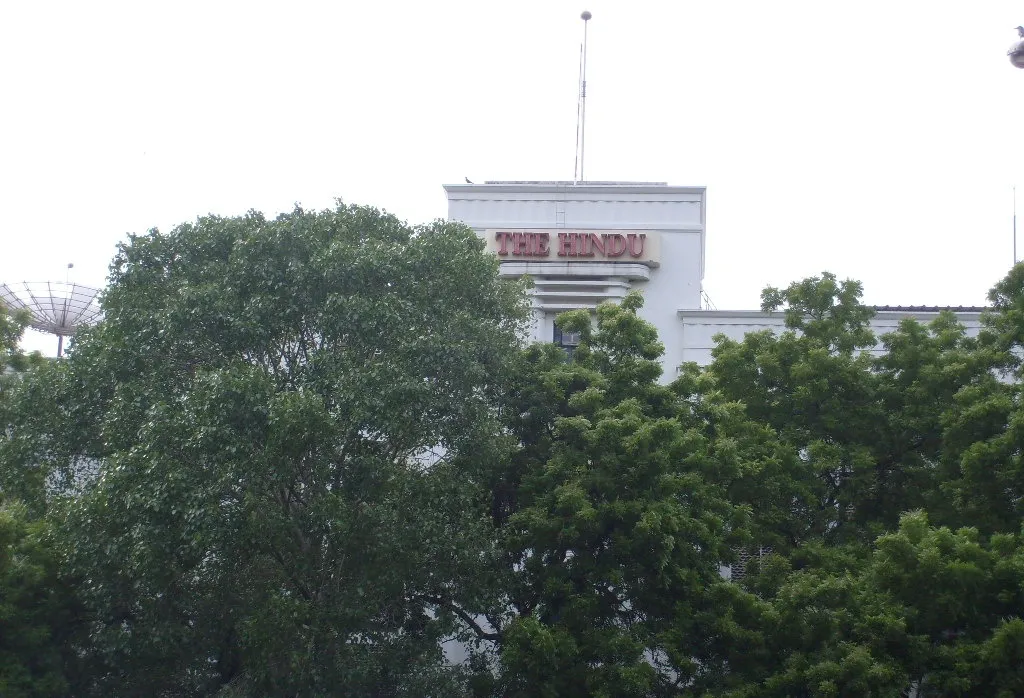
The Hindu is both a long-running newspaper and a useful case study in how to read news with care. A reader does not need to agree with every editorial position to learn from a publication's reporting, and a familiar name does not remove the need to check dates, sources and the distinction between news and opinion. Those habits make reading more active and less dependent on a headline's first impression.
This guide explains the newspaper's documented early history and provides a practical method for students. It does not reproduce paid articles, supply unauthorised copies of an e-paper or claim that one publication is correct about every subject. Examples are original classroom scenarios, not disguised quotations from current reporting. The aim is to make the reader better at asking what a story actually establishes.
What is The Hindu?
The Hindu is an Indian newspaper whose publisher's history dates its first weekly issue to 20 September 1878. The same history records the move to daily publication in 1889. Those are different milestones. The newspaper, its website, an e-paper edition and other publications within the wider group should not be treated as identical products simply because the names are related.
A founding year does not date every service
An 1878 origin refers to the publication's early history, not the launch of its mobile app or every digital service. A timeline should name the event attached to each date. Otherwise a correct founding year can be used to imply an impossible age for a modern product. This is a general source-reading lesson that applies to many long-established institutions.
Publisher history is a source with a defined role
A publisher's own timeline is useful evidence for how it records its institutional development. It is not an independent verdict on the accuracy of every later story. Match each source to the claim being made. Historical background, editorial standards and the evidence behind a particular news report are related questions, but one page does not automatically answer all of them.
How should a student begin reading a news story?
Start with the publication date, subject, location and type of article. Then identify the main claim in plain words. A headline may simplify the story, while the opening paragraphs add limits or conditions. Reading those details first helps prevent a student from building notes around an impression that the full report does not actually support.
Ask what changed
A news report usually concerns an event, decision, finding or development. Identify the change and distinguish it from background information. A paragraph explaining an older policy may be context rather than a new rule announced today. If the article was updated, check whether the update changed the central claim or only added supporting detail.
Keep the place attached to the claim
A local decision does not automatically apply nationally, and a national development may still have different local effects. Record the jurisdiction or location in your notes. Removing that label can turn a limited statement into a false universal claim. A clear summary should preserve where the reported event occurred and which people or institutions it concerns.
Read beyond a search snippet
A search result can show only a small extract, sometimes detached from the paragraph that explains it. The snippet may also reflect an older version. Use it to find the story rather than as a complete substitute for the source. If the page is inaccessible, state that limitation instead of pretending that the entire article has been read and checked.
How do news, analysis and opinion differ?
News reporting primarily establishes what happened and what the evidence or participants say. Analysis interprets the significance, while opinion advances a viewpoint or argument. The boundaries can overlap, but the labels help readers understand the purpose. An editorial position should not be presented as a new official decision merely because it appears in a respected newspaper.
Identify the speaker of a claim
A report may quote a minister, researcher, company representative or critic. The newspaper reporting that someone made a claim is not the same as the claim being independently proven. Keep attribution in the summary. Replacing the spokesperson's statement with an unqualified fact can make a careful report sound more certain than its evidence allows.
A columnist's argument needs its reasoning
When reading opinion, ask what conclusion the writer proposes and what reasons support it. Separate factual premises from value judgements. A reader can question the reasoning without pretending the piece was meant to be a neutral event record. This makes disagreement more useful: the discussion can focus on evidence and assumptions rather than on the publication's name alone.
A label does not guarantee quality
Calling a page analysis does not make every inference sound, just as calling it news does not remove the need for verification. The label tells you the intended form, not the final reliability score. Read the underlying evidence, date and context. Good media literacy uses categories to guide attention rather than replace judgement.
How can primary sources improve understanding?
A news story may link to a court order, government notice, company filing, research paper or other original record. Where accessible and relevant, the primary document can clarify the exact wording and scope. It may also be technical or incomplete for a broader question. Use it alongside clear reporting instead of assuming either source makes the other unnecessary.
Match a claim to a document
If the story concerns a published deadline, look for the actual notice. If it concerns a study, identify the study rather than only the press release. The right document depends on the question. A primary source is valuable because of its relationship to the claim, not merely because a page looks official or includes a logo.
Check whether the document was amended
A later correction, revised notice or updated filing can change the relevant information. An old document may still be genuine while no longer being the final version. Record its date and any amendment you find. This is especially important when turning a news story into practical notes about applications, timetables or other actions that depend on the current record.
What do numbers in a news story need?
A number needs a unit, period and definition. A yearly total, a monthly rate and a percentage change answer different questions. A large figure without those labels can be difficult to interpret. Students should copy the surrounding qualifiers into their notes rather than taking only the most striking number from the headline or chart.
Percentage and percentage points differ
Imagine a fictional rate rises from 20 percent to 25 percent. The increase is five percentage points, while the relative increase is 25 percent of the original rate. These are original teaching inputs, not a reported current statistic. Naming the difference prevents a common mistake in summaries of economics, education, surveys and election-related reporting.
A total needs its population
An amount spread across a larger population can have a different meaning from the same amount concentrated in a smaller group. If a story uses an average, ask who is included and whether the distribution is also discussed. An average does not mean every person experienced the same outcome. The denominator often matters as much as the headline total.
Forecasts are not completed events
A projection describes what a model or analyst expects under stated assumptions. It is not a record of what has already happened. Preserve words such as estimated, projected and provisional when summarising. Removing them can turn a conditional calculation into a false certainty. The date and assumptions should remain attached to any forecast used in a student report.
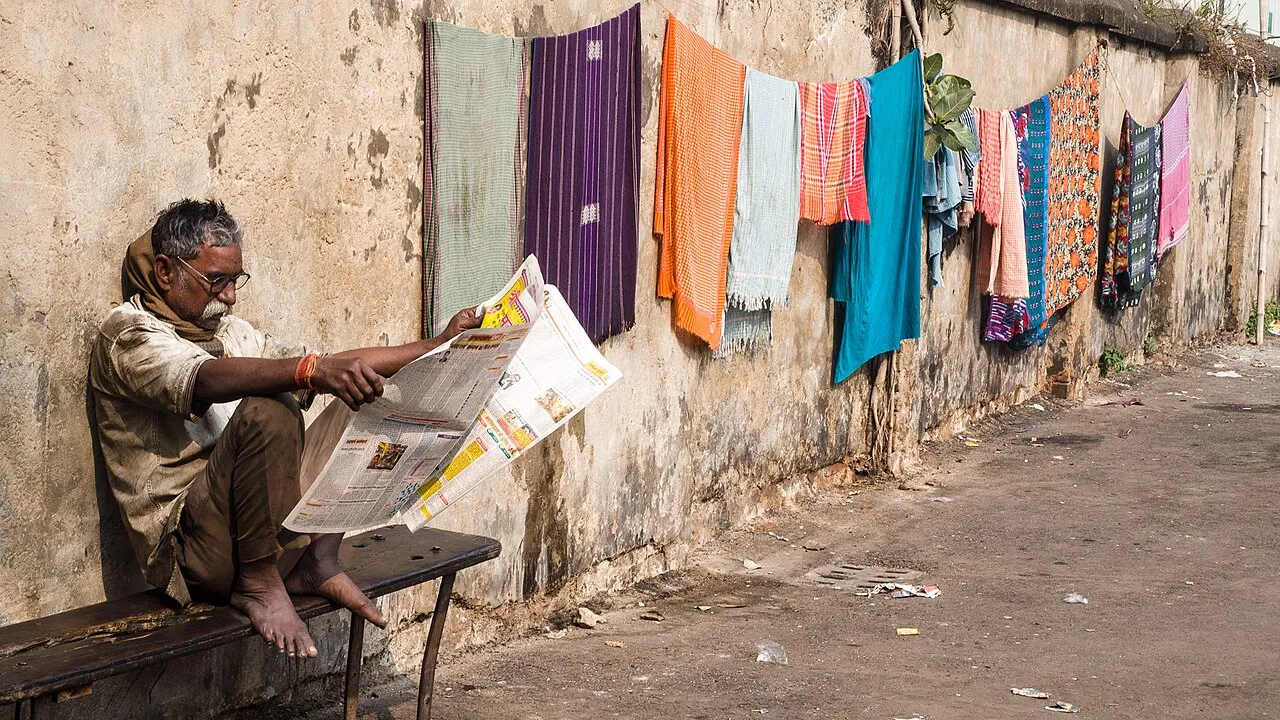
A person reading a newspaper in a 2014 photograph; illustrative reading context, not evidence that the paper is The Hindu.
How should a reader assess images?
A photograph can identify a person or illustrate an event, but it needs a caption and date. Historical images are often reused for context. They do not automatically prove that the pictured action occurred today. If the image is illustrative, the caption should say so. The text and picture should support compatible claims rather than quietly tell different stories.
Cropping can change the impression
A tight crop can remove context without changing the pixels that remain. A wider view may reveal other people, signs or the setting. This does not make every crop deceptive, but it explains why an image should not be interpreted alone when the surrounding situation matters. Look for the original caption and avoid inventing details outside the frame.
A screenshot is not a stable source link
A screenshot can preserve a visible statement, but it may omit the date, corrections or page address. When possible, keep the original link and publication details with it. If the source changes, those details help explain why two versions differ. A cropped screenshot forwarded through several accounts should not be treated as a complete verified article.
Can newspaper reading support exam preparation?
It can help develop vocabulary, summary writing and awareness of public issues, but the method matters more than reading every page without a purpose. Connect the article to a defined subject or skill. This guide does not promise an exam score from one newspaper subscription. A useful routine produces understandable notes and questions rather than a pile of copied paragraphs.
Write a short factual summary first
Try four fields: what happened, where, when and what evidence is cited. Then add a separate sentence explaining why it matters to your study topic. The separation helps prevent your interpretation from replacing the reported fact. If a detail is unclear, turn it into a question to investigate rather than filling the gap with an assumption.
Keep vocabulary in context
Record a new word with the sentence's meaning rather than only a dictionary equivalent. Some words have different senses in law, science or ordinary speech. Write your own example to check understanding. There is no need to copy large passages from the publication. The learning value comes from explaining the idea accurately in your own words.
Compare coverage of one clear event
Read another reliable account of the same event and note what both establish, which sources they use and where emphasis differs. Different emphasis is not automatically a factual contradiction. Identify the precise disputed claim before judging reliability. This is a more useful exercise than assuming that agreement proves truth or that every difference means one outlet must be dishonest.
What should readers know about digital access?
A website, app and e-paper can offer different experiences and access arrangements. Use the publisher's current official information for subscriptions or account support. This article does not provide prices or claim that an older offer is still valid. Respect access controls and avoid unofficial copies that may be incomplete, altered or distributed without permission.
Protect account information
Use the publisher's genuine account pages rather than a link asking for credentials through an unrelated form. A forwarded screenshot of a discount is not proof that the offer is official. Check the domain and current terms before acting. The general lesson is to verify the service you are using, not to assume a familiar publication name makes every related-looking link safe.
A privacy notice has a different purpose
The group's privacy notice describes aspects of its services and data practices. It is not a source for deciding whether a particular news claim is true. Reading it can still help users understand the service context. Match the document to the question: access, privacy, institutional history and event verification each require the appropriate evidence.
A practical news-reading project
Choose one accessible article and create a claim log with columns for claim, source, date, location and confidence limit. Mark quotations as attributed statements and keep your own interpretation in another column. Do not copy the whole article. The output should show what you understood and what remains uncertain, with enough information for another reader to follow the sources.
Make the notes reusable
Use the class resources to connect the topic with your studies and the programming courses to build a small source-log tool. Require a URL and date, preserve corrections and distinguish unavailable information from zero. A good tool supports careful reading rather than automatically declaring a publication always true or always false.
Questions about The Hindu
Did the newspaper begin as a daily in 1878?
The publisher's history records a weekly launch on 20 September 1878 and the later daily stage in 1889. Those milestones should not be merged. A timeline with an event label beside each date is clearer than a single founding year used to describe every format. The same care applies to later websites, apps and other group publications.
Is reading one newspaper enough to verify every claim?
No single publication can replace checking the evidence relevant to a particular question. Read the story carefully, preserve attribution and consult primary records where useful. Compare other reliable reporting when needed, especially for disputed or developing events. The aim is not endless doubt; it is a clear understanding of what the available sources establish and what they leave open.
Sources
- The Hindu Group: official institutional timeline
- The Hindu Group: official publishing and privacy notice
Image credits: cover: Ravichandar84, source, CC BY-SA 3.0. Resized and converted to WebP. inline: Mike Prince from Bangalore, India, source, CC BY 2.0. Resized and converted to WebP.
Result dates, fees and eligibility must be checked against the issuing authority's current notice. Report a correction with the article URL and original source.