
Thibaut Courtois: Career Milestones, Goalkeeping and Save Statistics
Learn Thibaut Courtois’s career milestones and goalkeeping role. Understand save percentages, positioning, clean sheets and distribution context.
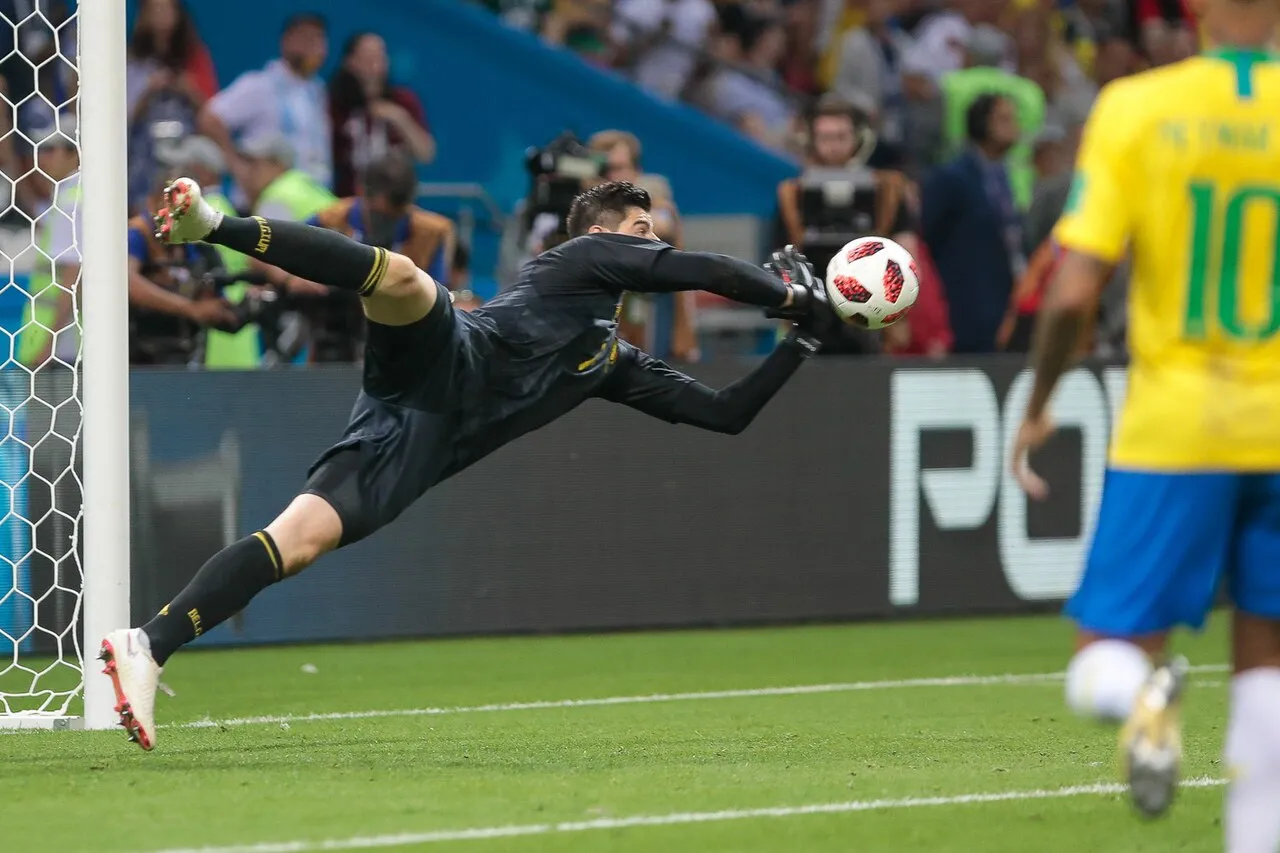
Thibaut Courtois was UEFA's Player of the Match when Real Madrid defeated Liverpool 1-0 in the 2022 Champions League final. The result is a useful starting point for understanding goalkeeping because a clean sheet, a series of saves and a team victory are connected without being the same statistic. The goalkeeper's work also includes positioning, decisions and communication that a final score alone cannot fully describe.
This guide follows official club, FIFA and UEFA records. It uses the documented final and clearly fictional exercises to explain goalkeeping measures. It does not invent a current injury update, transfer, appearance total or medical assessment from a historical photograph.
Identify the goalkeeper and the career stage
The official Madrid profile records Courtois with the club from 2018. The club's dated birthday account identifies his birth in Bree, Belgium, on 11 May 1992 and his Madrid debut on 1 September 2018 against Leganés. Those are specific career milestones, separate from a current match selection.
An earlier image can show another stage of the player's career. A photograph from a different club or national-team match can still be useful when captioned correctly, but it should not be presented as evidence of a newly played Madrid game.
| Record | Meaning |
|---|---|
| Madrid career from 2018 | Club-profile context |
| Madrid debut in September 2018 | Historical first appearance |
| 2022 Champions League final | Madrid defeated Liverpool 1-0 |
| Player of the Match | UEFA's individual final award |
| Clean sheet | No team goals conceded in the relevant match |
The 2022 final was a team result with a major goalkeeper contribution
UEFA's report and technical analysis identify Courtois as Player of the Match and describe important saves in Madrid's win. Vinícius Júnior scored the match's only goal. The account therefore contains different contributions at different ends of the pitch.
A useful summary preserves both. The goalscorer supplied the decisive attacking outcome, while the goalkeeper's work helped keep the opponent from scoring. Neither contribution requires the other to be erased from the explanation.
For a classroom timeline, mark the actual events from the report rather than guessing a save count from a short video. A complete match record and a highlight selection can support different kinds of observation, and their scope should remain visible.
A clean sheet is a team-level outcome
A clean sheet means the team did not concede in the relevant match or defined appearance context. It is important, but it does not independently describe how many attempts the goalkeeper faced or how difficult the work was.
In a fictional comparison, one goalkeeper faces two straightforward attempts while another faces several demanding chances. Both teams finish without conceding. The clean-sheet outcome matches, but the underlying workload differs.
This is why the 2022 final is more informative when read alongside UEFA's performance account. The final score establishes the outcome, while the analysis provides evidence about the goalkeeper's contribution. One measure should not be expected to answer every question.
Saves need the provider's definition
A save is a recorded event under a statistical method. It should not be inferred by counting every ball the goalkeeper touches. A collected cross, a routine pass and a stopped attempt can belong to different categories.
For an invented exercise, a goalkeeper handles ten balls but only four are classified as saves under the stated rules. Calling all ten saves would change the statistic. The example shows why the category definition belongs beside the count.
For Courtois's actual figures, use the relevant competition record. If a report describes a notable stop without supplying a complete numerical total, describe that stop rather than inventing the missing aggregate.
Save percentage requires a consistent denominator
A save percentage relates saved attempts to a defined set of shots faced, with the provider's treatment of events determining the inputs. It is not the percentage of all opposition attacks prevented or the probability of winning the match.
For a fictional model, eight saves and two conceded goals among ten relevant attempts produce an 80 percent save rate. The exercise assumes that those events form the complete defined sample. Real records may contain specific classification rules.
Do not combine saves from one competition with shots from another. A precise percentage built from mismatched scopes is not a reliable statistic. The numerator, denominator, period and source should be recorded together.
Shot difficulty is not captured by count alone
Two attempts can differ in distance, angle, speed, obstruction and the surrounding play. A count treats them as separate events, while a fuller analysis needs the situation. A low number of shots does not automatically mean an easy match.
Imagine a fictional goalkeeper facing one close-range chance and several distant attempts. The numerical workload and the challenge of the most dangerous moment are different aspects of the performance. Neither should be ignored.
For an actual sequence, describe the visible conditions without inventing a precise expected-goal value. Model-based measures require their own data and definitions. A viewer's impression is useful as observation, not as a substitute for a recorded probability.
Positioning shapes the available angle
A goalkeeper's location relative to the ball and goal changes the angle available to an attacker. The useful position depends on the developing situation. A still frame taken before the final pass cannot necessarily establish the best position at the moment of the shot.
For a fictional diagram, draw the ball and the two goalposts, then move the goalkeeper along the relationship between them. The visible angle changes. This is a spatial learning exercise, not an operational instruction for a real match or a claim about a particular training session.
When studying Courtois, follow the sequence into the attempt. Identify the ball movement and the goalkeeper's adjustment. Concrete description is more useful than a general statement that every successful save resulted from one fixed stance.
Handling and deflection are different outcomes
A goalkeeper may retain the ball or redirect it away from the immediate attempt. The consequences depend on where the ball goes and what happens next. A stopped first effort is not always the end of the attacking sequence.
In an invented example, a deflection leaves the ball in play and the defence responds to the rebound. The goalkeeper's first action and the next team action should be described separately. Calling the move finished before the rebound would omit relevant context.
For a verified match, use the actual sequence. Avoid claiming that a particular technique was required or that the goalkeeper should always catch every attempt. The evidence supports analysis of the action shown, not a universal rule derived from one clip.
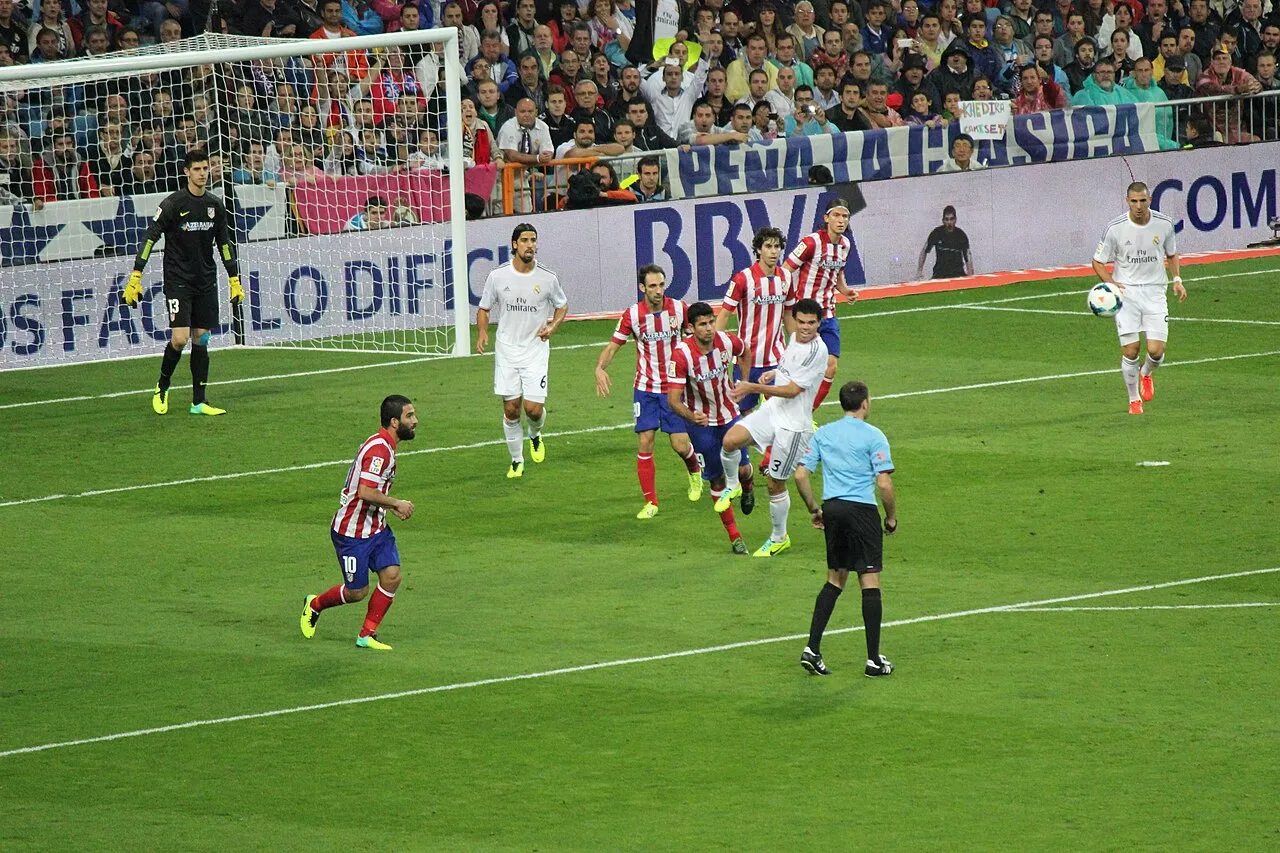
Real Madrid against Atletico Madrid in September 2013, shown as historical derby context from before Courtois joined Real Madrid.
Crosses create a different decision problem
A cross can involve the goalkeeper, defenders, attackers and the ball's path through a shared space. Its interpretation differs from a direct shot. A goalkeeper touching a cross should not automatically be added to a save tally without the relevant statistical definition.
For a fictional observation, note where the ball is delivered, which players are nearby and whether the goalkeeper retains or redirects it. These fields help explain the event without guessing private communication or instructions.
The broader lesson is to preserve event types. A strong goalkeeper profile can discuss several responsibilities while keeping the formal statistics accurate. Combining every defensive action under one dramatic label makes the record less clear rather than more impressive.
Distribution begins another phase of play
After gaining possession, a goalkeeper can help start the next attack through the available passing options. Completion, distance and purpose are different aspects of that distribution. A long pass and a short pass should not be assumed identical tasks merely because both can be completed.
Imagine a fictional goalkeeper completing nine short passes and one longer pass. A total completion percentage can summarise the outcomes, but it does not describe the risk, pressure or progression of each choice.
For Courtois's actual distribution figures, use the matching provider record and competition. A profile can explain why the measure matters without inventing a current percentage or treating it as a complete assessment of goalkeeping quality.
Communication is difficult to measure from a silent clip
Football involves coordination between the goalkeeper and other players, but a viewer may not hear or know the actual communication. A silent highlight cannot establish the words spoken or every instruction given.
For an assignment, describe observable responses rather than inventing dialogue. If a player points or adjusts position, record that visible action. A statement about what the player said needs a legitimate source.
This keeps the account useful and fair. It allows discussion of team organisation without converting a plausible explanation into an undocumented private conversation. The same principle applies to biographies of players in every position.
Individual awards and team trophies are different
Courtois's Player of the Match honour in the 2022 final is an individual award attached to a particular game. Madrid's Champions League title is a team achievement attached to the competition. The two should retain their labels.
An award from one final does not mean the player received every season-long or calendar-year honour. Categories and dates matter. A photograph holding one trophy should not be captioned with the name of another award merely because both are associated with the player.
For a student catalogue, record the awarding body, category, event and year separately. This allows documented recognition to be appreciated without expanding it into a claim the official record does not support.
Club and national-team statistics need separate boundaries
Belgium matches and Madrid matches concern different teams, opponents and competition structures. A total can combine them only when the chosen scope is made explicit. A clean-sheet count from one should not become a total for the other.
For a fictional player, five club clean sheets and two national-team clean sheets produce seven under that combined sample. They are not seven domestic-league clean sheets. The label determines the meaning of the addition.
When checking a current record, identify team, competition, season and update date. This article uses historical milestones and does not create a live aggregate by adding partial search results from incompatible tables.
Photographs are not medical evidence
An image from a match, a training session or a public event can establish visual context. It does not independently determine a player's current fitness, recovery or availability. Those claims need the relevant official information and date.
For a historical profile, caption the actual occasion and avoid implying a current medical conclusion. A picture from 2018 can show the player at that event without establishing whether he is selected for a match in 2026.
This boundary is especially important for goalkeepers because a dramatic image can encourage speculation about a movement or landing. A public article should not turn a single photograph into a diagnosis or a prediction about the player's health.
Build a goalkeeper observation sheet
Record the match, date, player and event type before describing an action. Separate direct attempts, crosses, distribution and other touches. Add the outcome and the source that supports any official statistical label.
Then compare the event account with the team result. Ask what a clean sheet tells you and what the sequence adds. A no-goal outcome is meaningful, but the analysis becomes stronger when it explains the relevant work rather than treating the score as a complete performance report.
Use class resources for percentages and geometry. Learners in programming courses can create a goalkeeper-statistics tool that checks the team, competition and denominator before displaying a save percentage.
Questions about Thibaut Courtois
What award did he receive in the 2022 Champions League final?
UEFA named him Player of the Match in Madrid's 1-0 win over Liverpool. The category and event are important. It is an individual honour attached to that final, separate from the team's competition trophy and from awards covering other periods.
Does a clean sheet reveal the number of saves?
No. It records a no-goals-conceded outcome under the relevant context. The goalkeeper's workload needs the actual attempts and event record. Two clean sheets can involve very different numbers and types of opportunities faced.
Is every touch by a goalkeeper a save?
No. Crosses, passes and other actions have different classifications. Use the provider's definition for an official save count. A useful description can discuss all these responsibilities without relabelling every touch as the same statistical event.
Can an old photograph prove current fitness or selection?
No. A historical image supplies context for its own occasion. Current availability or medical information requires an appropriate dated official source. The image should not be used to invent an injury update or a new playing appearance.
Sources
- Real Madrid: Courtois official career profile
- Real Madrid: dated birth and debut record
- UEFA: 2022 final report and Player of the Match
- UEFA: final performance analysis
- FIFA: Courtois interview and award context
Image credits: cover: Эдгар Брещанов, source, CC BY-SA 3.0. Resized and converted to WebP. inline: LauraHale, source, CC BY-SA 3.0. Resized and converted to WebP.
Found an error or an outdated detail? Report a correction with the article URL and original source.