
Thunderstorms Explained: IMD Nowcasts, Weather Maps and Lightning Safety
Understand thunderstorms, read IMD warning times and weather maps, and follow official lightning guidance when planning school or family activities.
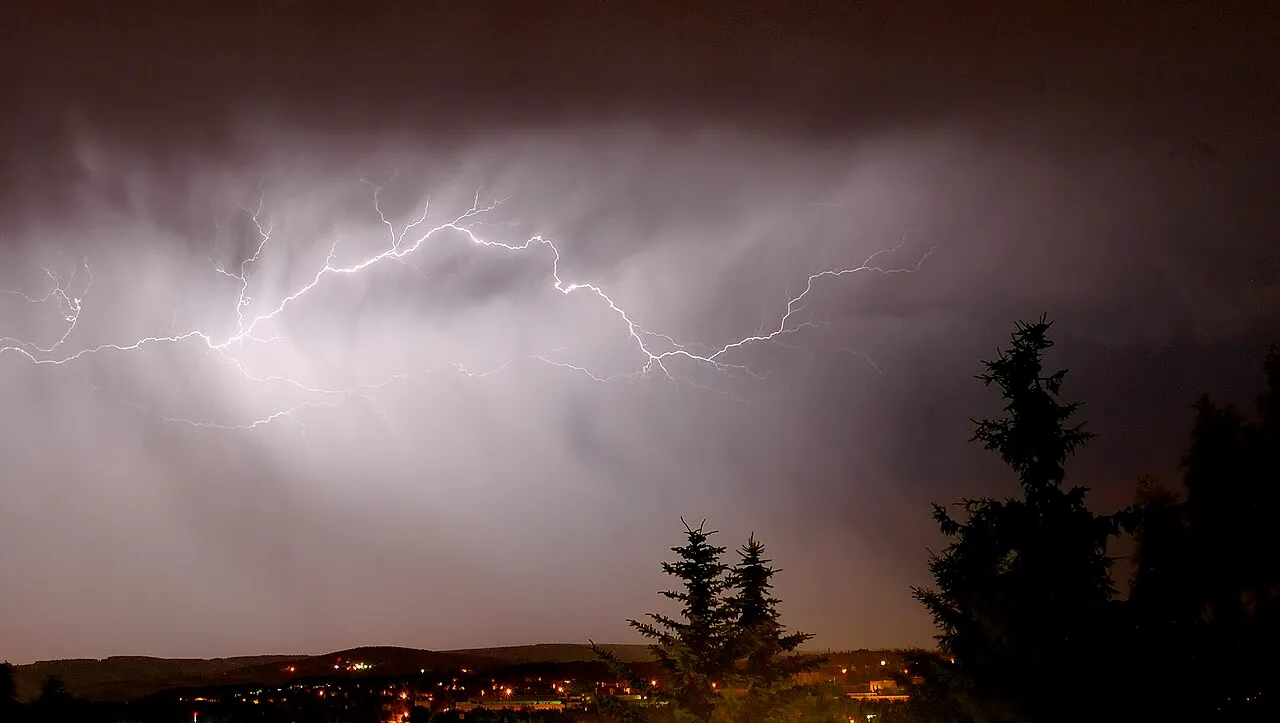
A thunderstorm is a weather event involving lightning and thunder, often accompanied by other changing conditions. Understanding it requires two separate habits: learning the science and following current safety guidance. A dramatic cloud photograph is useful for discussion, but it cannot establish the warning that applies to a particular district or the shelter available to a person outdoors.
This guide was checked on 5 November 2026 using official weather and disaster-management resources. It does not issue a live forecast, predict a storm's arrival at your location or replace local emergency instructions. For present conditions, use the applicable official warning and nowcast, then act on the guidance relevant to your situation.
What makes a thunderstorm different from ordinary rain?
Thunderstorms involve electrical activity. Rain alone does not establish that the same process or risk is present, and a period without heavy rain does not establish safety from a nearby storm. Official lightning guidance emphasises that the danger should not be judged only from whether rain is falling directly on a person.
For a classroom explanation, separate the things you can observe: cloud development, rain, lightning and thunder. They are related features of a weather event, but their appearance at one viewpoint is not a complete measurement of everything happening in the surrounding area.
Keep observations distinct from decisions. You can discuss a photograph or a recorded weather report indoors without making the activity an outdoor experiment. Scientific curiosity does not require students to approach a developing storm, wait in an exposed area or attempt to obtain a better view of lightning.
How are lightning and thunder related?
Lightning is an electrical discharge, while thunder is the sound associated with its effects on the surrounding air. They are different phenomena, which helps explain why people can observe a flash and hear the sound at different moments. The relationship is a useful starting point for learning about light, sound and measurement.
In a safe classroom exercise, use a recorded demonstration rather than an outdoor observation task. Ask learners to identify what the recording actually establishes and which conditions are unknown. A recording can illustrate an idea without giving enough information to calculate the precise location or distance of every discharge.
Avoid turning an approximate classroom calculation into a safety rule. A numerical estimate made from a recording is not a reason to remain outdoors during a real event. Follow official protective guidance instead of treating a rough calculation as proof that a nearby storm cannot affect you.
Where should I look for current warnings in India?
The India Meteorological Department provides official weather information, including district-warning and nowcast services. Select the relevant location and read the issue time, validity period and the hazards described. A general national outlook and a short-term local warning answer different questions and should not be presented as identical products.
Save a reliable official route before it becomes urgently needed. When using a shared family or school device, make the bookmark easy to identify. A plan that depends on searching through many advertisements during a changing event is less useful than a route everyone already knows how to open.
Check the administrative area carefully. Similar place names and forwarded screenshots can create confusion. If a warning concerns a particular district, retain that location when sharing it. Do not relabel it as a warning for the entire country or assume that a neighbouring location automatically has identical conditions.
What do issue time and validity mean?
The issue time identifies when a product was released. Its validity describes the period to which the information applies. These details help readers distinguish a current warning from an older message that remains available online. A recently forwarded image may still contain an expired warning.
Make a practice worksheet with source, area, issue time, validity and described hazard. Use an archived example indoors and label it as a reading exercise. The purpose is to learn how a notice is structured, not to imply that the archived example is a warning for today's conditions.
When a later official update appears, retain its relationship to the earlier record. Do not combine the time from one notice with the map from another. A complete current product is easier to interpret than a visually neat collage assembled from several different updates.
How should I read a weather map?
Start with the legend, location labels and the period represented. Colours are meaningful only within the map's own explanation. A similar colour on an unrelated service can describe another quantity or warning framework. Read the label rather than carrying an interpretation from one map into every other map you encounter.
Distinguish a forecast map from an observation and from an explanatory diagram. A forecast represents an assessment about future conditions under its stated scope. An observation describes measured or reported information. An educational diagram explains an idea. Mixing these categories can turn a useful illustration into a misleading claim about current weather.
For a project, reproduce the relevant labels beside any map excerpt and identify the source. Cropping away the legend may make the image look simpler while removing information essential to understanding it. Clear presentation preserves the context needed to interpret what the graphic actually says.
What does official lightning safety guidance recommend?
NOAA's lightning guidance advises moving to a substantial building or a fully enclosed, metal-topped vehicle when appropriate, rather than remaining outdoors. It also advises waiting at least thirty minutes after the last thunder before resuming outdoor activity. A roof-like object or an open shelter is not automatically an equivalent protective environment.
Use the current local disaster-management instructions alongside this general guidance. Avoid isolated trees, exposed open areas and water during lightning risk. Do not seek an outdoor viewpoint to test whether a storm seems close enough to matter. Safety decisions should not depend on getting a more dramatic photograph.
For a school, identify the appropriate shelter and the route to it in advance. Give responsible adults clear roles and communicate the plan before an event develops. This is an organisational exercise, not a guarantee that every possible situation can be handled by a single sentence in a website article.
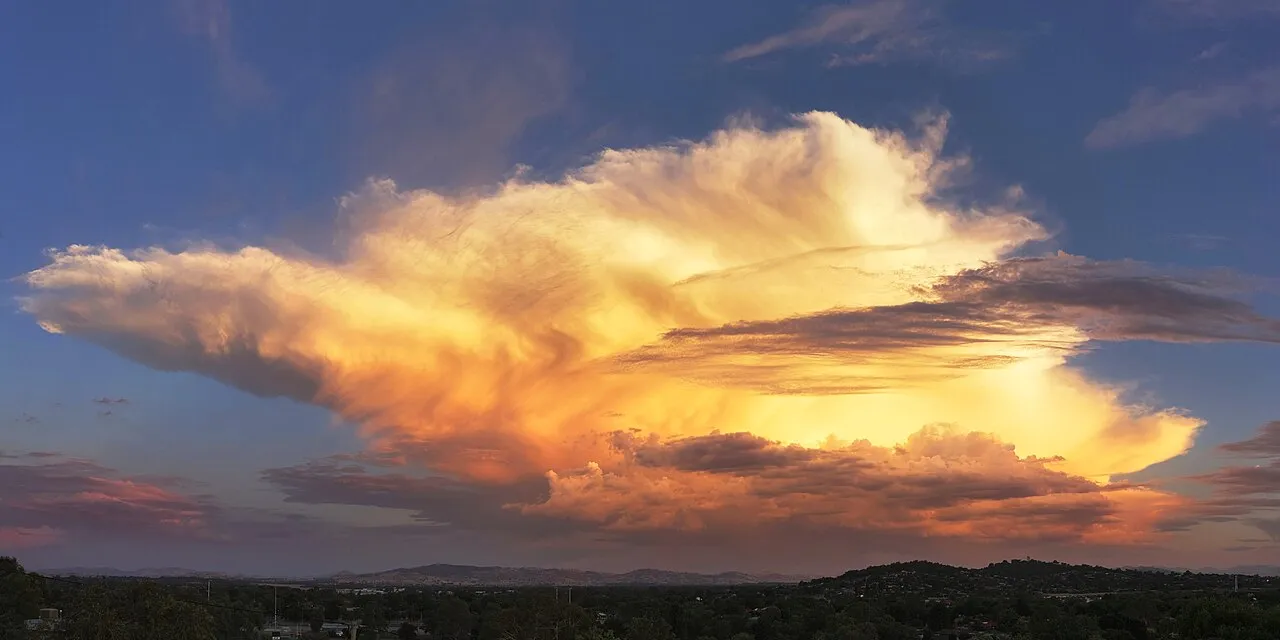
A cumulonimbus cloud at sunset near Albury in Australia, shown for cloud context rather than current Indian weather.
What precautions matter indoors?
Follow official guidance about avoiding contact with conductive paths such as plumbing and corded electrical equipment during lightning. A person should not have to stand beside a window or handle connected equipment to obtain a better observation of the storm. Discuss these arrangements before the weather changes.
Keep preparation separate from risky last-minute actions. For example, decisions about equipment and essential communications should follow the relevant safety instructions and be planned appropriately. Do not improvise work on exposed wiring or outdoor equipment while a storm is active.
In a classroom, use the event to practise clear communication rather than collecting live observations at windows. Learners can review an existing forecast, read a safety notice or discuss an archived image from an appropriate indoor setting. The educational task should support the safety plan instead of competing with it.
Can a phone or app establish that I am safe?
A weather application can provide information, but a screen does not physically protect a person or describe every feature of their immediate surroundings. Read the official product and its limitations. Do not delay moving to appropriate shelter simply to wait for an application to display a more alarming colour or notification.
Keep the device ready through ordinary preparation: know the official source, maintain an appropriate communication arrangement and understand who will share updates. Do not let repeated checking replace the actions required by a warning or the instructions of responsible local authorities.
For an information-literacy exercise, compare two weather messages indoors. Ask whether they identify the same area, time and hazard. A difference between their displays should lead to checking their scope and source, not an assumption that the less alarming display guarantees safe conditions outside.
How should schools plan outdoor activities?
Establish who checks official weather information, who can stop an activity and where participants should go. Make the plan understandable to students before departure. A procedure hidden in a document nobody has read is less useful than a short, rehearsed explanation of the actual arrangements.
For a hypothetical trip, list the information needed without inventing a forecast: location, planned times, appropriate shelter, communication method and the responsible adult's decision process. Then identify which details can be settled in advance and which require current information closer to the event.
Do not make participation depend on students judging lightning risk for themselves. A child taking a photograph or waiting for friends may not understand the reason for a change in plans. Clear instructions reduce confusion and allow the educational activity to resume appropriately when responsible adults determine that conditions permit it.
How can students study thunderstorms safely?
Use official explanatory resources, archived maps and recorded observations. Choose one scientific question, such as the difference between a forecast and an observation or the meaning of a map's time labels. A focused project allows students to demonstrate understanding without turning storm watching into an outdoor assignment.
Build a glossary in your own words. Include lightning, thunder, warning, forecast and observation, then add examples that preserve their differences. Avoid defining every term through the same vague phrase about bad weather. Precise language helps learners understand why different kinds of information lead to different questions.
For a data exercise, use clearly invented values or a documented historical dataset. Label its status and units. A graph about a past event is not a forecast for the next one. Explaining that distinction is a meaningful part of the science lesson, not merely a caution added after the work is finished.
How can I check a viral storm claim?
Look for the place, time, original source and actual claim. A spectacular video can be authentic yet unrelated to today's location. A photograph can show lightning without establishing the warning currently issued for your district. Preserve the distinction between a visual illustration and the official information needed for a decision.
Be cautious when a message supplies a dramatic prediction without linking to a current official product. Check whether the quoted period is still valid and whether the location matches the claim. Do not fill missing details with assumptions merely because the message has been forwarded by someone you trust.
When sharing a correction, provide the relevant official route and explain the specific mismatch. You do not need to repeat the entire alarming message. A concise correction identifying an old date or wrong location is more useful than adding another layer of speculation to an already confusing discussion.
How should I label a practice safety discussion?
State clearly that the classroom example uses archived information and is not an instruction for a current event. Give students the official route they would use for real updates, and identify the responsible adult who makes activity decisions. This keeps the lesson useful without creating confusion between an educational scenario and an actual warning.
Frequently asked questions
Does little rain mean there is no lightning risk?
No. Do not judge lightning safety solely from the amount of rain at your exact location. Follow official warnings and protective guidance. An educational description of cloud or rain conditions should not be used as permission to remain in an exposed place during a developing thunderstorm.
Can a historical cloud photograph describe today's warning?
It can illustrate cloud appearance, but it cannot establish a current warning. Read the image's location and date, then use the relevant official weather service for present information. Images in this guide are contextual material, not evidence that a storm is happening at the reader's location now.
Where can I practise the related science skills?
Use the class resource directory for available science and mathematics material. Practise units, reading maps and distinguishing measurements from interpretations. Keep weather-safety decisions separate from classroom calculations, and use official guidance rather than treating a practice exercise as an operational warning system.
Sources
- India Meteorological Department official portal
- IMD official forecast and nowcast service reference
- NOAA: lightning safety
- Maharashtra State Disaster Management Authority: precautions
Image credits: cover: André Karwath aka Aka, source, CC BY-SA 2.5. Resized and converted to WebP. inline: Thennicke, source, CC BY-SA 4.0. Resized and converted to WebP.
Found an error or an outdated detail? Report a correction with the article URL and original source.