
Trump 100k Paid Feed: Truth API and the Reporting Explained
Explore Trump 100k Paid Feed with clear explanations, worked examples, source checks and practical questions for independent student learning.

The “Trump paid group 100k” search phrase is best understood through reporting about Truth API, a paid institutional data feed, rather than as proof of a public giveaway. Trump Media announced the service in July 2026. Reuters reported discussion of prices as high as US$100,000 per month. That is a reported subscription cost, not an offer to pay ordinary users that amount.
This guide was checked on 2 November 2026. It explains the documented product, the limits of the price claim and the computing concepts behind a low-latency feed. It does not recommend buying the service, trading on political posts or joining a group that asks for money. It also does not decide unresolved legal allegations.
What did the company announce?
Trump Media & Technology Group's 16 July 2026 release announced Truth API as a business-to-business service offering licensed access to influential Truth Social accounts. The announcement described institutional customers, machine-readable delivery and an anticipated 1 August availability date. It also described continuous coverage and a historical archive. Those are the company's stated product features, not independent performance measurements conducted by this website.
Reuters reported on 17 July that the company had discussed charges of up to $100,000 monthly and a lower monthly price associated with a longer commitment. Keep the amount attributed and dated. A reported proposal is not a personalised current quote, and this guide does not assert that every customer pays an identical fee.
The important correction is the direction of payment. The reporting concerns organisations paying for a data service. It does not establish a programme in which a random person receives $100,000 for joining a social-media group. A search phrase can be ambiguous; the article should resolve that ambiguity rather than turn it into a more dramatic unsupported claim.
What is an API?
An application programming interface provides a defined way for software systems to exchange information or request functions. In a data service, a program may receive structured records instead of having a person read a webpage manually. The precise interface, permission model and delivery method depend on the service. The term API alone does not imply public or free access.
Imagine an original school example: a timetable service returns a class name, room and starting time in labelled fields. A website can display those fields without asking a person to copy each line. The data may be the same information that appears on a noticeboard, but the interface changes how reliably and quickly software can retrieve it.
Do not confuse the API with the complete product. Access permissions, licences, documentation, support, reliability and usage limits can all matter. A link described as an API endpoint does not automatically grant a right to use or redistribute the material it returns. Technical accessibility and permission are separate questions.
What does low latency mean?
Latency is delay between defined events. A provider may describe the interval between publication and delivery, while a user may care about the interval until their own application displays or processes the record. Those measurements are not necessarily identical. An impressive delay figure needs a starting point, an ending point and an explanation of the conditions.
Consider an original fictional timeline. A record is created at 10:00:00.000, received by a server at 10:00:00.040 and displayed by an application at 10:00:00.180. Creation-to-server delay is forty milliseconds; creation-to-display delay is one hundred and eighty. Both can be accurate while measuring different parts of the system.
This example is not a benchmark for Truth API. The company describes fast delivery, but we have not measured its infrastructure or compared customer access with another route. Keeping hypothetical timings separate from verified product claims prevents a teaching illustration from becoming a fabricated performance test.
Is faster delivery the same as access before publication?
Not automatically. Faster receipt of published information and possession of information before it is public are different claims. Establish what was published, when it became accessible and what each service delivered. A headline using “early access” may not, by itself, settle the technical timeline or the legal meaning of that access.
For an original analogy, a public announcement is placed on a school noticeboard at noon. One student checks immediately; another sees it after lunch. The difference in receipt time does not prove that the first student possessed the announcement before noon. Now imagine a separate private briefing before publication: that is a different factual situation requiring different evidence.
Real systems can be more complicated than the analogy. The lesson is to ask the right questions rather than assume the answer. Publication logs, delivery records and access conditions would matter to a precise analysis. This guide has not inspected such private records and does not claim that it has.
Why would a structured feed interest organisations?
Structured records can be easier for software to process consistently than screenshots or manually copied text. An organisation may want identifiers, timestamps, a reliable delivery method or an archive. Whether those features justify a particular price is a separate commercial question. A technical benefit does not establish that every possible use is appropriate or profitable.
In an original newsroom example, a feed alerts an editor that an official statement has appeared. The editor still checks the text, identifies its context and decides what to report. Automation can reduce the delay in noticing information without replacing the judgement needed to interpret it accurately.
A computer receiving a message quickly can also misunderstand it quickly if the processing rules are poor. A correction, quotation or negation may change the meaning of a sentence. Speed and understanding are different capabilities. A useful explanation of data infrastructure should not imply that low latency removes the need for verification.
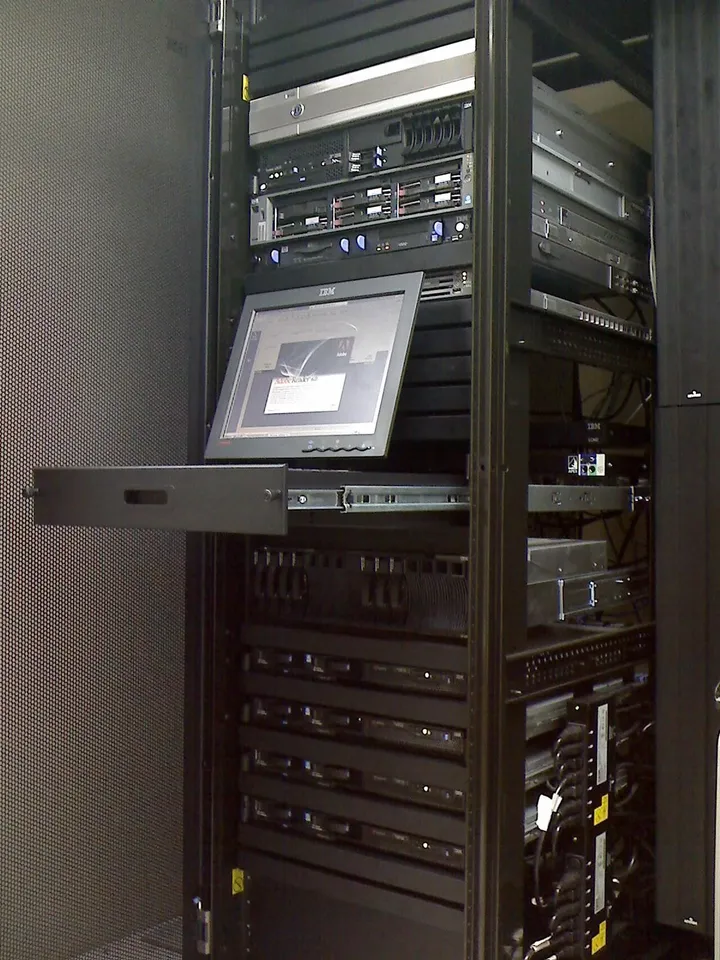
General server-infrastructure illustration, not Truth Social’s servers or a measured API test.
What do the reported prices mean mathematically?
The reported amount is denominated in US dollars and described as monthly, not as an amount per post or a payment to a subscriber. Preserve both the currency and the period whenever the figure is repeated. A large number becomes misleading when its unit, payer or frequency disappears from the sentence.
For arithmetic only, an imagined service costing $100,000 each month would cost $1.2 million across twelve identical monthly payments, before any other terms. That calculation does not confirm an actual annual Truth API contract. It simply demonstrates multiplication with a recurring price. Real agreements can include conditions that the simplified example does not model.
If a hypothetical plan instead charges $60,000 monthly, twelve such payments total $720,000. Do not subtract those totals and describe the difference as guaranteed savings available to every buyer. Reported proposals can involve different durations and obligations. Matching the period is necessary before comparing the headline amounts.
What is recurring revenue?
Recurring revenue describes income that repeats under an ongoing arrangement, such as a subscription. It is not the same as profit, cash balance or total company value. A product can generate revenue while also creating costs. The company's announcement describes a recurring-revenue strategy, but that description does not independently establish the product's actual profit margin.
Use an original fictional business with ten customers paying one hundred units each month. Monthly subscription revenue is one thousand units. If service costs are eight hundred units, the simplified remainder is two hundred before any other relevant items. Changing the currency sign or increasing the customer count does not remove the need to account for costs.
This example is not a valuation model for Trump Media. It teaches why revenue and profit should remain separate in a business story. Do not infer shareholder returns from a subscription price, and do not treat a company's forward-looking statement as a guarantee that its expected adoption or revenue will occur.
What legal and public-interest questions have been raised?
The service has prompted legal and public-interest scrutiny concerning access to presidential communications. An October 2026 Axios report records the company's chief executive declining detailed comment about investigations. That establishes a dated reported response. It does not establish a final court judgment or prove every allegation made by critics.
For legal-news reading, separate the existence of a complaint, the claims it makes, the response and any court order. Those are different document types and different stages. A complaint can raise serious questions without being a judicial finding. A company can deny an allegation without that denial alone resolving the dispute.
This article offers general document-reading education, not legal advice or a conclusion about insider-trading liability. A proper legal assessment depends on the applicable rules and established facts. Neither a search trend nor an alarming headline supplies all of that information. Keep open questions open when the evidence available here does not settle them.
How can students model a feed safely?
Use invented public announcements rather than real credentials or a commercial service. Create three records with an identifier, text and publication time. Then add a separate receipt time for each record. A simple table can calculate the delay and show why the two timestamps should not be merged into one vague field called “time.”
For example, fictional record A is published at 09:00:00.000 and received at 09:00:00.120. Its delay is one hundred and twenty milliseconds. Record B may arrive sooner even if it was published later. Sorting by receipt time and sorting by publication time can therefore produce different orders. Label the chart accordingly.
Do not include an API key, real account identifier or a copied private message in a classroom example. The educational goal is to understand a data model. You can learn identifiers, timing and validation without scraping a platform, violating terms or connecting to a financial trading system.
What should happen when data changes?
A reliable model needs a way to distinguish a new record from an edit, correction or duplicate delivery. An identifier helps recognise the same item across repeated arrivals. A version or update time can help represent later changes. Without those distinctions, an application may count one announcement multiple times or continue showing an obsolete version.
Try an original exercise in which record A arrives twice and record B is corrected. The application should not create two independent copies of A simply because delivery repeated. It should also avoid silently treating B's first wording as permanent. Explain whether the system retains history or only the latest version, because those designs serve different purposes.
These are general software principles, not documented claims about a particular provider's implementation. They illustrate the questions an engineer would ask when evaluating any licensed feed. A useful technical guide makes that boundary visible instead of pretending to know private architecture from a press release.
What should you do with an unrelated “100k group” invitation?
Do not treat this news story as verification of an invitation sent through a message app or social account. The documented product is an institutional data service. A separate request for a joining fee, credentials or a promised payment needs its own verification and cannot borrow legitimacy from a similar phrase in a headline.
This website is not collecting payments, arranging subscriptions or offering access to presidential posts. If you are researching the topic, begin with the dated company announcement and attributed reporting below. Keep commercial claims, political statements and legal allegations separate, and never substitute a forwarded screenshot for evidence about who is actually making an offer.
For more practice, explore our technology and media-literacy guides. The central lesson is precise interpretation: identify who pays whom, what the amount measures, what the service claims and which questions remain unresolved. That is more useful than repeating an ambiguous search phrase as if it already contained a verified story.
Sources
- Trump Media: Truth API announcement, dated 16 July 2026, for the company's product description and anticipated availability.
- Reuters: reported pricing discussions, dated 17 July 2026, for the attributed monthly-price report, not a current offer to individual readers.
- Axios: October response concerning investigations, for the limited dated legal-news context. All timing records and business calculations are original illustrative examples, not a benchmark or investment recommendation.
Image credits: cover: The White House, source, Public domain. Resized and converted to WebP. inline: Jfreyre, source, CC BY-SA 3.0. Resized and converted to WebP.
Found an error or an outdated detail? Report a correction with the article URL and original source.