
Tuba Hassan: Pakistan Leg-Spinner, Debut Record and Bowling Figures Explained
Read Tuba Hassan’s documented debut and first-contract context, then learn how leg spin, sample size and bowling figures help explain women’s cricket.
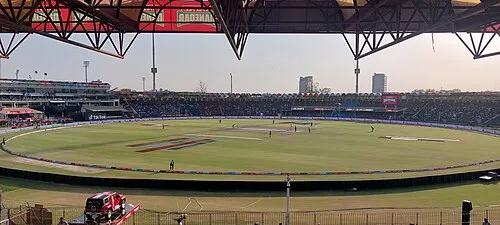
Tuba Hassan is a Pakistan leg-spinner whose early international record includes three wickets for eight runs on her T20I debut. The PCB's July 2022 announcement of her first central contract records that debut return and five wickets across the three-match series. Those dated facts provide a useful starting point for a profile about women's cricket and spin bowling.
This article was checked on 13 November 2026. It keeps the 2022 achievement separate from current team selection and contract questions. The learning activities are original examples; they are not attributed to Hassan as private drills or presented as unreported match performances.
For a new match score, consult the current official scorecard. A historical profile should not become a false live update merely because a player's name is trending. The purpose here is to explain the verified milestone and help readers understand the record around it.
The official career starting point
The PCB player page lists Hassan's teams, including Pakistan Women and age-group or development sides. Team names should remain attached to their records. A performance for an emerging side is not automatically a senior international appearance, even when it is an important part of a player's development.
The July 2022 release identifies her as a leg-spinner receiving a first central contract for the 2022–23 season. That is a dated appointment. It should not be copied into a 2026 article as proof of her exact current contract category without a newer official source.
Keeping those distinctions visible makes the career outline more useful. A reader learns what happened and when, rather than receiving a list of impressive labels that may refer to different stages of a pathway.
Why the debut figures drew attention
Three wickets for eight runs is a compact record of wickets taken and runs conceded. The PCB release also notes five wickets in the three-match series. Those figures describe a strong start without requiring an unsupported claim that every later appearance must match it.
Do not turn one successful debut into a forecast. A first match establishes an event in a career; a longer record needs more matches and context. Both the milestone and the limits of the sample can be acknowledged in the same account.
For a simple study note, preserve the format, debut context and date of the source. A number without those labels can be mistaken for a different match or a current career total. Clear context is part of the statistic, not an optional decoration.
Leg spin is a category, not one fixed ball
A leg-spinner can use changes of flight, pace, line and length. The broad category does not mean every delivery follows the same path or turns by the same amount. Readers should avoid treating a style label as a complete description of an over.
When watching public footage, begin with what can be seen. Note where the ball lands and how the batter responds. If the release is not clear, do not invent a grip explanation from the outcome alone.
This is a way to observe the game, not a complete physical coaching programme. A beginner can learn the language of bowling without being asked to copy an advanced action from a short edited clip. More detailed technique belongs in an appropriate supervised setting.
Women's cricket records deserve the same precision
Read team level, format, match date and opponent just as carefully as in any other cricket record. A women's T20I and a domestic one-day game are separate categories. Combining them without labels produces a number that can be difficult to interpret or verify.
Avoid treating a women's fixture as an imitation of a men's match. It has its own players, results and competition context. Useful coverage explains those actual records rather than filling the article with unrelated comparisons to better-known male players.
For students, a fair starting habit is to learn the names and roles from official sources. That makes it easier to follow the match itself instead of relying on a vague description of a team that ignores who is actually playing.
Reading three for eight correctly
The phrase means three wickets credited to the bowler for eight runs conceded in the stated spell. It does not give the overs on its own. Without the legal-ball count, the reader should not invent an economy rate for that return.
This is an important limit. Runs divided by wickets can give a spell average where wickets were taken, but economy needs overs or legal balls. A statistic requiring a missing input cannot be reconstructed simply because the other numbers look small.
The same discipline applies to a social graphic. If the original return lacks one field, leave that field out or consult the full scorecard. A complete-looking but guessed line is less useful than a shorter accurate record.
Wickets are not the only part of an over
A bowler may concede few runs without taking a wicket in a particular over. Another over may produce a wicket and more runs. The role of each depends on the match task, so a useful review looks beyond a single result label.
Imagine a fictional sequence with four dot balls and two singles. It costs two runs, but no wicket. Whether it helps the bowling side depends on the stage, target and wider situation. The number is clear; the assessment still needs context.
This does not mean every economical over is good in every circumstance. It means the claim should fit the actual task. A side needing wickets urgently may ask a different question from one defending a target with few runs to spare.
Economy and wicket-taking are separate measures
Economy measures runs per over, while bowling average measures runs per wicket. Bowling strike rate measures legal balls per wicket. They can describe different aspects of a spell and should not be used as interchangeable names for one number.
For a fictional four-over spell costing 20 runs with two wickets, economy is five, average is ten and strike rate is twelve balls per wicket. Write the units beside each answer. The labels explain why the three values are not competing versions of the same calculation.
These figures are an exercise, not another Hassan performance. Keeping that label visible lets an educational article use simple numbers without creating a false record for a real player.
Small samples need care
A three-match series can contain useful evidence, but it is still a short sample. A few dismissals or one large score can change a rate sharply when the denominator is small. That does not make the performance unimportant; it defines the scope of the conclusion.
Compare a fictional two wickets in one match with ten across ten matches. The first record has a higher wickets-per-match rate, but it also rests on much less evidence. A careful reader notices both the value and the sample size.
Avoid declaring a career settled after one debut, whether the start is good or difficult. Development and future performance need their own records. A profile can celebrate an achievement without demanding that it predict everything that follows.
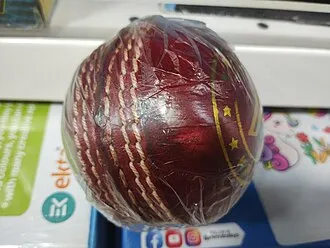
Archive cricket-ball illustration for the bowling-statistics guide. It is not identified as a ball used by Tuba Hassan.
The field supports a bowling plan
A delivery is played within a field. The same ball can present different scoring options depending on where fielders stand. For an observation exercise, draw the visible field before explaining a shot rather than discussing the ball in isolation.
Then ask which areas look open and which are covered. Keep the answer descriptive. A visible gap does not prove what the batter or bowler intended, and a fielder's position does not guarantee the ball will travel there.
This is particularly useful when studying spin because the relationship between length, shot choice and field can change across an over. The explanation becomes clearer when it names the visible elements instead of relying on a broad phrase such as clever bowling.
Pathways are part of the story
An official list of development and domestic teams can help explain how players gain experience before or alongside senior cricket. Those levels matter in their own right. They should not be treated as mere decoration or silently converted into international statistics.
For a student interested in the sport, the useful question is which official structures and competitions exist locally. A profile of one professional does not guarantee the same selection route for everyone. Current participation requirements should come from the relevant organising body.
This article does not offer a contract promise or a shortcut to selection. It explains a recorded career milestone and the care needed when reading a pathway. Interest can be encouraged without inventing opportunities that have not been verified.
A central contract is dated information
The PCB release concerns the 2022–23 season. It is useful evidence that Hassan received a first central contract then. It does not establish the current value, category or terms of any later agreement.
Do not add private financial estimates to make a profile seem more complete. A reliable sporting account can focus on role, appearances and achievements without claiming knowledge of a player's personal income. Contract news should be tied to the actual official announcement.
This distinction also helps when old news is shared again. A genuine dated contract story can become misleading if its year is removed. Keep the season visible rather than presenting an old appointment as a newly announced one.
How to make a useful viewing note
Choose one short spell with an official scorecard and public footage. Record the actual figures and the match situation first. Then note a few visible changes in line, length or field. Put any interpretation in a separate column.
Afterwards, compare what the footage explains with what the figures alone show. The scorecard can establish wickets and runs while leaving the precise challenge to the batter less visible. Both kinds of evidence can be useful without being identical.
Finish with one unresolved question. For example, a camera angle may not show the release clearly enough to identify a variation. Leaving that uncertainty visible is better than adding a technical term merely because it sounds expert.
Team news needs a current source
A player page is not a confirmed lineup for the next fixture. Selection and availability change, and a current squad announcement has its own date and scope. Do not infer them solely from a name appearing in a search trend.
If an article claims a player has been recalled, dropped or injured, look for the relevant official statement. These are specific current claims, not natural extensions of a historical profile. A careful guide separates what it knows from what requires another check.
The same applies to rankings and awards. Keep the category and period attached to the announcement. A dated achievement remains worth reporting without being expanded into a permanent status that no current source confirms.
A score-reading exercise for new fans
Create an imaginary bowler with one wicket for twelve from three completed overs. Calculate economy and average. Then add a wicketless over costing eight. Recalculate using the complete four-over return instead of averaging the two separate economy figures without checking their lengths.
The final example total is twenty runs from four overs with one wicket. Economy is five and average is twenty. The exercise shows why rates should be built from the underlying totals rather than a casual average of displayed numbers.
No part of this exercise is added to Hassan's record. It is a learning tool. The distinction helps readers practise with clear numbers while respecting the accuracy of real player statistics.
What readers should retain
Hassan's early international return and first central contract are documented dated achievements. Her role offers a useful way to learn about leg spin, small samples and bowling figures. None of those facts requires an invented current selection or a private career story.
More cricket and learning guides are available here. Follow current official scorecards for later performances and keep the women's competition, team level and format visible. Accurate names and labels make the sport easier to follow for new readers.
The strongest next step is to study one well-documented spell and ask a narrow question. Use the figures, observe carefully and leave uncertain technical claims out. That method produces a more useful account than broad praise unsupported by the actual record.
Common questions
What debut achievement is recorded here?
The PCB's July 2022 release records three wickets for eight runs on Hassan's T20I debut and five wickets in the three-match series. These are historical figures, not an unverified live update.
Does the contract story describe her current terms?
No. It concerns the 2022–23 season. A current contract claim needs a newer official source. The article does not invent a category, salary or later agreement from that older announcement.
Are the numerical exercises real spells?
They are explicitly fictional examples for understanding bowling statistics. Use the relevant dated scorecard for a real performance and do not merge the examples into a player's career totals.
Sources
Image credits: cover: Ahmed Abdulbasit, source, CC BY-SA 4.0. Resized and converted to WebP. inline: Gpkp, source, CC BY-SA 4.0. Resized and converted to WebP.
Found an error or an outdated detail? Report a correction with the article URL and original source.