
UEFA Nations League November 2026: Pakistan Times and Format
Find November Nations League kick-offs in Pakistan time, the midnight date change, selected fixtures and the revised promotion and relegation rules.
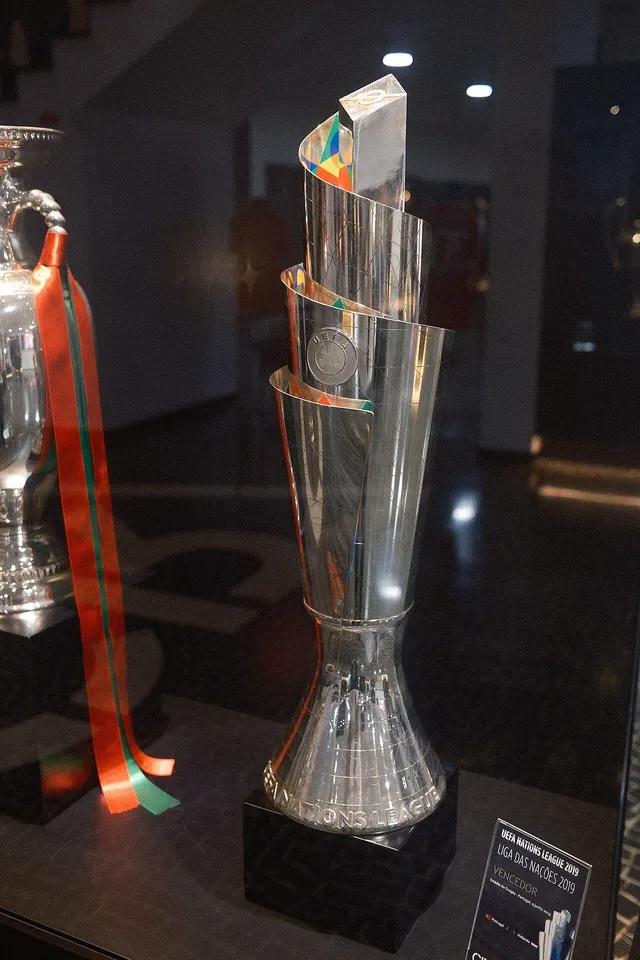
UEFA Nations League November 2026: the Pakistan viewing guide
The UEFA Nations League returns for its final league-phase matches on 12–17 November 2026. For viewers in Pakistan, an important detail is the calendar date: a game starting at 20:45 Central European Time starts at 00:45 Pakistan Standard Time the following day. Saving only the European date can put a reminder on the wrong night.
This guide was checked on 11 November 2026. It covers selected upcoming fixtures, the time conversion and the current competition structure. It does not report those matches as completed or promise a particular result. Pakistan broadcast availability has not been confirmed here; a broadcaster's rights in another country do not establish permission to show the same match in Pakistan.
The best way to use the guide is to choose a fixture, check its Pakistan date, and then confirm its latest official listing before kick-off. Read the group and the competition name too. UEFA's national-team competition is different from the Champions League, domestic club leagues and the Concacaf Nations League.
Selected fixtures on the opening November matchday
The following matches are listed for Thursday 12 November in the organizer's European schedule. The Pakistan column includes the date as well as the time. These are scheduled fixtures, not live scores; subsequent official scheduling changes would take precedence over this checked snapshot.
| Match | European listing, CET | Pakistan date and time |
|---|---|---|
| Türkiye vs Belgium | 12 November, 18:00 | 12 November, 22:00 |
| Armenia vs Cyprus | 12 November, 18:00 | 12 November, 22:00 |
| Italy vs France | 12 November, 20:45 | 13 November, 00:45 |
| Czechia vs Spain | 12 November, 20:45 | 13 November, 00:45 |
| England vs Croatia | 12 November, 20:45 | 13 November, 00:45 |
| Albania vs Finland | 12 November, 20:45 | 13 November, 00:45 |
| San Marino vs Belarus | 12 November, 20:45 | 13 November, 00:45 |
| Montenegro vs Latvia | 12 November, 20:45 | 13 November, 00:45 |
Choose the match itself before setting an alarm. Several fixtures start together, so a general “Nations League tonight” reminder will not distinguish the game you intend to follow. A useful calendar title includes both teams, the competition and the time zone.
Why the date changes for late European kick-offs
In November, CET is UTC plus one hour and Pakistan Standard Time is UTC plus five hours. Pakistan is therefore four hours ahead of a listing explicitly given in CET. Add four hours to the published time, and advance the date if the calculation passes midnight.
For the early slot, 18:00 plus four hours becomes 22:00 on the same date. For the later slot, 20:45 plus four hours becomes 24:45, which is written as 00:45 on the next date. The arithmetic is simple; forgetting the date rollover is the usual source of confusion.
Be careful with the label rather than memorising one universal difference from “Europe.” A listing in British GMT is not a CET listing. Daylight-saving arrangements also change offsets during the year. Always start with the time zone printed on the specific fixture, not the language of the website displaying it.
As a cross-check, England's federation lists England-Croatia at 19:45 GMT on 12 November. Adding five hours produces the same Pakistan appointment: 00:45 on 13 November. Its Spain-England listing at 19:45 GMT on 15 November converts to 00:45 PKT on 16 November.
What matchday five and matchday six mean
A matchday is a round of the competition, not necessarily a single calendar day. The November schedule places matchday five across 12–14 November and matchday six across 15–17 November. Teams in different groups can therefore complete the same round on different dates.
This matters when reading a table during the window. Two teams may have different numbers of completed matches while games are still being played. A points total without the played column can make one position look more secure than it actually is. Check whether the comparison is between equal samples before drawing a conclusion.
Use a simple note when following a group: team, matches played, points and remaining fixtures. Record the point at which you checked it. The note helps you separate an official completed result from an in-progress situation that might change before the final whistle.
It also prevents a common search mistake. A page headed “matchday five” may contain upcoming fixtures, live games and finished matches at different stages of the window. Identify the status attached to the individual match instead of assuming that the page heading makes every entry a final result.
How the current league structure works
The competition separates national teams into Leagues A, B, C and D. In the current edition, A, B and C each contain four groups of four, while D has two groups of three. The larger groups use home and away fixtures, giving each team six league-phase matches.
England's group is A3, alongside Spain, Croatia and Czechia. The group label matters because it identifies the set of opponents and the relevant table. A supporter should not compare raw points across unrelated groups and describe the result as one universal standings table without checking the competition's ranking rules.
For a beginner, think of the labels as an address: the competition identifies the tournament, the league identifies its level and the group identifies the immediate set of opponents. A fixture is easier to follow once all three pieces are clear. The same country can appear in different competitions at different times of the season.
Do not use a club crest or a club fixture to identify a national-team game. Players' employers are not the teams competing here. A headline mentioning a familiar player can still refer to a different match from the one in your calendar, particularly during an international window.
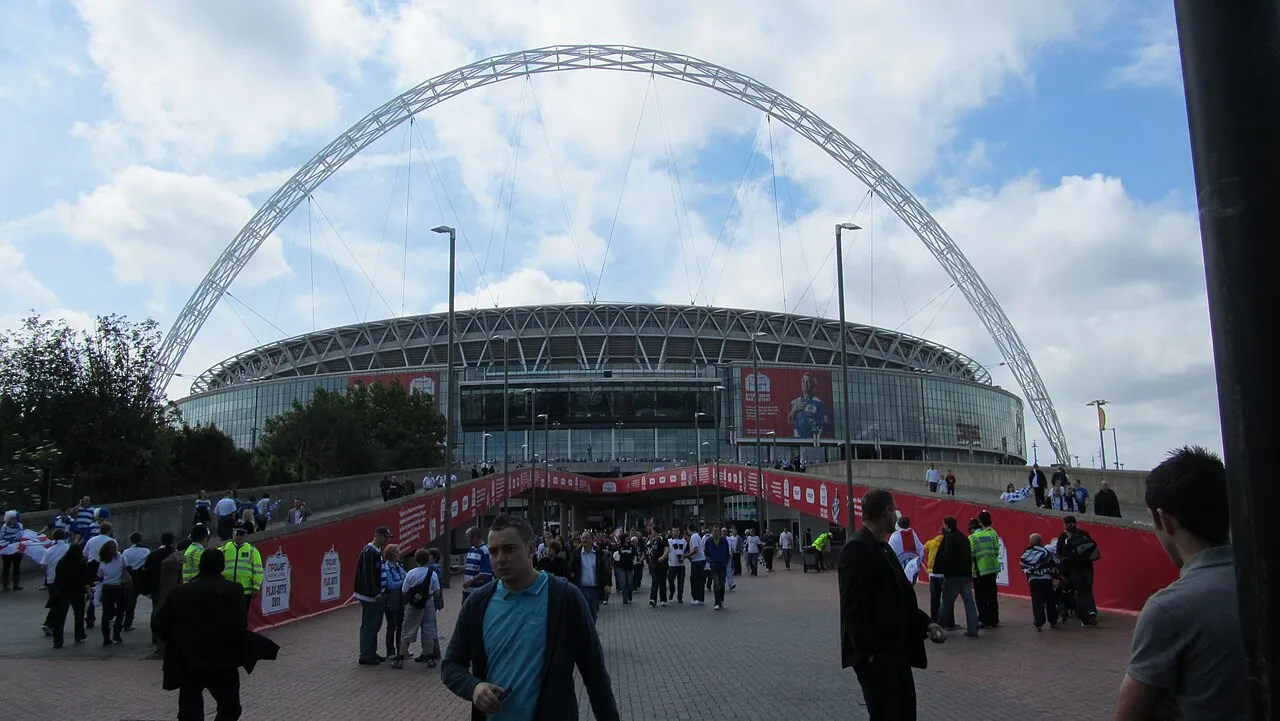
An archival view of Wembley Stadium from Wembley Walk. It illustrates the venue, not a November 2026 match, team lineup or live stadium conditions.
The League A race is about more than first place
League A group winners and runners-up progress to the quarter-finals. That means the relevant question is not simply who sits first at one moment. The position of second place, the matches still to come and the applicable ranking criteria all matter when assessing whether a team has secured progress.
Keep “currently in a qualifying position” separate from “qualified.” The first describes a table at a particular time. The second means remaining outcomes cannot remove the team from the qualifying places under the rules. A persuasive-looking table screenshot is not, by itself, a complete mathematical qualification check.
A useful way to follow the closing rounds is to identify the result you are watching, then ask which other games can affect the same race. That turns simultaneous fixtures into a coherent story without requiring a prediction. Wait for completed results before describing a final outcome as settled.
Avoid guessing the tie-break order from memory. Different competitions and editions can treat equal points differently. If two teams finish level, consult the applicable regulations or an official explanation before announcing that goal difference, a head-to-head result or any other criterion must settle the position.
Promotion and relegation rules have changed for this edition
The 2026/27 edition has amended movement between leagues as the competition prepares for its later structure. In League A, the two best-ranked third-placed teams stay up. The other two third-placed teams and the two best-ranked fourth-placed teams enter A/B play-offs. Only the two lowest-ranked fourth-placed teams are automatically relegated.
The practical lesson is to avoid recycling an older explanation that says every fourth-placed League A team goes straight down. A team at the bottom of its group still needs to be considered under the current cross-group ranking framework. An older article can have a correct historical description and still give the wrong answer about this season.
Elsewhere, League B group winners move up to A, and League C group winners move up to B. The current organizer's guide sets out the relevant play-off routes, while League D teams move to C under the transition. These outcomes belong to league placement; they should not be confused with winning the overall tournament.
When explaining a team's situation, name the specific consequence. “Progresses to the quarter-finals,” “enters a play-off” and “moves to another league” describe different outcomes. Using one vague word for all of them makes an otherwise accurate update difficult for a new supporter to understand.
How to read a points situation without inventing a prediction
Imagine an invented four-team table in which one team has nine points and another has seven, with two matches still to play. That gap alone does not tell you the final order. You need the remaining fixtures and the points each team can still collect. This example illustrates a method; it is not the current table of a real group.
Begin with the numbers you can verify, then list possible outcomes rather than selecting the one you prefer. A team can gain ground while winning its own match, but another result may preserve the gap. A qualification statement requires the relevant combinations to be considered, not just the most attractive scenario.
For a small classroom or fan exercise, write the current position in one column and a clearly labelled hypothetical result in another. Keep the two columns separate. Do not overwrite the real table with your scenario or share a speculative table without the label that explains what it represents.
The same distinction improves match discussions. A tactical expectation, a preferred result and a confirmed score are three different types of statement. You can discuss all three, provided the wording tells readers which type they are looking at. Certainty should follow the evidence rather than the enthusiasm of the headline.
Make a viewing plan that survives midnight
Choose one main game and write its full Pakistan date. For a 00:45 Friday kick-off, the practical viewing night begins late on Thursday, but the calendar event belongs to Friday. Mention both if you are inviting a friend, because people use “Thursday night” and “Friday morning” differently in casual conversation.
Set a reminder slightly before the scheduled kick-off and identify the intended service in advance. Check your own account and region rather than assuming that a link shared abroad will work locally. A channel logo in a social post does not establish the service's rights or accessibility for your location.
If you cannot watch live, decide beforehand whether you want to avoid results until you can find official highlights. Search engines, notifications and social feeds can reveal the score immediately. Knowing your preference makes it easier to choose which alerts to enable, without pretending that a replay is a live broadcast.
For readers with early work or classes, a concise official match report can be a better next-day option than staying up for several simultaneous fixtures. Choose the amount of coverage that suits your schedule. Following a competition does not require watching every minute of every match to understand its main developments.
Share a useful result update after the match
Start with the teams, the final score and the competition. Add the date and any relevant distinction such as a scheduled fixture, half-time score or completed result. If a game has not finished, say so. A clear status label does more for accuracy than a dramatic description of the scoreboard.
Next, explain the consequence only as far as you have checked it. If the result moves a team into a qualifying position, that is a useful statement. If you have not established mathematical qualification or the correct tie-break, avoid announcing that the race is over. An accurate limited update is better than a confident claim that needs reversing.
When using a photograph, check its date and event. An archival stadium image can illustrate a guide, but it should not be described as a photograph of tomorrow's match or evidence of a confirmed lineup. Captions should tell the reader what an image actually shows.
For more sports explainers and study-oriented news, use the Blogs and Updates directory. This page is a checked schedule guide, so revisit the organizer's match centre for subsequent changes and completed results rather than treating the November snapshot as a continuously updated live service.
Common questions for Pakistan viewers
When is England versus Croatia in Pakistan?
The federation's 12 November, 19:45 GMT listing converts to 13 November 2026 at 00:45 PKT. The Pakistan date is one day later than the European fixture date. Check the official listing again before the match in case a later schedule update changes the appointment.
Does the European evening slot always mean the next day here?
Not every slot does. In the November CET examples above, 18:00 becomes 22:00 PKT on the same date, while 20:45 becomes 00:45 on the next date. Read the actual time and its zone, then perform the conversion; do not apply a date change automatically to every fixture.
Is a Nations League match a World Cup qualifier?
The competition name matters. This is the UEFA Nations League, not a fixture that should be relabelled as a World Cup qualifier. Any relationship with another tournament's qualification system must be explained using that system's current rules. Similar national-team names do not make separate competitions interchangeable.
Are the results in this article live?
No. This is an upcoming-fixture and format guide checked on 11 November. The listed November matches are not presented as completed results. For the latest score, final status, team selection or a rescheduling notice, use the organizer's match page and the participating federations' current updates.
Sources
- Official November fixtures and time-zone convention
- Current edition's structure and movement between leagues
- England fixtures and competition explanation
- Federation explanation of the revised relegation rules
Image credits: cover: Tkotw12, source, CC BY-SA 4.0. Resized and converted to WebP. inline: Wembley Stadium from Wembley Walk by J WILLIAMS, source, CC BY-SA 2.0. Resized and converted to WebP.
Found an error or an outdated detail? Report a correction with the article URL and original source.