
Ugo Humbert: Dubai and Paris 2024, Left-Handed Angles and Match Context
Explore Ugo Humbert’s Dubai title and Paris final in 2024. Learn left-handed angles, serve patterns and fair comparisons of match conditions.
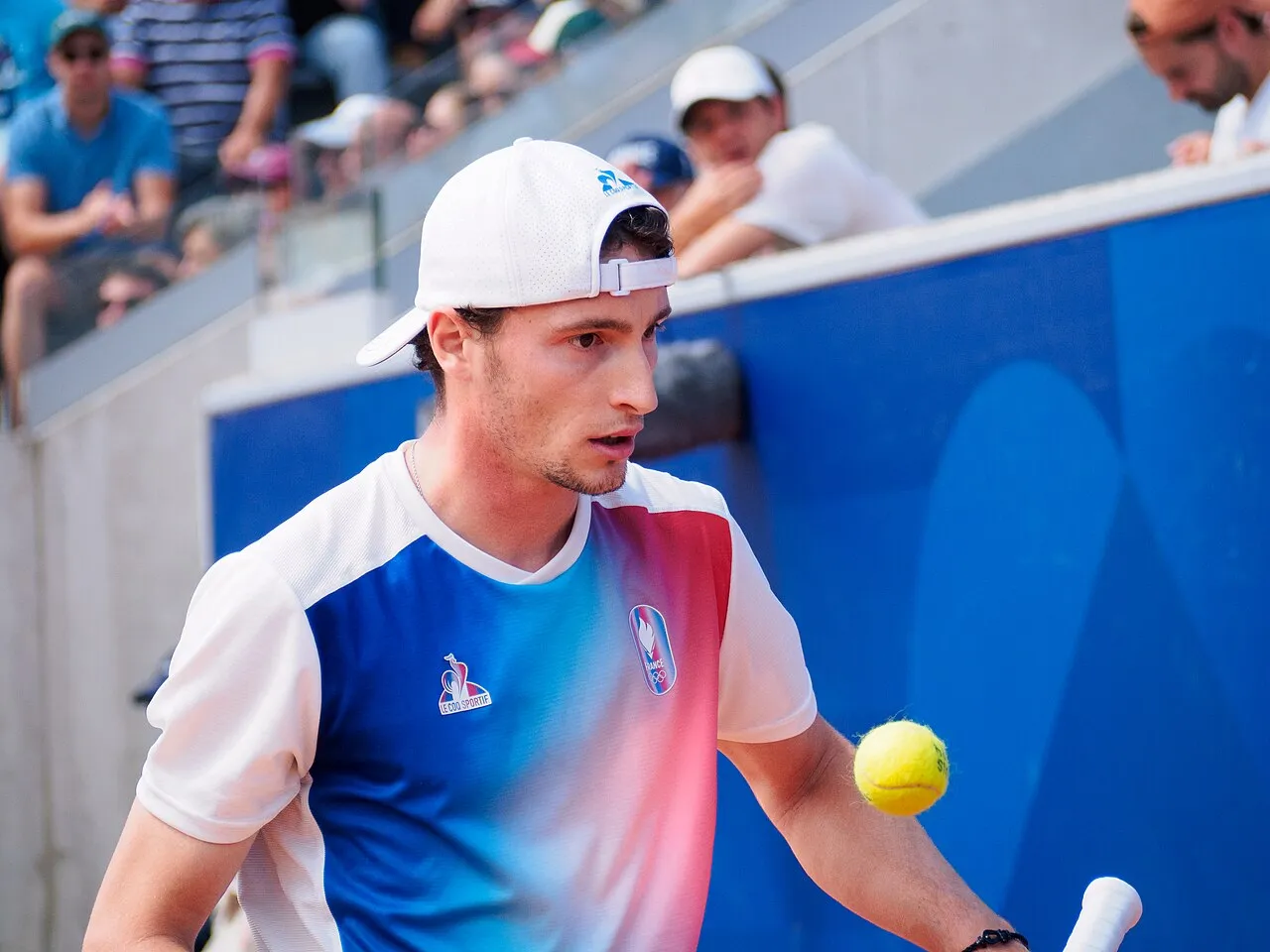
Ugo Humbert's 2024 season contains a useful contrast: he won the Dubai title and later reached the Paris Masters final, where he finished runner-up. Both results were significant, but they were not identical. Following that difference gives readers a better account than a headline that treats every final appearance as another championship or every defeat as the end of a successful season.
His tennis also offers a route into understanding left-handed angles. Handedness changes some serve and rally patterns, but it does not make every matchup automatic. This guide explains the dated achievements and then examines positioning, direction and comparison methods. It does not publish a current ranking, new injury claim or unverified result from the latest tournament.
Who is Ugo Humbert?
Ugo Humbert is a French professional tennis player. His documented 2024 results include winning Dubai against Alexander Bublik and reaching his first Masters 1000 final in Paris. ATP's reports distinguish the title from the later runner-up finish. A career summary should keep the event and year visible rather than turning those two outcomes into a single unlabelled run.
A name query can have several intentions
Someone searching for Humbert may want a current score, a biography or an explanation of his style. This article serves the career and learning questions. A live result requires the actual event and date. The fact that a name appears in a trend list is not evidence that a particular match has taken place or finished with a particular score.
Historical rankings need their own dates
A career high, an event seed and a current ranking are different records. A biography may retain a valid older milestone without showing today's table. Use the dated official ranking for a present-tense claim. This guide focuses on established results and tactical ideas rather than embedding a number that could become stale while the explanation remains useful.
What happened in Dubai in 2024?
Humbert defeated Bublik 6-4, 6-3 in the Dubai final. ATP's official report and the French Tennis Federation's account confirm the title. The result belongs to that tournament and year. It should not be described as a Paris victory or a major championship simply because those labels might sound more impressive in a shortened social post.
Read the winner's perspective correctly
The set scores are written from Humbert's perspective in the cited final report. He won six games to four and then six to three. In a table with one row per player, the alignment matters. A reader who reverses the rows can repeat the same numbers while reaching the wrong conclusion about who won the match.
A title is more than one attractive point
The final score establishes the outcome, while a highlight video selects particular moments. To explain a full title run, earlier rounds and different opponents also matter. This guide does not invent a detailed plan for every match. It uses the verified final as a historical anchor and keeps general tactical teaching separate from claims about private preparation.
How did the 2024 Paris run finish?
Humbert reached the Paris Masters final after a semi-final victory over Karen Khachanov. Alexander Zverev then won the final 6-2, 6-2. ATP's dated reports establish both stages. The semi-final celebration and the final result can therefore tell different parts of one genuine tournament story without either being false when properly captioned.
Advancing to a final is not winning it
A player can celebrate reaching a new career stage and later finish runner-up. Removing the round label from an image can make the celebration look like a championship ceremony. Preserve the date and match stage when sharing historical material. The achievement is clearer when the reader knows exactly what the celebration followed.
A final defeat does not erase earlier wins
The final result and the path to the final answer different questions. A balanced report can describe a difficult championship match while recognising the earlier run. There is no need to choose between exaggerated triumph and total failure. Career development includes meaningful outcomes that do not all fit a simple winner-or-nothing narrative.
What changes when a player is left-handed?
A left-handed player can create different familiar patterns against a right-handed opponent because the forehand and backhand sides are reversed relative to each other. That does not mean every left-hander uses the same tactics. Watch the actual serve direction, contact position and next shot rather than assuming handedness alone explains the entire matchup.
Court labels need a clear viewpoint
Terms such as left and right can become confusing when viewers switch between camera directions. Use the player's forehand or backhand side where possible, or state the viewpoint explicitly. A diagram should identify which player is at each end. Clear labels prevent a sound tactical explanation from becoming wrong when the court is shown from the opposite baseline.
An angle is useful only in context
A wide serve may pull an opponent away from the centre, but it can also open a return angle. The server's next position and shot matter. A left-handed delivery is not automatically an ace or an unanswerable pattern. Study what the receiver could do and how the server prepared for that response.
The opponent can adjust
A receiver may change starting position, contact height or return target after seeing a repeated pattern. The server then faces a new problem. Good match analysis follows this exchange of adjustments rather than treating one favourable serve angle as a permanent advantage. A pattern that works early can become less effective when the opponent reads it more clearly.
How do rally directions create opportunities?
Cross-court and down-the-line shots use different paths and change the opponent's movement. The useful choice depends on balance, incoming direction and available space. A change of direction can create an opening but can also increase the control required. The point should be read as a sequence of options rather than a collection of isolated stylish swings.
The arriving ball limits the menu
A player stretched wide has different options from one balanced inside the baseline. Judging both contacts by the same expectation of an immediate winner ignores the situation. Describe the incoming pressure before evaluating the response. A controlled ball that restores balance can be effective even when it does not look as dramatic as an attacking highlight.
Depth and pace are not the same
A ball can be deep without being especially fast, or fast while landing short. Those combinations can create different next shots. If you call a rally ball strong, explain which property made it useful. This helps students move beyond judging tennis by sound or apparent effort and toward observations another viewer can check.
A short angle can be a deliberate choice
Not every ball landing away from the baseline is weak. A shorter angled shot may move an opponent wide and create a different space. The target must be considered with the opponent's position and the hitter's recovery. General rules such as always hit deep are starting ideas, not substitutes for understanding the actual geometry.
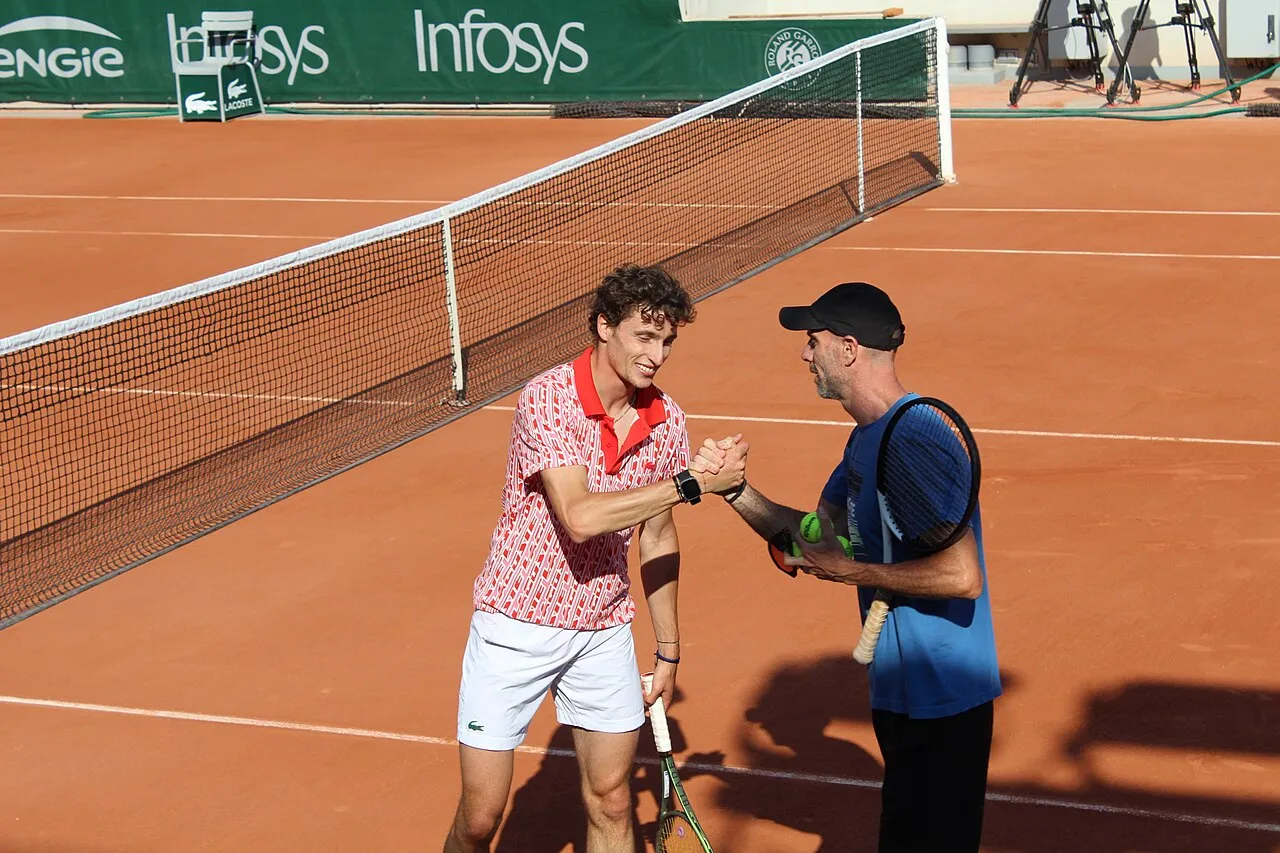
Ugo Humbert after practice at Roland Garros in May 2023, shown as historical career context.
What should a serve comparison measure?
Serve speed, first-serve percentage and points won behind the serve describe different features. An impressive speed can coexist with frequent misses, while a well-placed delivery may create a useful next ball without an ace. Compare several related measures and the point patterns they represent. One number should not be made responsible for explaining the whole service performance.
Use a fictional first-serve example
Imagine a player lands 36 first serves from 60 service points. The first-serve percentage is 60 percent. If he wins 27 of those 36 points, first-serve points won is 75 percent. These are invented teaching inputs, not Humbert's match statistics. The two rates use different denominators and should not be combined under one vague success percentage.
Keep second-serve outcomes visible
The remaining service points create a separate sample. A player may land many first serves yet struggle behind the second, or use a lower first-serve rate with different outcomes. The categories help explain the service picture together. Hiding one because it complicates a preferred conclusion makes an analysis less useful even if the displayed numbers are accurate.
Why do indoor and outdoor labels need care?
Conditions can influence play, but a roof does not make every indoor court identical. Court surface, ball, temperature and other event conditions can differ. A comparison between Dubai and Paris should not assume that every difference in outcome came from one environmental label. The opponents and match sequences are also part of the explanation.
A venue is not a permanent tournament specification
Events can change sites or arrangements over time. If a historical report names a venue, preserve the year rather than treating it as a universal present-day address. A career guide can explain a 2024 result without claiming where every future edition will be held. Current travel or attendance plans require current official event information.
Avoid a single-cause story
A match can be influenced by several visible factors at once. Saying a player lost only because of one condition requires strong evidence. Start by identifying observations such as return depth or service-game pressure, then state the limits of the explanation. An honest account can remain engaging without pretending that one convenient cause explains every point.
A left-handed-pattern project for students
Choose a small consecutive sample from a historical match. Record the serve side, target, receiver's contact position and next shot. Draw the court with the player's forehand and backhand sides labelled. The exercise should reveal a sequence rather than merely count spectacular serves. State your definitions and sample boundaries before collecting the observations.
Compare patterns, not only outcomes
Two points can end differently even when the opening pattern is similar. One receiver may reach the return better or the server may miss the next shot. Record the intermediate stages so the final outcome does not erase useful information. A point won is important, but it does not prove that every earlier decision was the best available choice.
Make a simple data tool
Use the class resources for supporting mathematics and the programming courses to build a labelled point log. Keep the match date and source with the data, reject impossible totals and show counts beside rates. A diagram should preserve the player's orientation when the view changes. Reliable labels make both the tennis and the code easier to understand.
A diagram exercise for left-handed angles
Draw a court and mark a left-handed server, a right-handed receiver and a proposed serve target. Then draw two possible return routes rather than only the one that makes the server look successful. Mark where the server would need to recover for each reply. The drawing makes the trade-off visible: creating one angle can leave another route available. It also prevents a learner from treating the opponent as a stationary target who never reacts.
Change one assumption
Move the receiver a little wider in the diagram and ask which routes become easier or harder to cover. Do not assign exact probabilities without data. The purpose is to explore options, not predict a real match from a sketch. This kind of small model is useful because its assumptions are visible. When a video shows a different outcome, students can ask which missing factor mattered instead of deciding that the entire sport is unpredictable.
Questions about Ugo Humbert
Did Humbert win both Dubai and Paris in 2024?
He won Dubai and finished runner-up in Paris. The Paris semi-final victory earned a place in the final, while Zverev won the championship match. Keeping those stages separate gives a correct account of the season. An image celebrating advancement should not be used to replace the documented final result with a title claim.
Does being left-handed guarantee a serving advantage?
No. Handedness changes some angles and familiar matchups, but placement, execution and the opponent's response still matter. A receiver can adapt to repeated patterns. The most useful analysis explains how the angle affected a particular sequence rather than treating left-handedness as a complete answer to why a player won or lost a match.
Sources
- ATP Tour: Humbert wins the 2024 Dubai final
- ATP Tour: Humbert reaches the 2024 Paris final
- ATP Tour: Zverev wins the 2024 Paris final
Image credits: cover: Kuberzog, source, CC BY-SA 4.0. Resized and converted to WebP. inline: Hameltion, source, CC BY-SA 4.0. Resized and converted to WebP.
Found an error or an outdated detail? Report a correction with the article URL and original source.