
US Midterm Elections 2026: What Changes and Where to Find Voting Information
Understand the 2026 US midterms, find official polling-place and state election guidance, and distinguish early vote counts from certified results.
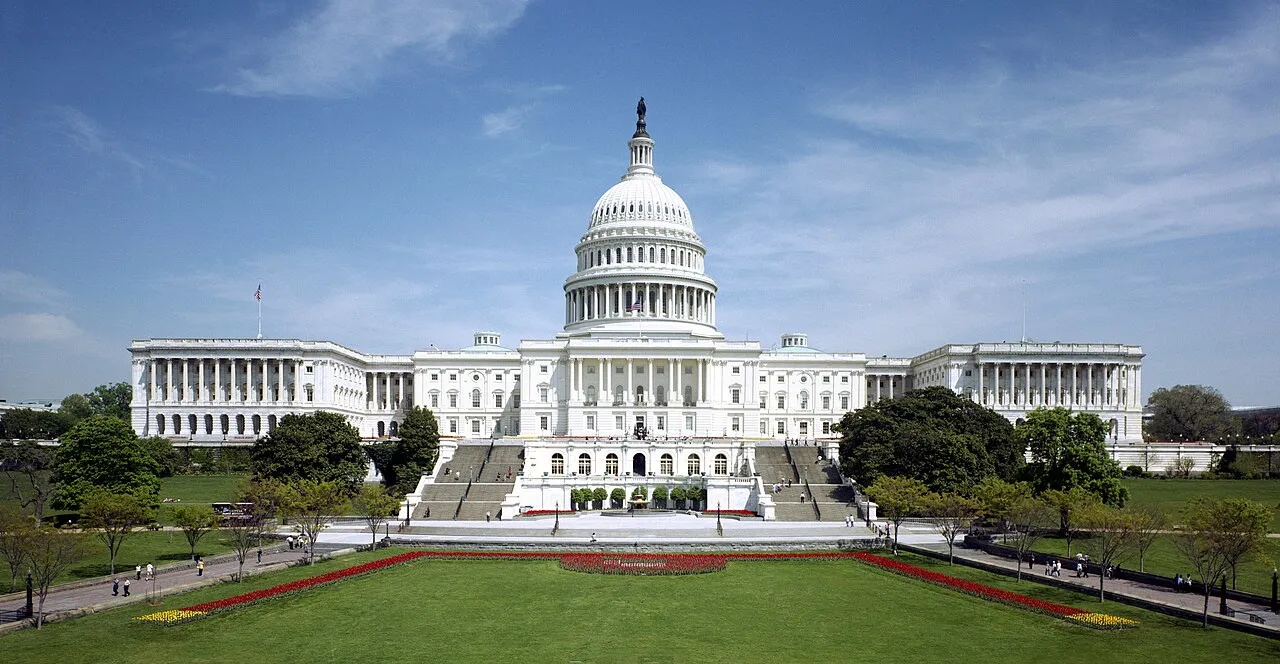
The 2026 US midterm elections take place on 3 November. They are congressional elections held between presidential election years, not an election for a new president. For an eligible voter asking where to vote, the correct polling place comes from the relevant state or local election office, not from a single nationwide address.
For readers following events from Pakistan, this guide explains what is being elected, how to find official voter information and why early election-night totals are not certified results. It is nonpartisan information, not a recommendation for a candidate or an assessment of any individual's legal eligibility.
What are midterm elections?
Midterms are the congressional elections halfway through a presidential term. House seats and approximately one-third of Senate seats are contested on the regular cycle. State and local contests may also appear on a voter's ballot, depending on that jurisdiction's schedule.
The word “midterm” describes timing rather than a smaller version of a presidential vote. Congress and the presidency are separate institutions with different elections. A change in congressional seats should therefore not be reported as directly electing a new president.
For a new reader, begin with the office rather than the party colour on a television graphic. Ask whether the number refers to a House district, a statewide Senate contest or another race. Mixing those categories can make a live screen appear to show one national election when it actually combines several kinds of contest.
Why is only part of the Senate elected?
Senators have six-year terms, divided into three classes so that approximately one-third face the regular election cycle every two years. The Senate's official explanation sets out that staggered structure. It means the whole chamber does not normally appear on the same regular ballot in one year.
A special election is a separate consideration from the ordinary class rotation. Consequently, an exact count of contests in a particular year should be checked against that year's official election information rather than inferred only from the phrase “one-third.”
This also explains why a state may not have the same offices on its ballot at every general election. The date can be shared while the available contests differ. A voter needs their own jurisdiction's ballot information, not a sample from another state that happens to have familiar candidates.
Where do I find my polling place?
Use the official state or local election-office route linked through USAGov or the Election Assistance Commission. A polling location is assigned under local arrangements, so the nearest building with a campaign sign is not necessarily the correct place for your registration.
Have the information required by the official lookup service available, and provide it only through the genuine service. This website does not need your residential address, date of birth, identity document or voter information to explain the process. Do not post those details in a public comment asking strangers to locate your polling place.
Check the current election's record even if you remember where you voted before. Locations and arrangements can change. A saved map or an old social-media post is useful only if the election office confirms that it still applies.
Official starting points
| What you need | Where to begin |
|---|---|
| Registration guidance | Vote.gov, then the relevant state information |
| Polling-place guidance | USAGov's polling-place page and official local lookup |
| State election contacts | Election Assistance Commission's state directory |
| Absentee or mail information | The state election office and USAGov guidance |
| Overseas voter assistance | Federal Voting Assistance Program |
| Official results | The relevant state or local election office |
These are starting points, not six interchangeable application forms. Select the route that matches your question. Registration information, polling-place assignment, a mail-ballot status and a published result are different records maintained for different purposes.
An advertisement appearing above an official result is not automatically the official service itself. Read the destination and make sure you are following the intended government or election-office route before entering personal information.
What time do polls close?
Polling hours depend on the jurisdiction. There is no single closing time that can responsibly be applied to every US voter. Check the applicable election office for the current election, including the location and local time zone relevant to you.
Readers in Pakistan should also distinguish the US local date from the date on their own device. The United States spans multiple time zones, and Pakistan's clock does not determine when another jurisdiction's polls open or close. A result described as arriving “tonight” in an American report may appear on the following date for a Pakistani reader.
This page does not calculate an individual deadline from an assumed address. An exact voting deadline is consequential information, so the official local source is the place to confirm it rather than a general article written for an international audience.
Can I still register or change my details?
Registration rules and deadlines vary by state. Use Vote.gov to reach the relevant state information and check the current requirements. Do not assume that an option available to a friend in one state is available on the same terms somewhere else.
The same caution applies to moving, correcting details or checking a registration record. A general explanation cannot tell every reader that a particular deadline remains open. The correct answer depends on the applicable jurisdiction and the individual's situation.
If you are unsure, contact the election office through its verified directory entry. That route is more reliable than a forwarded message claiming a nationwide last-minute extension. The article provides navigation to authoritative information rather than substituting an invented universal rule.
What about voting by mail?
Absentee and mail-voting arrangements differ by state, including eligibility, request procedures and deadlines. Check the instructions issued by the responsible election office. A ballot-request deadline is not necessarily the same as a ballot-return deadline.
Read the actual return requirements carefully. The difference between a date by which something must be sent and a date by which it must be received can matter. This article does not promise that a mailing option remains timely for every reader on Election Day.
If you already have a ballot and need to confirm a return method or its status, use the official jurisdiction's guidance. Do not rely on an informal promise from a social post that any location will accept it or that all states follow the same process.

Demonstration voting booth photographed in 2023, not a polling-place assignment or a current voting-method instruction.
Can US citizens abroad find official help?
The Federal Voting Assistance Program provides information for covered military and overseas voters. A person following the election from Pakistan should distinguish general interest in US politics from having an actual voting entitlement under the applicable rules.
If you are an eligible US voter overseas, use the official program and your relevant election office to check the process that applies to your circumstances. This general article does not determine eligibility from nationality, residence or a social-media profile.
Do not send sensitive documents to somebody who offers to “register your vote” through a chat message. Use the established official route and its stated forms. A person offering help should not need your account passwords or unrelated financial details.
Is there one online voting website for everyone?
Do not assume that finding election information online means every voter can cast a ballot through a general website. Online registration, a ballot lookup, a sample ballot and actually casting a vote are different functions. The official jurisdiction determines the options available to a particular voter.
An unfamiliar page asking you to select a candidate and submit payment or login information should not be treated as legitimate just because it uses an official-looking flag. Verify the service through the election office's established route before relying on it.
This site is not a ballot-casting service and does not collect votes. Its role is to explain the election and direct readers toward official resources. Keeping that boundary clear helps prevent information pages from being mistaken for an authorised voting method.
When will the results be final?
Election-night reporting generally provides unofficial totals. The Election Assistance Commission explains that officials complete additional processes before certification makes results official. The timing and procedures vary between jurisdictions, so a national television schedule is not a universal certification deadline.
A media projection is also different from an official certified result. A news organisation may call a race based on its analysis while the election office continues its prescribed work. Report both accurately rather than treating either label as though it means the other.
This article does not publish invented winners, exit polls or live seat totals. For a current count, follow the appropriate election office and keep the reported status with the number. A timestamp matters when totals are still changing.
Why can totals change after the first report?
An initial total may not include every eligible ballot. As officials process the remaining categories and complete checks, later updates can change the displayed count. A changing unofficial number is not, by itself, evidence that the process is improper.
At the same time, a general explanation should not declare that every claim about every local problem has already been investigated. A specific concern needs its own evidence and response from the appropriate authority. Keep a documented observation separate from a conclusion about its cause.
The responsible approach is to read the update status and the jurisdiction's explanation. Comparing a partial early total with a later fuller one without preserving that context can produce an alarming graphic that does not accurately describe what was counted at either point.
How should readers compare vote shares?
A vote share is a proportion of a defined total. Before comparing two percentages, check whether they refer to the same race, geography and stage of reporting. A statewide total and a single district's total are different samples.
For a simple illustration, fifty votes out of one hundred is fifty per cent. If another hundred votes are later included with a different distribution, the combined share can change without altering the original first hundred. That arithmetic example explains why a partial result is not a fixed final percentage.
The example does not predict any race or describe actual ballots from the 2026 election. Its purpose is to keep the denominator visible when reading a chart. Real results must come from the actual jurisdiction's records, with the correct reporting status.
How to read a national seat graphic
Check which chamber the graphic describes and what its legend means. A coloured seat may represent a projected winner, an incumbent holding over or a contest not yet called, depending on the broadcaster's design. The map is not self-explanatory without that key.
A count of races won in the current election can differ from a count of the chamber's full membership after the election. This is especially relevant to a staggered chamber such as the Senate, where many seats are not part of the ordinary election that year.
Keep projections and confirmed categories separate when sharing a screenshot. Removing the legend to make the image fit a phone screen can remove the very information that tells another reader what the colours and totals mean.
Questions about the 2026 midterms
Is the president being elected on 3 November 2026?
The regular midterms are congressional elections during a presidential term. They should not be described as the regular presidential election. Other state and local races may share the date, but they remain contests for their own offices.
Can this page tell me my exact polling address?
No. Use the relevant official state or local lookup. An individual's registration and jurisdiction determine the applicable location. Do not supply private voter details in a public message to obtain a general article's answer.
Are election-night results certified?
Not merely because they appear on election night. Official reporting can remain preliminary while counting and verification continue. Certification follows the applicable procedures and dates, and a television projection is a different label.
Does every state have identical voting rules?
No. Registration, voting methods, polling arrangements and deadlines require state or local confirmation. Use national government guides to find the right office, then follow that office's current instructions for the actual election.
Follow the right office and the right status
For an eligible voter, the most useful next step is an official local lookup or contact. For an international observer, it is understanding the difference between an office, a projection and a certified result. Neither task is helped by an invented universal deadline or an unverified winner.
Explore our world-affairs articles for related explainers and study resources for structured learning. This guide was reviewed on 3 November 2026; it is not an automatically updating election tracker or individual legal advice about eligibility.
Sources
- USAGov: Congressional and midterm elections, for the election cycle and offices.
- US Senate: Qualifications and terms of service, for six-year terms and staggered classes.
- USAGov: Find your polling place, for the official local-information route.
- Vote.gov: Guide to voting, for registration and state-specific navigation.
- USAGov: Absentee voting and voting by mail, for the need to check applicable state arrangements.
- Federal Voting Assistance Program, for official military and overseas voter guidance.
- Election Assistance Commission: State election information, for official jurisdiction contacts.
- Election Assistance Commission: Results, canvass and certification, for the distinction between unofficial and certified results.
Image credits: cover: Architect of the Capitol, source, Public domain. Resized and converted to WebP. inline: Kenneth C. Zirkel, source, CC0. Resized and converted to WebP.
Found an error or an outdated detail? Report a correction with the article URL and original source.