
Vande Bharat Explained: Trainsets, Speed, Energy and Official Journey Checks
Understand Vande Bharat trainsets, speed, braking and journey information. Learn to check the right train, date, class and official booking record.
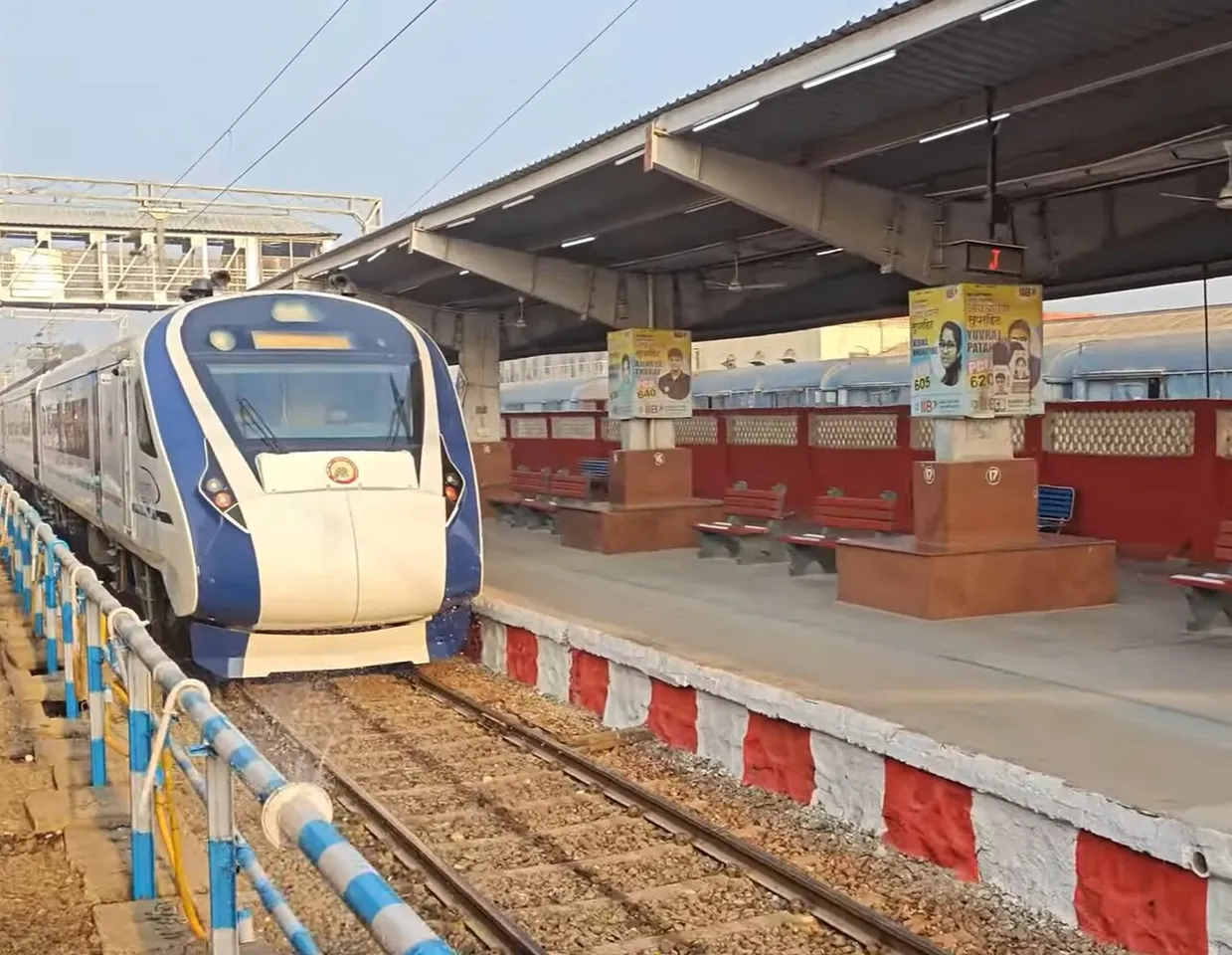
Vande Bharat is an Indian Railways train family, not one train running on one permanent timetable. The name can refer to the trainset design or to a particular passenger service using it. Understanding that distinction helps readers check a route, interpret an engineering claim and avoid treating a historical launch announcement as today's booking information.
The Ministry of Railways announced the Vande Bharat Express name for Train 18 on 27 January 2019. Its later official descriptions discuss chair-car and sleeper services, modern train features and the infrastructure needed to introduce services. This guide connects those records with practical timetable reading and school-level science, without inventing a current fare, route opening or seat-availability figure.
Train family, trainset and service are different ideas
A train family describes a design or related group of designs. A trainset is a physical formation of vehicles. A passenger service is identified by its scheduled operation, including its train number and journey. Those concepts are related, but they should not be counted interchangeably.
For a fictional railway, one physical trainset might operate an outward service and a return service. Two service entries do not necessarily mean two different physical trainsets. Equally, a fleet may contain vehicles undergoing maintenance rather than operating a scheduled passenger journey at that moment.
| Term | Useful question |
|---|---|
| Train family | Which design or variant is being discussed? |
| Trainset | Which physical formation is meant? |
| Service | Which train number and journey? |
| Route | Which origin, destination and stops? |
| Timetable | Which date and operating days apply? |
Why the 2019 announcement is historical evidence
The original announcement establishes the naming of Train 18 and describes the initial Delhi-Varanasi plan. It is useful history. Its wording should not be copied into a current guide as if the entire network still consisted only of that initial planned service.
A historical statement and a later service update can both be accurate for their respective dates. The error is removing the date and treating an earlier plan as a current nationwide timetable. Transport information changes, so the relevant service record must be checked for the intended journey.
Students can build a timeline with separate columns for announcement, introduction and later updates. Mark which event each source establishes. That exercise teaches how to read progress without converting a proposal into a completed event or a past milestone into today's operating condition.
Chair-car and sleeper descriptions need their own context
A chair-car journey and a sleeper journey involve different accommodation concepts. A feature described for one variant should not automatically be promised for every service carrying the broader Vande Bharat name. The actual train and booking class determine what the traveller is selecting.
For a fictional comparison, an upright seat and an overnight berth answer different travel needs. Their layouts, occupancy measures and passenger expectations can differ. A photograph of one interior does not establish the accommodation available on a separately identified train.
Use the official service and class information for a real booking. This article explains how to interpret the labels rather than claiming that a particular seat arrangement, meal or amenity is included on every Vande Bharat journey.
Maximum speed is different from average journey speed
A train's stated capability and its average speed over a complete journey are different measures. Stops, route conditions and the operating timetable affect the total journey. A design-speed figure should therefore not be used as if it were maintained for every kilometre.
For an invented trip covering 300 kilometres in five hours, average journey speed is 60 kilometres per hour. The train could travel faster on part of the route while still averaging 60 once stops and slower sections are included. There is no contradiction.
To compare real journeys, use the correct distance and complete scheduled duration for each service. Do not divide distance by a headline maximum speed and present the result as a promised arrival time. A capability figure is not a substitute for a timetable.
Acceleration matters between stops
Acceleration describes how velocity changes over time. It is different from the highest speed reached. On a journey with several stops, the periods spent increasing and reducing speed are part of the total time, alongside cruising and station dwell.
Imagine two fictional trains with the same maximum speed but different times needed to reach it. Their journeys can differ even if the maximum-speed label matches. The example shows why one headline number cannot describe the whole operating performance.
The original and later official descriptions discuss improved acceleration in the Vande Bharat context. Actual journey time still depends on the particular route and operating conditions. An engineering improvement can be meaningful without guaranteeing the same percentage saving on every service.
Regenerative braking connects motion and electricity
The official technical and public descriptions identify regenerative braking as an energy-efficiency feature. At a basic level, it concerns recovering some energy during braking rather than treating all of it as energy that must be dissipated. The actual performance depends on the system and operating conditions.
For a fictional energy exercise, a vehicle uses 100 energy units and recovers 15 under the stated model. That recovery is not the same as eliminating all energy use. Losses and the rest of the journey still matter.
Avoid turning a general efficiency statement into a universal saving for every passenger trip. The useful science lesson is about energy transfer and the boundary of the calculation. It does not require operating instructions for railway equipment or an invented measurement from a real train.
Power and energy should remain separate
Power is the rate at which energy is transferred or used. Energy describes the amount over time. A motor's power rating and a journey's electricity consumption therefore use different units and cannot be substituted for one another.
In a simplified fictional example, a constant power use of ten kilowatts for two hours corresponds to 20 kilowatt-hours. Real trains do not operate at a constant power level throughout a journey, so this is a unit exercise rather than an actual train-consumption estimate.
When reading a technical announcement, record the unit before comparing figures. A higher capability rating does not independently establish higher or lower energy use per completed passenger journey. The operating profile and the chosen measurement boundary are also needed.
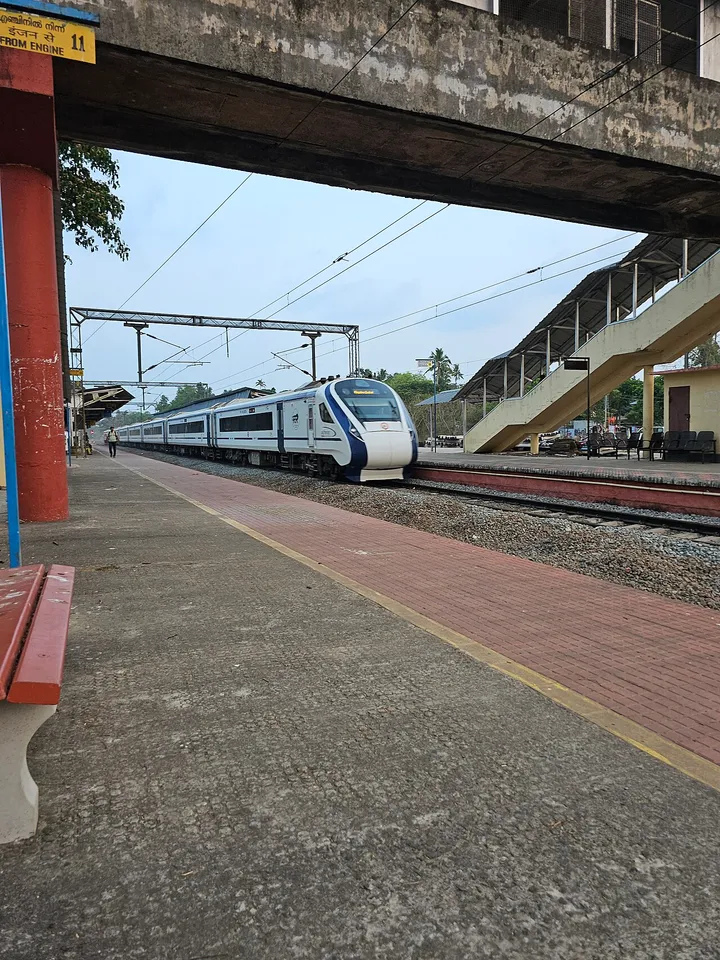
A Vande Bharat train photographed in March 2024, shown as train-family context rather than proof of current timings or available seats.
Amenities and safety descriptions need a dated source
The March 2026 Ministry of Railways description discusses features including automatic doors, passenger information and safety-related systems. Such descriptions establish what the source says about the train category and period. They should remain attached to that scope.
A reader should distinguish a listed feature from a promise that no disruption or incident can ever occur. Equipment, operating procedures and the wider railway environment are related parts of a system. A public guide should not turn a feature list into an absolute guarantee.
For a specific passenger need, check the actual service information and contact the official provider where necessary. A historic photograph or promotional clip cannot confirm the accommodation or accessibility arrangements available for a particular booking date.
Introducing a service requires more than manufacturing a train
The Ministry's March 2026 statement describes service introduction as depending on factors including route capacity, available paths, rolling stock, infrastructure and maintenance requirements. A new trainset and an available timetable slot are therefore different parts of the operating question.
For a fictional railway, a vehicle can be ready while the route's timetable still needs coordination. Conversely, a proposed route may be discussed before the required operating resources are available. Neither stage should be reported as a confirmed passenger service without the relevant announcement.
This distinction helps readers evaluate launch rumours. Identify whether a source describes a proposal, a trial, an inauguration or a bookable scheduled journey. These labels convey useful progress without making an unsupported promise that tickets are already available.
Check a journey by train number and date
A familiar service name is useful, but the train number and travel date identify the actual journey more precisely. Origin, destination, boarding point and operating days also matter. Similar names or cities can conceal different services or station choices.
The official IRCTC booking guidance describes viewing route and timing information through the train entry. Use the official service record for current details rather than a screenshot copied from an old article. A schedule should be read for the intended date, not assumed permanent.
Write the necessary journey fields before comparing options. This reduces the chance of checking a return-direction train, a different station or a service that does not operate on the intended day. It is information checking, not a guarantee of availability.
Dates crossing midnight need careful reading
An arrival after midnight can fall on a different calendar day from departure. The day indicator in the journey record therefore matters. Ignoring it can produce an incorrect duration or a missed connection even when both clock times have been copied correctly.
For a fictional journey leaving at 23:30 and arriving at 01:00 the next day, the duration is one hour and 30 minutes. Subtracting the clock numbers without accounting for the day would give the wrong result.
Use the actual timetable's date and day information. When sharing a journey plan, include the date with the time rather than sending only a clock reading. That small habit makes the information more useful to someone checking the journey later.
A quoted fare needs its conditions
A fare shown for one journey can depend on the identified train, date, class and selected conditions. An old fare screenshot should not be described as a universal current price. A current amount must be checked through the official booking record for the intended trip.
For a fictional comparison, two totals may differ because one includes a selected service and the other does not. They are not automatically like-for-like. Read the components and options before describing one as cheaper on an identical basis.
This guide does not set fare rules or make a booking. It explains why a price needs its context. Current product conditions, availability and payment information belong to the responsible official provider rather than an undated educational article.
Booking success and payment activity are different stages
A payment attempt and a completed reservation should not be assumed identical. The official confirmation record is the evidence of the booking outcome. A bank notification by itself should not be treated as a complete replacement for the travel provider's reservation details.
For an invented online purchase, money activity appears before a final confirmation screen. The user still needs the transaction's official outcome. This illustrates a general digital-service distinction without prescribing a particular refund rule or promising a specific processing time.
Keep private booking references and identity information out of public comments or screenshots. Use the official provider's support route for account-specific questions. An educational page can help interpret the process without needing access to a traveller's documents, credentials or payment details.
Build a timetable and science worksheet
Create a table with service number, direction, date, departure day, arrival day, duration and source. Add a separate science section for distance, average speed and energy units. Keep reported journey information separate from fictional calculations.
Next, test one variable at a time. Change the number of stops in a fictional timetable or the duration in an average-speed exercise. Explain why a maximum-speed claim alone does not determine the result. This connects transport reading with mathematics without pretending to simulate actual railway control.
Use class resources for units and ratios. Learners using programming courses can build a journey-duration calculator that handles midnight correctly and refuses to calculate an average until the distance and time units are stated.
Questions about Vande Bharat
Is every Vande Bharat entry a different physical train?
Not necessarily. A service entry, a return-direction service and a physical trainset describe different things. Read the source's counting method before turning a service total into a fleet claim. The relevant unit and reference date are essential parts of the number.
Does maximum speed determine the arrival time?
No. Stops, route conditions and the operating timetable affect the complete journey. Use the actual scheduled service information. A simple distance calculation can teach average speed, but a headline capability figure should not be presented as a promised door-to-door journey time.
Does regenerative braking mean the train uses no energy?
No. Energy recovery is different from eliminating energy consumption. The operating conditions, system efficiency and measurement boundary matter. A responsible explanation describes the principle without turning a possible saving into a guaranteed percentage for every train and trip.
Where should current travel details be verified?
Use the official railway and IRCTC records for the identified train and date. Historical announcements explain development and context, while the current journey record supplies the relevant schedule and booking information. Keep both kinds of evidence dated and use each for the question it answers.
Sources
- Ministry of Railways: original Vande Bharat naming announcement, January 2019
- Ministry of Railways: Vande Bharat features and service context, March 2026
- Indian Railways: technical specification for energy-efficient Vande Bharat trainsets
- IRCTC official e-ticket booking guidance
Image credits: cover: Kushal Kumar Jain, source, CC0. Resized and converted to WebP. inline: Ganesh Mohan T, source, CC BY-SA 4.0. Resized and converted to WebP.
Found an error or an outdated detail? Report a correction with the article URL and original source.