
Vantara Public Criticism: Court Findings and Conservation Evidence
Read Vantara’s dated court outcome and learn to separate allegations, findings and conservation measures through clear, original educational examples.
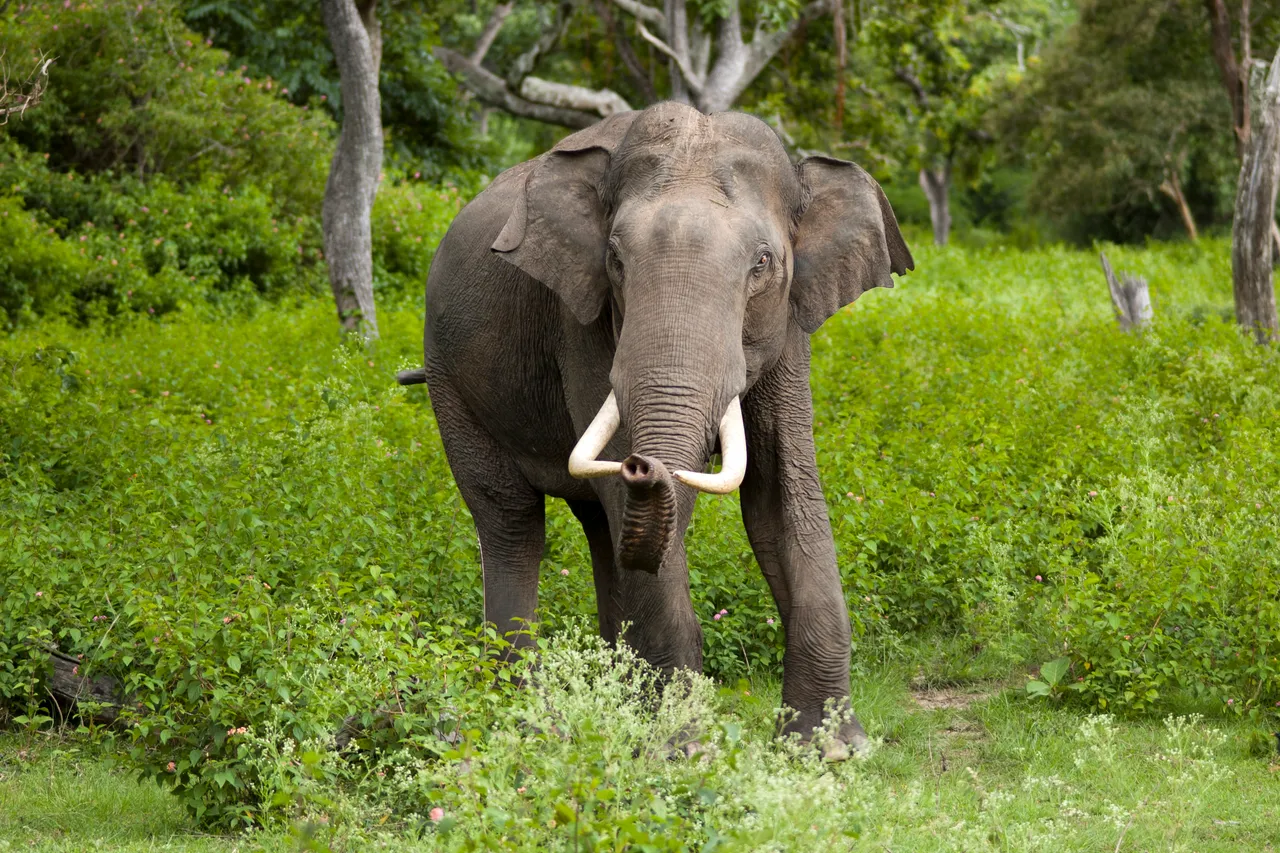
Public criticism of Vantara needs to be read alongside the relevant evidence and court findings. Vantara describes its Jamnagar operation as a wildlife rescue, care and conservation initiative. In a 15 September 2025 order, India’s Supreme Court accepted a court-appointed investigation’s conclusions and closed the investigated complaints. An allegation should not be repeated as an established violation after omitting that outcome.
This guide, reviewed on 2 November 2026, explains the dated findings and the wider questions students can ask about wildlife care. It does not claim access to confidential investigation material, a personal inspection or a current animal-by-animal welfare assessment. The learning examples use invented records and numbers, not undisclosed information about Vantara.
What is Vantara?
Vantara’s own website presents it as an animal rescue, rehabilitation and conservation initiative in Jamnagar, Gujarat. Its descriptions include the Greens Zoological, Rescue and Rehabilitation Centre. Those are the organisation’s descriptions of its work. They are useful for identifying its stated purpose, but an organisation’s promotional account is a different source category from a regulator’s finding or an independent scientific study.
Start an institutional profile by identifying the name, location, stated activities and the legal entities mentioned in the source. Do not assume that every associated trust, facility or project is interchangeable. If a court document uses specific respondent names, preserve them when explaining which proceedings it concerns.
This makes the discussion more precise. Instead of asking whether an entire institution is simply “good” or “bad,” ask a question that evidence can answer: which animal movement was reviewed, which permit applied, which welfare measure was assessed, and what the dated conclusion was. A defined question produces a more useful answer than a broad label.
What did the Supreme Court’s September 2025 order say?
The order concerned writ petitions about the Greens Zoological Rescue and Rehabilitation Centre and the Radhe Krishna Temple Elephant Trust. The Court described a Special Investigation Team’s examination of animal acquisition, welfare and related allegations. It accepted the team’s conclusions that the investigated matters disclosed no legal violation and closed the complaints within the stated scope.
The Court also distinguished the confidential investigation record from the summary, which it said should not be treated as confidential. Readers can examine the published order and its appended summary. They should not imply they have independently read all sealed annexures. The difference between available material and confidential material belongs in any fair account of the evidence.
Use that dated outcome when discussing the controversy. It would be misleading to reproduce allegations as proven facts while hiding the result. Equally, a particular judicial finding is not a substitute for identifying the date and scope of a new, distinct question. Accurate reporting keeps the actual finding, its subject and its time frame together.
Why do allegation, investigation and finding need separate labels?
An allegation identifies something someone claims. An investigation describes an inquiry into that claim. A finding records a conclusion reached through a particular process. These terms are not three names for the same thing. Moving from one to another requires evidence, and a headline should not skip those steps.
Imagine a fictional sanctuary receiving a complaint that a transport crate was unsuitable. The complaint is a starting point. Inspectors might review the crate dimensions, veterinary assessment and journey conditions. Their conclusion could support or reject the complaint. A fair summary reports both the concern and what the inspection actually established, without inventing a result.
For a classroom exercise, write the same invented case in three stages. Label each paragraph with its status and date. Then ask a partner what is known at each point. This helps learners recognise why a screenshot of an early complaint can become misleading when circulated after a later decision without its updated context.
What does an animal-transfer permit establish?
A permit concerns the authorisation of a specific activity under a legal framework. Its meaning depends on the species, jurisdiction, purpose and conditions involved. It should not be replaced by a general assumption that all transfers are automatically allowed or automatically suspect. The document and the relevant authority matter.
CITES is an international agreement intended to ensure that international trade in listed wild animals and plants does not threaten their survival. Its controls depend on the species listing and type of movement. A learner should therefore identify the relevant animal and document rather than treating “CITES” as a single universal stamp with identical requirements for every situation.
In an invented record, separate the permit number, issuing authority, species name, date and stated purpose. Do not publish real sensitive records or infer fraud from a field you do not understand. This is a document-reading exercise, not legal advice for arranging an animal shipment or a substitute for regulatory guidance.
How do rescue, rehabilitation and conservation differ?
For a learning worksheet, use rescue to describe intervention in an animal’s immediate situation, rehabilitation to describe work toward an appropriate condition or capability, and conservation to describe efforts concerned with species or ecological persistence. These are working educational distinctions, not a claim that every organisation uses identical operational definitions.
A single project can contain several activities. Caring for an injured animal is important, but the number of admissions alone does not measure a wild population’s recovery. Similarly, a breeding programme requires more explanation than a photograph of a newborn animal. Ask what outcome is being sought and how it will be assessed.
Draw three columns for an imaginary wildlife project: immediate care, longer-term individual outcome and species-level objective. Place each proposed activity in the appropriate column, allowing overlap where justified. The purpose is to explain the connection rather than assuming that every activity automatically proves every type of success.

Historical courthouse context, not a photograph of the September 2025 hearing.
Why is a photograph not a full welfare assessment?
A photograph may show an animal, an enclosure or a particular interaction. It usually cannot establish the entire daily environment, medical history or behaviour over time. Attractive pictures and distressing pictures both need context. Neither should be stretched into a complete clinical or welfare conclusion without suitable evidence.
For an original observation exercise, compare two drawings of the same fictional enclosure: one close view and one wide view. Ask which features disappear in the close view. Then add a written daily schedule. Students can see how the same scene supports different observations depending on what information is available.
This is not an instruction to diagnose animals from public videos. A general reader can ask for the source, date and scope of an assessment without pretending to be a veterinarian. Distinguishing what is visible from what needs professional evaluation makes the discussion more responsible and more useful.
Read animal-care numbers with their denominators
A total is difficult to interpret without knowing what it counts. An institution might report admissions, individual animals, treatments or procedures. These are different units. Ten treatments do not necessarily mean ten animals, and ten admissions do not necessarily mean ten permanent residents. A reliable dataset defines its unit before presenting a dramatic number.
Consider an invented clinic treating 20 animals and recording 60 procedures in a month. The average is three procedures per animal, but that does not tell you that each received exactly three. Some may need one intervention and others several. The arithmetic summarises the fictional dataset; it does not describe any actual Vantara records.
Add a date range and a definition to each field. If one report covers a month and another covers a year, do not compare their raw totals as though they measure equal periods. If the definitions change, explain the change before drawing a trend line. Good interpretation begins before the graph is drawn.
What can mortality comparisons tell us?
A mortality figure needs careful context: the population being counted, the observation period, the condition of animals on admission and the definition of the measure. A percentage without those details can invite a conclusion that the underlying data cannot support. This article does not calculate a Vantara mortality rate from incomplete public information.
Use an invented example instead. Two fictional centres each record five deaths, but one admitted 20 critically ill animals while another housed 200 stable residents. Dividing five by each total produces different percentages, yet even those percentages are not a complete fair comparison because the groups differ. The denominator is necessary, but it is not the only relevant detail.
Ask students to write what additional information they would need before interpreting the figures. They might request a consistent period, comparable case categories and a clear definition of who entered the population. The learning goal is knowing why a comparison may be weak, rather than forcing a ranking from insufficient evidence.
How should public criticism be discussed fairly?
Begin with the specific claim and its source. Identify whether it is a question, a documented observation, an allegation or an established finding. Include relevant responses and subsequent decisions. Do not present every disagreement as equally supported, and do not replace evidence with the size or popularity of an institution.
A useful summary can say that concerns were raised, explain what the inquiry examined and state the actual outcome. It should not use an unresolved question as a rhetorical way to imply wrongdoing. Nor should it use a favourable finding to invent a claim that no future question could ever be meaningful.
In class, ask learners to rewrite a sensational invented headline into a precise one. Keep the subject, date and status visible. Compare how much information the revised version provides. Accuracy can make a sentence less dramatic while making it much more helpful to someone trying to understand the issue.
Create an evidence map rather than a rumour list
An evidence map links each claim to a document and a defined conclusion. Use columns for question, source, date, scope and what remains unknown. Avoid a collection of screenshots without provenance. A screenshot may preserve words while losing the publication date, correction notice or link needed to interpret them.
For the published court order, record the case identifiers and decision date. For an organisation’s website, identify it as self-description. For a scientific paper, note what population and method it actually studied. These source types can contribute different information without becoming interchangeable endorsements of every statement in an article.
If you build a small version in our programming courses, use fictional animal records and public document links. Keep the data model simple: one claim can have several sources, and one source can answer only part of a question. Include a correction field so that a later update does not erase the record of what changed.
A practical conservation-literacy project
Design an imaginary rescue centre for a made-up classroom scenario. Choose one species and describe three information needs: immediate veterinary assessment, suitable daily care and an appropriate longer-term plan. Do not invent professional treatment instructions. Focus on the questions a responsible project would need qualified people to answer.
Give the class a fixed fictional budget in tokens, not real currency. Let learners choose between record keeping, enclosure improvements and public displays, then explain their priorities. There need not be one perfect answer. The value lies in explaining trade-offs and identifying which choices need expert evidence instead of personal preference.
Finish with a short report separating observed facts, proposed actions and unanswered questions. This is a constructive way to learn from public interest in Vantara. It moves beyond repeating accusations or promotional claims and helps students understand how conservation discussions depend on clear definitions, dated evidence and proportionate conclusions.
Before presenting the project, have another learner trace one conclusion back to its supporting record. If the link is missing, revise the record rather than making the conclusion stronger. An evidence trail is useful because it allows a reader to check the reasoning without having to trust the confidence of the speaker.
Sources
- Supreme Court of India order, 15 September 2025, W.P.(C) 783/2025 with 779/2025, for the investigation outcome, confidentiality distinction and scope of the closed complaints.
- Vantara’s official website, for the organisation’s description of its location and work, identified here as self-description.
- CITES: what the convention is, for its purpose and international wildlife-trade context. All numerical examples and imaginary rescue-centre activities above are original educational exercises, not measurements of Vantara.
Image credits: cover: Yathin S Krishnappa, source, CC BY-SA 3.0. Resized and converted to WebP. inline: Legaleagle86 at English Wikipedia., source, CC BY-SA 3.0. Resized and converted to WebP.
Found an error or an outdated detail? Report a correction with the article URL and original source.