
Veterans Day 2026: November 11 Date, History and Meaning Explained
Veterans Day 2026 is Wednesday, 11 November. Learn its history, meaning, national ceremony and distinction from Memorial Day in the US.
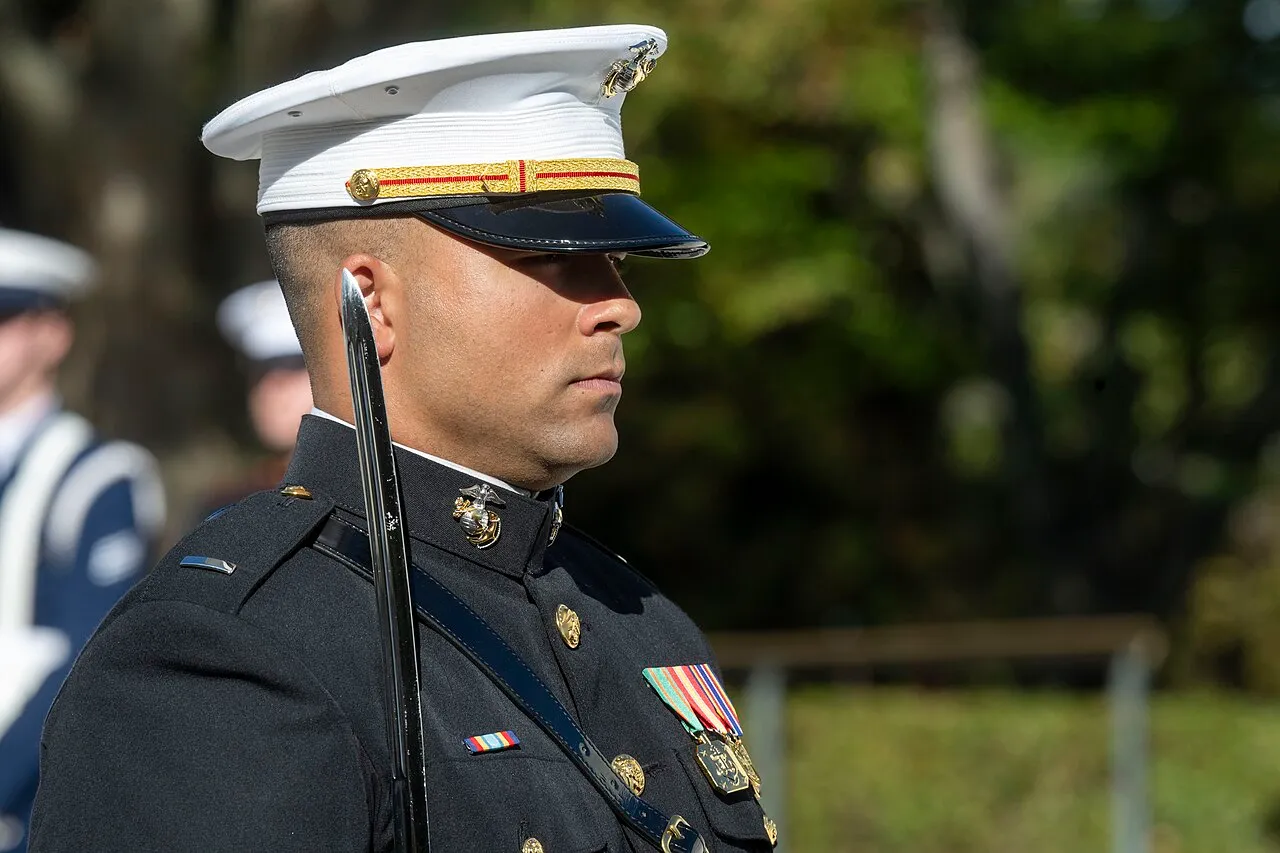
Veterans Day 2026 falls on Wednesday, 11 November. In the United States it honours people who served in the country's armed forces. The annual national ceremony is associated with Arlington National Cemetery, including an 11:00 am wreath-laying at the Tomb of the Unknown Soldier. It is not the same observance as Memorial Day, and it is not a general announcement that every organisation everywhere closes.
For readers in Pakistan, the date often appears through international news, school research and questions about American working hours. Understanding the purpose of the day is more useful than treating it as another unexplained holiday label. The history also offers a clear example of how a public commemoration can change its name while retaining a meaningful date.
When is Veterans Day in 2026?
The date is 11 November, which falls on a Wednesday in 2026. The United States federal holiday calendar identifies Veterans Day as a federal holiday. That designation concerns a particular legal and administrative setting; individual service arrangements should still be checked with the organisation concerned.
| Question | Answer |
|---|---|
| Date in 2026 | Wednesday, 11 November |
| Country discussed here | United States |
| Main purpose | Honouring military veterans |
| Historical starting point | The First World War armistice |
| Same as Memorial Day? | No |
| Automatically a Pakistan public holiday? | No |
A calendar date and an event time are different pieces of information. A ceremony announced for 11:00 am in Virginia is not taking place at 11:00 am in Pakistan. If you plan to watch an event remotely, check the location's time zone and the organiser's current programme before setting a reminder.
Why 11 November matters
The date recalls the armistice that stopped fighting between the Allied powers and Germany in the First World War at the eleventh hour of the eleventh day of the eleventh month in 1918. An armistice is an agreement to stop hostilities. It should not be confused with every later treaty or legal step that followed the fighting.
That distinction is a useful history lesson. A war can have a sequence of important dates rather than one event that answers every question about its ending. When writing a timeline, label what each date represents: a ceasefire, a political declaration, a treaty or a commemoration. Accurate labels prevent a memorable anniversary from replacing the more complicated historical record.
The American observance began as Armistice Day. Its focus later broadened to honour veterans of other wars as well. The current name expresses that broader purpose, while 11 November preserves the association with the earlier armistice. Names and dates can therefore carry different parts of a holiday's history.
From Armistice Day to Veterans Day
The official historical account describes the early commemoration in 1919, the establishment of a legal holiday in 1938 and the change of name in 1954. Those stages are not interchangeable. An observance can begin socially or through a proclamation before legislation changes its formal status or name.
The history also includes a period when the federal observance was moved under the Uniform Monday Holiday Act. Veterans Day was subsequently restored to 11 November, with the return taking effect in 1978. The sequence explains why a history page may discuss an October observance without implying that the current date has changed.
Students reading an old newspaper should therefore ask which year its calendar describes. A report about a historical arrangement is not necessarily wrong; it may simply belong to a different period. This is the same reason a present-day article should not copy an archived holiday schedule without checking its year.
Veterans Day and Memorial Day have different purposes
Veterans Day honours military veterans, including living former service members. Memorial Day is particularly associated with remembering people who died in military service. Both can involve solemn ceremonies, but the purpose of one should not be substituted for the purpose of the other.
The difference matters when choosing language for a school presentation or public message. A general note of thanks to veterans fits a different context from a remembrance of the war dead. Neither requires exaggerated language or assumptions about an individual's experiences. Begin by identifying whom the observance is intended to recognise.
Other countries have their own traditions around 11 November. Similar dates do not make all ceremonies identical in meaning, legal status or practice. When comparing international observances, record the country, name and stated purpose before describing shared symbols or activities. Avoid presenting one country's tradition as a universal rule.
What happens at the national ceremony?
The national Veterans Day programme is associated with Arlington National Cemetery in Virginia. The official ceremony information describes an 11:00 am wreath-laying at the Tomb of the Unknown Soldier, followed by a programme in the Memorial Amphitheater. The published event programme is the right place to check the current arrangements.
Images of a wreath-laying can be powerful, but they need accurate captions. Identify whether a photograph is from 2026 or an earlier year. An archival image can illustrate the tradition without being evidence of this year's attendance, weather or speakers. That distinction should remain clear when a photograph is shared outside its original article.
Local ceremonies may have different organisers and schedules. A school, municipality or veterans' organisation might hold its event before or after the calendar date. Check the organiser rather than assuming that every programme starts at the same hour or follows the national ceremony's sequence.
Does the holiday mean every service is closed?
A federal holiday is not a single answer to every question about business operations. Government-office arrangements, private employers, schools, transport and online services can follow different schedules. If you need a particular service, consult its current operating notice instead of relying on a general list copied from another year.
The same caution applies when an overseas client mentions a holiday. Confirm the practical effect on the task you share: whether a meeting is postponed, a response will arrive later or a deadline has actually changed. A holiday greeting does not automatically amend a contract, assignment or submission time.
For a student project, you can model this distinction with a table. Put the organisation in one column, the announced schedule in another and the source in a third. Leave an unconfirmed entry as unknown. The exercise shows why a broad label such as holiday cannot replace an organisation-specific answer.
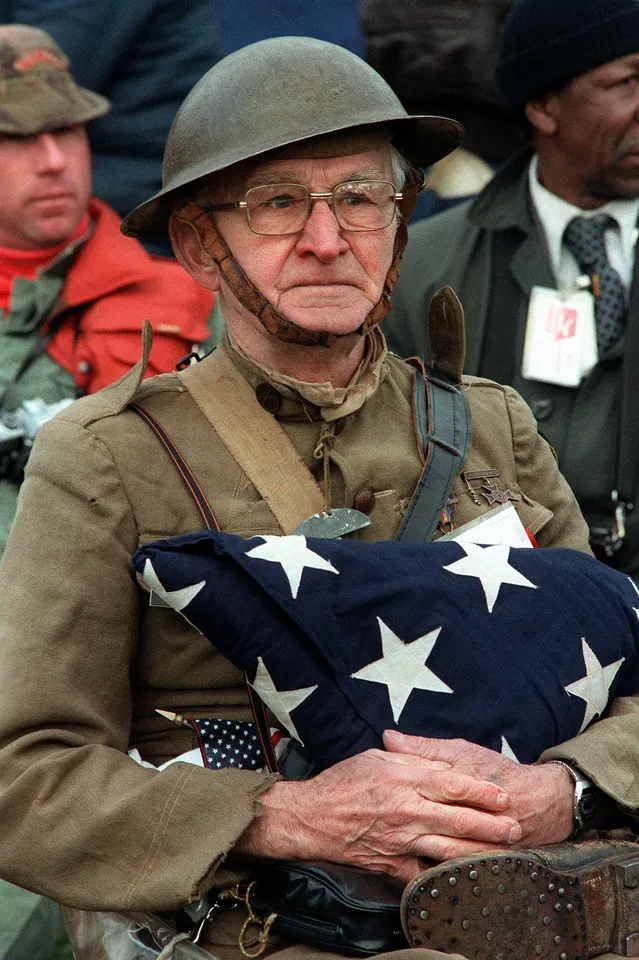
World War I veteran Joseph Ambrose at a 1982 memorial dedication parade, shown as a historical photograph.
How readers in Pakistan can understand the context
The United States observance does not itself create a Pakistan public holiday. Pakistan's official holiday arrangements must be checked through the relevant local authority or institution. International search interest can be high without changing the schedule of a school or workplace in another country.
If you study American history, English or international affairs, the date is still relevant. It provides a practical example of commemoration, historical memory and the relationship between public ceremonies and legislation. You can learn the context without assuming that you must adopt another country's civic practice.
For remote teamwork, write time zones explicitly. A date-only message can hide the fact that participants are in different working days or hours. Confirm both the local date and the agreed deadline when an international event affects a project. This is ordinary planning, not a special rule unique to Veterans Day.
A respectful school presentation
Begin with a short statement of what the day recognises. Then explain the historical link to 11 November and the change from Armistice Day to Veterans Day. Keep those facts separate from personal opinions about a particular war or current political event. A clear structure helps an audience understand the observance before considering wider questions.
Use a timeline with only the dates you can explain accurately. It is better to discuss a few well-labelled milestones than to display a crowded list of years without showing what changed. Add a source note so classmates can distinguish an official historical account from an unattributed social-media image.
If someone shares a personal service story, obtain permission before quoting or recording it. Do not pressure a person to describe experiences they would rather keep private. Respect can be expressed through careful listening and accurate attribution, not only through public speeches or decorative displays.
Reading photographs and posters critically
Ask who created an image, when it was made and what it was intended to communicate. A commemorative poster is designed to express a theme; it is not a statistical account of every veteran's experience. A photograph records a particular moment, not every event that occurred on the date.
When using an archival picture in a classroom handout, retain enough context for a reader to recognise its limits. Identify the place and year when known, and do not imply that an old parade photograph shows a new ceremony. The caption should answer a factual question rather than merely repeat an emotional slogan.
Image reuse also requires checking permission. A photograph found through a search engine is not automatically free to republish. Use an appropriately licensed source and keep the attribution information with the file. This is a useful digital-literacy habit for any historical topic, not just for holiday coverage.
Build a simple historical timeline exercise
Create four columns: date, event, type of evidence and explanation. Enter the 1918 armistice, an early commemoration, the legal-holiday milestone and the later naming change. Then explain why each row belongs in a different category. This forces a timeline to show relationships rather than just sorting numbers.
Next, give students two statements to compare: fighting stopped on a date, and a treaty was signed on a date. Ask what additional information is needed before treating them as equivalent. The exercise develops the habit of checking the meaning of a verb rather than relying on a familiar year.
For a computing extension, store the events as records and display them in chronological order. Keep the source field attached to each record. Our programming courses provide a place to practise the basic data structures behind that task, while class resources support wider study.
Common questions about Veterans Day 2026
Is Veterans Day always on 11 November?
The current American observance is on 11 November. Its history includes a period with a different federal observance arrangement, which is why older records can mention another date. Check the year and whether a source is describing the present calendar or an earlier policy.
Why is there no apostrophe in Veterans Day?
The official spelling is Veterans Day. It uses the plural word veterans without a possessive apostrophe. The name identifies a day honouring veterans rather than a day described as belonging to them. Retain that spelling in a heading, school assignment or calendar entry.
Is it the same as Remembrance Day everywhere?
No. Several countries commemorate events around 11 November, but names and purposes differ. Describe the particular country's observance instead of assuming that one definition applies internationally. Similar ceremonies can share historical roots while emphasising different aspects of remembrance and service.
Can a Pakistan school announce a closure because of it?
A school's own official notice determines its arrangements. The existence of a United States federal holiday does not itself establish a closure in Pakistan. Check the school or responsible local authority rather than forwarding an international holiday headline as a local announcement.
Where should I verify the national ceremony?
Use the official Veterans Affairs event information and the cemetery's current visitor guidance. Confirm the year, programme and access arrangements before travelling or sharing a schedule. An old poster or video description may remain online after the event it originally advertised.
The useful lesson behind the anniversary
Veterans Day connects a specific historical date with a broader act of recognition. Understanding it requires attention to purpose, terminology and the difference between past events and present commemorations. Those habits also help readers evaluate other anniversary stories without confusing a remembered event with the way it is observed today.
For 2026, the calendar answer is clear: Wednesday, 11 November. The more valuable next step is to read the history carefully, identify the people being honoured and verify any practical schedule with its organiser. That produces a better understanding than a copied holiday list with no explanation.
Sources
- Veterans Affairs national ceremony and 2026 information
- Official history of Veterans Day
- Veterans Day facts and terminology
- United States federal holiday calendar
Image credits: cover: U.S. Secretary of Defense, source, Public domain. Resized and converted to WebP. inline: Department of Defense. Defense Audiovisual Agency; Scene Camera Operator: Mickey Sanborn, source, Public domain. Resized and converted to WebP.
Found an error or an outdated detail? Report a correction with the article URL and original source.