
Vinicius Junior: Career Milestones, Wing Play and Attacking Decisions
Explore Vinicius Junior’s career milestones and wing play. Understand dribbling, chance creation, finishing and the dates behind major finals.
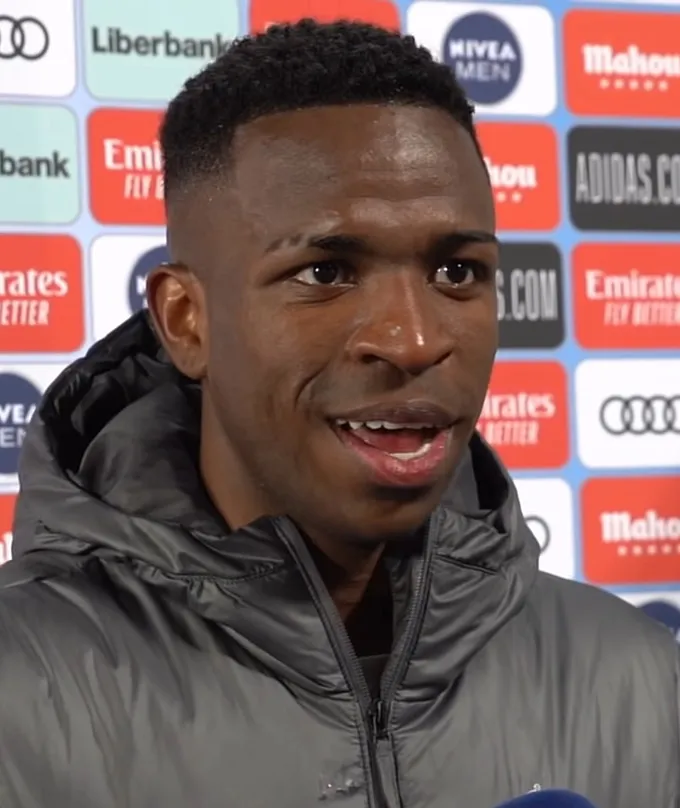
Vinícius Júnior's decisive appearances in major finals offer a practical way to understand wing play, chance creation and football records. He scored the only goal when Real Madrid defeated Liverpool in the 2022 UEFA Champions League final. In the FIFA Club World Cup 2022 final, played in February 2023, he contributed two goals and an assist as Madrid defeated Al Hilal 5-3.
These are specific historical performances, not a live score service or a prediction about the next match. This guide follows official competition analysis and the record of his 2018 Madrid presentation, then explains the movements and statistical distinctions that make a forward's contribution easier to understand.
Identify the player and the period
Vinícius Júnior is the Brazilian forward who moved from Flamengo into his Real Madrid career in 2018. The presentation and the later match records belong to different stages. A profile should preserve those stages rather than using an older photograph as evidence of a new transfer.
His name can appear as Vinícius Júnior, Vinicius Junior or Vini Jr. Those forms can refer to the same player, but the team, source and occasion should still be checked. A familiar short name is a clue, not a reason to ignore the identity behind a statistic.
| Historical event | What the record establishes |
|---|---|
| Madrid presentation | July 2018 arrival context |
| 2022 Champions League final | Goal in the 1-0 win over Liverpool |
| Club World Cup 2022 final | Two goals and an assist in a 5-3 win |
| Club World Cup final date | February 2023, despite the edition's 2022 name |
The competition name and match date can differ
The FIFA Club World Cup 2022 final was played in February 2023. The edition name and the calendar date therefore answer different questions. A reader should not change one to force an apparent match between the two labels.
This happens in several sporting contexts. A competition can retain an edition or season name while its events take place across calendar years. The official record supplies the correct relationship, and a reliable article keeps both labels visible.
For a timeline exercise, make separate columns for competition edition and date played. This prevents a genuine historical match from being placed in the wrong calendar year simply because the title contains a different number.
The 2022 Champions League final shows the value of timing
UEFA's report records Madrid's 1-0 victory over Liverpool and Vinícius Júnior's winning goal. Its performance analysis follows the attacking sequence, including Federico Valverde's movement on the right before the finish. The scorer's action is important, but the chance developed through a team sequence.
A useful reading looks at where the forward was before the ball arrived, how the space opened and what the final action required. A short clip beginning at the finish can omit the movements that made the opportunity possible.
The lesson is not that every goal follows one template. It is that timing and the surrounding play deserve attention. A documented goal can be explained more clearly through its actual sequence than through a general claim that the scorer simply wanted it more.
Width and inside movement ask different questions
A wide starting position can stretch the space an opponent must cover. An inward run can then change the relationship with defenders and teammates. These are different moments within an attack, not mutually exclusive descriptions of a forward's role.
Imagine a fictional winger beginning near the touchline while a teammate advances centrally. The winger later attacks an inside space. A photograph from the first moment and a photograph from the second would show different positions without proving that either description was wrong.
When analysing an actual Vinícius sequence, identify its starting point and development. A position label is an introduction. The movement, available pass and opponent's response explain the specific action being studied.
A dribble should be connected to its outcome
Beating an opponent can create space, but its meaning depends on what follows. A dribble leading to a useful pass, a shot or retained possession has a different context from one ending with a loss. A raw dribble count does not tell the whole story.
For a fictional example, one player completes five take-ons far from the penalty area, while another completes two that create clear shooting opportunities. The count and the consequence are separate observations. Neither should be replaced by the other without explanation.
Use the actual data provider's definition when discussing a recorded successful dribble. A visual impression can support a description of movement, but it should not become an invented official total for a player or match.
The first touch can shape the next decision
A first touch can bring the ball under control, direct it into space or prepare a pass or shot. Its usefulness depends on the situation rather than one universal rule about distance or speed. The following action helps reveal why the touch mattered.
Picture a fictional forward receiving near a defender. A touch away from pressure can create an extra moment to choose a pass. In another situation, a shorter touch may be more suitable because a teammate is immediately available.
For a student observation, record where the ball arrives, the direction of the first touch and the next action. This produces a concrete explanation without guessing what the player privately intended or presenting one technique as mandatory in every situation.
Creating a chance and finishing one differ
A forward can score, provide the final pass or contribute earlier in an attack. Goals and assists identify particular outcomes under the relevant definitions, while preceding movement can require a separate description. The official label should not be stretched to cover every helpful action.
In a fictional sequence, a winger draws two defenders before passing to a teammate who supplies the final ball. The winger may have influenced the chance without receiving a recorded assist. The appropriate response is to explain the sequence, not invent a new assist in the statistics.
The FIFA technical analysis of the Club World Cup final provides an example of a performance containing both scoring and creative contribution. Its reported two goals and an assist should retain the match context rather than becoming an undated career total.
A 5-3 result is not an individual score
Madrid's 5-3 Club World Cup final victory describes the team result. Vinícius Júnior's two goals are a contribution within the five. Adding the individual goals to the team total would count them twice.
For a fictional arithmetic exercise, a team scores four and one forward scores two of them. That player supplies half of the team's goals in the match. The result is not six goals, and the percentage does not independently describe every aspect of the player's performance.
When writing a match summary, keep team score, individual goals and any assist count in distinct fields. This simple structure prevents an impressive performance from being exaggerated through a basic category error.
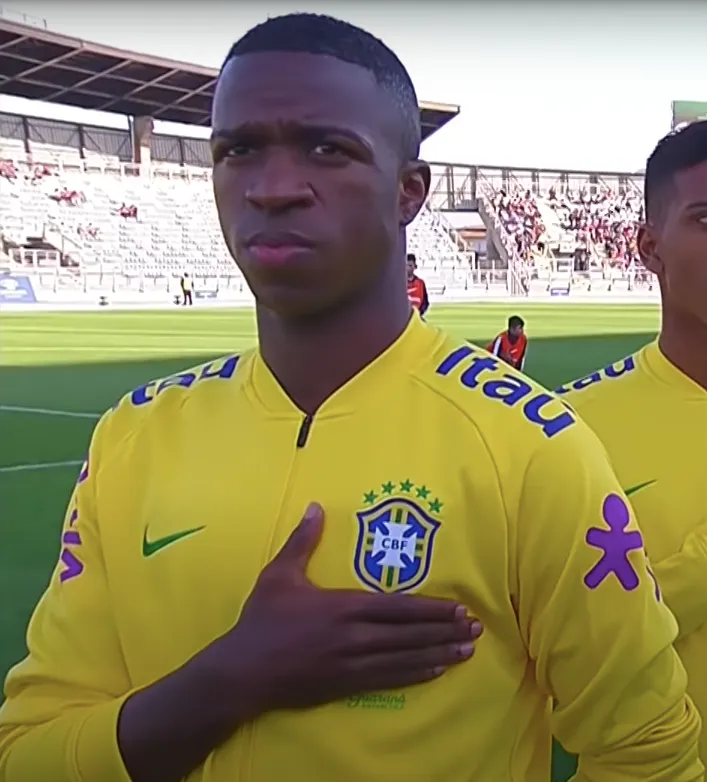
Vinicius Junior pictured in 2018, providing an earlier career reference rather than a new performance claim.
Shots, shots on target and goals need separate labels
These statistics describe different stages or classifications of attempts. Their exact definitions can depend on the provider. A blocked effort, an off-target effort and a goal should not be assumed to belong to one identical category without checking the method.
In an invented example, a forward has six attempts and scores twice. A simple goals-per-attempt calculation is one-third under the exercise's definitions. A separate shots-on-target rate would need the actual number of attempts classified on target.
Do not fill a missing denominator with a guess from a highlights video. For real Vinícius figures, use the matching competition and provider record. A transparent incomplete calculation is better than a complete-looking percentage built from incompatible inputs.
Passing choices depend on the surrounding space
A wide attacker may face options to cross, pass inside, continue carrying the ball or recycle possession. The usefulness of each depends on teammates, opponents and the match situation. A single still frame rarely establishes all those options.
For a fictional exercise, pause a sequence before the final action and list the visible passing routes. Resume the clip and compare the outcome with those options. This teaches observation without pretending that a viewer can know every instruction given to the player.
When discussing an actual match, distinguish the available evidence from an imagined alternative. It is reasonable to analyse a visible pass. It is less reliable to claim that an unseen teammate was always available or that one decision proves a permanent attitude.
A winger's movement can help someone else score
Attacking contribution is not limited to touching the ball. A run can change a defender's position and open a route for a teammate. Such actions require a clear description because they may not appear in a basic goals-and-assists table.
Imagine a fictional forward taking a defender toward the near post while another player arrives behind. If the second player scores, the first run may be relevant to the explanation. It should remain an observed contribution rather than an invented statistical assist.
The distinction helps readers appreciate team attacks while preserving accurate records. It also allows a profile to discuss Vinícius as part of a collective sequence instead of presenting football as a series of isolated individual events.
Club and national-team records are different scopes
Real Madrid statistics and Brazil statistics belong to different teams and competition structures. Combining them requires a stated period and inclusion rule. A club-season figure should not be described as an international total simply because the player represents Brazil as well.
For a fictional dataset, a player scores eight in a domestic league and three in a continental competition. Eleven is a combined total across those two categories, not eleven league goals. The label determines whether the calculation is meaningful.
When checking current numbers, retain season, competition and update date. This guide uses dated historical finals and does not manufacture a current aggregate from partial tables or a search snippet.
Physical speed and decision speed are different ideas
A forward can move quickly across the pitch, but the timing of a decision concerns a different aspect of play. A well-timed pass or run cannot be fully described by a sprint measurement alone. The match sequence gives the necessary context.
For a fictional example, a player releases the ball early and creates space for a teammate without making a long sprint. Another action may require a fast run to reach a pass. Both can be effective for different reasons.
Use actual measured data for a numerical speed claim. A video that looks fast is not sufficient evidence for a precise kilometres-per-hour figure, and a single measurement should not be presented as a complete ranking of football ability.
Historical photographs should not become new transfer claims
An image from a presentation, an awards event or a previous season can provide useful context. It does not automatically establish a current contract or a new move. The known occasion belongs in the caption.
For a profile, keep the creator, source and date together with the image. If the photograph shows a team celebration, describe it as a celebration rather than a new match-action image. This is especially important when several players appear in the same scene.
The same discipline applies to search results. A similar kit or a familiar stadium does not establish the player's identity. Match the source description with the actual person before using an image as a cover.
Build a wing-play learning exercise
Choose a verified sequence and record the player's starting position, first touch, movement and final action. Add the position of the nearest teammates and defenders where visible. Keep observations separate from assumptions about instructions or private thoughts.
Then compare the sequence with a matching statistic, such as an attempt or a recorded assist. Ask what the statistic captures and what the sequence adds. This makes the exercise more useful than either an unlabelled highlight clip or a table without context.
Use class resources for percentages and evidence-based writing. Learners in programming courses can build a match-event table that requires team and competition labels before adding an individual goal to an aggregate.
Questions about Vinícius Júnior
What happened in the 2022 Champions League final?
Real Madrid defeated Liverpool 1-0, and Vinícius Júnior scored the only goal. UEFA's report and performance analysis establish the result and attacking sequence. The goal should retain that match context rather than being attached to a different final or season.
Why is a 2022 Club World Cup final discussed in February 2023?
The competition's edition name and the date played differ. The FIFA Club World Cup 2022 final took place in February 2023. Keep both labels visible so that a historical result is not moved into the wrong calendar year.
What did he contribute in the 5-3 final victory?
FIFA's technical analysis records two goals and an assist against Al Hilal. Those are individual contributions within the team result. They should not be added again to Madrid's five goals or described as an undated total across his entire career.
Can a highlight compilation replace a full performance record?
No. It is a selected presentation of moments. It can support observations about the actions shown, while broader claims need the matching match data and wider sequence. Enjoying a highlight and preserving the limits of its evidence are compatible approaches.
Sources
- UEFA: 2022 Champions League final report
- UEFA: performance analysis of Liverpool 0-1 Real Madrid
- FIFA Training Centre: Club World Cup final analysis
- Xinhua: 2018 Real Madrid presentation
Image credits: cover: Real Madrid, source, CC BY 3.0. Resized and converted to WebP. inline: Real Madrid, source, CC BY 3.0. Resized and converted to WebP.
Found an error or an outdated detail? Report a correction with the article URL and original source.