
Virat Kohli Birthday and Age in 2026: Verified Career Milestones
Virat Kohli turned 38 on 5 November 2026. Check his birth date, format retirements and major career milestones with clear explanations of batting records.
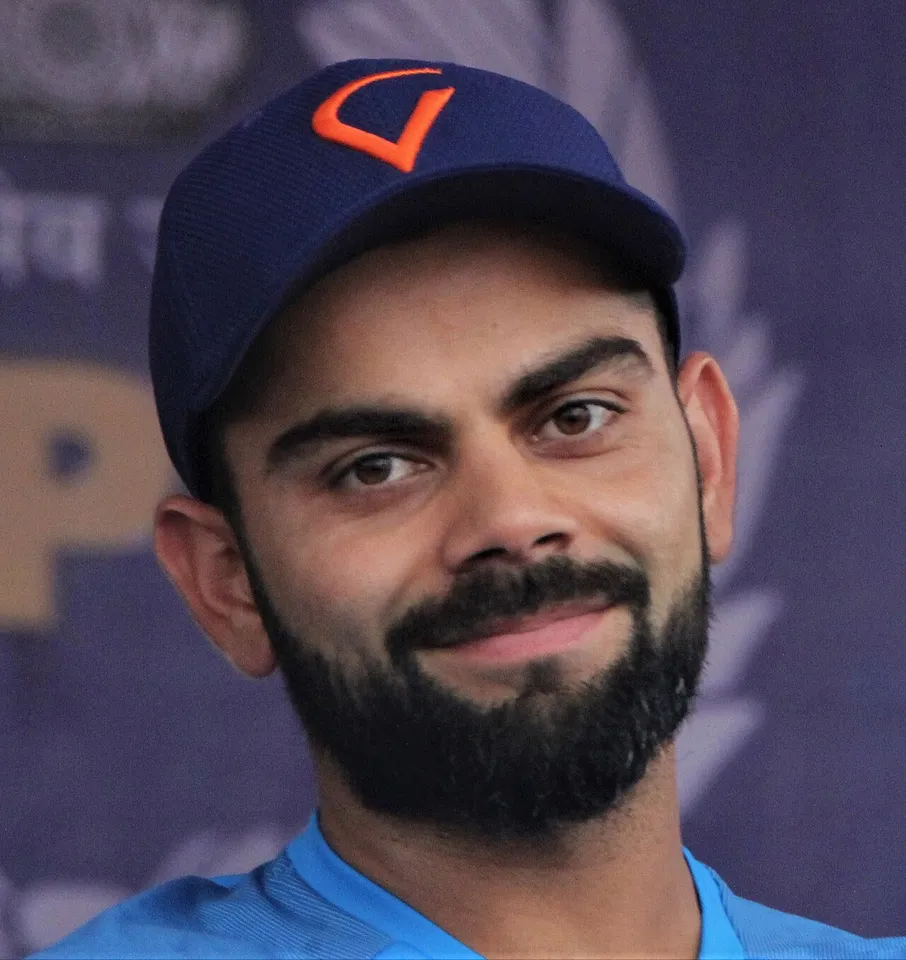
Virat Kohli was born on 5 November 1988 and turned 38 on 5 November 2026. His birthday is therefore 5 November, not the date on which an old photograph or tribute is reposted. The birth date is recorded in his BCCI profile; the age given here is calculated for this article's review date, 6 November 2026.
Kohli's career extends across different international formats, major team tournaments and long periods of individual achievement. Those categories need to be kept separate. This profile explains his birthday, selected verified milestones and the statistics readers commonly encounter. It is a career guide, not a live scorecard or an announcement about his next selection.
How old is Virat Kohli in November 2026?
Kohli is 38 after his birthday on 5 November 2026. Subtracting 1988 from 2026 gives 38, and his birthday has already occurred by the review date. An article written before 5 November in the same year would need a different age. That timing is why old profile snippets can disagree without using a different birth date.
The simplest reliable way to share the answer is to include both the birth date and the date on which age is calculated. A sentence such as born 5 November 1988; age 38 on 6 November 2026 remains interpretable when someone encounters it later. A bare age becomes outdated more easily.
Readers looking for birthday photographs should also distinguish when an image was taken from when it was posted. A photograph of Kohli in an older team kit can illustrate his career, but it does not prove that the pictured event occurred at his latest birthday celebration.
Why is Kohli important in international cricket?
Kohli has been a major Indian batter across Test cricket, one-day internationals and T20 internationals. His career includes leadership responsibilities and performances in global tournaments. Understanding that range is more useful than trying to describe every part of his record using one total or one nickname.
BCCI's profile records international debuts in ODIs in 2008, T20Is in 2010 and Tests in 2011. These dates establish that the formats entered his senior career at different times. They should not be combined into a claim that all three careers began in the same season or followed an identical path.
A useful career timeline separates debut, leadership, team success and individual milestones into different columns. One event can matter in more than one way, but the labels prevent a team trophy from being counted as an individual batting record or a personal score from being described as a tournament victory.
What did the early-career period establish?
The ICC's historical player material identifies Kohli as captain of India's victorious 2008 Under-19 World Cup team. That achievement belongs to youth international cricket. It is an important part of his pathway, but it should not be described as the same competition as the senior men's ODI World Cup.
His senior ODI debut also came in 2008. The transition illustrates how a youth achievement and a senior opportunity can appear close together while remaining different events. A responsible profile preserves those distinctions rather than treating a promising early result as proof that later success was guaranteed.
For students, the useful lesson is how to read a pathway without turning it into a formula. Many athletes develop through youth competitions, and their later careers vary. Kohli's history is evidence about his own progression, not a promise that copying one early milestone produces an identical professional outcome.
How do his three international formats differ?
Tests, ODIs and T20Is provide different competitive settings. An ODI batting average cannot simply be substituted for a Test average, and a T20I strike rate answers a different question from the length of a Test innings. A profile should identify the format beside each statistic.
In a simplified classroom comparison, imagine a batter playing an invented fifty-over chase and a separate short-format innings. The available time, team requirements and risks differ. This does not establish what Kohli would do in a particular situation; it explains why a single measure should not be used as a universal description of batting value.
When checking career information, keep international figures separate from domestic and franchise competitions. A player can appear in several categories of cricket, but the records are not automatically combined. The source's filter and definition determine what a total represents.
What happened at the 2023 World Cup semi-final?
The ICC's report of India's 2023 World Cup semi-final against New Zealand records Kohli reaching his 50th ODI century. This was a milestone in the ODI format. Calling it his fiftieth international century without the format label would describe a different record and would be incorrect.
The match was also part of a team campaign. A batter's century and the team's qualification for a final are connected events, but they should be described in their own terms. A career article can acknowledge an individual achievement without erasing the roles of other batters, bowlers and fielders.
Historical milestones stay meaningful even when later totals change. That is why this article uses the dated fiftieth-ODI-century event rather than presenting an unverified current career count. A live statistical total should be checked against an up-to-date official record and its selected format.
What is significant about the 2024 T20 World Cup final?
The ICC's final report and retirement coverage record Kohli scoring 76 from 59 balls against South Africa in the 2024 men's T20 World Cup final. India won the tournament, and Kohli received the Player of the Match award. These are specific historical facts about that match, not predictions of future tournament performances.
After the final, he announced that he was stepping away from T20 internationals. The format label matters. Retiring from T20Is does not mean that every form of cricket or every possible playing competition ended on that date. A headline that omits the distinction can mislead readers about the scope of the announcement.
The innings can be studied in context without reducing the whole game to one number. A scorecard shows runs and balls, while the sequence of wickets, partnerships and match situation provides additional information. An analysis should explain which evidence supports its interpretation instead of inventing private thoughts or conversations.
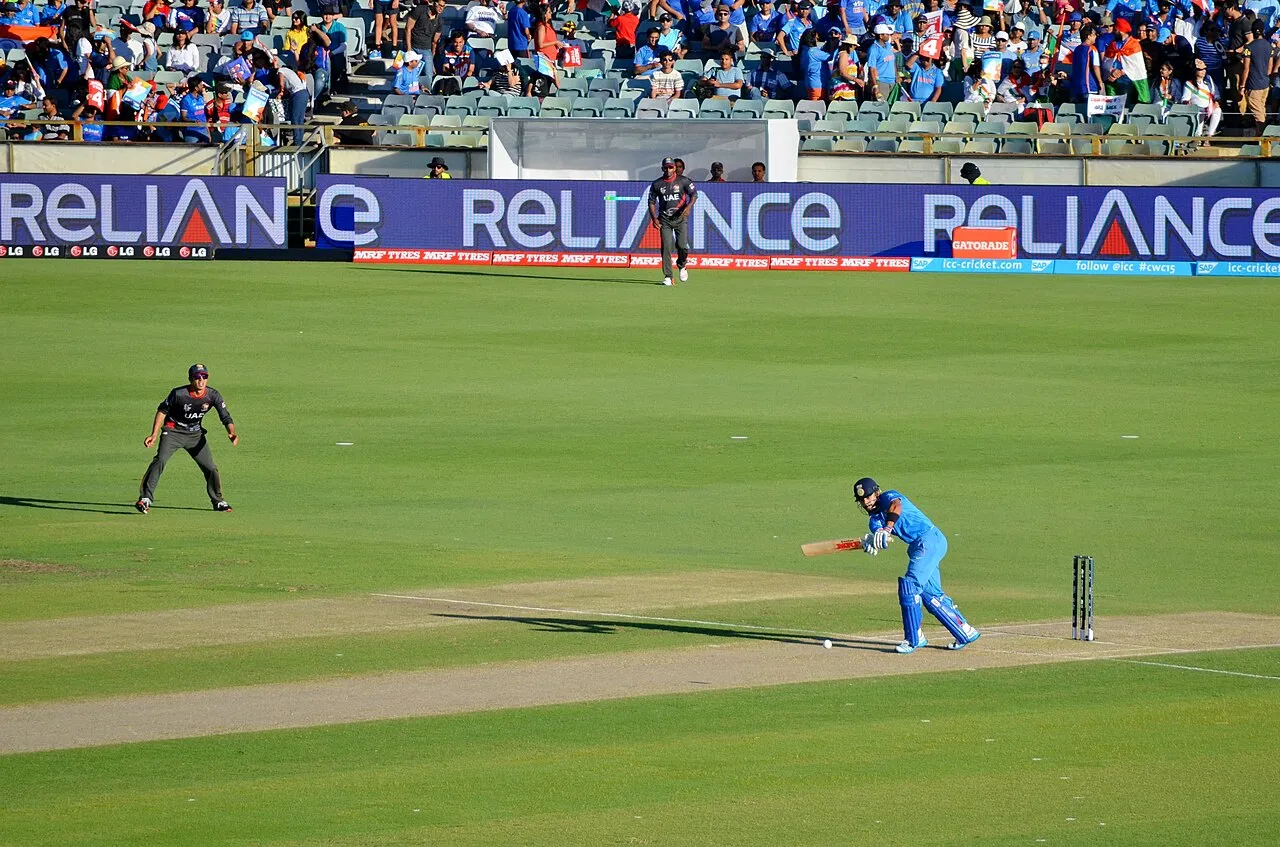
Kohli batting against the UAE at the 2015 Cricket World Cup, shown as historical career context.
When did Kohli retire from Test cricket?
The ICC reported his Test retirement on 12 May 2025. That announcement is separate from the T20I decision made after the June 2024 final. Maintaining two dated entries prevents the common mistake of treating several format decisions as one undifferentiated retirement event.
This profile does not infer a new retirement announcement from an old photograph or birthday message. If a later format decision is reported, it requires its own current official source. A career guide should preserve what the documented announcement says rather than expanding its meaning to attract attention.
For a research exercise, place the ODI debut, T20I retirement and Test retirement on a timeline. Label each format explicitly. The timeline helps a reader understand why a recent article can discuss Kohli's international career while also referring accurately to two completed format careers.
How should batting average and strike rate be read?
Batting average and strike rate describe different relationships. In standard batting statistics, average relates runs to dismissals, while strike rate relates runs to balls faced. Not-outs therefore matter to the average's denominator. Neither measure is simply another spelling of total runs.
Use an invented record of two hundred runs across four dismissals. The average in that model is fifty. If the same two hundred runs came from two hundred and fifty balls, the strike rate is eighty runs per hundred balls. Those calculations describe different quantities and do not evaluate every aspect of the innings.
These are fictional numbers, not Kohli's current statistics. Their purpose is to make the definitions clear before readers compare actual records. A meaningful comparison also considers format, period, innings and match context rather than declaring one player better from an isolated percentage.
Why does chasing require context?
Kohli is frequently discussed in relation to run chases. To analyse a chase, identify the target, overs available, wickets remaining and the match situation at the relevant moment. A final individual score alone does not explain how those conditions changed during the innings.
For an original example, a fictional team needs sixty from sixty legal balls. Later it needs thirty from twenty. The required rate has changed, even though the remaining run total has become smaller. This illustrates why the state of a chase cannot be understood by looking at runs alone.
Do not attach the invented example to a real Kohli innings without matching the actual scorecard. A useful article separates the general concept from a documented match. Readers interested in current results should use the appropriate cricket updates rather than treating a biography as a live scoreboard.
What does captaincy add to a career profile?
Captaincy introduces team responsibilities that differ from individual batting. Selection discussions, field settings, bowling changes and wider team decisions involve several people and constraints. A profile should not claim access to a player's private decision-making unless a reliable public account establishes it.
Use official match records to identify when someone captained and documented interviews to explain public statements. Avoid invented dressing-room scenes or motivational quotations. An attractive story loses value when its detail cannot be traced to evidence or is presented as fact merely because it sounds plausible.
For students, distinguishing an individual's performance from team leadership is a valuable analytical habit. The team can win when one batter has a quiet match, and a strong individual innings can occur in a defeat. Those observations are compatible because the measurements describe different levels of performance.
How can photographs be used accurately?
The photographs accompanying this article are career illustrations with source credits. Their captions identify the setting supported by their source. They are not presented as new birthday-party pictures, proof of a current training session or evidence that a particular selection decision has been made.
A useful image check asks who is pictured, where the source places the event and when the photograph was made. If a date is not established, do not invent one. Reposting a photo on 5 November does not turn it into a photograph taken on that birthday.
Respect image licences and avoid using an unrelated player's photograph because the uniform looks similar. Visual accuracy matters just as much as numerical accuracy. A correctly spelled name beside the wrong image still gives the reader an unreliable result.
What is a sensible way to check current Kohli statistics?
Begin with a recognised governing-body or competition source and select the exact format. Record the date checked and whether the figure concerns career totals, a season or one tournament. Do not add international and franchise runs together unless the source defines the combined category and the comparison genuinely requires it.
Then check whether the record is complete for the question. A birthday search needs a birth date and a calculated age, while a current-match query needs a dated scorecard. One page cannot replace every type of evidence. Matching the source to the question is more useful than copying the first large number encountered.
Our study resources can support percentage and table-reading practice, while programming courses can help students build a fictional cricket-statistics calculator. Keep invented datasets labelled and make the selected format visible so the calculator does not invite comparisons between incompatible records.
Questions readers ask about Kohli's birthday and career
When is Virat Kohli's birthday?
His birthday is 5 November. The BCCI profile records his birth date as 5 November 1988. He turned 38 on 5 November 2026. A profile stating his age should include the date to which that age applies, because age changes while the birth date remains fixed.
Does a Test retirement mean retirement from every format?
No. A format-specific announcement has a defined scope. The documented T20I decision followed the 2024 World Cup final, and the Test announcement was reported in May 2025. Check a current official source for any later change rather than inferring it from one of those earlier announcements.
Are the statistics in the worked examples his actual figures?
No. The arithmetic examples are explicitly invented to explain definitions. The career milestones identified as historical facts are separately attributed to official sources. Keeping those categories distinct lets a reader learn the method without accidentally repeating a fictional number as a player record.
Sources
- BCCI: Virat Kohli profile and date of birth
- ICC: historical team guide, including the 2008 Under-19 captaincy
- ICC: the 2023 World Cup semi-final and fiftieth ODI century
- ICC: 2024 final and T20I retirement
- ICC: Test retirement, 12 May 2025
Image credits: cover: Anand Anil, source, CC BY-SA 4.0. Resized and converted to WebP. inline: Bahnfrend, source, CC BY-SA 4.0. Resized and converted to WebP.
Found an error or an outdated detail? Report a correction with the article URL and original source.