
Rockets Beat Warriors 115–108: Curry’s Early Exit and Score Context
Read the reported Rockets 115–108 win, Curry’s early exit and the difference between partial score snapshots, completed results and availability updates.
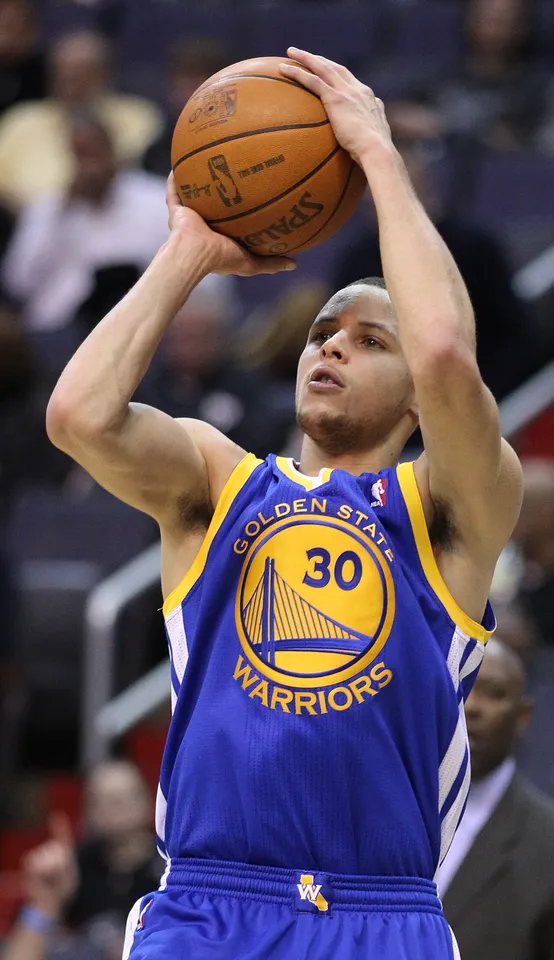
Rockets beat Warriors 115–108 as Curry leaves early
Houston defeated Golden State 115–108 on 11 November 2026, according to the reviewed completed-result reporting. Stephen Curry left early. Those facts should remain separate from speculation about a diagnosis, a return date or availability for another fixture.
The game was at Toyota Center. This guide explains the reported result, the problem of unfinished score snapshots and how to interpret a short appearance without turning it into a complete medical or tactical account. It does not claim to have independently watched every possession.
Several searchable records describe different stages of the evening. A report showing a fourth-quarter clock still running is not a completed final merely because a search engine displays it beneath the game's title. The status and timestamp matter as much as the team names.
The result checkpoint used here
| Item | Context |
|---|---|
| Fixture | Golden State at Houston |
| Date | 11 November 2026 |
| Venue | Toyota Center |
| Reported completed score | Houston 115, Golden State 108 |
| Margin | Seven points |
| Curry development | Early departure reported |
The official scorer-report material indexed during research included a clock within the fourth quarter. Its visible Curry line recorded three points in 5:35. The unfinished team snapshot should not be substituted for a completed result, even when an individual line later remains unchanged.
For subsequent corrections or availability information, consult the current official game and team records. This article does not keep a permanent live status for a player's next appearance. A dated report answers a different question from a current injury update.
A running clock changes what a score means
A score with time remaining describes a checkpoint. A final score describes the completed contest. Both can be accurate records of their respective moments. Problems arise when a checkpoint is copied without its clock or status and then presented as the outcome.
The distinction is particularly important in search results. A PDF or page can be indexed before the last possessions occur, while its title already contains the teams and date. The familiar title does not prove that the body has reached a final state.
Before sharing a score, look for a final designation and compare the fixture identity. If two completed records still disagree, state the conflict rather than choosing the number that makes the most dramatic headline. A current official correction should take precedence over an archived extract.
For a classroom exercise, keep a fictional game's snapshots at three different times. Remove the times and see how easily the records can appear contradictory. Restore them and explain which question each snapshot answers. The exercise demonstrates why metadata is part of the information, not an optional decoration.
Read a short player appearance with care
A short appearance limits the amount of game activity in the sample. It does not automatically establish how the player would have performed over a full match or how the entire result would have changed if the appearance had continued.
The same caution applies to rate calculations. A few early minutes can contain unusually high or low activity. Extending that rate across a longer period is a mathematical projection, not an observed achievement or a reliable prediction.
Consider an original example unrelated to Curry's line. A player scores six points in four minutes. Multiplying the rate across 32 minutes gives 48, but that does not mean the player would actually score 48 with a different workload, opponent response and game situation.
Keep actual totals separate from projected totals. A clear label prevents an illustrative calculation from becoming an apparent record. This is a useful statistical habit whenever the available sample is small, whether in sport, a classroom experiment or a performance test.
An early departure is not a complete diagnosis
A player leaving a game establishes a change in participation. The reason, medical assessment and later availability require appropriate statements and updates. A short clip of discomfort cannot responsibly supply all of those details.
This guide therefore does not name an unverified structural injury, estimate recovery time or claim that the next appearance is confirmed. Readers looking for a later status should use the team's current announcement and the applicable official report, not a prediction attached to an old match article.
The language of an update matters. Evaluation, absence and clearance describe different stages. A statement that a person is being assessed should not be rewritten as a final diagnosis. Equally, an early reassuring description should not become a promise about future participation.
That restraint does not make the sporting development unimportant. It keeps the report within the evidence available. A result story can explain that the team played without a prominent player for part of the contest while leaving the medical and selection questions to suitable sources.
The final margin does not measure a missing player's hypothetical value
Subtracting 108 from 115 gives seven. That is the recorded difference between the teams' final totals. It does not tell you how many points a particular player would have added under circumstances that did not occur.
A counterfactual changes more than one line on a spreadsheet. If a player remained in the game, teammates' roles, shot distribution, substitutions and opponents' decisions might also differ. Simply adding an expected personal score to the actual team total would ignore those connected changes.
For discussion, distinguish the useful question from an answer the record cannot provide. Asking how a team adjusted after a departure is reasonable. Claiming certainty about a different final score requires evidence that a completed box score cannot supply.
This is a general reasoning lesson rather than a judgement on anyone's importance. A prominent player can matter greatly while the exact outcome of an unplayed alternative remains unknown. Acknowledging uncertainty is more accurate than presenting a hypothetical victory as a fact.

Archive illustration: Houston Rockets mascot Clutch the Bear entertains the crowd prior to an NBA basketball game between the Rockets and the Dallas Mavericks, Nov. 1, 2013, at the Toyota Center in Houston, Texas. Not a photograph of the November 11 game or current incident.
Team roles can change without every adjustment being visible in the box score
When a participant leaves, another player may take minutes or responsibilities. The total can show who played, but it may not explain every change in playmaking, defensive assignment or shot selection. A detailed review needs the relevant sequence and a clear question.
Start by distinguishing minutes from role. Two players can each receive additional time while being asked to do different things. Likewise, a player can remain on court but take a different responsibility as the lineup changes.
If you have not reviewed the sequence, describe the adjustment as a question for further analysis rather than inventing an answer. A familiar phrase such as everyone stepped up sounds positive but can hide the specific contribution a reader wants to understand.
A stronger summary identifies a verified contribution or an attributed explanation. If neither is available, the result and participation change remain useful facts on their own. A report does not need to manufacture a complete coaching account to justify its existence.
Separate scoring totals from shooting opportunities
A team's final points are produced through different scoring categories. A raw point total does not reveal how many attempts were used or the value of each made shot. The shooting mix and other opportunities matter when making an efficiency comparison.
As an original exercise, imagine one team scoring 12 points from six two-point baskets and another scoring 12 from four three-point baskets. The same point total arises from a different composition. Without the attempts, however, neither line establishes a complete shooting-efficiency comparison.
Now add missed shots to the example and notice how the interpretation changes. The relevant denominator must match the question. Makes, attempts, points and possessions are not interchangeable simply because they all appear in a statistical table.
The exercise explains a reading method, not the actual shot distribution in Warriors–Rockets. Keep that label visible. An educational article should never let a convenient invented example become a false line in the match record.
Use highlights for what they actually show
A highlight can establish that a particular visible action occurred within the identified footage. It does not necessarily show the entire possession, every intervening event or the reason for a player's later absence. The selection and caption need to be read together.
An upload focusing on Houston may emphasise Houston's successes. A player reel may omit almost everything not involving that player. Those formats can be enjoyable without functioning as a complete balanced record of the contest.
Check that a clip belongs to the November 11 fixture. These teams have met on many dates, and older playoff footage can attract renewed attention around a new game. A familiar jersey and opponent are not enough to establish the date.
Archive photographs should also be identified honestly. A portrait or earlier public appearance can illustrate who a player is without pretending to show the current match or the early departure. The caption should make that distinction before the reader supplies an incorrect assumption.
Build a reliable result note
Use fields for fixture, venue, date, status and source. Add a separate field for player availability information, with its own timestamp. This prevents a later injury update from being mixed into the original game's chronology without explanation.
When a source changes, record what changed. A completed score replacing a live snapshot is a normal update. A correction to a final number is a different event. Describing the difference clearly helps another reader understand the record rather than assume every revision means the same thing.
Keep interpretation in a separate paragraph. A sentence about a possible tactical effect should be labelled as analysis and supported appropriately. It should not be placed inside a result table where readers reasonably expect established figures.
Finally, check names and units before sharing. A point total, a clock reading and a game date can each be correct yet become misleading if attached to the wrong label. Small organisational choices can prevent large misunderstandings.
Questions about Warriors versus Rockets
What completed result is used in this guide?
The reviewed completed-result reporting gives Houston a 115–108 win on 11 November 2026. The official game page remains the route for current record checks and any subsequent correction.
Does an in-progress scorer report contradict a later final?
Not necessarily. A document showing time remaining can describe an earlier checkpoint. Preserve the clock and status before comparing its numbers with a completed account. Do not remove those identifiers and then treat the difference as unexplained.
Is Curry's next appearance confirmed here?
No. This is a dated match guide, not a permanent availability service. An early departure and a later medical or selection update are different facts that need their own sources and timestamps.
Can the final margin tell us what would have happened if he stayed?
No. A different participation pattern could change many connected decisions. The seven-point final difference is real; an alternative unplayed result is not established by adding an imagined score to the actual total.
Keep the result useful without overstating the explanation
The reported Houston win and Curry's early departure are meaningful developments. They become clearer when the final score, unfinished snapshots and later availability questions are kept separate rather than forced into one confident narrative.
For related basketball numeracy, see the Cavaliers–Knicks score guide and the RayTech article collection. Use the sources below for the actual record, and treat original examples as learning tools rather than substitute match footage.
Distinguish a corrected final from an ordinary live update
An in-progress score changing as play continues is not necessarily a correction. It is the normal development of the record. A final number later amended after review is a different situation and should be described as such when a suitable source establishes it.
For a simple tracking exercise, keep a column for status beside the score. An entry marked live can be superseded by a later live entry, then by a completed result. Retaining the statuses explains the chronology without accusing an earlier accurate checkpoint of being false.
If you saved a screenshot, do not assume it updates when the original page changes. The saved image remains a record of the earlier moment. Include its date and status if you use it in a discussion later.
This distinction is useful for Warriors–Rockets because search results can preserve partial scorer documents. A careful reader can recognise their historical value while still using completed reporting for the final outcome.
Sources
- Source: Completed-result report
- Source: Official game page
- Source: Official scorer-report document, including its visible clock status
Image credits: cover: Keith Allison from Hanover, MD, USA, source, CC BY-SA 2.0. Resized and converted to WebP. inline: Pkantz, source, CC BY-SA 3.0. Resized and converted to WebP.
Found an error or an outdated detail? Report a correction with the article URL and original source.