
YANGWANG U9 Xtreme: The 503.17 km/h Report and Record Categories Explained
Read BYD’s November 2026 U9 Xtreme speed update. Understand single-direction records, speed units, power, energy and fair performance comparisons.
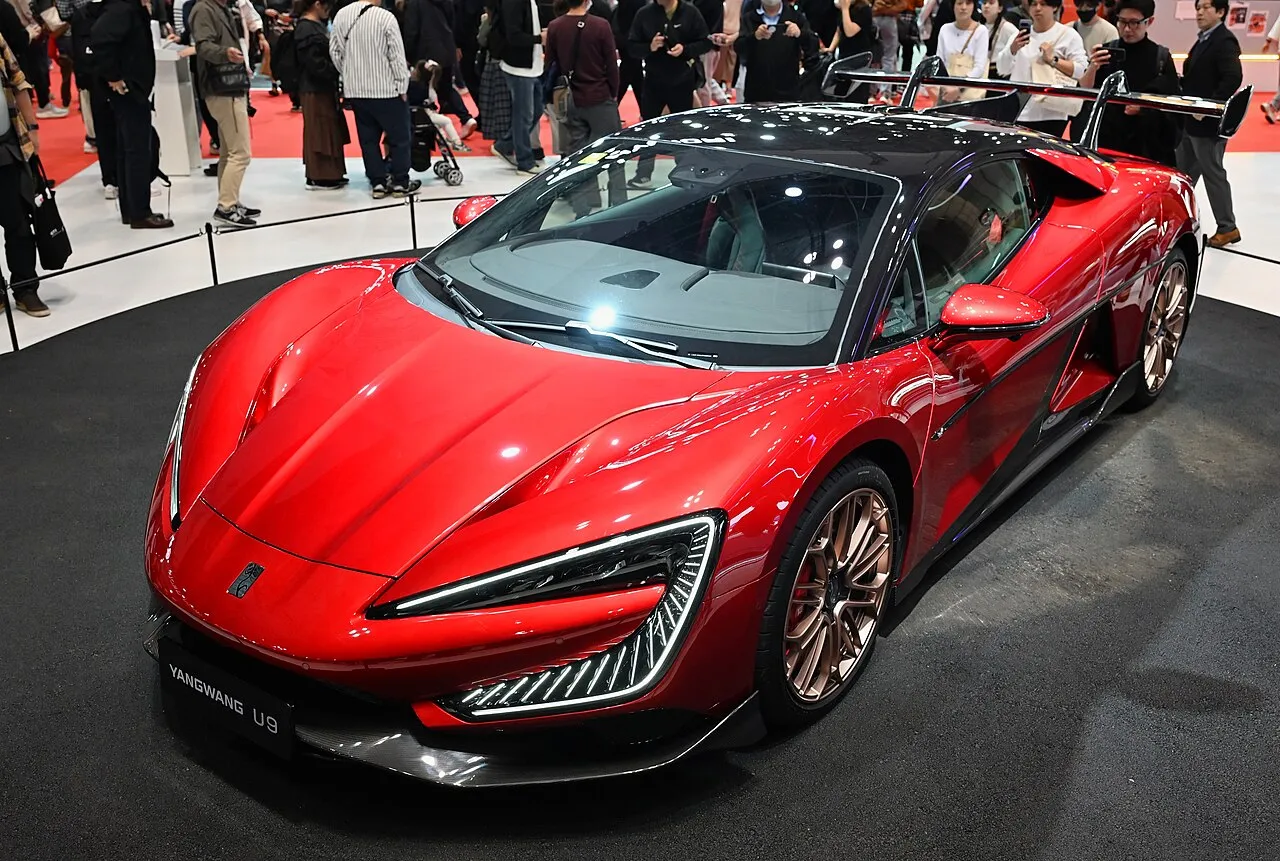
The YANGWANG U9 Xtreme is back in the news after BYD reported a 503.17 km/h run in Abu Dhabi. The manufacturer dated its announcement 6 November 2026 and identified the run itself as taking place on 1 November. That distinction matters: the news-release date and the date of the measured event are not the same field.
The new figure also changes how older coverage should be read. BYD's earlier 496.22 km/h result belongs to 2025, not the latest reported benchmark. This guide separates those milestones, preserves the single-direction category described by the manufacturer and explains the engineering measurements behind the headline. It does not suggest attempting record speeds on public roads or infer a Pakistan retail price from a performance announcement.
What did BYD announce in November 2026?
BYD's media release says the U9 Xtreme reached 503.17 km/h during a run in Abu Dhabi on 1 November 2026, with Marc Basseng driving. The release describes Guinness record categories based on a single-direction run and says the achievement was recognised by the FIA. Those are attributed manufacturer statements, with the category kept visible rather than replaced by a broader unqualified claim.
A record needs its category
Maximum speed, a two-way average and a lap time are different measurements. A result in one category should not silently become a result in another. The phrase single-direction belongs alongside this reported speed. Readers comparing records should examine the timing method, category and conditions rather than sort a list of headline numbers as though every entry used the same procedure.
An announcement is not the raw test dataset
A manufacturer release can establish what the company reported and the recognition it identifies. It is not the same as publishing every measurement sample or independent test document. Preserve attribution where appropriate. A careful explainer can report the announcement while distinguishing the public claim from a full technical audit of all data behind the run.
How does the new result relate to 496.22 km/h?
The 496.22 km/h figure appears in BYD's 2025 U9 Xtreme material. The November 2026 release presents 503.17 km/h as a later benchmark. An older article can therefore contain a genuine historical record without being the latest update. Add the date to both figures instead of describing one as false simply because a later result is larger.
The difference is a speed difference
Subtracting 496.22 from 503.17 gives 6.95 km/h. That arithmetic describes the difference between the two reported maximum speeds. It does not show the energy needed to achieve the increase, the distance covered or the time spent at maximum speed. Those questions require additional information rather than a more dramatic interpretation of the subtraction.
A percentage needs a baseline
Using the earlier figure as the baseline, the increase is about 1.4 percent. Changing the denominator changes the question. State the baseline when presenting a percentage so readers know whether it describes growth relative to the old result or a share of the newer one. The calculation is simple, but its label determines what the answer means.
What does km/h measure?
Kilometres per hour expresses speed as distance per unit of time. It is not acceleration, which concerns how speed changes over time. A car can have a high maximum speed without reaching it instantly. Comparing an acceleration time with a top-speed figure as if they ranked the same quality confuses two different measurements.
Convert the units transparently
To convert kilometres per hour into metres per second, divide by 3.6. A simplified conversion of 503.17 km/h gives about 139.8 metres per second. This is a unit conversion of the reported figure, not a description of a safe stopping distance. Real vehicle motion includes changing speed, reaction intervals and conditions that the conversion alone does not model.
Maximum and average speed differ
A brief peak does not mean the entire run was completed at that speed. Average speed depends on total distance and elapsed time. A record announcement focused on the maximum should not be used to calculate a journey duration without a suitable model. The same distinction applies to ordinary travel, where stops and slower sections affect the average.
How does a lap time differ from top speed?
A lap combines straights, corners, braking and acceleration around a defined circuit. A car with a higher peak speed is not automatically faster around every track. Grip, control and the course layout matter. Compare like with like: a lap result needs the circuit, configuration and timing conditions, while a maximum-speed result needs its own test context.
A circuit name is not the full specification
Different layouts, timing conventions or conditions can produce records that are not directly comparable. Read the exact description before ranking lap times. A screenshot containing only a time and car name may omit the qualifiers needed to understand it. The result becomes more useful when its category and procedure remain attached to the number.
A fast straight does not explain cornering
Maximum speed can draw attention, but it does not measure every aspect of vehicle performance. A complete engineering discussion may consider thermal management, braking, tyres and repeatability. This article explains the distinctions rather than awarding an overall driving-quality score from one record. A large headline number should begin questions, not end them.
What is the difference between power and energy?
Power describes the rate of energy transfer, while energy describes an amount. Motor power and battery capacity therefore use different kinds of units. A high power figure does not, by itself, state the battery's stored energy or the distance a vehicle can travel. Keeping those categories separate is essential when reading electric-car specifications.
Use a fictional battery example
Imagine an entirely hypothetical vehicle using 50 kWh of energy over a defined task. That amount is different from drawing 50 kW at a particular moment. If the average draw were 50 kW for one hour, the simplified energy use would be 50 kWh before considering the details of the system. These inputs are teaching examples, not U9 Xtreme battery specifications.
A power-unit conversion needs its convention
Automotive material can use kW, hp or PS. The exact conversion depends on the horsepower convention being referenced. Do not replace one unit with another simply because both are called horsepower in casual speech. A specification table should preserve the original unit or show a correctly labelled conversion. A larger-looking number may reflect the unit rather than a different vehicle.

A YANGWANG U9 photographed in 2026; related model-family context, not proof that this is the record-run U9 Xtreme.
Why do aerodynamic effects matter?
Moving through air creates resistance that changes with conditions and vehicle shape. In a simplified model with other factors held constant, aerodynamic drag grows with the square of speed and the power needed to overcome that drag grows with the cube. This is an educational approximation, not a complete simulation of the U9 Xtreme run or a claim about its exact power losses.
A small speed increase can require more than a small power increase
In the simplified model, increasing speed by ten percent multiplies the aerodynamic power term by roughly 1.1 cubed, or 1.331. That is about a 33 percent rise in that term. The example does not say total vehicle power always follows the same change, because other effects and operating limits also matter. Visible assumptions keep the model useful.
Do not use the model as a public-road experiment
A mathematical relationship can be studied on paper or in a small simulation. It does not require testing extreme speeds in traffic. The reported record took place within an organised attempt described by the manufacturer. The relevant learning objective is to understand units and dependencies, not to reproduce professional test conditions with an ordinary vehicle or road.
What distinguishes the U9 Xtreme from other U9 material?
The model designation matters. A standard U9 photograph or specification should not be presented as proof of every U9 Xtreme detail. Related vehicles can share a family name while differing in purpose or equipment. If an image shows the broader model family, its caption should say so. The exact variant should be matched to the claim in the text.
A display car is not a local sales promise
A vehicle shown at an exhibition can illustrate design or brand context without establishing delivery in another country. A performance release also does not set a Pakistan price, import cost or warranty arrangement. Those questions need local official information. Converting an overseas amount into rupees would not account for all the conditions affecting a real purchase.
A limited-production claim needs a date
Production quantities and specifications can be announced for a particular period or version. Do not carry an older statement into every later edition without checking. A historical source remains useful when its scope is clear. The safest comparison identifies the announcement date and exact model rather than assuming the family name describes one unchanged product forever.
How should readers assess record evidence?
Look for the measurement, event date, location, category and source. Separate the manufacturer announcement from any independently published recognition or test report. A photo of a speed display can be part of the evidence but does not alone establish the full procedure. A clear article states what its sources support and avoids supplying missing technical details from imagination.
Conditions affect comparability
Wind, route, surface and vehicle configuration can matter in performance testing. If those details are not available in a source, note the limit rather than assuming they matched another test. A fair comparison can remain descriptive until the procedures are sufficiently aligned. The purpose is not to dismiss a result but to avoid comparing unlike measurements as though they were identical.
A historical image needs a truthful caption
An older U9 exhibition photograph is not a new image from the Abu Dhabi run. A genuine image can become misleading through its caption even when it has not been edited. Preserve the model and event context. This guide uses images to identify the subject and explain the model family, not to imply that every photo documents the latest test.
A student engineering project
Create a table with speed, unit, date, category and source. Add a unit-conversion function and a separate simplified aerodynamic model. Keep the two calculations distinct: converting a measured number is not the same as predicting a new performance result. Label every assumed input so a reader can see which values come from a report and which belong to the teaching model.
Add meaningful validation
Require positive speed values and explicit units. Reject a blank category when the table is meant to compare records. Preserve the original reported number alongside any rounded conversion. If a source is updated, add a new dated row rather than silently replacing the earlier historical record. This creates an understandable timeline instead of an unexplained collection of changing figures.
Use the course material for the simulation
The programming courses can help students build the calculator, while the class resources support the mathematics. Start with simple fictional values, test conversions and show the assumptions beside the output. A clear simulation teaches more than a decorative gauge that displays a speed without explaining the unit, category or evidence behind it.
Questions about the U9 Xtreme update
Is 496.22 km/h still the latest figure in the cited material?
It is the earlier 2025 benchmark. BYD's 6 November 2026 release reports the later 503.17 km/h run. Both belong in the historical timeline with their dates and categories. The newer report should not erase the earlier achievement, but an article discussing the latest cited announcement should not present the old number as if no update existed.
Does this establish the car's price in Pakistan?
No. A performance announcement does not establish local pricing, availability or delivery terms. Those require relevant current local records. This guide explains the reported speed and the engineering measures behind it. It does not turn a headline about a record attempt into a purchase quotation or a claim that a particular variant is officially on sale in every market.
Sources
Image credits: cover: TTTNIS, source, CC0. Resized and converted to WebP. inline: JustAnotherCarDesigner, source, CC0. Resized and converted to WebP.
Found an error or an outdated detail? Report a correction with the article URL and original source.