
Young Sohn: Technology Leadership, Connected Systems and Role Timelines
Explore Young Sohn’s technology leadership history. Learn hardware-software interfaces, strategy, integration, prototypes and reliable role records.

Young Sohn's career is a useful starting point for understanding how technology leadership connects hardware, software and business decisions. Company profiles describe his earlier Samsung strategy role and his work around HARMAN, while other corporate records identify additional leadership experience. Those titles belong to particular institutions and periods. They should not be merged into the claim that one person is the current chief executive of every company named in a biography.
This guide explains the public role history and turns it into a practical lesson about connected systems, technology strategy and evidence. It does not provide investment advice or claim access to private corporate plans. Technical examples are original classroom models, not undisclosed details of a Samsung, HARMAN or other commercial product.
Who is Young Sohn?
Young Sohn is a technology executive whose official corporate biographies describe service as Samsung Electronics' Corporate President and Chief Strategy Officer and earlier leadership at Inphi. HARMAN's board profile also discusses his role in Samsung's acquisition of HARMAN. The important research habit is to preserve former and current titles separately rather than copy every role into one present-tense sentence.
Similar names can identify different executives
Corporate leadership pages can contain several people with partly similar names. Young Sohn should not be confused with another Samsung executive simply because a search result contains Young and a senior title. Match the full name, biography and institution. A photograph or role belonging to somebody else can make an otherwise careful article misleading.
A board role is not the same as an executive job
A director or chair position concerns governance responsibilities, while a chief executive or operational role concerns a different set of tasks. One person may hold more than one role, but the categories should remain clear. A profile is more informative when it names the institution and title rather than presenting every senior position as an interchangeable form of company control.
What do the public biographies establish?
HARMAN's record describes Sohn's previous Samsung strategy role and the acquisition context. NETGEAR's advisor biography also records earlier executive experience, including Inphi. Samsung's own historical writing provides a dated example of his strategy title. These sources establish a public professional timeline, not every private negotiation, internal decision or future business plan.
Historical writing should retain its date
An article signed with a title years ago is evidence of that role at the time. It should not automatically override a newer biography using former or advisor. Build a timeline instead of forcing every source to sound current. The difference can reflect a changed role rather than a false document or a person holding all positions simultaneously.
A transaction has several stages
An acquisition announcement, agreement and completion can be separate events. A biography summarising leadership in a transaction does not replace the transaction's formal record for exact dates or terms. This guide uses the public career connection without inventing an unverified financial timeline. A student researching the deal should match each claim to its relevant dated document.
What does technology strategy mean?
Technology strategy concerns choices about which problems to address, which capabilities to build and how different parts of an organisation can work together. It is not simply predicting the next fashionable word. A useful strategy discussion connects a real need with technical feasibility, implementation and measurable outcomes. A public speech can describe priorities without proving that every proposed idea became a finished product.
A problem should come before a feature list
Imagine a fictional school device that must show study material reliably on a weak connection. The need suggests questions about storage, updates and user feedback before a list of fashionable features. This is a teaching example, not a Samsung project. It illustrates why adding more technology does not automatically improve a system if the original problem remains unclear.
Capability and product are different
A company may demonstrate a component or research result without announcing a retail product. Turning a capability into a dependable service can require integration, testing and support. A headline about a laboratory achievement should not be treated as proof that every consumer can already buy the same function. The stage and scope of the claim belong in the explanation.
An ecosystem contains more than one company
Hardware suppliers, software teams, service providers and customers can all affect the result. No single diagram label removes the need to define interfaces and responsibilities. A technology partnership is meaningful when the connected parts work together for the intended task. A row of logos is not evidence that every component has already been integrated successfully.
How do hardware and software interact?
Hardware provides physical capabilities such as sensing, computation and communication, while software determines how those capabilities are used. A system can fail even when each part seems capable in isolation. The interface between them matters. Students should ask what information passes, in what form and under what timing assumptions rather than treating hardware and software as two unrelated boxes.
A sensor value needs meaning
Imagine a fictional temperature sensor sending the number twenty-five. The receiving program still needs the unit, timestamp and an indication that the reading is valid. Without those fields, the same number can be misunderstood. The lesson applies broadly to connected devices: data is useful only when the receiving system knows how to interpret it and detect missing or stale information.
An interface is a contract
A data interface should define allowed inputs, outputs and error conditions. If one component changes a field name or unit without coordination, another can produce the wrong result while appearing to run normally. This is why integration needs explicit checks. A polished user screen does not prove that all the underlying assumptions remain compatible.
Timing can change the result
Information arriving late can be different from information arriving on time, especially when the user expects an immediate response. A system needs a way to distinguish a current state from an old reading. This is a general design idea, not a claim about the internals of any named commercial product. A classroom model can show the principle with simple timestamped messages.
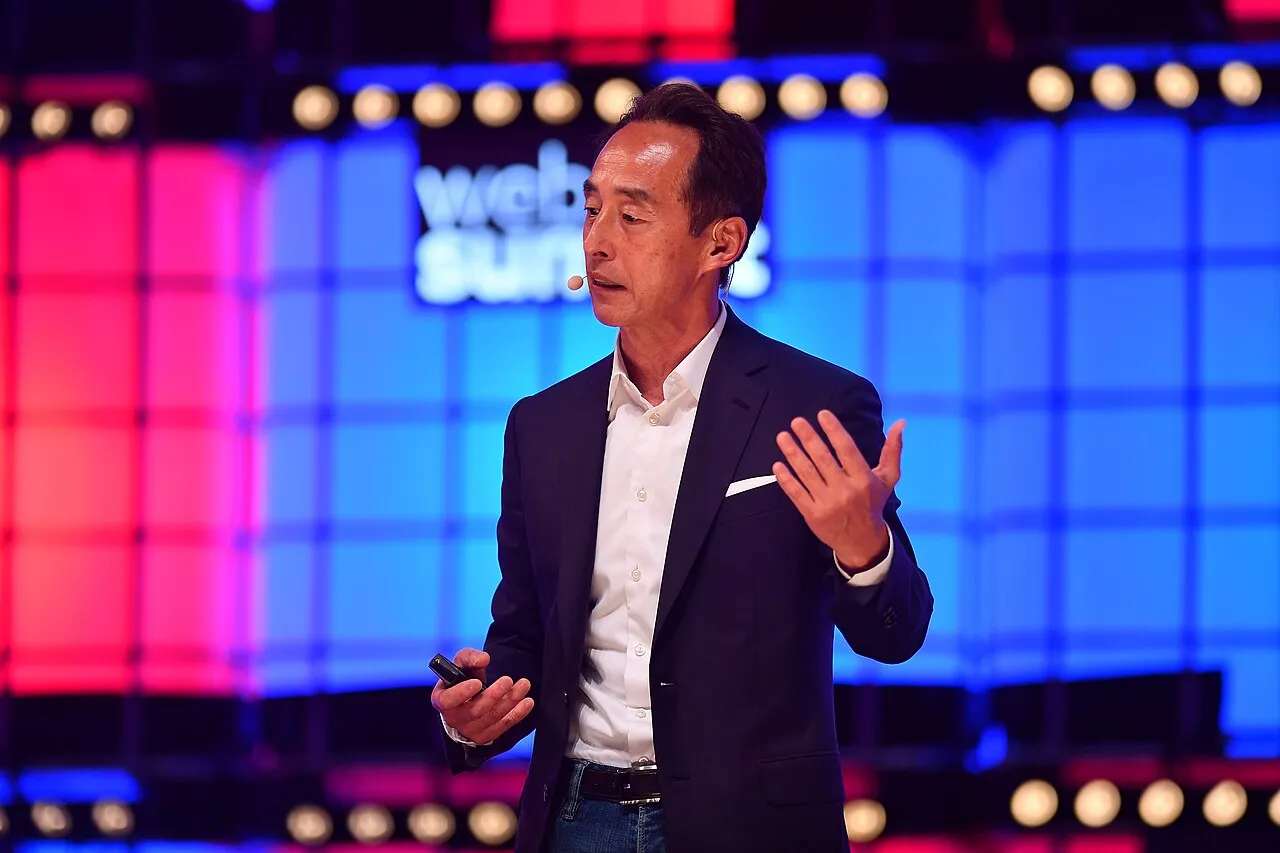
Young Sohn at Web Summit in Lisbon in November 2018, shown as a separate historical speaking appearance.
What is the difference between a demonstration and deployment?
A demonstration can show a promising interaction under chosen conditions. Deployment requires the system to work across the conditions it claims to support. That can include updates, recovery from faults and different users or devices. A successful stage presentation is evidence of the shown demonstration, not proof of every unshown scenario or a guarantee of universal readiness.
Define the conditions of success
For a fictional study app, success might mean opening a saved lesson without a connection and syncing changes safely later. Those conditions are testable. Saying the app is intelligent or seamless is less useful unless the terms are defined. Clear acceptance criteria help both technical and business teams discuss the same outcome rather than use the same word for different expectations.
An error needs a planned response
A missing connection should not necessarily erase saved work or expose a technical stack trace to the user. The system can provide a clear status and a recoverable next step. That behaviour needs design and testing. Adding a new feature without considering failure can make a system less dependable even if the normal demonstration becomes more impressive.
How should innovation claims be evaluated?
Ask what was demonstrated, what evidence supports the result and what remains proposed. A company can communicate an ambition honestly, while a reader mistakenly treats it as an achieved capability. Preserve words such as prototype, pilot or planned when they appear. The goal is not to dismiss new ideas but to understand their actual maturity and limits.
A metric needs a baseline
If a fictional system reduces an operation from ten seconds to eight, the time reduction is twenty percent relative to the old value. That does not automatically mean every user's overall task becomes twenty percent faster. The operation may be only one part of the workflow. Explain the measured unit and scope before turning a component result into a broad productivity claim.
A small test does not describe every user
A pilot can reveal useful information while covering a limited population or environment. Report the sample and conditions. A successful result on one device should not become a claim of compatibility with all devices. A larger deployment needs its own evidence. This is especially important when marketing language compresses several technical qualifications into one broad promise.
What does governance contribute to technology?
Governance can define responsibilities, oversight and how decisions are reviewed. It is not the same as writing the code or designing a chip. A board biography and an engineering specification therefore answer different questions. Both can matter to a technology organisation, but neither should be used as a substitute for the other when evaluating a particular product claim.
Ownership of a decision should be clear
If several teams share a system, someone still needs to own each interface, update and user-facing commitment. Otherwise a fault can fall between teams even when every group completed its own checklist. A classroom project can model this with a simple responsibility table. The aim is clarity, not a large bureaucracy that creates documents without improving the working system.
Security is part of the system requirements
Private credentials should not be embedded in a public interface merely to make a demonstration easy. Access controls and data handling need to fit the real task. This general principle can be practised with fictional data and local examples. A student does not need actual customer records or production keys to learn why a working feature also needs appropriate boundaries.
A connected-system project for students
Build a small mock device dashboard using invented readings. Define the message fields, units and timestamps, then show what happens when a reading is missing, stale or invalid. Keep the project simple enough to finish and inspect. The objective is to understand the interface and response, not to recreate a commercial technology platform from a keynote description.
Test the failure paths
Try an unsupported unit, a repeated message and a value arriving out of order. Decide how the application should respond before adding decorative features. These cases reveal whether the data model is coherent. A test should examine useful behaviour rather than merely confirm that the screen renders the same input the program was written to display.
Keep the source log separate from the simulation
A career article can inspire the topic, but the invented dashboard should not be presented as a product created by the executive or companies discussed. Label the classroom design clearly. This keeps factual research and creative implementation connected without mixing them. A source proves its own claim, not every idea a student develops after reading it.
Use the course material purposefully
The programming courses can support the implementation, while the class resources help with units and percentages. Store assumptions visibly, validate inputs and preserve a short revision history. A useful project explains why each part exists and how it behaves when something goes wrong. That is a stronger learning outcome than an impressive diagram with no working connections.
Questions about Young Sohn
Does an old Samsung title prove a current CEO role?
No. A historical strategy title, a board position and a present executive appointment are different records. Use the relevant current corporate biography for current status and dated documents for earlier stages. Similar names on leadership pages also need careful matching. A profile should preserve those distinctions instead of combining every senior title into one inaccurate sentence.
Does a keynote prove a product works everywhere?
No. It establishes what was shown or said in that context. Compatibility, reliability and deployment claims require their own evidence and defined conditions. A strong technology explanation can discuss the idea and its potential while making clear which parts were demonstrated, which were proposed and which details remain outside the available public record.
Sources
- HARMAN: Young Sohn's official board biography
- NETGEAR: official advisory biography and earlier roles
- Samsung: historical strategy article by Young Sohn
Image credits: cover: Noam Galai, source, CC BY 2.0. Resized and converted to WebP. inline: Web Summit, source, CC BY 2.0. Resized and converted to WebP.
Found an error or an outdated detail? Report a correction with the article URL and original source.